
Ever wondered why your Ford F-150 displays “System Off to Save Battery” messages? This common notification can leave many F-150 owners confused and concerned about their vehicle’s electrical system.
When your truck’s battery voltage drops below optimal levels, the F-150’s smart power management system kicks in to protect your vehicle. This feature automatically shuts down non-essential electrical components to preserve battery power and prevent you from getting stranded with a dead battery. Understanding what triggers this message and how to address it can save you time, money, and potential headaches on the road.
Understanding the “System Off to Save Battery” Feature in Ford F150
The “System Off to Save Battery” message in your Ford F150 indicates the truck’s intelligent power management system has activated. This feature automatically engages when your F150 detects the battery voltage dropping below 11.5 volts, shutting down non-essential electrical components to preserve power. Ford engineers designed this system specifically to prevent complete battery drainage that could leave you stranded.
When your F150 displays this message, it’s actively working to extend your battery life by disabling high-consumption features like your infotainment system, heated seats, and certain lighting elements. The core functionality—engine start capability, essential dashboard displays, and basic safety systems—remains operational to ensure you can still drive safely.
Ford’s battery management system monitors voltage levels continuously, making real-time decisions about which systems to disable based on current battery condition. This smart feature differentiates between temporary voltage drops and genuine battery depletion, preventing unnecessary system shutdowns during momentary power fluctuations.
“I’ve seen countless F150 owners panic when this message appears,” says Liam Kohn, owner of KB Tire & Auto Repair. “But it’s actually a helpful feature protecting your truck from more serious electrical issues. Understanding what triggers it helps you address the root cause instead of just treating symptoms.”
The system operates differently depending on your F150’s model year. Newer models (2021-2024) incorporate more sophisticated algorithms that can predict potential battery issues before they become critical, while older trucks tend to engage the battery saving mode only when voltage has already dropped significantly.
Your truck calculates precisely which electrical components to shut down in sequence based on their power consumption and importance to vehicle operation. This prioritization ensures your F150 maintains essential functions even as it works to conserve battery power.
Recommended Products

【Measuring Range】: The measuring range of this automobile voltmeter is DC 6-36V with an accuracy of 0.1V, which is widely used in cars, trucks, motorcycles, ships, yachts, trailers, etc. You will receive 1 car voltmeter and 2 nuts in the package. Effortlessly monitor your battery voltage with all necessary accessories included.
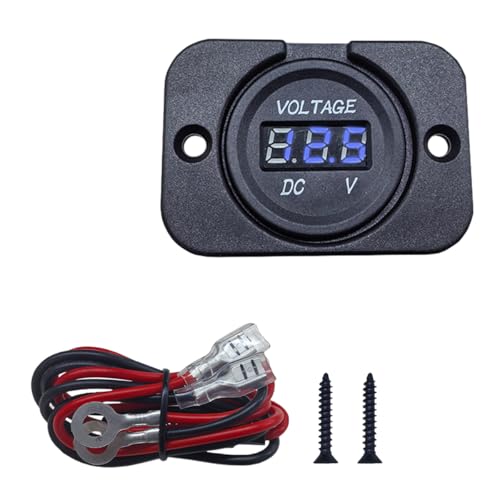
【Meet Different Needs】:The 12V round voltmeter comes with a panel and nylon nuts, allowing easy installation in a 1-1/8-inch hole. The nylon fixing nut ensures a secure fit, meeting various installation needs.
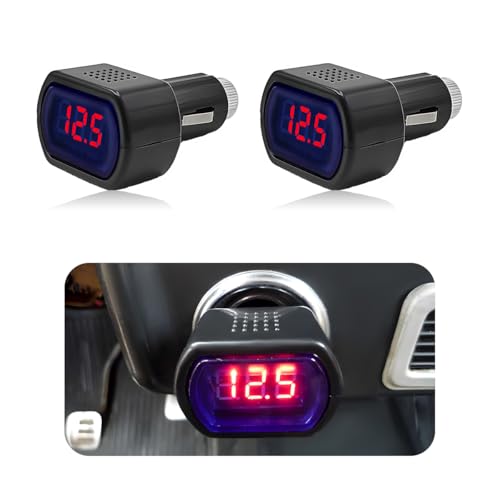
【Reliable Quality】: Our voltmeter consists of electronic board and ABS and PC material. The plastic casing is not only resistant to dirt and abrasion, but also gives solid and all-around protection to the electronic components inside, making the meter less prone to malfunction.
Common Causes of Battery Drain in Ford F150 Trucks
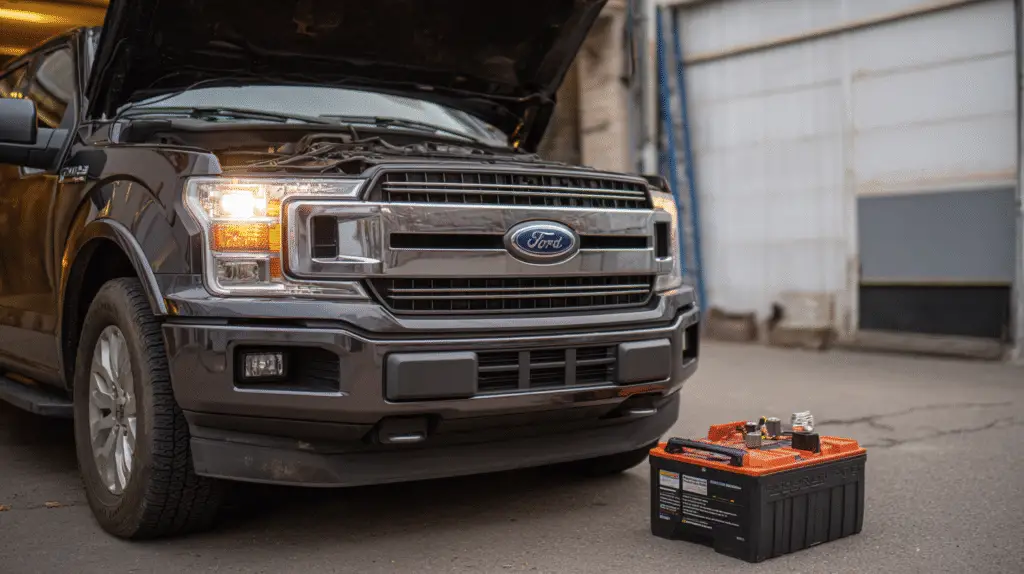
Battery drain issues frequently trigger the “System Off to Save Battery” message in Ford F150 trucks. Understanding the common causes can help you diagnose and fix these problems before they leave you stranded.
Recommended Products

PREVENT BATTERY FAILURE: Ensure reliable starts after storage with this 3-in-1 device that charges, maintains, and reconditions batteries for cars, motorcycles, ATVs, trucks, SUVs, and boats.

Stay Charged: The powerful 3 amp charger provides a full charge to your automotive vehicle’s battery before automatically going into float mode to maintain proper voltage levels without overcharging. 5 amps 12 volt charger and maintainer

Stay Charged: The 4 amp car battery charger automotive provides a full charge to your machine's battery before automatically switching to float mode to maintain proper voltage levels for your battery without overcharging
Electrical Components Left On
Electrical components that remain active when your F150 is turned off create parasitic draws that steadily deplete your battery’s charge. Interior lights accidentally left on can drain your battery overnight, leaving you with a truck that won’t start in the morning. The infotainment system sometimes fails to power down completely, continuing to draw small amounts of current even when the vehicle is off. Aftermarket accessories like dash cams, radar detectors, or amplifiers connected directly to the battery rather than through ignition-switched power can cause important drain. USB chargers plugged into auxiliary power outlets might continue drawing power after shutdown, especially in older F150 models with less sophisticated power management systems.
Faulty Alternator Issues
Alternator problems directly impact your F150’s battery charging capability, leading to repeated “System Off to Save Battery” messages. A failing alternator may not generate sufficient voltage to recharge your battery during normal driving, causing progressive discharge over time. Worn brushes inside the alternator reduce its charging efficiency, making it unable to keep up with your truck’s electrical demands. Damaged diodes in the alternator can allow electricity to flow back from the battery when the engine is off, creating a continuous drain cycle. Loose or corroded alternator connections increase resistance in the charging circuit, preventing proper battery charging even though the alternator functioning correctly. Slipping drive belts may cause the alternator to spin slower than designed, resulting in inadequate charging output particularly at idle speeds.
How the Battery Saver System Works in Your F150
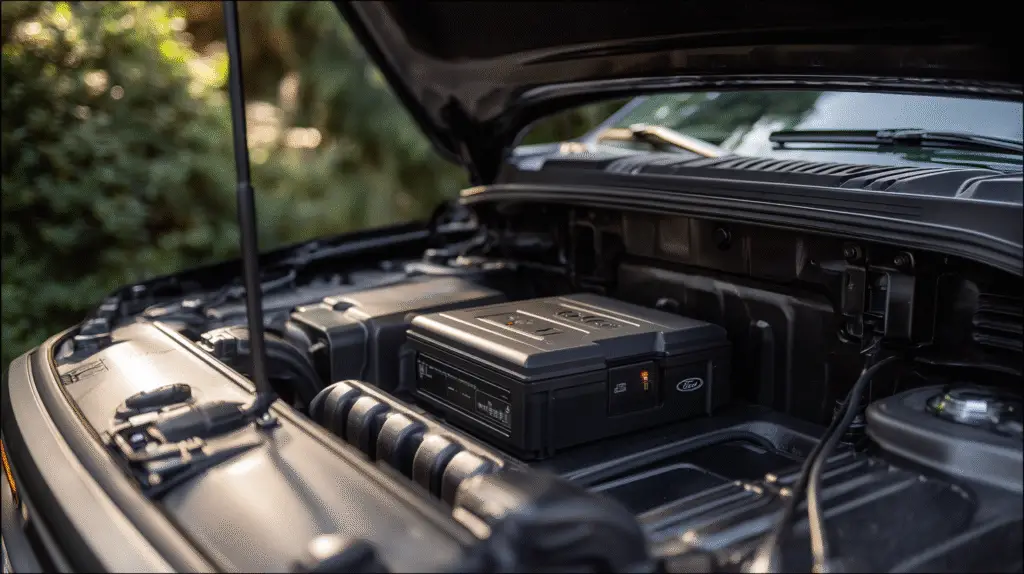
Ford’s Battery Saver System protects your F-150’s battery by intelligently managing electrical components when voltage drops too low. This sophisticated system prevents you from experiencing a dead battery when you need your truck most.
Recommended Products

【Powerful Battery Starter】The OXILAM car jump starter delivers a powerful peak current of 6000A, capable of quickly reviving a dead car battery in just seconds—even in extreme temperatures. A single full charge provides up to 60 jumpstarts. 2024 upgraded jumper cables can safely start all gas engines and 12L diesel engines, including 12v vehicles, motorcycles, pickups, RVs, tractors, trucks, vans, ATVs, snowmobiles, yachts, and many more. Say goodbye to being stranded due to a dead battery

7000A Peak Current & Broad Compatibility – Equipped with a high-rate lithium battery, this portable jump starter delivers 7000A peak current to instantly revive dead batteries. It safely jump-starts All gas and 12.0L diesel engines, including cars, motorcycles, SUVs, pickups, boats, and lawnmowers. A must-have emergency roadside assistant for your garage.

4-in-1 Device - Jump starter, wireless charging pad, USB charger, and LED light
Triggering Conditions for System Shutdown
The F-150’s battery saver activates based on exact parameters designed to protect your vehicle’s electrical system. Low battery voltage detection serves as the primary trigger, with sensors including the Electric Battery Sensor (EBS) continuously monitoring battery current. These sensors can force shutdown when voltage falls below 11.5 volts to preserve starting power. Time limits also play a crucial role in system activation – your accessories remain operational for predetermined periods after engine shutoff. Courtesy lamps and headlamps stay illuminated for 10 minutes, while chimes continue functioning for 30 minutes. Power outlets and USB ports remain active for up to 75 minutes after you turn off your engine. The radio can operate for a maximum of 60 minutes with the engine off, though the system shuts it down earlier if voltage drops too low. Your F-150’s ignition system powers down after 45 minutes maximum, with a 60-second warning before shutdown occurs.
Troubleshooting Battery Drain Issues in Your Ford F150
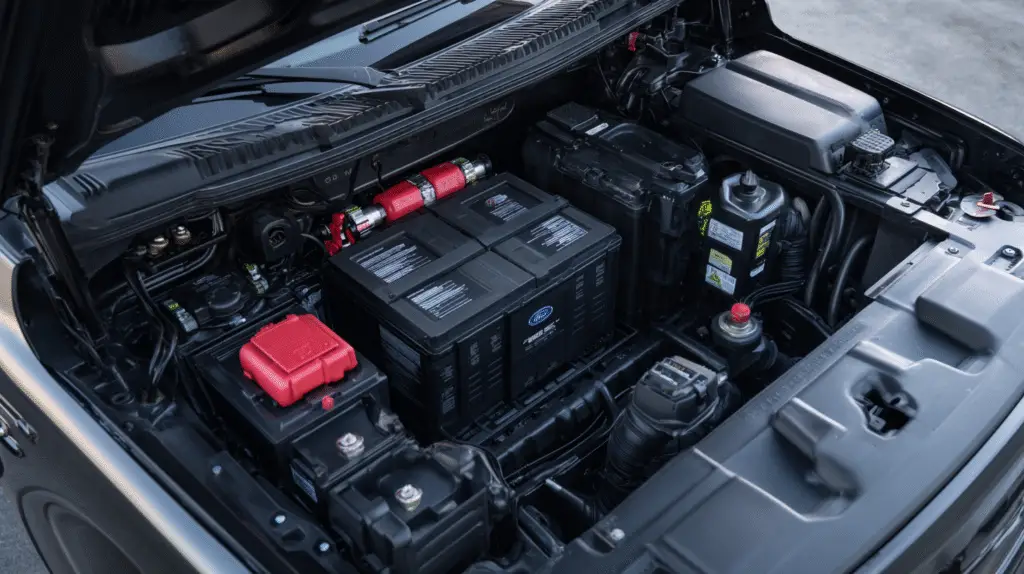
Battery drain issues often trigger the “System Off to Save Battery” message in Ford F150 trucks. Identifying and fixing these problems requires a systematic approach to determine whether parasitic drain, battery health issues, or electrical system faults are causing the problem.
Recommended Products

【PRECISE READOUTS & CLEAR DIGITAL DISPLAY】Bright LED display shows highly clear readings in any lighting condition, 0.1V resolution gives you reliable indication and shows you the voltage number easily & quickly. Bidirectional light emitting diode on the circuit board for easy battery load testing, red light indicates positive polarity, green light indicates negative polarity.
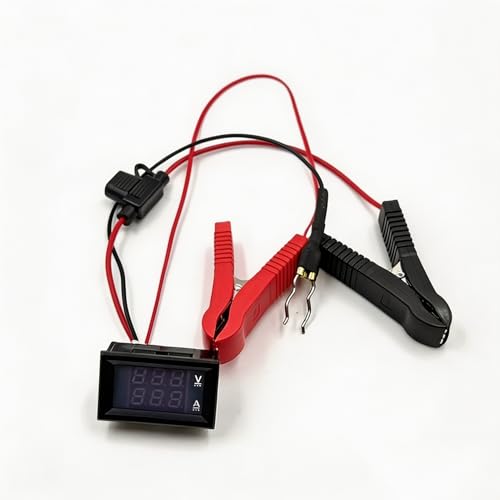
NO-DISCONNECT SAFE TESTING: Innovative design allows you to track down parasitic battery drain without disconnecting the vehicle's electrical system. This completely prevents vehicle computer (ECU) resets, loss of radio codes, and anti-theft system lockouts, ensuring a hassle-free diagnostic process.
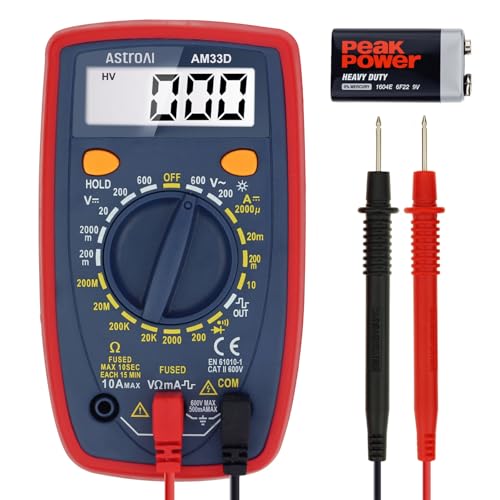
Additional Tips - The following incorrect operations may cause the multimeter not to show results: Firstly, the plugs of test leads are not fully inserted or not inserted into the correct sockets. Secondly, the manual rotary switch is not placed in the correct position. In addition, this meter can not test all AC Current and below 100mV AC Voltage. Please check the user manual carefully before measurement.
Diagnosing Parasitic Drain
Parasitic drain occurs when electrical components continue drawing power even when your F150 is turned off. Start by disconnecting the negative terminal of your battery to isolate potentially problematic circuits. Connect a multimeter set to DC amperage (mA) between the negative terminal and battery lead to measure current draw. Readings above 0.020 mA indicate a parasitic drain that’s depleting your battery. Allow at least 10-15 minutes for all electrical modules to enter sleep mode before taking your final reading.
Check individual fuses using your multimeter set to millivolts (mV). A reading near 0.00 mV shows no draw on that particular circuit. Replace fuses one by one while monitoring the multimeter to identify which circuit is causing excessive drain. Common culprits include the radio, interior lights, power seats, and aftermarket accessories. I’ve seen many F150 owners struggle with mysterious battery drains caused by faulty door switches keeping interior lights partially activated.
Using a Multimeter to Test Battery Health
Testing your F150’s battery health helps determine if the “System Off to Save Battery” message stems from battery deterioration rather than parasitic drain. Perform a voltage test with the engine off by connecting your multimeter to the battery terminals. A healthy, fully charged battery should read approximately 12.6 volts. Readings below 12.4 volts indicate your battery needs charging, while persistent low readings suggest replacement might be necessary.
Conduct a load test by turning on your headlights for 15 minutes with the engine off, then measure voltage again. Voltage shouldn’t drop below 12.2 volts during this test. The Electric Battery Sensor (EBS) in your F150 monitors these voltage levels and triggers the battery saver mode when levels fall too low. Faulty EBS sensors sometimes cause false “System Off to Save Battery” messages even with a healthy battery.
Perform a charging system test by starting your engine and measuring battery voltage. Readings should increase to 13.5-14.5 volts, indicating your alternator is properly recharging the battery. Lower readings might point to alternator problems requiring repair or replacement. Many F150 owners discover their battery drain issues stem from failing alternators that no longer provide sufficient charging capacity.
Preventing Battery Drain in Your Ford F150

Ford F-150’s Battery Management System (BMS) actively preserves battery power by controlling electrical components when your truck isn’t running. This sophisticated system monitors voltage levels and automatically disables certain features to prevent battery drain when levels fall too low.
Recommended Products

【Compatible Models】12 Volt Battery Charger Compatible for Ride on Toys Compatible with Wrangler, Kid Jeeps car, Motorcycle, Dynacraft, Mercedes-Benz, Range Rove, BMW i8, Kidzone Lamborghini Car, Best Choice Products, Ferrari Farm, Kid Tractor Car, Hello Kitty Car, Bumper Car,Toddler Car, Kidzone Bumper Car, Truck, SUV, Trax, AVT, UVT Ride On Cars and more

Charger, Maintainer & Desulfator - An all-weather battery charger, battery maintainer, trickle charger, and battery desulfator. Perfect for charging and maintaining all 12-volt lead-acid, flooded or sealed maintenance free batteries (AGM and gel cell).

Stay Charged: Battery Tender battery chargers and maintainers provide a full charge to your powersport vehicle’s battery before switching to float mode to maintain proper voltage levels for safe, long-term storage
Regular Maintenance Tips
Regular maintenance significantly extends your F-150’s battery life and prevents those frustrating “System off to save battery” messages. Drive your truck for longer periods rather than taking frequent short trips, as brief drives don’t allow the battery to reach full charge. Short trips are particularly problematic in winter when more power is needed for heating systems and lights.
Check your battery’s health regularly by inspecting terminals for corrosion and ensuring connections remain tight. Liam at KB Tire & Auto Repair has seen countless F-150s come in with battery issues that could’ve been prevented with simple visual inspections.
Limit accessory usage when the engine isn’t running. Power-hungry components like the infotainment system, phone chargers, and cabin lights quickly deplete your battery if left on after shutting down the engine. Your F-150’s Battery Saver feature automatically turns off courtesy lamps after 10 minutes, headlamps after 10 minutes, and power points and USB ports after 75 minutes to help prevent complete discharge.
Aftermarket Answers for Battery Protection
Trickle chargers offer excellent protection for F-150 owners who frequently park their trucks for extended periods. These devices maintain optimal battery charge by providing a small, continuous current. Many of Liam’s customers who store their F-150s during winter months swear by quality trickle chargers to eliminate spring startup issues.
The Electric Battery Sensor (EBS) occasionally triggers unnecessary “System off to save battery” messages due to corrosion or connection issues. Cleaning or replacing this sensor often resolves persistent battery warnings even when the battery itself tests healthy.
Battery replacement becomes necessary when your F-150’s battery can no longer hold adequate charge. Most truck batteries last 3-5 years depending on climate and usage patterns. Premium AGM (Absorbent Glass Mat) batteries offer superior performance for F-150s with high electrical demands from aftermarket accessories or frequent short-trip driving.
Battery monitoring systems provide real-time voltage tracking and alerts before problems develop. These aftermarket devices connect to your smartphone, allowing you to monitor battery health remotely and receive notifications when voltage drops below critical levels.
When to Seek Professional Help for Battery Issues

Your Ford F-150’s “System Off to Save Battery” message doesn’t always require professional intervention, but certain situations demand expert attention. Recognizing these warning signs early can save you from unexpected breakdowns and costly repairs.
Recommended Products
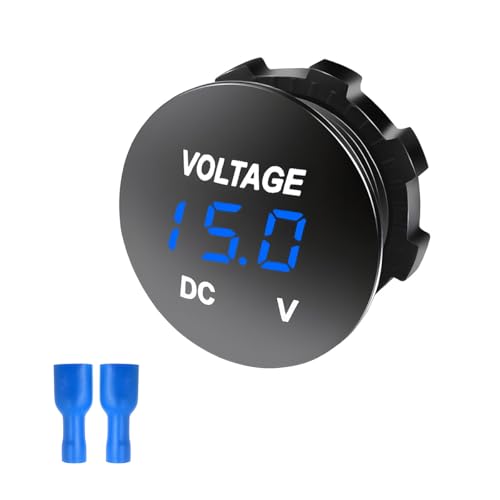
Monitoring Function: Voltmeter Gauge is widely used at DC 12-24 V with an accuracy of 0.1V. When the car voltage is displayed at 13.4-14.8 V, it indicates the normal voltage after starting, and when 12.2-12.8 V, it indicates the normal voltage without starting. If the value is lower than 12 V, replace the battery. It can timely grasp the state of the battery between full charge and discharge

OEM Genuine Ford Parts only at Rod Baker Ford

Practical Features: This product supports a wide DC 12V–24V input voltage range. The screen displays the current voltage in real time and automatically categorizes the status into three levels based on the reading: <12V displays please charge or replace the battery as soon as possible; 12V–12.8V indicates normal range before startup; and 12.8V–14.8V indicates normal range after startup.
Failed Jump-Start Attempts
Jump-starting your F-150 typically resolves temporary battery depletion. If your truck refuses to start even after multiple jump-start attempts, the battery has likely reached the end of its lifespan. “I’ve seen customers try to jump their F-150 three or four times before bringing it in,” says Liam Kohn, “but by then, they’re just postponing the inevitable battery replacement.”
Persistent Warning Messages
Recurring “System Off to Save Battery” warnings, even though driving your truck regularly for 30+ minutes, indicate deeper issues. Your F-150’s Electric Battery Sensor (EBS) might be malfunctioning or the battery could be failing to hold a charge. These components require specialized diagnostic equipment to properly assess and repair.
Unusual Battery Behavior
Pay attention to these red flags that necessitate professional diagnosis:
- Battery drains completely overnight
- Electrical components function erratically
- Dashboard lights flicker when starting the engine
- Battery appears swollen or has visible corrosion
- Starter cranks slowly even with a recently charged battery
Alternator Issues
A malfunctioning alternator prevents proper battery charging while driving. Symptoms include dimming headlights during idle, battery warning lights on your dashboard, or strange noises from the engine bay. Alternator repairs require professional tools and expertise, especially in newer F-150 models with complex charging systems.
Battery Management System Faults
Modern F-150 trucks use sophisticated Battery Management Systems (BMS) that can occasionally develop electronic glitches. These issues manifest as false battery warnings or premature system shutdowns. Technicians use specialized diagnostic tools to reset or reprogram the BMS when necessary.
When DIY Answers Don’t Work
If you’ve attempted basic troubleshooting—checking connections, cleaning terminals, driving longer distances—without resolving the battery warnings, it’s time for professional help. Certified technicians can perform comprehensive system tests to pinpoint the exact cause of your F-150’s battery problems.
Conclusion
Understanding your Ford F-150’s “System Off to Save Battery” message can save you from unexpected breakdowns and costly repairs. By recognizing the signs of battery drain and implementing the preventive measures outlined in this guide you’ll extend your battery’s lifespan and avoid that frustrating warning message.
Remember that your truck’s Battery Management System is there to protect your vehicle not inconvenience you. Regular maintenance checking for parasitic drains and monitoring battery health are your best defenses against electrical issues.
Don’t hesitate to seek professional help when basic troubleshooting fails. With proper care and attention your F-150’s electrical system will keep running smoothly mile after mile providing the reliable performance you expect from America’s favorite truck.
Recommended Products

PREVENT BATTERY FAILURE: Ensure reliable starts after storage with this 4-in-1 device that charges, maintains, tests, and restores batteries for cars, motorcycles, ATVs, trucks, SUVs, and boats.
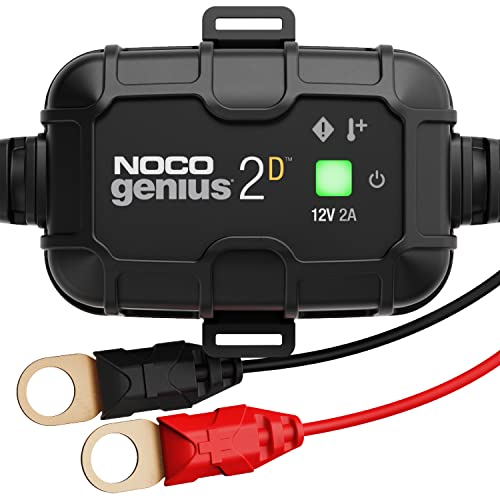
MEET THE GENIUS2D — The all-new direct-mount onboard battery charger for an under-the-hood battery charging system and year-round battery maintenance.
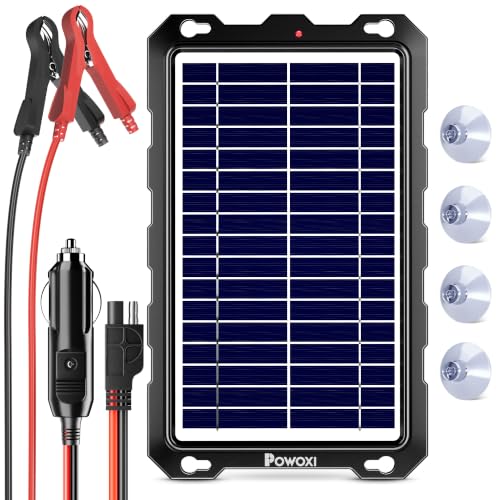
Upgrade Intelligent Charge Controller: Built-in internal protection system and smart fast charging Cooperate with Quality solar silicon material ensures high conversion and stable output the solar panel's energy conversion efficiency to 25-30%
Frequently Asked Questions
Recommended Products

Powerful 12V Lithium-Ion Jump Starter: Delivers up to 25 jump starts on a single charge. Compatible with 6.0L gas / 3.0L diesel engines, covering cars, trucks, SUVs, motorcycles, and ATVs—perfect for daily commutes, road trips, or camping. No more waiting for roadside assistance

【START 12V DEAD BATTERIES WITH BOOSTER】This new version A11 jump starter battery pack has a boosted cranking power of 5000A and can instantly start your 12V vehicles with up to 10.0L gas and 7.0L diesel engines including motorcycles, SUVs, trucks, cargo vans, ATVs, snowmobiles, yachts, and the like. One full charge supports up to 50 times starts, perfect for every car owner.

[Emergency Save Dead Batteries] - Safely, stable and powerful, you can start a dead car battery in seconds, Gehopow jump starter with 6000A peak current for up to 10.0L gasoline or 8.0L diesel, suitable for 12v vehicles like car, suv, truck, van, motorcycle.
What does “System Off to Save Battery” mean on a Ford F-150?
This message appears when your F-150’s battery voltage drops below 11.5 volts. The truck’s smart power management system activates to protect your vehicle by shutting down non-essential electrical components like the infotainment system and heated seats while maintaining essential functions. This feature prevents complete battery depletion and potential breakdowns.
What causes battery drain in Ford F-150 trucks?
Common causes include leaving electrical components on (interior lights, infotainment system), parasitic draws from aftermarket accessories, USB chargers remaining plugged in, and faulty alternators. A failing alternator can’t properly recharge the battery, leading to progressive discharge due to worn brushes, damaged diodes, loose connections, or slipping drive belts.
How does the Battery Saver System work in the F-150?
The system monitors battery voltage through sensors like the Electric Battery Sensor (EBS). When voltage falls below 11.5 volts, it shuts down non-essential components to preserve starting power. It also enforces time limits for accessory operation after engine shutoff: courtesy lamps (10 minutes), radio (60 minutes), power outlets (75 minutes), and ignition system (45 minutes).
How can I test for parasitic battery drain?
Disconnect the battery and use a multimeter in series with the negative terminal to measure current draw. Normal readings should be under 50 milliamps. Higher readings indicate excessive drain. To pinpoint the source, remove fuses one by one while monitoring the current reading. When the reading drops significantly, you’ve found the circuit causing the drain.
How long do F-150 batteries typically last?
Ford F-150 batteries typically last 3-5 years, depending on usage patterns, climate conditions, and electrical demands. Vehicles with numerous aftermarket accessories or that frequently sit unused may experience shorter battery life. Premium AGM (Absorbent Glass Mat) batteries are recommended for F-150s with high electrical demands or start-stop technology.
When should I seek professional help for battery issues?
Seek professional help if: jump-start attempts fail, warning messages persist despite regular driving, the battery drains completely overnight, electrical components function erratically, or the alternator is suspected of failing. Basic troubleshooting that doesn’t resolve issues or Battery Management System (BMS) faults also require specialized diagnostic tools and expert attention.
What preventive measures can avoid battery drain?
Drive your F-150 for longer periods (30+ minutes) to fully charge the battery, regularly check battery health, limit accessory usage when the engine is off, and use trickle chargers for vehicles parked for extended periods. Monitor the Electric Battery Sensor (EBS) and consider installing battery monitoring systems to track voltage levels in real-time.
Can aftermarket accessories cause the “System Off to Save Battery” message?
Yes, aftermarket accessories can trigger this message, especially when improperly installed. High-power accessories like amplifiers, additional lighting, winches, or poorly wired devices can create significant parasitic draws. Always have aftermarket electrical components professionally installed with proper fusing and ensure they disconnect when the vehicle is off.
Will driving more frequently prevent battery issues?
Yes, regular driving helps prevent battery issues. Short trips don’t allow the alternator sufficient time to recharge the battery fully. Aim for driving sessions of at least 30 minutes several times weekly to maintain proper battery charge. This is especially important in cold weather when batteries are less efficient and electrical demands are higher.
Can extreme weather affect my F-150’s battery performance?
Absolutely. Extreme temperatures significantly impact battery performance. Cold weather reduces battery capacity and requires more power for starting, while heat accelerates internal corrosion and water loss. In very cold regions, battery warmers can help maintain efficiency. In hot climates, ensure the battery is securely mounted away from excessive engine heat to extend its lifespan.
Related Posts: