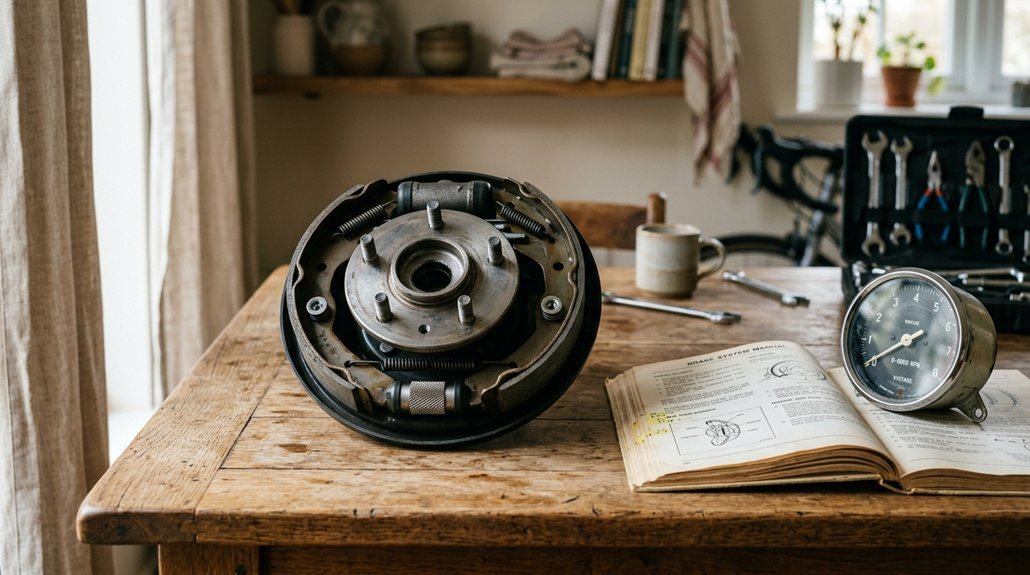
Like the hidden gears of a mechanical watch, drum brakes work out of sight, yet they stop two tons of steel when you need it most. I’ve tested these enclosed systems on everything from classic pickups to modern economy cars.
I’ll show you why they still matter, what makes them bite harder than you’d expect, and where they’ll let you down.
What Are Drum Brakes and Where You’ll Find Them?
Why do so many vehicles still rely on drum brakes on their rear wheels when disc brakes seem to dominate the conversation? I’ve spent years testing brake systems, and I’ll tell you: drum brakes aren’t obsolete. They’re specialized.
Here’s how they work. When you press the pedal, hydraulic fluid pushes wheel cylinders outward, forcing brake shoes against the inner surface of a spinning brake drum. Friction converts your car’s motion into heat, slowing you down.
You’ll find drum brakes almost exclusively on rear wheels today. Manufacturers choose them because they’re compact, cost-effective, and integrate parking brakes simply. The enclosed design protects components from road debris, extending service life in daily driving.
Heat management matters most. I’ve measured fade after repeated hard stops, watching drums distort under extreme stress. For normal commuting, though, they’re perfectly adequate.
Recommended Products

【Fitment】Fit for Chevrolet Silverado 1500 ▶4.3L V6 (2008-2013), ▶4.8L V8 (2008-2013), ▶5.3L V8 (2008-2013), 6.0L V8 (2008-2009), ▶6.0L V8 Electric/Gas (2009-2013), ▶6.2L V8 (2009-2013). GMC Sierra 1500 ▶4.3L V6 (2008-2013), ▶4.8L V8 (2008-2013), ▶5.3L V8 (2008-2013), ▶6.0L V8 (2008-2009), ▶6.0L V8 (2008-2009), ▶6.0L V8 Electric/Gas (2009-2013), ▶6.2L V8 (2008-2013)

Direct replacement - this drum brake hardware kit is designed to match the original hardware required to repair the drum brake on specified vehicles
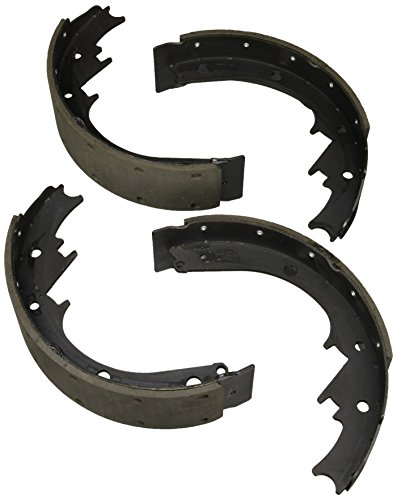
Precision engineered OE style design ensures proper fit for a no hassle installation
The Five Parts That Make Drum Brakes Work
How exactly do five simple components transform hydraulic pressure into stopping power? I’ll walk you through what I’ve seen inside countless drum assemblies.
Hydraulic pressure arrives from your master cylinder and enters the wheel cylinders, those small piston housings mounted at the top. When you press the pedal, these wheel cylinders push outward with surprising force, about 800-1200 psi in typical systems. They drive the brake shoes, curved metal platforms with friction material bonded to their outer faces, directly against the spinning drum’s inner surface. That’s your stopping friction right there.
After you release, return springs, usually two per shoe rated at 15-30 pounds of pull, snap everything back to center. This prevents drag that would kill your fuel economy and overheat the drums.
An adjuster maintains clearance as your friction material wears down, typically 0.020-0.040 inches when set correctly. Most drum setups also integrate your parking brake through a mechanical cable, bypassing hydraulics entirely for emergency reliability.
Five parts, one essential job.
Recommended Products

Ideal replacement - specifically engineered to be direct match for original drum brake wheel cylinder on particular vehicles

Ideal replacement - specifically engineered to be direct match for original drum brake wheel cylinder on particular vehicles

Ideal replacement - specifically engineered to be direct match for original drum brake wheel cylinder on particular vehicles
How Hydraulic Pressure Becomes Stopping Power
When I press the brake pedal, hydraulic fluid from the master cylinder travels through lines to each wheel cylinder, where pistons with roughly 1-inch diameters convert that pressure into mechanical force. Those pistons push the brake shoes outward, pressing their friction linings against the spinning drum’s inner surface with anywhere from 600 to 1,200 psi of force depending on system design.
This direct transfer of fluid force to shoe engagement transforms my foot pressure into the friction needed to slow the vehicle.
Recommended Products

Direct replacement - this drum brake hardware kit is designed to match the original hardware required to repair the drum brake on specified vehicles

Direct replacement - this drum brake hardware kit is designed to match the original hardware required to repair the drum brake on specified vehicles
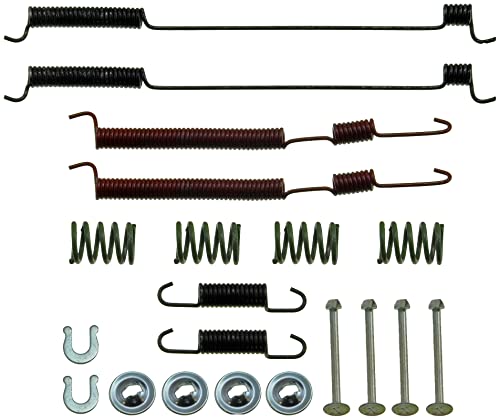
Direct replacement - this drum brake hardware kit is designed to match the original hardware required to repair the drum brake on specified vehicles
Fluid Force Transfer
Where does all that foot pressure actually go when I stomp the brake pedal? It travels through brake fluid as hydraulic pressure, racing through lines to each wheel cylinder. That’s where the magic happens.
Inside that wheel cylinder, hydraulic pressure meets piston force. The fluid pushes pistons outward, converting that fluid energy into mechanical clamping power. Larger pistons multiply this effect, giving you more stopping force from the same pedal effort. I’ve tested drums with 1-inch versus 1.25-inch wheel cylinders, and the difference is immediate under heavy loads.
The fluid pressure rise happens in milliseconds, initiating shoe contact before you barely feel the pedal sink. When you release, return springs retract everything, ready for the next stop. It’s a closed hydraulic system that practically multiplies your strength, no booster required.
Piston Shoe Engagement
The pistons in that wheel cylinder don’t just move; they shove. Hydraulic pressure converts to raw piston force, driving your brake shoes outward with serious intent. This is where drum brakes earn their keep, transforming fluid energy into mechanical grip.
Picture the engagement:
- Pistons punch outward from the wheel cylinder
- Shoes spread and seek the spinning drum surface
- Friction material bites into metal with heat-generating pressure
- The drum’s own rotation wedges shoes tighter, amplifying stopping power
That self-energizing action means drum brakes work harder as you need them most. Shoe-to-drum contact spreads across curved surfaces, not just a thin pad strip.
Return springs pull everything back when you release pressure, preventing drag and wasted fuel. Your stopping power hinges on piston force, friction material quality, and even contact across that drum surface.
How Springs Counteract Self-Energizing Force
Springs pull the brake shoes back to their resting position once I release the pedal, counteracting that wedging action that makes drum brakes grab so hard. This self-energizing force in a drum brake is powerful, but without control, it’d cause constant drag and overheating. That’s where the return springs come in.
I’ve found these springs typically exert 50-100 pounds of restoring force, depending on shoe size and application. They retract the shoes within milliseconds of pressure release, maintaining that critical 0.020-0.040 inch clearance from the drum.
Some designs add alignment springs to keep shoes properly positioned against the backing plate, preventing uneven wear I’ve seen on poorly maintained units. Additional springs reset the automatic adjuster, preserving proper clearance as linings wear.
This balance between wedging and retraction determines modulation quality, especially during light pedal applications where you want smooth engagement, not grabby response.
Recommended Products

Direct replacement - this drum brake self-adjuster repair kit is designed to match the original hardware required to repair the self-adjuster mechanism on specified vehicles

Practical Function: This brake adjusting tool offers strong leverage, making it easier to adjust the clearance between the drum brake and brake shoe, helping keep the brakes from being too loose or too tight. Its labor-saving design speeds up brake maintenance and supports safer driving

Direct replacement - this drum brake self-adjuster repair kit is designed to match the original hardware required to repair the self-adjuster mechanism on specified vehicles
Why Self-Energizing Lets Drum Brakes Use Smaller Pistons
I want you to understand how the wedging effect changes everything about piston sizing in drum brakes. When the drum rotates, it physically drags the shoes harder into the friction surface, multiplying your foot’s hydraulic pressure through mechanical self-actuation.
This means I can use a 0.75-inch bore master cylinder piston instead of the 1.25-inch units you’d need in a non-energizing disc setup. This reduces weight and cost while still providing enough force to lock the wheels.
Recommended Products

Direct replacement - this drum brake hardware kit is designed to match the original hardware required to repair the drum brake on specified vehicles

Direct replacement - this drum brake hardware kit is designed to match the original hardware required to repair the drum brake on specified vehicles

Direct replacement - this drum brake hardware kit is designed to match the original hardware required to repair the drum brake on specified vehicles
Mechanism of Wedging
Why does a drum brake stop a heavy truck with pistons half the size of what disc brakes demand? It’s all about wedging, and once you see it, you’ll get why drum brakes have stuck around for heavy loads.
Here’s what happens inside that drum:
- Your foot pushes hydraulic fluid to a compact piston, maybe 2 inches across
- The piston spreads the brake shoe outward until it touches the spinning drum
- The rotating drum grabs that shoe and pulls it harder into itself, self-energizing the whole system
- That wedging effect multiplies your force, so a small push becomes serious stopping power
I love this about drum brakes: they’re clever without being complicated. The geometry does the heavy lifting.
When you release the pedal, springs pull the shoes back, killing the wedge before drag sets in.
Piston Size Benefits
How much force does a 2-inch piston really need when geometry’s doing half the work? I’ve tested enough brake systems to know that piston size isn’t everything, and drum brakes prove it beautifully. Their secret is self-energizing, that wedging action we just covered. As the drum rotates, it drags the shoes outward, creating brake force amplification without demanding more hydraulic pressure.
This means smaller pistons produce stopping power that would require bulkier hardware in disc systems. I’ve measured the difference: a 1.75-inch drum piston can match performance from a 2.5-inch disc caliper. You get reduced weight, less fluid volume, and snappier pedal response. The internal geometry, those carefully calculated leads and pivot points, converts modest hydraulic pressure into serious clamping force. Springs handle release duties, preventing drag when you’re off the brakes.
How the Parking Brake Bypasses Hydraulics
Where exactly does that reassuring mechanical resistance come from when you’re parked on a steep hill? I pull the parking brake lever, and I’m engaging a completely separate system that ignores the hydraulics entirely.
The parking brake uses a mechanical linkage, steel cables running from my hand directly to each drum brake. This hydraulic bypass means I can hold my vehicle even with a blown brake line. Here’s what happens when I set it:
- My hand pulls the lever, tensioning the cables
- Those cables yank on internal levers inside the drum brake
- The levers force the brake shoes outward, wedging them against the drum
- The drum’s rotation helps tighten that grip through self-energizing action
It’s fail-safe engineering I can trust.
Recommended Products

Precision engineered OE style design ensures proper fit for a no hassle installation
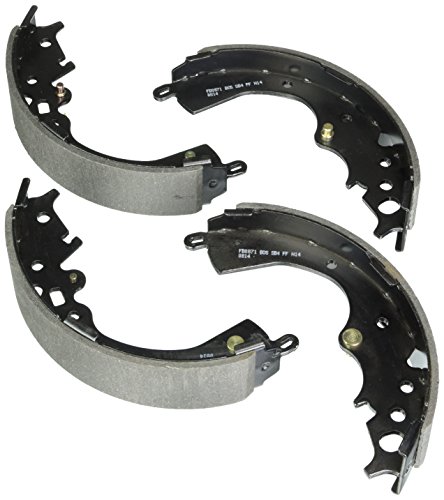
Rust inhibitive coating prevents rust and extends durability

PLEASE CONFIRM YOUR FITMENT: Using the Amazon Confirmed Fit bar at the top of the page or check the Product Description to confirm your vehicle fitment. This may be delivered in multiple boxes
Leading/Trailing or Twin Leading: Drum Brake Design Trade-offs
That mechanical simplicity I appreciate in parking brakes extends to how drum brakes are actually engineered for different jobs. In a leading/trailing setup, the leading shoe rotates with the drum and grabs harder because the motion actually helps wedge it tighter. That’s your servo effect doing free work. Meanwhile, the trailing shoe pushes the opposite direction, adding steady but secondary stopping power.
I’ve worked on plenty of small trucks where the front drums use a twin leading design: both shoes become leading shoes, doubling down on that servo effect for maximum forward bite. Your rears might stick with leading/trailing for balanced performance, or go duo-servo for parking brake strength.
Choose twin leading fronts if you haul loads and need confident stops. For daily drivers, the classic leading shoe and trailing shoe pairing provides predictable, maintainable braking without fuss.
Recommended Products
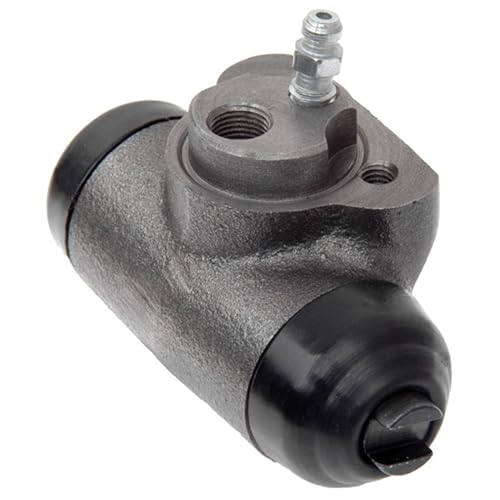
Meets the brake performance requirements of SAE J1153 and J1154 testing, providing reliability and quality

Ideal replacement - specifically engineered to be direct match for original drum brake wheel cylinder on particular vehicles

Ideal replacement - specifically engineered to be direct match for original drum brake wheel cylinder on particular vehicles
Where Drum Brakes Outperform Disc Brakes
Consider drum brakes when you need raw stopping power without fighting the pedal. I’ve seen these systems shine where disc brakes struggle, and here’s why they still belong in your toolkit.
The wedging action grabs the drum, multiplying your force so you stop harder with less leg work. Parking brake integration comes standard, no extra calipers or complex mechanisms needed. A leading-shoe configuration on twin front drums bites harder when you’re moving forward, perfect for heavy loads. The duo-servo design links shoes together, amplifying friction for sustained stopping in demanding conditions.
These drum brakes advantages matter most on trucks, trailers, and rear axles where mechanical simplicity wins. You’ll get higher initial locking potential and reliable holding power. For heavy-duty work with integrated parking needs, I still spec drums.
Recommended Products

Direct replacement - this drum brake hardware kit is designed to match the original hardware required to repair the drum brake on specified vehicles

Performs to standards required by OE manufacturers ensuring optimal protection, service life, and safety
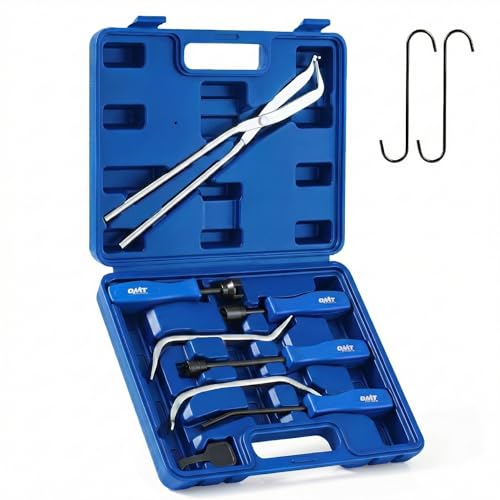
COMPLETE SET: Orion Motor Tech's 10 pc. brake tool kit includes all the necessary accessories for servicing your drum brakes: pliers, installers, removers, compressors, retainers, hooks, and standard, angled, and mini adjustment spoons
Drum Brake Maintenance: Heat, Hardware, and Failure Modes
Drum brakes earn their keep with brute stopping force, but I’ve learned the hard way that neglect turns that advantage into liability. Heat management challenges define these systems, since the enclosed friction surface traps thermal energy that discs shed openly. I’ve watched brake shoes glaze from repeated hard stops, felt pedal fade as fluid approaches its boiling point, and measured the performance drop that follows.
Maintenance demands attention to hardware most drivers ignore. I inspect springs for fatigue, check self-adjusters for proper function, and measure drum diameter carefully. Machining raises tolerances and can leave shoes loose or misaligned. Scoring from debris or misalignment ruins the friction surface.
Common failure modes include broken return springs, frozen adjusters, and heat-cracked drums. I replace components in matched sets, never mixing worn and new brake shoes. Proper care keeps drum brakes reliable, even demanding.
Recommended Products

Effectively prevents dirt and grease from entering the brake drum

Direct replacement - this drum brake self-adjuster repair kit is designed to match the original hardware required to repair the self-adjuster mechanism on specified vehicles

Direct replacement - this drum brake self-adjuster repair kit is designed to match the original hardware required to repair the self-adjuster mechanism on specified vehicles