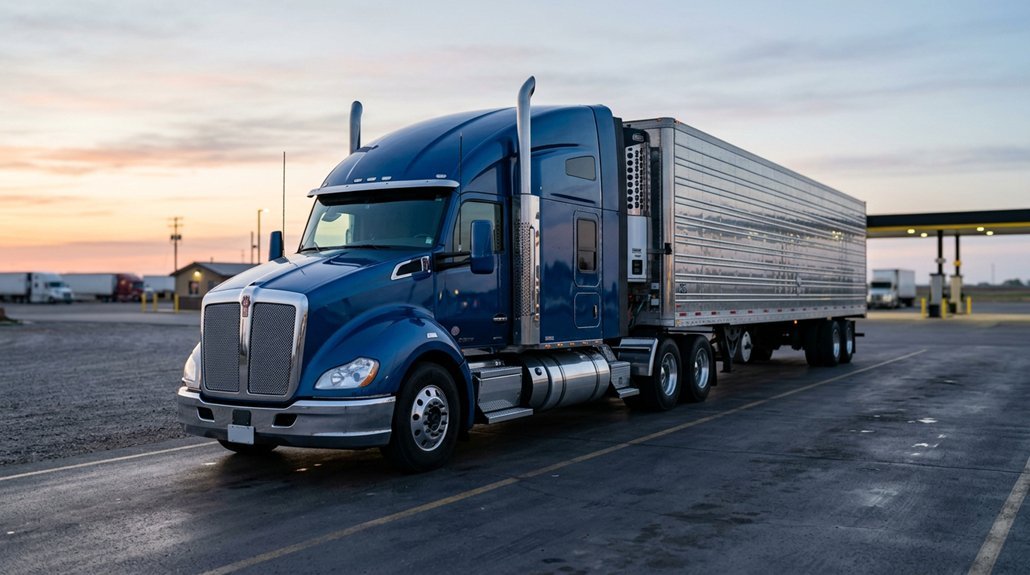
Day cabs dominate short hauls, sleepers transform highways into homes, and slope-nose designs rewrite the rules on visibility and weight. I’ve spent years behind the wheel of each, and I can tell you the difference between a profitable route and a grinding headache often starts with picking the right cab configuration.
You need to know which semi type actually matches your freight, your trailer length, and how many nights you’ll spend staring at truck stop ceilings. The wrong choice costs you thousands in fuel, maintenance, and lost sleep. Let me break down what really separates these three workhorses, because your next rig decision shouldn’t come from a brochure.
Day Cabs vs. Sleeper Tractors: Choosing Your Semi-Truck Configuration
Why does cab configuration matter so much? It shapes your daily life behind the wheel, your paycheck, and whether you sleep in your rig or your own bed.
I’ve driven both setups extensively. Day cabs suit short-haul work: no sleeper means tighter turning, easier parking, and lower cost. You’re home nightly, which matters if you’ve got family waiting.
Day cabs suit short-haul work: tighter turning, easier parking, lower cost, and you’re home nightly.
Sleeper cabs transform your truck into a mobile apartment. The three sleeper configurations, flat roof, mid-roof, and raised roof, provide 12–18 inches more headroom at the top tier. That space fits a real mattress, mini-fridge, and storage for weeks on the road.
Day cabs dominate urban freight and regional routes under 500 miles. Sleeper tractors handle cross-country hauls where rest stops become your bedroom. Choose based on your route, not your ego.
Recommended Products

Truck Sleeping Platform:This truck hammock provides a comfortable sleeping option for drivers , allowing for restful breaks during long hauls. It is also suitable for outdoor camping and outdoor adventures.

TRANSFORMS YOUR TRUCK CAB INTO A BED: Quickly convert your day cab into a comfortable resting space within seconds. Provides a stable surface so drivers can rest or nap safely when the vehicle is parked.

CUSTOM FIT FOR Freightliner Cascadia :Custom designed for Freightliner Cascadia 116 & 126 Sleeper / Day Cab semi-truck 2018-2026 2027, laser measured to match your semi truck's floor contours for a factory-style fit. Whether you're commuting to work or running daily errands, these floor liners deliver a secure fit and dependable interior protection. Please verify your vehicle model, year, trim, and configuration before purchasing
Slope-Nose and Custom Semi-Truck Designs for Specific Freight Needs
Slope-nose trucks caught my eye early in my career, and I’ve learned to respect what that rounded front end provides. That shortened hood sharpens your sightlines and tightens your turning radius, which I’ve found invaluable when threading 53-foot trailers through crowded yards or winding two-lanes.
The real advantage shows up in weight distribution. By pushing the cab forward, these configurations let you shift more payload ahead of the drive axles without burning your legal limits. I’ve hauled 80,000-pound machinery loads with slope-nose trucks that would have left conventional noses overweight on the steers.
Custom semi-trucks take this further. You spec axle spacing, sleeper length, and fifth-wheel placement to match your freight. Heavy-haul operators often run tridems; auto haulers need shallow deck heights. The truck becomes your tool, not someone else’s compromise.
Recommended Products

【Upgrade Your Marker Lighs】Inlcudes 10Pcs LED marker lights, Great replacement for incandancent lights, add a totally different look than the old lights, allowing your trucks to be more visible at night and increasing driving saft

13 Amber LEDs with Clear Lens

Matching Semi-Truck Specs to Trailer Types: Dry Van, Flatbed, and Reefer
How do you know you’re pulling the right trailer with the right truck? I’ve learned that matching specs to trailer types separates professionals from rookies.
Dry van trailers dominate the road. At 53 feet, they’re your bread and butter for warehouse runs, protecting electronics, retail goods, and packaged freight from weather. I spec my tractor with adequate power and fifth-wheel clearance for these boxy workhorses.
Flatbeds demand different muscles. You’re hauling lumber, machinery, and metal that won’t fit walls. I invest in cargo securement training and spec heavier axles; one loose strap costs your career.
Reefer trailers require precision. These refrigerated units keep meat, pharmaceuticals, and produce at temperature. I match my truck with auxiliary power units and telematics integration. Miss the cooling spec, and you’re dumping thousands in spoiled cargo.
Trailer type selection shapes your routes, regulations, and revenue. Choose correctly, and you belong among the earners.
Recommended Products

SLIDES TO PRECISE POSITIONS - Flatbed winches are designed to slide along C-tracks to get desired tie-down points. Slide in either direction on the winch track to line up and secure loads with winch straps. Winch is locked when tension is applied.

[60" x 28" Upgraded Larger Deck] This heavy duty rolling cart is an upgraded model with a spacious 60 x 27.6 in deck (6.5 in off the ground), which is significantly larger than standard platform carts on the market and provides more loading space. Built with sturdy construction, it maintains stability without wobbling under heavy loads, handling up to 2000 lbs to move bulky items efficiently. As a high-performance moving dolly, it outperforms competitors in both load capacity and loading area, meeting higher demands for industrial and commercial use.
