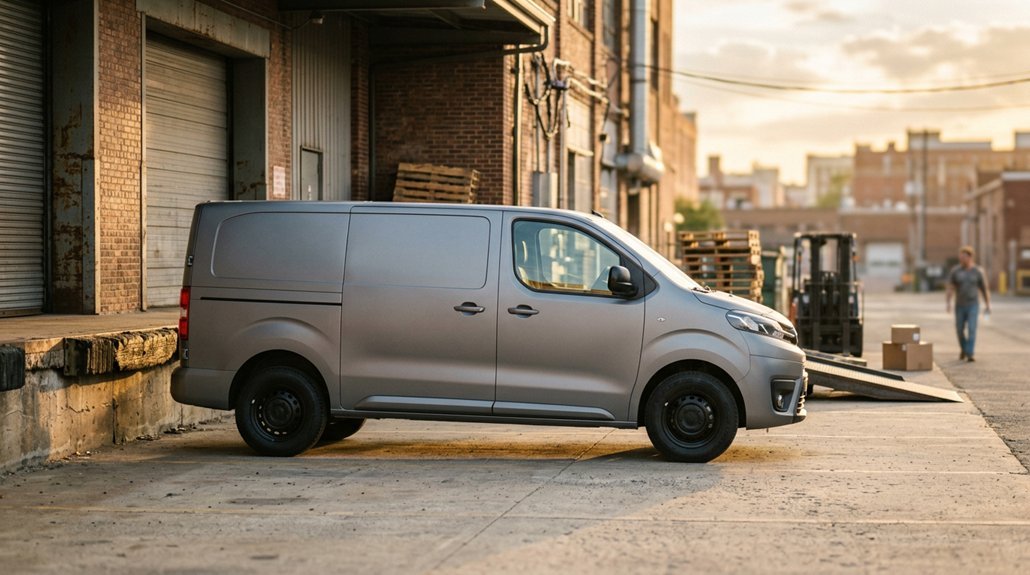
Like the old saying about ducks, if it weighs over 10,001 pounds, carries paying passengers, or hauls hazardous materials, it’s probably a commercial vehicle whether it quacks or not.
I’ve spent years sorting through DOT regulations, and here’s what actually matters. Your GVWR rating, passenger count, and cargo type determine everything from your license requirements to your insurance rates. The thresholds aren’t suggestions, they’re enforcement triggers, and misclassifying your vehicle gets expensive fast. I’ll walk you through the specific numbers that make the difference.
What Makes a Vehicle a CMV Under Federal Law?
How exactly does the government decide your truck crosses into commercial motor vehicle territory? I’ve learned it boils down to three triggers, and weight is the big one. If your rig hits a GVWR of 10,001 pounds or more, you’re in CMV territory. Push past 26,001 pounds with a single or combo vehicle, and the rules tighten further.
Passenger count matters too. Carry more than 8 people for pay, or 15 without compensation, and you’ve got yourself a commercial vehicle.
Here’s where it gets interesting: hazmat transport operates as its own independent trigger. Move hazardous materials in any size vehicle, and federal hazmat placarding kicks in regardless of weight. This definition applies specifically to interstate commerce and transportation purposes. Miss all these thresholds, and you’re clear of CMV status.
Recommended Products

Hazmat placard set is in a fade-resistant baked-on polyester finish and includes these screen-printed legends: Class 3 Flammable Liquid, Class 8 Corrosive, Class 3 Combustible Liquid, Division 6.1 Inhalation Hazard, Blank, Division 2.3 Inhalation Hazard, Division 5.1 Oxidizer, Class 9 Miscellaneous, Division 6.1 Poison/Toxic.

Miscellaneous placards display hazard class 9 and meet DOT placarding specifications.
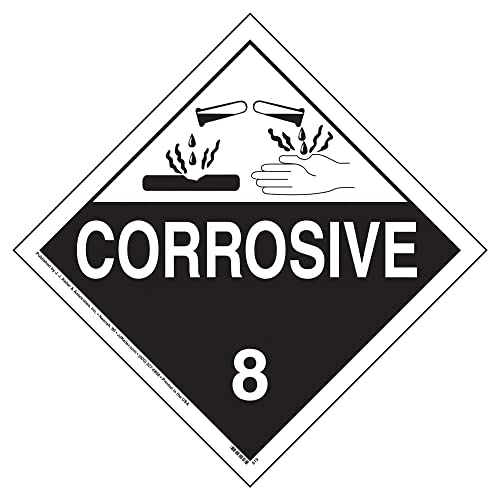
Corrosive blank placards are pre-printed with the word "corrosive," hazard class (8) and DOT-required symbol.
Weight Limits That Automatically Make Your Vehicle Commercial

When exactly does your truck become a commercial motor vehicle by weight alone? I hit this threshold myself when upgrading my work rig, and the rules caught me off guard. Your vehicle’s GVWR, the manufacturer’s maximum loaded weight rating, triggers automatic CMV status at 10,001 pounds.
Combine vehicles hitting 26,001 pounds or more, and you’re absolutely in commercial territory. But weight isn’t the whole story. Passenger transport matters too. I learned this running shuttle services: carry more than 8 passengers for pay, or 15 without compensation, and you’ve got a CMV regardless of weight.
Cross 26,001 pounds combined, and you’re commercial—period. But passenger count can override weight entirely.
Here’s what this looks like in practice:
- A loaded Ford F-450 dually at 10,500 pounds GVWR crossing state lines
- A box truck and trailer combo totaling 26,001 pounds hauling construction gear
- A 12-passenger church van making unpaid community runs
- A 9-seat airport shuttle collecting fares from business travelers
Recommended Products

This kit was designed with rideshare and car services in mind.
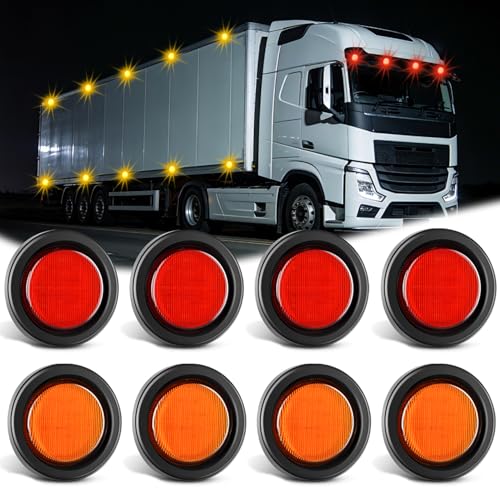
Brighter LED: Each light includes 13pcs red/amber 2835 SMD LEDs, and use lenses with good reflectivity to create better lighting effects. Make night driving more safer. 2prong plug: white wire to ground, black wire to positive.

Brighter LED: Each light includes 13pcs red 2835 SMD LEDs, and use lenses with good reflectivity to create better lighting effects. Make night driving more safer. 2prong plug: white wire to ground, black wire to positive.
How to Find Your Vehicle’s GVWR

Knowing your GVWR matters because it’s the number that determines whether you’re operating a commercial motor vehicle, and I’ve seen too many owners get caught off guard at weigh stations because they guessed wrong.
I always start with the door placard on the driver’s side. It’s the fastest way to find your GVWR, printed clearly alongside tire pressure specs. The manufacturer label in the door jamb works too, if the placard’s worn.
Your owner’s manual lists it, or I dig out the VIN and run it through manufacturer databases when labels go missing. I’ve found GVWR stickers tucked in glove boxes and engine compartments on older trucks.
Don’t confuse GVWR with curb weight. GVWR is your loaded ceiling: vehicle, passengers, cargo, and fluids combined. Most light trucks sit around 6,000–8,000 lb. Heavy haulers break 10,000 lb fast.
Get this right, and you’ll roll through inspections without a second thought. Guess wrong, and you’re explaining yourself to an officer.
Recommended Products


Hazmat markings meets DOT and international marking specifications. Sold in packs of 25.

Passenger Count Rules: 9 vs. 16, Paid vs. Free
Why do so many operators trip over passenger count rules? I see it constantly. The compensated vs. non-compensated distinction trips up even seasoned fleet managers. Here’s the breakdown that keeps you compliant and in the know.
A 15-passenger church van rolling empty at dawn, driver included, skirts the line. A 9-seat airport shuttle, every seat paid, crosses into CMV territory instantly. A 16-passenger party bus, music thumping, plates reading “for hire,” demands full compliance. A volunteer driver hauling 14 seniors to bingo, unpaid, stays below the CMV threshold.
Passenger capacity isn’t just headcount; it’s about money changing hands. The FMCSA sets 8+ compensated or 15+ non-compensated as your CMV trigger. Texas and federal rules converge at 16 including the driver. Know your numbers, protect your operation.
Recommended Products

Brighter LED: Each light includes 13pcs red/amber 2835 SMD LEDs, and use lenses with good reflectivity to create better lighting effects. Make night driving more safer. 2prong plug: white wire to ground, black wire to positive.

Multi-Functions: Each light is equipped with 11pcs quality 5050 SMD LED, displays high brightness for turn signals flicker light and low brightness for tail light

Awesome Brightness: Each light has 10 PCS high-quality SMD LEDs to output super bright amber light, high brightness of turn signal light, low brightness for Taillight, improving visibility and ensuring you a safer night.
Hazardous Materials: The Exception to All Weight Rules
How does a compact cargo van hauling a single drum of industrial solvent suddenly outrank a 26,000-pound box truck in regulatory stakes? It all comes down to hazardous materials, the ultimate trump card in CMV classification.
I learned this firsthand when researching fleet compliance. Any vehicle carrying hazardous materials earns automatic CMV status, no matter its size or weight. That placarding on the side isn’t just a warning label. It’s your signal that federal oversight kicks in immediately.
This means your driver needs proper endorsements, your vehicle faces inspection protocols, and your operation must follow hours-of-service rules. The 26,000-pound threshold? Irrelevant here. A subcompact with corrosive chemicals outranks a heavy-duty dry van every time.
If you’re moving hazmat, you’re in the big leagues. Plan accordingly.
Recommended Products

Durable vinyl numbers helps you satisfy requirements for marking USDOT numbers on motor vehicles or use on blank placards.

For Use with Placard Holders:These plastic shields are designed to cover and protect hazmat placards. Placard holders are not included.

Includes 8 placard panels in a single frame: Dangerous Flammable Gas 2 Poison 6 Corrosive 8 Flammable Liquid 3 Oxidizer 5.1 Radioactive 7 Non-Flammable Gas 2 Blank Placards
Real Vehicle Examples: CMV or Not?
I’ll walk you through real scenarios where weight thresholds and passenger counts decide CMV status, because the numbers aren’t always intuitive. Take a 7,000-pound pickup towing a 2,000-pound trailer: even combined, you’re nowhere near CMV territory since both units stay under 10,001 pounds.
But watch what happens with buses, where crossing 8 passengers for hire, or 15 without compensation, flips the switch regardless of weight.
Recommended Products

Compatible with NISSAN. Please verify your OEM part number from your original unit to help ensure fitment.

COMPATIBILITY – Fits 1992-1992 Arctic Cat Prowler Special; 1992-1992 Arctic Cat Wildcat; 1992-1992 Arctic Cat Wildcat EFI; 1992-1992 Arctic Cat Wildcat EFI Mountain Cat; 1992-1992 Arctic Cat Wildcat Mountain Cat; 1985-1989 Subaru GL; 1985-1989 Subaru GL-1
Weight Threshold Examples
Where exactly does that 10,001-pound threshold catch you off guard? I’ve seen it trip up plenty of operators who assume their setup’s safe from CMV rules. The GVWR stamped on your door jamb, not what you’re actually hauling, determines your fate.
Picture these scenarios:
- A 7,000-pound pickup towing a 2,000-pound trailer, combined at 9,000 pounds, cruising under the radar
- A 12,000-pound box truck, heavy enough solo to trigger full commercial motor vehicle compliance
- A 9,500-pound flatbed with 1,500 pounds of tools aboard, technically non-CMV despite the load
- A 26,001-pound combination, the big-league threshold demanding CDL credentials
Know your ratings cold. That weight threshold isn’t flexible, and misreading it costs you fines, downtime, and credibility with inspectors who’ve heard every excuse.
Passenger Capacity Cases
The passenger threshold sneaks up on operators faster than weight limits ever do. I’ve seen fleet managers assume their 15-passenger vans skirt CMV rules, only to discover they’re hauling 16 people and crossing into federal territory. The FMCSA draws a hard line at 8 passengers for compensation, or 15 without pay. Cross either, and you’re operating a CMV.
Take the bus scenario. A 14-passenger church bus stays exempt, but add that fifteenth seat and suddenly you’re logging hours, carrying medical cards, and displaying DOT numbers. Same chassis, same engine, different regulatory world.
Weight still matters. That same bus towing equipment trailers can trigger CMV status through combined GVWR, even with fewer seats.
I’ve watched operators scramble after roadside inspections revealed their 10,500-pound setup qualified as commercial. Know your numbers before rolling.
State Rules That Differ From Federal Law
I’ve spent years working through the patchwork of state regulations that can turn a straightforward commercial vehicle purchase into a compliance headache. While federal law sets baseline weight thresholds at 10,001 pounds GVWR for most commercial vehicles and 26,001 pounds for requiring a CDL, I’ve watched states like California and New York impose lower limits or stricter passenger count rules that catch buyers off guard.
You’ll also find hazardous materials placarding requirements that vary significantly; some states demand additional documentation or specific routing even when federal rules are satisfied. I always recommend verifying your operating states’ exact thresholds before finalizing any fleet acquisition.
Recommended Products

Includes (1) Aluminum flip placard with galvanized steel back plate and 8 legends. 8 legends: Dangerous, Class 3 Flammable Liquid, Class 8 Corrosive, Division 2.1 Flammable...
Weight Threshold Variations
How do you know if your truck or van actually counts as a commercial vehicle? I check the GVWR first, that’s the manufacturer’s maximum weight rating on the door jamb sticker. Federal law sets the weight threshold at 10,001 pounds for single vehicles, or 26,001 pounds for combinations. But here’s where it gets tricky: your state might play by different rules.
Some states use 26,001 pounds as a blanket cutoff regardless of what you’re hauling. Others mirror federal CMV criteria more closely. I’ve seen contractors get caught off guard when their 12,000-pound GVWR box truck triggers commercial registration requirements they didn’t expect.
These are the realities you might face:
- A loaded flatbed groaning at 10,500 pounds GVWR crossing into commercial territory
- State inspection stations with different scales and different attitudes
- CDL study manuals gathering dust because rules shifted
- Registration fees that jump from hundreds to thousands based on a single pound
Know your numbers before you buy.
Passenger Count Differences
Weight classifications aren’t the only surprise waiting for your registration paperwork. Passenger capacity rules trip up plenty of operators who assume federal CMV thresholds apply everywhere.
Federal law sets clear lines: more than 8 passengers for compensation, or more than 15 without pay, triggers commercial status. But I’ve seen state vs federal definitions clash firsthand. Some states ignore weight entirely and classify your van as commercial based on seating alone, even when GVWR stays below federal limits.
This matters when you’re hauling 9-15 people across state lines. Your CDL requirements, insurance costs, and compliance obligations shift depending on which border you cross.
A 14-passenger shuttle for hire might avoid federal CMV rules but still face state commercial registration, inspections, and driver qualifications. Check both rulebooks before you buy.
Hazardous Materials Rules
Where does your delivery route really end? I’ve learned that when you’re hauling hazardous materials, your CMV status isn’t negotiable, even in a compact van under 10,001 pounds GVWR.
Federal law triggers CMV placarding the moment hazmat transport begins, weight be damned. That diamond-shaped sign on your vehicle, it’s your regulatory badge of honor and burden.
But here’s where we all need to stay sharp: your state might layer extra rules on top. I’ve seen operators get caught flat-footed assuming federal compliance covers everything.
A 6,500-pound box truck with chlorine cylinders, placarded and regulated. State inspectors checking your documentation at a weigh station you didn’t plan to cross. Local hazmat permits that expire mid-route, leaving you stranded. A friendly local fleet manager who warns you about the county’s extra fees before you get burned.
Check your state’s playbook. Don’t let assumptions cost you.
Penalties for Misclassifying Your Commercial Vehicle
Why does a simple paperwork error on your registration form matter so much?
A single misclassification on your registration form can trigger fines, audits, and operating authority suspension—regulatory compliance is your only shield.
I’ve seen CMV misclassification turn routine registrations into costly nightmares. When you underestimate your gross vehicle weight rating, skip hazmat placarding, or check the wrong box on forms like REG 31 or REG 397, you’re inviting penalties that hit harder than you’d expect.
Regulatory compliance isn’t just bureaucracy. It’s your shield against fines, registration holds, and suspended operating authority. I’ve watched operators discover their “personal” truck actually exceeds 10,001 pounds GVWR, exposing them to CDL requirements they ignored. The inspection penalties stack fast, especially with hazardous materials involved.
Repeated errors trigger audits and FMCSA enforcement. Get your classification right the first time. Your operating authority, insurance coverage, and peace of mind depend on it.