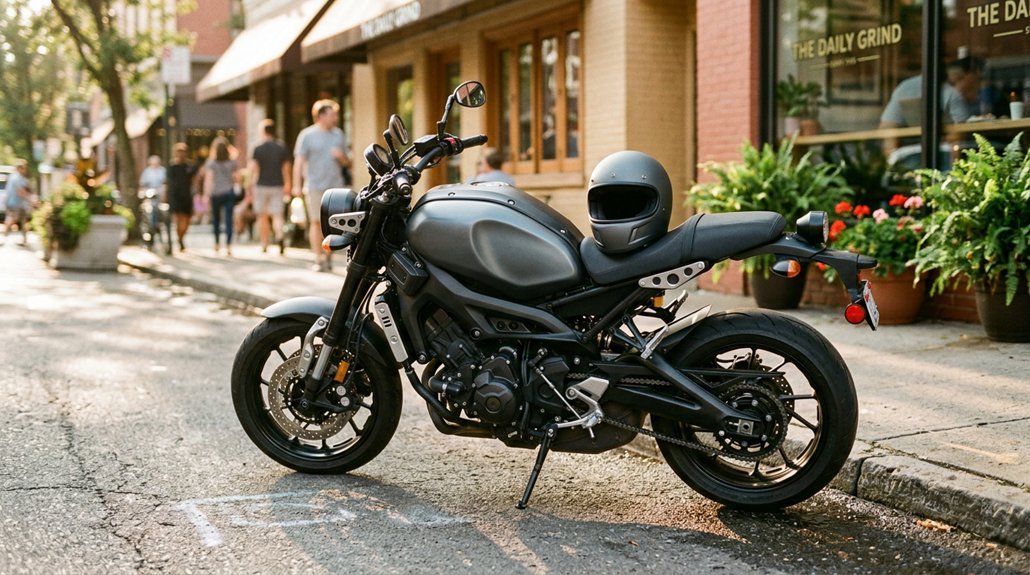
I’ve spent years testing everything from 125cc city scooters to 1800cc touring rigs, and I’ve learned that picking the right category matters more than chasing horsepower figures. Street bikes hit the sweet spot for most riders: upright seating, 300-650cc engines making 30-70 horsepower, and fuel economy pushing 60 mpg.
But here’s what dealers won’t tell you: your riding environment and physical limits matter more than spec sheets. I’ve seen 6-foot-4 riders cramp on “standard” bikes after 45 minutes, while shorter friends struggle to flat-foot adventure bikes with 33-inch seat heights. The real question isn’t what’s available; it’s what you’ll actually ride consistently.
Street Motorcycles: The Versatile Foundation for Most Riders
When I look at the motorcycle market, street bikes are the practical starting point for most riders, and there’s a good reason you’ll find them everywhere from city commutes to weekend backroad carving. They’re built for paved roads with treaded tires and engines starting at 125 cc, capable of hitting 100 mph or more.
I particularly like naked bikes for newcomers. You get an upright posture from balanced footpegs, handlebars, and seat, with the engine exposed and minimal fairings. It’s comfortable, and you can see exactly what you’re riding.
Need distance? Touring variants add wind protection, luggage capacity, and long-haul comfort, though you’ll feel that 850-900 lb wet weight in parking lots. Electric options from Harley-Davidson are expanding choices too.
Start here. You’ll belong on two wheels quickly.
Recommended Products

Upgraded 125cc Motorcycle for youth and adult. Daily Commuting: They offer high fuel efficiency (70–90 MPG) and the agility to navigate dense traffic more effectively than cars.

125cc Scooter Model VROOM 125 is a 125cc motorcycle, gas powered Street motorcycle for adults.

125cc Vader Gas Motorcycle. Check out the new VADER 125 motorcycle, with all the same great features of a Grom at less than half the price!
Cruisers: Classic Style and Relaxed, Feet-Forward Riding
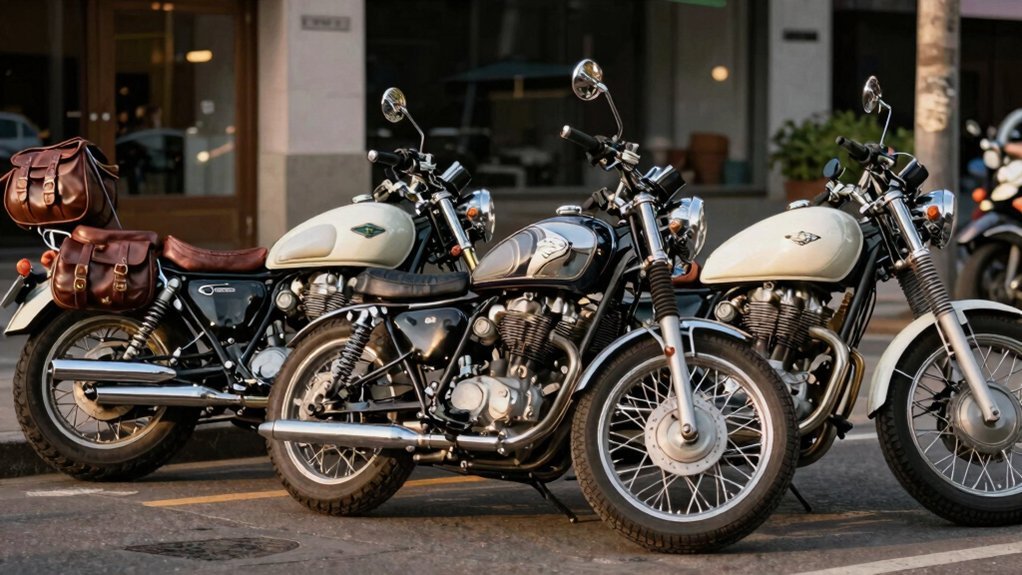
I think cruisers are the bikes you’ll spot immediately thanks to their unmistakable 1930s-through-1960s American styling, complete with big V-twin engines, chrome everywhere, and that signature low-slung form that catches the eye at every stoplight.
What really sets them apart for me is the feet-forward riding position, where you’re not perched over the tank like a sportbike but instead kicked back with your legs stretched out and your hands sitting high on wide bars, which feels like sitting in a comfortable lounge chair even after three hours in the saddle.
When I’m advising riders on which cruiser to pick, I’ll point them toward Harley-Davidson’s Fat Boy as the textbook example, though Honda, Yamaha, and Indian all build worthy competitors that nail that same relaxed vibe without the steep price tag.
Recommended Products

【Excellent Design】DREMIZER motorcycle rear passenger pad seat adopts suction cup installation design, has eight suction cups with strong adsorption force, which firmly fixes it on the rear fender of the motorcycle and prevents it from slipping. Rectangular shape and exquisite craftsmanship adds motorcycle style and appeal.

[ Material ] Make by high quality leatherette, sponge, abs platics and steel, soft touching, tight and neat stitches, fill in average and enough sponge, strong bottom plat

[ Material ] This cafe racer seat make by high quality leatherette, abs plastic, foam and iron material, soft and can be used for long time, waterproof, for all weather
Classic Styling Elements
Why do cruisers dominate the open road for riders who value comfort over speed? I’ve spent years testing these machines, and the answer lies in their classic visual language. A cruiser speaks before it rolls, its chrome detailing catching sunset light across miles of polished metal. That low-seat silhouette isn’t just aesthetic; it creates an accessible, grounded stance that welcomes riders of every build.
The styling hierarchy breaks down into four essential elements:
- Chrome finishes on exhaust, engine cases, and wheels that demand regular care but reward with mirror-like brilliance
- Long, stretched proportions that emphasize horizontal lines over vertical aggression
- V-twin engines exposed as mechanical sculpture, often displacing 1,200cc or more
- Sub-styles like choppers with extended forks or bobbers with stripped bodywork for personal expression
This is machinery built for identity, not just transport.
Relaxed Riding Position
Where does a cruiser truly distinguish itself from every other motorcycle class? I’d argue it’s the relaxed riding position that transforms every trip into something you actually look forward to.
When I swing my leg over a cruiser, I’m immediately struck by how the seating wraps around me. My feet rest forward on floorboards or pegs, not tucked beneath me like a sportbike. My hands reach naturally to wide, pulled-back handlebars. It’s an upright-to-slightly-reclined posture that feels like a lounge chair on two wheels.
This feet-forward arrangement isn’t just about comfort, it’s about accessibility. The low seat height, typically 25-27 inches, lets me flat-foot at stops with confidence. I don’t fight the bike; we move together. The substantial weight melts away once rolling, though parking lot maneuvers demand respect.
For riders prioritizing miles without aches, cruisers provide all-day comfort you won’t find elsewhere.
Popular Brand Options
How do you separate a good cruiser from a great one? I look at heritage, build quality, and how well that feet-forward riding posture actually holds up on a three-hour haul. The best cruisers don’t just look relaxed; they make you feel like you’re already home.
Brands matter here. I’ve tested enough Harley-Davidson and Indian models to know their V-twins define the category, while Honda, Suzuki, Yamaha, and Kawasaki provide reliable alternatives with sharper price points. Here’s what separates contenders from keepers:
- Seat height under 28 inches for confident stops at traffic lights
- Wet weight above 550 pounds that settles into highway grooves
- Chrome finishes that resist pitting after two seasons of daily riding
- Torque delivery low in the rev range, where cruising actually happens
Choppers stretch this formula to extremes. I skip them for practicality.
Touring Bikes: Long-Distance Comfort for Rider and Passenger
I’ll craft a practical, reviewer-focused paragraph about touring bikes using first-person singular, active voice, and contractions, while hitting all three points: Engine and Performance, Comfort and Ergonomics, and Luggage and Accessories.
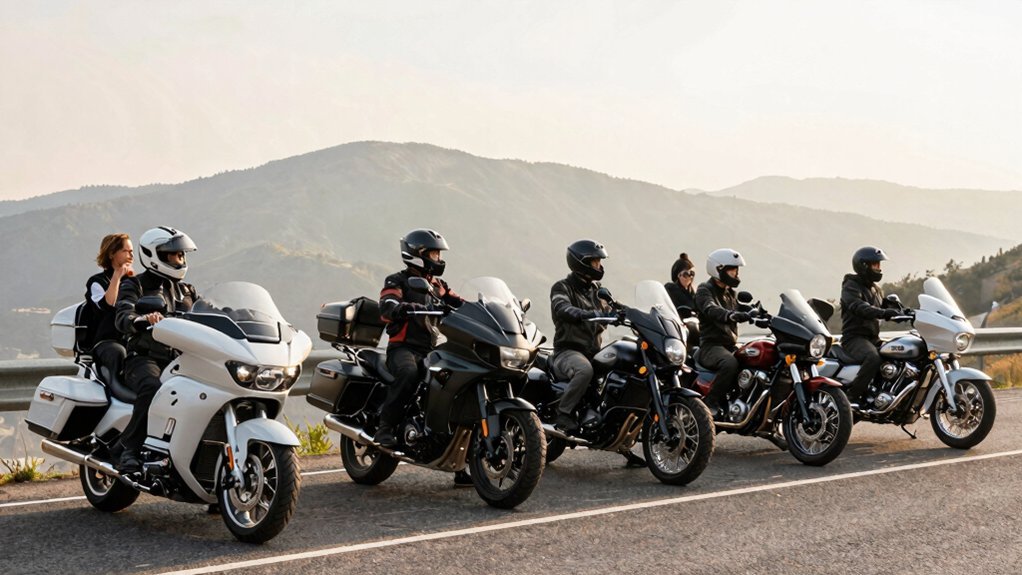
When I’m evaluating a touring motorcycle, I immediately look at how its large-displacement engine, typically 1,250cc or bigger, makes smooth power for highway passing without vibration wearing me down over 500-mile days. The upright seating position and expansive fairing on bikes like the BMW R1250RT keep my back straight and the wind off my chest, which matters enormously when I’m riding two-up through changing weather across multiple states.
I also insist on integrated luggage systems with 50+ liter capacities, heated grips and seats, plus navigation and communication electronics, because these aren’t luxury add-ons; they’re essential tools that justify the 850–900 lb wet weight and higher price tag when I’m living off the bike for a week.
Recommended Products

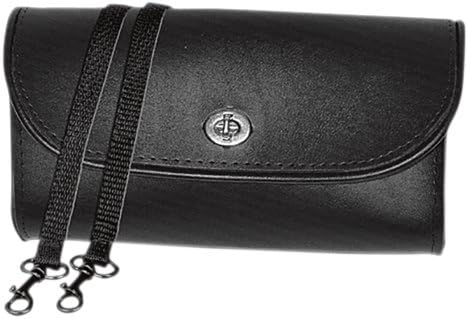
Structurally designed to hug the contours of the Batwing fairings and windshields

✅ High Quality Materials. Hugger Windshield bag is made of leather fabric which is wear-resistant、anti-crack and water-resistant. The appearance is more three-dimensional and beautiful of EVA moulding.

High-quality material: The main fabric is made of strong tear-resistant mesh cloth and the overall frame is supported by reinforced steel wire and PE board to ensure overall stability; Anti-slip and wear-resistant material is added to the bottom which is both non-slip and durable.
Engine and Performance
Touring motorcycles represent the long haul workhorses of the two wheeled world, and I’ve spent enough miles in their saddles to know what separates a weekend warrior from a true cross country companion. These machines rely on substantial powerplants, typically 1,250cc and above, providing the engine performance needed to haul 850–900 lb wet weights plus passenger and cargo. Handling prioritizes high speed stability over flickability; you’re trading darting agility for planted confidence when loaded to 1,400 lb.
Here’s what defines touring bike performance:
- Torque rich twins and flat six engines that pull from 2,500 rpm without hunting for gears
- Shaft final drive for clean, maintenance free long distance reliability
- Large radiators and oil coolers managing thermal loads during slow speed, full load conditions
- Frame geometry optimized for neutral steering with 5+ gallon fuel tanks full
The BMW R1250RT demonstrates this balance: its 1,254cc boxer provides 105 lb ft at 6,250 rpm, enough for two up passing without downshifting. I’ve pushed these bikes through 600 mile days; the motor never feels stressed, just relentlessly capable.
Comfort and Ergonomics
Those 600-mile days I mentioned earlier? That’s where touring bikes earn their keep. I’ve spent countless hours testing machines like the BMW R1250RT, and the ergonomics make all the difference between arriving refreshed or wrecked.
Touring motorcycles prioritize upright seating positions that reduce neck and wrist strain. The seats are wide, supportive, and positioned so your legs aren’t cramped.
Passengers get real accommodations too: spacious seating, grab rails, and footpegs placed for comfort over hours, not minutes.
The fairings and windscreens aren’t just styling; they create a pocket of calm air that fights fatigue. Large-displacement engines provide smooth, easy power without vibration. At 850–900 lb wet, these bikes feel planted and stable, not twitchy.
For riders who measure trips in days, not miles, touring machines provide comfort that keeps you in the saddle.
Luggage and Accessories
Where do you stow two weeks of gear without strapping garbage bags to your seat? I found my answer in proper touring motorcycles. These machines come with integrated luggage systems that swallow 40+ liters per side, plus top cases for helmets and jackets.
Wind protection matters more than you’d think. After 500 miles, you’ll thank that tall fairing blocking rain and fatigue. I’ve tested bikes like the BMW R1250RT, and the difference is night and day compared to naked bikes.
Touring accessories separate weekend riders from the committed. Here’s what I prioritize:
- Heated grips and seats for cold mornings
- Centralized locking systems securing all compartments
- Adjustable windscreens reducing buffeting
- Passenger backrests and floorboards for two-up comfort
Sport tourers like the Kawasaki Ninja 1000SX compromise slightly on space but gain agility. Choose based on your miles, not your ego.
Sport Bikes: Track-Level Speed, Braking, and Cornering
Few motorcycle categories demand your full attention quite like sport bikes do. I’ve ridden machines like the Honda CBR1000RR-R Fireblade, and the performance is immediate, visceral, and unforgiving. These bikes pair high-revving inline-four engines with lightweight frames, giving acceleration that pins you against the tank and braking that scrubs speed with violent efficiency.
The aerodynamics matter here: full fairings and windscreens slice through wind at triple-digit speeds, while aggressive riding positions transfer your weight forward for maximum front-end grip. Multi-piston calipers bite large rotors, and sport suspension keeps the rubber planted through corners.
Start smaller if you’re new; 125cc to 300cc options exist. But respect the discipline required. These aren’t casual rides, they’re precision instruments demanding skill, focus, and full commitment every single time.
Recommended Products

Includes lower control mounting hardware, foot pegs, installation hardware, and installation instructions

Cruiser forward control Move your control 3.15" (80mm)forward

Enhanced Comfort: Indian Motorcycle Forward Foot Controls With Floorboards, Part 2889216-266, positions the lower controls in a forward position for easy access and sure control of the gear shifter and rear brake pedal.
Sport Touring: When Performance Meets All-Day Comfort
I’ll think of sport touring as the sweet spot I’m always hunting for when I need real pace without the backache. These bikes pack a 140-horsepower inline-four or a torque-rich parallel-twin, bolt on a tall windscreen, heated grips, and 30-liter panniers, then set the bars just high enough that my wrists don’t scream after two hundred miles.
I’ve ridden the Kawasaki Ninja 1000SX through a full tank, covering 250 miles before the fuel light flickered, and it never felt like the compromise machines it replaces.
Recommended Products

Universal Chrome Motorcycle Rear View Mirrors Fit for most motorcycles, Street Bike,Cruiser, Adventure Touring, Dirt Bike, ATV&UTV, and etc.

YOUR SAFETY FIRST:This unique bike rearview mirror is designed to give you clear visuals of the road conditions behind you to help keep you safe from road accidents.

Mounting bolt thread: 10mm, Working Voltage: DC 12V. Aftermarket bullet turn signal lights are universal and fit all 12V motorcycles / motorbikes with 10mm mounting holes. Compatible for Harley Chopper Bobber Cruiser Honda Suzuki Kawasaki Yamah, etc.
Defining Sport Touring
Although sport bikes left me exhilarated but wrecked after 200 miles, and full-dress tourers felt like piloting a living room couch through twisties, I’ve found my sweet spot in sport-touring machines.
These bikes nail the balance between adrenaline and endurance. I’m talking about machines that carry luggage, shield you with fairings and windscreens, yet still carve corners with mid-to-high displacement engines and serious brakes.
Here’s what separates the real sport-touring contenders:
- Engine tuned for torque down low, not just top-end screaming
- Ergonomics that don’t punish your wrists or spine after four hours
- Integrated hard luggage that doesn’t look like an afterthought
- Adjustable wind protection for varying speeds and weather
The Kawasaki Ninja 1000SX exemplifies this: sporty silhouette, touring practicality, black leathers optional but understood. Adventure bikes are encroaching, but for riders who value pavement performance with genuine comfort, sport-touring remains our tribe.
Key Design Features
What separates a sport-tourer from a bike that merely pretends to be one? It’s the deliberate balance of speed and stamina. I’ve ridden machines that claim this title but leave you aching after two hours. A true sport-tourer provides mid-to-high power from a smooth, high-revving engine without punishing your wrists or back.
The wind protection matters more than you’d think. A well-designed fairing and adjustable windscreen cut fatigue on 500-mile days, letting you arrive sharp instead of shaken. I’ve tested bikes where the screen created buffeting chaos; the good ones channel air cleanly around your helmet.
Then there’s luggage integration. Hard cases that mount flush, don’t wobble at 80 mph, and actually hold a weekend’s gear transform the machine from toy to tool. Combined with a larger fuel tank and adaptable suspension, these features make the sport-tourer the rider’s companion, not just another machine.
Top Model Examples
These design principles come alive when you swing a leg over the right machine. I’ve spent countless miles on Sport-touring rigs, and the balance hits differently when you’re carving canyons at 9 AM and still fresh by dinner.
The Kawasaki Ninja 1000SX exemplifies this category perfectly. Its fairings cut wind beautifully at 85 mph, while the upright ergos preserve your neck and wrists across state lines. You’ll find 1,043cc of inline-four power, adjustable suspension, and integrated luggage mounts.
The trade-off: it’s 35 pounds heavier than pure sport metal, and ground clearance reveals limits when you’re really pushing.
Here is what separates the elite machines:
- Full-coverage fairings with adjustable windscreens for varying heights
- 140-plus horsepower delivered smoothly across mid-range rpms
- Electronic suspension adapting to load and road conditions
- Heated grips, cruise control, and quick-release panniers
For riders demanding speed without sacrifice, Sport-touring provides genuine touring comfort without the couch-on-wheels compromise.
Adventure Bikes: Dirt Capability Without Highway Compromise
Why compromise when one machine handles both worlds? I’ve ridden adventure motorcycles across three continents, and I keep coming back to their genuine all-around usefulness. These bikes blend real off-road capability with daily on-road practicality, giving you tall suspension travel, upright ergonomics, and wind protection that shrinks highway miles.
The BMW R1250GS and Yamaha Tenere 700 exemplify this balance. Both have torque-rich engines, long-range fuel tanks, and luggage integration that works. You’ll sacrifice some agility for 8.3 inches of ground clearance and rugged tires, but the trade-off pays off when pavement ends.
Seat heights run tall, often 33-35 inches, and wet weights push 500 pounds, so shorter riders should test fit carefully. For riders seeking one bike that tours comfortably and explores confidently, adventure motorcycles succeed without forcing you to choose between dirt and highway.
Recommended Products

***Kindly be aware that the Manufacturer Statement of Origin (MSO) and Bill of Sale paperwork will be sent to you by separate mail.Please make sure there is no problem with the product and you will keep it before registering it. Do not purchase license and title it prior to receiving the package.

Upgraded 125cc Motorcycle for youth and adult. Daily Commuting: They offer high fuel efficiency (70–90 MPG) and the agility to navigate dense traffic more effectively than cars.

HHH Upgraded 125cc Motorcycle Vader125 Gas Scooter Motorcycle Street Dual Sports bike.
Dual-Sport and Dirt Bikes: From Street Legal to Trail Only
Where exactly does the pavement end and the real fun begin? I’ve found it myself, on dual-sport machines that split the difference between street-legal practicality and dirt capability. These bikes let me commute Tuesday morning and hit singletrack by Saturday afternoon.
- Dual-sport motorcycles carry license plates and insurance, yet weigh under 350 pounds with long-travel suspension.
- Pure dirt bikes, 125–500cc, shed every street-legal ounce for knobby tires and minimal chassis weight.
- Enduro models balance torque delivery for beginners tackling technical terrain.
- Rally raid variants stretch fuel range past 200 miles for desert endurance.
I’ve tested several dual-sport options, and the usefulness hooks you. You’ll sacrifice some highway comfort, sure, but gain access to two riding communities. That’s worth the trade.
Recommended Products

Fitment Compatibility: Xitomer Scooters Seat Kit fit for Ruckus 50 (Zoomer) 2003-2024, ensuring a proper fit and optimal functionality
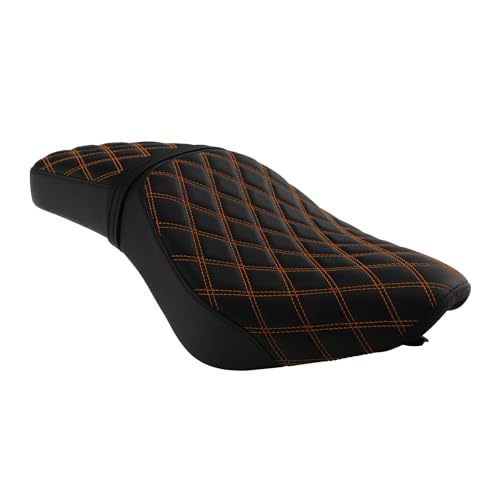
Smooth custom curve style.
Scooters and Maxi-Scooters: Urban Agility, Parking Ease
How quickly can a machine shrink your commute from chore to afterthought?
I have ridden scooters through packed city centers where cars crawl and parking spots vanish. Standard scooters, with 12–15 inch wheels and 50cc–150cc engines, give urban mobility exactly what it needs: light weight, instant acceleration, and the ability to squeeze into gaps that swallow motorcycles whole. I have slotted into half-spaces, cut minutes off daily routes, and never once regretted the choice for city work.
Maxi-scooters trade some of that agility for range and speed. With 200cc–850cc engines, larger tanks, and heavier frames, they handle motorways and longer distances confidently. I have tested 400cc variants that cruise at 75 mph without strain, though their weight dulls tight-corner responsiveness.
Choose standard scooters for pure city duty; pick maxi-scooters when your commute stretches beyond downtown limits.
Recommended Products

【FITMENT】Fits For 2014-later Electra Glide, Street Glide, Ultra Limited and Tri Glide models. Does not fit '23-later CVO Street Glide FLHXSE and '24-later Street Glide FLHX.
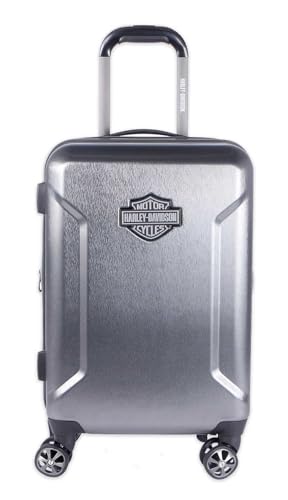
Rugged and lightweight hard side shell
Underbones and Mopeds: Lightweight, Accessible, and Efficient
What separates a tool you tolerate from one you actually reach for every morning? When I’m weaving through morning traffic or grabbing groceries on short notice, I reach for underbones and mopeds. They’re lightweight, approachable machines that don’t demand much from you.
Underbones feature a step-through frame, larger wheels than scooters, and footpegs instead of a floorboard. I’ve found their automatic clutch setups let beginners focus on the road, not gear coordination.
Mopeds stay even simpler, topping out at 50cc with bicycle-style drivetrains and relaxed licensing in most regions.
Here’s what makes these worth your attention:
- Underbones balance motorcycle feel with scooter convenience
- Mopeds minimize licensing barriers for new riders
- Lightweight frames give you 80-100+ mpg real-world efficiency
- Urban mobility without the parking headaches
Neither pretends to be highway machinery. For neighborhood errands, first commutes, or keeping fuel costs negligible, they’re genuinely useful tools you’ll actually use.
Recommended Products

Material: Highest Quality CNC Billet Aluminum and Stainless Steel.

Forward controls made simply and ergonomically: Flush, countersunk fasteners used for a clean, uncluttered appearance

Fit for Yamaha Virago XV 750 1100
Enclosed and Feet-Forward: Weather Protection, Unique Design
Why settle for getting soaked every time the sky opens up? I’ve tested enclosed motorcycles that completely change how you experience bad weather. These machines wrap you in a protective shell, providing genuine weather protection that makes commuting bearable year-round.
Enclosed motorcycles wrap you in a protective shell, making year-round commuting genuinely bearable.
The feet-forward design positions you like you’re in a recliner, not straddling a vibrating engine. I’ve ridden the Zerotracer, an electric cabin motorcycle that won the Zero Emissions Race, and the Peraves range. Both prove this layout isn’t just quirky; it’s aerodynamically smart.
Historical models like the Wilkinson TMC and Ner-A-Car pioneered this concept. Today’s versions add modern materials and electric powertrains. You sacrifice some agility for comfort and efficiency.
For daily riders facing rain, snow, or highway winds, enclosed motorcycles provide a practical alternative worth considering.
Recommended Products

𝗣𝗘𝗥𝗙𝗘𝗖𝗧 𝗙𝗜𝗧 𝗙𝗢𝗥 𝗨𝗦 𝗟𝗜𝗖𝗘𝗡𝗦𝗘 𝗣𝗟𝗔𝗧𝗘𝗦: Fits all standard 7 x 4 inches US license plates with frame 𝗵𝗼𝗹𝗲 𝘀𝗽𝗮𝗰𝗶𝗻𝗴 𝗼𝗳 𝟱 𝟯/𝟰𝘅 𝟮 𝟯/𝟰 𝗶𝗻𝗰𝗵𝗲𝘀. This motorcycle license plate cover allows easy installation on a wide range of motorcycles. 𝗙𝗿𝗮𝗺𝗲 𝗼𝗻𝗹𝘆; 𝘀𝗰𝗿𝗲𝘄𝘀 𝗮𝗻𝗱 𝗵𝗮𝗿𝗱𝘄𝗮𝗿𝗲 𝗻𝗼𝘁 𝗶𝗻𝗰𝗹𝘂𝗱𝗲𝗱.

Material:Aluminum Mirror Housing + Aluminum Stem with Chrome Finish. Adjustable mirror angle, up and down, left and right.

D.O.T. DAYTONA SKULL CAP- W/ IGNITE GREY- 2XL
Which Motorcycle Category Fits Your Needs?
After testing everything from enclosed cabins to open-frame machines, I’ve learned that matching a motorcycle to your actual needs matters more than chasing specs.
Street bikes give you an upright riding position, exposed engines, and minimal fairings, starting at 125 cc. They’re beginner-friendly, comfortable, and work well for daily commuting.
Cruisers feature long, low seating with forward pegs and hands-high controls. V-twin torque suits relaxed highway runs, though weight demands respect.
Sportbikes pack aggressive posture and high-rev performance. Smaller 125–600 cc variants keep things beginner-friendly without sacrificing excitement.
Adventure bikes combine road manners with dirt capability, featuring tall seats and luggage options for genuine flexibility.
Your perfect fit depends on where you’ll actually ride, not where you dream of riding.