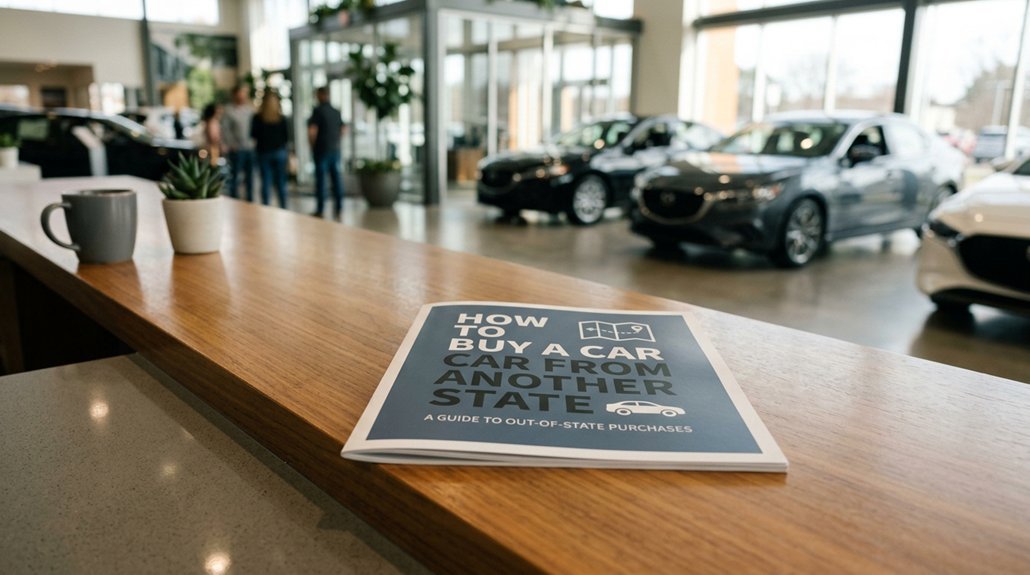
Roughly 15% of used car buyers cross state lines to find better deals, and I’ve done it twice myself. Each time, I learned something new about title transfers, temporary tags, and emissions rules that nearly caught me off guard.
The process isn’t complicated, but one missed step can strand you hundreds of miles from home with a car you can’t legally drive.
Is It Legal to Buy a Car Out of State? (What to Know First)
Why would you limit yourself to local dealerships when the right car might be sitting three states away? I’ve done the out-of-state car purchase dance twice, and I’ll tell you straight: it’s completely legal, but you’ve got to nail the paperwork.
Here’s what trips people up. You don’t pay sales tax to the seller’s state. You’ll square that up when you register back home.
That temporary registration the dealer hands you? It’s your golden ticket to drive legally across state lines, usually valid for 30 days. Don’t skip it.
Your home state’s rules rule everything: emissions, safety standards, title transfers. I’ve seen buyers get burned assuming seller-state paperwork cuts it. It doesn’t.
Some dealers ship and handle documentation, which saves headaches. Know your state’s requirements before you sign.
Recommended Products
How to Find Out-of-State Cars Worth the Trip
Where exactly should you cast your net when local inventory feels picked over? I start by checking regional listings within a few hundred miles of my ZIP code, comparing what’s actually available against local stock. Price variations between states can surprise you. A truck that’s scarce and pricey near me might sit plentiful and cheaper two states over, even after factoring in taxes and temporary tags.
I hunt for models that are rare in my region but common elsewhere. That vintage wagon or specific trim I’ve been chasing? It might be everyday transportation somewhere else.
Before I commit to an out-of-state purchase, I pull a vehicle history report and line up an independent inspection. This groundwork tells me whether the drive or shipping cost pays off, or if I’m better off waiting for local deals to surface.
Recommended Products

Meets all New York State Requirements

Meets and Exceeds Pennsylvania Inspection Regulations

Meets all New York State Requirements
How to Verify the Title, VIN, and Seller Before You Travel
I’ll verify the seller’s identity by matching their name to the title, and I’ll check that the title is clean or get a lien release if there’s outstanding financing. I always request a vehicle history report to catch accidents, title problems, or odometer rollbacks before I even pack my bags.
These steps save me from driving hundreds of miles only to find paperwork nightmares waiting at the destination.
Verify Seller Identity
Before I book a flight or burn a tank of gas to see a car, I verify the seller is who they claim to be. I match the seller’s identity to the name on the title and any lien documents. No exceptions.
Here’s my three-step check:
- I request a photo of the seller’s ID and compare it to the title signature, watching for misspellings or altered dates that scream fraud.
- I run the VIN through a vehicle history report and confirm it matches the title, bill of sale, and the actual car.
- I verify the title lists the seller’s name, not a friend, relative, or flipper operating without paperwork.
I also grab written contact info and cross-check it against public records. One mismatch, and I’m walking.
Confirm Title Status
Why risk a wasted trip when the title itself can tell you whether a deal is solid or a headache waiting to happen? I always verify the title status before I book any travel. First, I confirm the seller’s name matches the title exactly. Then I check for liens: if money’s still owed, I need a lien release from the lender, or I’m walking away.
Next, I match the VIN on the car to the title, bill of sale, and vehicle history report. One mismatch kills the deal. I pull a Carfax or AutoCheck to spot salvage titles, flood damage, or frame repairs. I want “clear” or “clean” on that document, nothing branded.
This fifteen-minute homework saves me hundreds in gas and a weekend of regret.
How to Get a Mechanic’s Inspection Without Being There
I can’t physically kick the tires myself, so I’ve learned to rely on remote inspection services that send a certified mechanic to the seller’s location, or third-party platforms that coordinate video walkthroughs with detailed checklists covering brakes, suspension, and engine codes. These services typically run $100–$200, provide a written report within 24 hours, and flag issues like frame damage or inconsistent wear patterns I’d never catch from photos alone.
I’ve found the best results come from providers that include a live video call, letting me ask the mechanic to zoom in on specific rust spots or undercarriage leaks while we’re both looking at the same feed.
Remote Inspection Options
How do you really know what you’re buying when you can’t kick the tires yourself? I’ve learned that a solid remote inspection bridges the gap between blind trust and smart ownership.
Here’s my field-tested approach:
- Live video walkthrough — I ask sellers to stream real-time footage of the exterior, interior, undercarriage, and engine bay, plus close-ups of the VIN plate, odometer, and dash warning lights.
- Mobile inspection service — I hire a certified tech who provides compression test results, leak checks, and component wear assessments with time-stamped photos.
- Documentation deep-dive — I pull a full vehicle history report and perform VIN verification across title, registration, and door jamb labels for consistency.
Pair this with a written return policy, and you’re buying with confidence, not hope.
Third-Party Services
Where do you turn when the seller’s two states away and you need eyes on the ground? I hire a mobile inspection service or a trusted local mechanic to handle the pre-purchase inspection for me. I give them the VIN, seller photos, and any known issues, then they check the engine, transmission, brakes, steering, and suspension in person.
They pull maintenance records, check for recalls, and look for flood or frame damage. I ask for a detailed written report with photos, wear assessments, and repair cost estimates. I cross-reference everything against the VIN history report to catch mileage discrepancies, title problems, or hidden accidents.
When possible, I set up a video walkthrough and ask for recorded test drives to judge noise, handling, and real-world performance before committing to transportation.
Sales Tax: Do You Pay Where You Buy or Where You Live?
When you’re buying a car from another state, figuring out sales tax can trip you up if you aren’t prepared. I’ve learned you generally pay sales tax where you register, not where you buy.
Here’s what actually happens:
- Dealers sometimes collect your home-state tax upfront, saving you paperwork later
- Private party purchases mean you’ll pay at your local DMV during home-state registration
- Use tax kicks in if you paid tax elsewhere but owe more in your state
I made a private party purchase last year and paid nothing to the seller, then settled up at my DMV based on my home-state rate. Watch for double-taxation though. If a dealer collects tax but it’s lower than your state’s rate, you’ll reconcile the difference during registration.
How to Get Temporary Tags to Drive Your Car Home
Why risk getting pulled over before you’ve even made it home? I always secure temporary tags before I drive home with an out-of-state purchase. Most states provide permits valid 10 to 30 days, giving me breathing room to handle registration and home state paperwork.
I’ve found the process straightforward. I bring my bill of sale, valid ID, and proof of insurance to the DMV or authorized agent. Some dealerships handle temporary tags directly, which saves me a trip. Costs run $5 to $100 depending on location, plus documentation fees.
The clock starts ticking immediately. I mark my calendar for the expiration date and prioritize completing permanent registration in my home state. Missing that deadline means penalties, and I’ve learned that lesson watching friends scramble. Plan the timeline, not just the route.
How to Meet Your State’s Emissions Requirements
I always dig into emissions rules before I sign anything on an out-of-state car. Emissions requirements vary wildly, and I’ve learned the hard way that a clean bill from the seller’s state doesn’t guarantee I’ll pass my home-state standards.
Here’s what I check before committing:
- I verify the vehicle’s emissions compliance sticker under the hood, or I budget for a certified test if it’s missing.
- I confirm whether my state demands a fresh emissions inspection after purchase, even with prior passes.
- I research if I’ll need component swaps, like catalytic converters or EV system updates, to meet local limits.
If the car can’t hit those marks, I’m looking at failed registration, fines, or expensive retrofits. I never skip this homework.
How to Register Your Car and Get Insurance After the Purchase
The paperwork chase starts the moment you hand over payment, and I’ve found that getting ahead of it saves serious headaches down the road. You’ll need insurance before you drive or ship the car, so I always call my agent first. Most policies cover out-of-state purchases, but I confirm the details. If I’m financing, lenders demand proof of coverage.
For registration, I head to my home state’s DMV with the title, bill of sale, and proof of residency. Here’s the catch: sales tax gets paid where you register, not where you buy. Some states also require a VIN verification, an inspection matching the vehicle’s identification number to its paperwork.
If I’m shipping, I ask about transit coverage. Comprehensive and collision protect against damage, while liability rules vary. I budget 2-4 hours for DMV visits, longer if emissions tests are required.