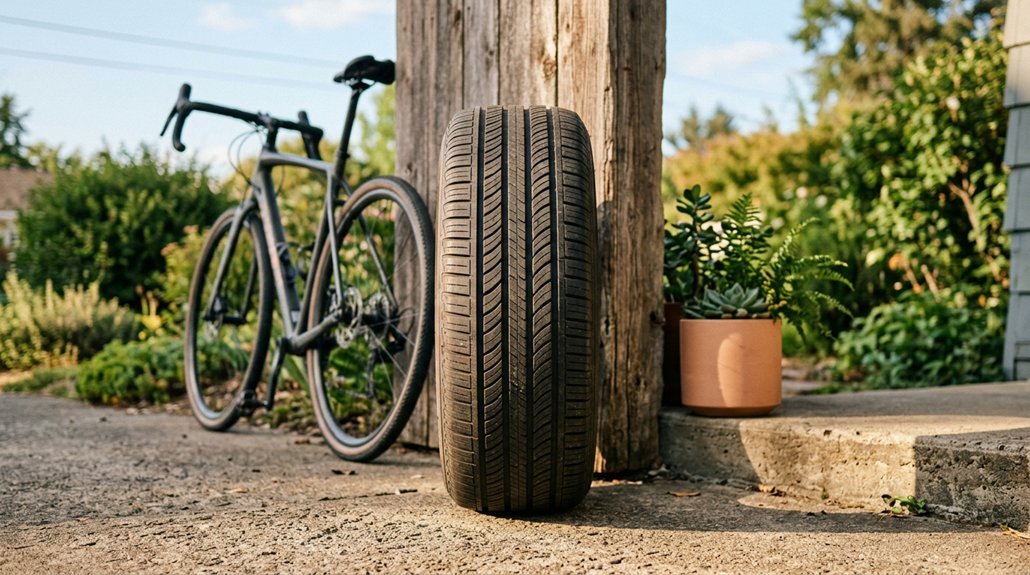
I’ve watched too many drivers learn the hard way that tires are time bombs ticking on your driveway, not just mileage counters on your odometer. Most all-season tires promise 50,000–70,000 miles, but I’ve seen six-year-old rubber with full tread crack apart on summer highways.
The DOT code stamped on your sidewall, those four tiny digits revealing manufacture week and year, tells the truer story than your tread gauge ever will. Heat, UV exposure, and improper inflation age tires faster than any road trip, and I’ve tested enough brands to know: replace by year six, regardless of miles, or you’re gambling with every corner.
How Long Do Tires Really Last? Miles, Years, and What Actually Matters
How long should your tires actually last? I’ve learned it depends on more than just tread depth. Most all-season tires provide 50,000–70,000 miles, while performance tires tap out around 30,000–40,000. But here’s what surprised me: tire age matters just as much as mileage.
I check the DOT date code on every tire I buy. It reveals the week and year of manufacture. Even with decent tread, I replace tires after six years. Many experts push that to ten years maximum, but I’m not risking it.
Extreme heat and poor air pressure speed up aging regardless of mileage. I’ve seen six-year-old tires crack while others last longer with proper maintenance. For safety and performance, I balance mileage versus age, prioritize regular inspections, and never ignore visible aging.
Recommended Products

EFFICIENT LEAK DETECTION: TECH CHEK Tire Leak Detector uses a concentrated formula to swiftly coat tire and tube surfaces, making it easy to spot hard-to-find leaks. This formula ensures fast, precise leak detection, offering confidence on the road.

Leading Manufacturer Of High-Quality Products

32nds Ultra-High Measurement Accuracy & Equipped with a laser and high-precision camera, this tire tread depth gauge delivers accurate readings down to 0.1mm (1/32"), with clear color-coded display (Red/Yellow/Green) for instant safety level recognition. Suitable for checking legal tread depth compliance and avoiding driving risks. Laser Safety: Class 2 laser product, maximum laser output power <1 mW, wavelength 520 nm ±10 nm.
What Shortens Tire Lifespan? Heat, Sun, and How You Park
I’ve watched tires age faster than expected, and it’s rarely from mileage alone. Heat and sunlight are silent killers. When temperature climbs, rubber oxidizes faster, accelerating tire aging and shortening tire lifespan. I’ve seen tires stored outdoors under direct sunlight show serious rubber deterioration in just two years.
Your storage conditions matter more than you’d think. Parking in a garage versus the driveway can add years to usable life. Tires need movement; when they’re static too long, the rubber chemistry breaks down unevenly. It’s a hidden trap.
For solid tire maintenance, I park in shade, rotate regularly, and check for sidewall cracking. These small habits fight premature aging. Your tires will thank you with safer, longer performance.
Recommended Products

RUGGED DESIGN: The stainless steel components prevent rust and corrosion while the precision-crafted nozzle seamlessly seals onto the valve stems for highly accurate readings (±2% span). We also provide 4 valve stem caps for convenient replacement.
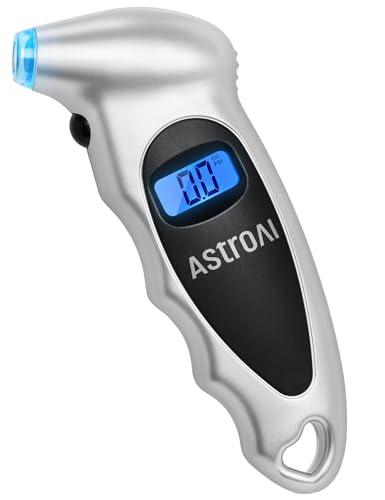
Accurate, Dependable Readings: Factory‑calibrated to ±1 PSI, so you can confidently match your vehicle’s recommended PSI (check the door jamb sticker). Ideal for monthly checks and road trips — consistent results every time, cold or warm.

PROCESS LEVEL ACCURACY: This heavy duty tire pressure gauge is calibrated manually to ANSI B40.1 Grade A (±1% of span)
Worn Tread or Old Age: Which Is Wearing Out Your Tires?
When you’re checking your tires, it’s easy to assume the tread depth tells the whole story. I’ve learned that tire age matters just as much as tread wear.
Even with strong tread depth, aging tires lose structural integrity. The rubber stiffens, dry rot sets in, and brittleness creeps in from sun and heat exposure. I always check DOT date codes to gauge tire age, since rubber degrades regardless of miles driven. Wear indicators show tread wear at 2/32 inch, but they won’t catch internal aging.
For tire safety, I recommend tire replacement by year six to ten, even if tread looks fine. Don’t gamble on worn tread or old age alone. Both demand attention for real protection.
Recommended Products

1.Accurate and Efficient: Different colors on the bar represents different scopes, the red range on bar: 0 - 3/ 32; Yellow range on bar: 3/ 32 - 6/ 32; Green range on bar: 6/ 32 - 32/ 32, allowing you easy and fast to read and calibrated

Accurate measures tire tread depth gauge tool

Easy to read. Two calibration meters(inch and millimeter) in order to make people read more easily and suitable for the wider population. Color coded tire tread depth gauge clearly indicates the tire different phase by colors.
How to Tell If Your Tires Are Too Old: DOT Codes and Tread Tests
Where exactly do you start when your tires look fine but might be hiding their real age? I always check the DOT date code first. It’s stamped on the sidewall, four digits showing the week and year of manufacture. Tires made after 2000 use this format, so “3520” means week 35 of 2020.
Next, I grab a penny and a quarter for quick tread tests. The penny test shows if you’ve hit 2/32 inch; Lincoln’s head visible means tire replacement is urgent. The quarter test confirms 4/32 inch for safer wet traction. Washington’s head partially hidden means you’re good.
Don’t ignore aging tires with decent tread depth. I look for sidewall cracks, stiffness, or discoloration. These signs demand attention regardless of tire wear measurements.
Recommended Products

ULTIMATE PROTECTION: Shield your outdoor products from harmful UV rays, dust, dirt, salt water, & staining with this 303 protectant. Prevents fading & cracking for long-term care.

Long-Lasting Tire Shine - Designed to provide a durable gloss and protection to your tires that leaves them looking shiny for weeks and prevents cracking and dry rot.
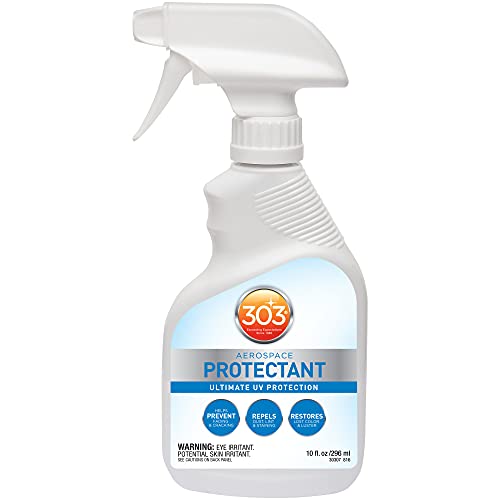
ULTIMATE PROTECTION: Shield your outdoor products from harmful UV rays, dust, dirt, salt water, & staining with this 303 protectant. Prevents fading & cracking for long-term care.
How to Make Your Tires Last Longer: Proven Maintenance Steps
Why replace tires sooner than necessary when a few consistent habits can add thousands of miles to their lifespan? I check my tire pressure monthly, before any road trip, because underinflation kills treadwear fast.
I rotate my tires every 5,000 to 7,500 miles to spread wear evenly across all four corners. I get my alignment checked annually, or immediately after hitting a nasty pothole, since misalignment chews through rubber unevenly.
I monitor tread depth regularly, watching for those raised tread indicators that signal 2/32” and replacement guidelines. I inspect sidewalls for cracks or bulges, especially as tire age climbs past five years.
I’ve adjusted my driving habits too. I avoid hard launches and panic stops, which generate heat and accelerate wear. This matters more with EVs, where instant torque stresses tires harder.