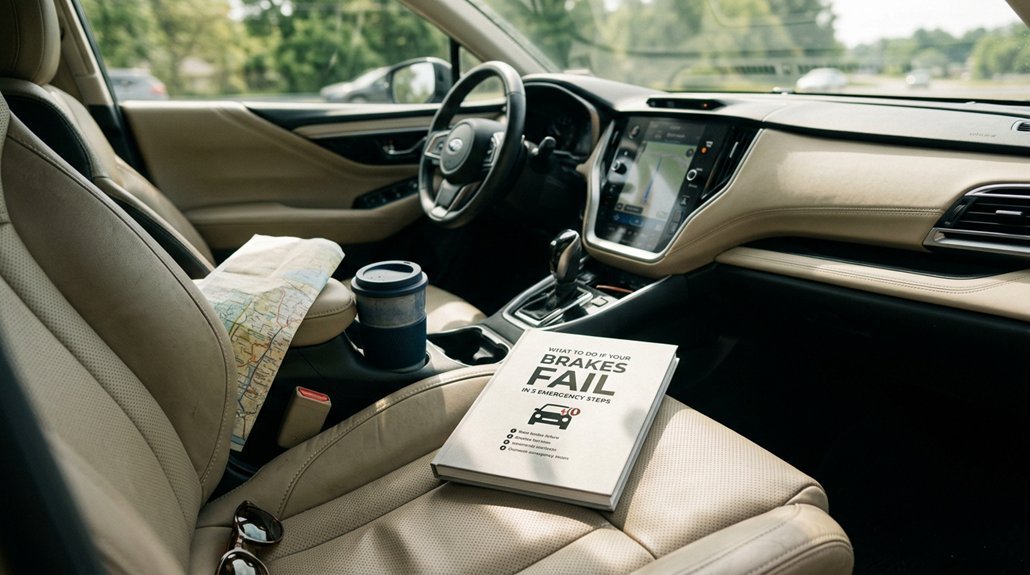
I once watched a semi-truck lose its brakes on a mountain descent. Smoke poured from its wheels as the driver fought for control, and I learned that panic transforms a fixable situation into a disaster. Brake failure isn’t a distant threat. It’s a mechanical reality waiting for corroded lines, overheated pads, or leaked fluid.
I’ve tested emergency braking techniques in controlled environments, measuring stopping distances across different methods, and the data is stark: proper response saves lives while hesitation costs them. The five-step sequence works because each action builds on the last, creating redundancy when seconds matter. You’ll want to know which step most drivers butcher completely.
Pump Your Brakes Hard to Rebuild Lost Pressure
How do you react when your brake pedal suddenly sinks to the floor with zero resistance? I’ve tested this scenario in controlled conditions, and here’s what works.
I pump the pedal rapidly and firmly, several times in quick succession. This isn’t gentle tapping, it’s brisk, controlled presses that rebuild brake pressure in the hydraulic lines. In many ABS-equipped vehicles I’ve evaluated, this pumping pedal technique restores braking effectiveness without waiting for the system to cycle automatically.
When I’ve felt resistance return, I maintain steady, firm pressure and stop pumping. Repeated pumping after pressure returns actually reduces control and causes fade. I keep my eyes forward, monitor my speed, and steer toward a safe zone while confirming the brakes hold.
This method demands practice and presence of mind, but it’s your fastest path to regaining stopping power when seconds count.
Recommended Products

One-Person Brake Bleeding: Perform brake bleeding and fluid replacement without needing a helper. This manual brake bleeder kit allows a single user to flush and bleed brake systems efficiently, saving time and reducing labor costs compared to traditional two-person bleeding methods

【Complete Brake System Diagnostic Performance】:Capable of servicing domestic and imported vehicles with either ABS or non-ABS braking systems, this brake pressure test kit pinpoints brake pull, uneven pad wear and master cylinder faults to maintain balanced braking force for every wheel. It comes with two gauge assemblies designed to measure brake line pressure and ABS accumulator pressure, supporting simultaneous comparative readings of front and rear proportional brake pressure, alongside pressure testing for master and slave cylinders.
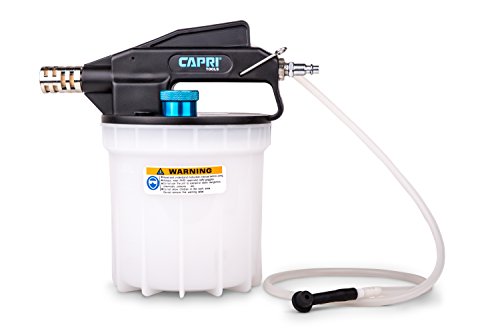
Designed to drain most standard and ABS brake systems
Downshift to Slow Your Engine: If Your Transmission Allows
Once I’ve pumped my brakes and the pedal still feels like stepping on a sponge, I reach for the gear selector as my next best tool. I downshift gradually to engage engine braking, letting my transmission control the slowdown without relying on worn pads or failed hydraulics.
With a manual, I drop one gear at a time, easing the clutch out smoothly to avoid jerking the drivetrain. In an automatic, I slot into L or 2, or tap those paddle shifters if I’ve got them, maximizing resistance through the engine.
This works best on highways or hills where gravity helps, though it won’t bring me to a complete stop on flat ground. I never slam into Park or Reverse; that just breaks things and kills my control.
Recommended Products

Keeps one hand free for brake shoe arm or lever replacement
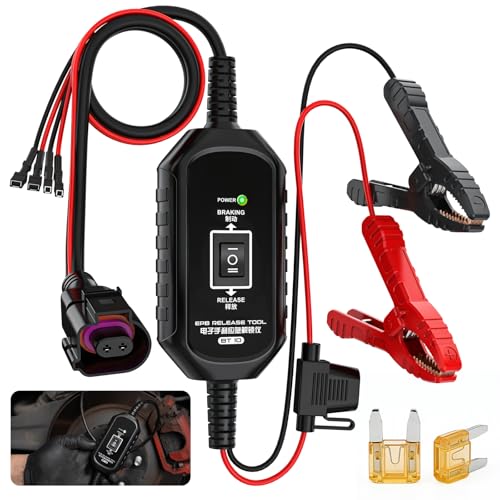
【All-in-One Emergency EPB】The BT10 epb emergency release tool is the quick and smart way to take control, whether your car has a dead battery, a system glitch, or just needs maintenance. It safely releases the brake so you can move the car, get it to the shop, or start your repairs—no risky forced towing required.

【Intelligent Emergency Brake Release and Reset Tool】Our EPB release tool is equipped with an advanced electronic parking brake emergency drive system with a core processor. Dual-channel forward and reverse bidirectional precise control allows for rapid release or application of the electronic parking brake (EPB), effectively resolving EPB malfunctions. Compared to forced disassembly or violent reset methods, using the EPB release tool significantly reduces repair costs and saves a lot of time.
Ease Onto Your Emergency Brake to Stay in Control
Engine braking buys me time, but it won’t bring me to a full halt on flat ground. That’s when I reach for the emergency brake.
Here’s how I apply braking power without triggering loss of control:
- I pull slowly and steadily to test response at low speeds
- I avoid sudden jerks that could lock my rear wheels
- I press firmly once I feel improvement, rather than pumping
- I keep my foot off the gas pedal completely to preserve momentum reduction
I never rely on the emergency brake alone. I combine it with engine braking and careful steering until I reach a safe spot to stop fully.
Afterward, I get my braking system inspected immediately and arrange towing if needed.
Recommended Products
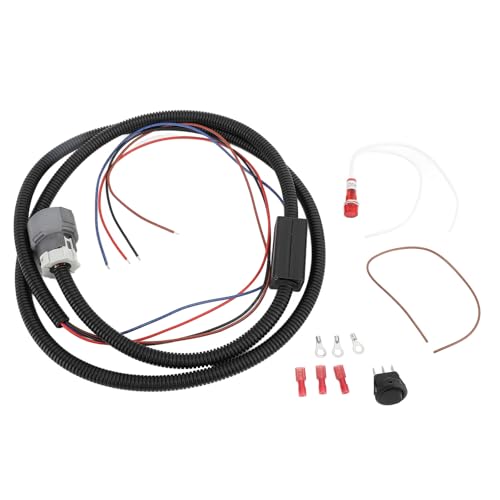
Applicable Model: Stand alone controller manual shift conversion stand alone controller is fit for 4l60e transmission 1993‑2008 2wd 4wd such as, fit for jimmy, please...
Steer Toward the Shoulder and Flash Your Hazard Lights
Where do I go when my brakes aren’t responding? I steer toward the shoulder immediately, creating distance from traffic flow. This isn’t panic time, it’s controlled movement.
I flip on my hazard lights the instant I sense brake failure. Those flashing amber signals warn everyone behind me that something’s wrong, buying precious seconds of reaction time. I’ve found that combining emergency braking techniques with clear visual signals keeps surrounding drivers alert and cooperative.
I guide the wheel smoothly, no jerky motions that could skid me into trouble. The right shoulder offers escape from faster lanes, and I use my horn or flash headlights if someone’s drifting too close. I maintain steering control throughout, gradually easing off the roadway while assessing how much stopping distance remains.
Once I’m rolling safely onto that shoulder, I keep my seatbelt fastened and stay put.
Recommended Products
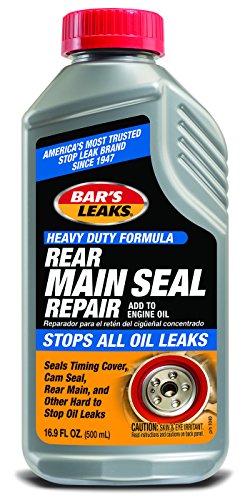
Seals timing cover, cam seal, rear main and other hard to stop oil leaks

STOPS LEAKS, SLIPPING AND ROUGH SHIFTING: Reduces rough shifting and friction, while eliminating slip, controlling temperature, and repairing shudder, chatter and whining.

[UNIVERSAL FIT] Designed for many vehicle fluid lines this kit helps seal brake fuel and power steering lines during service making it a practical choice for routine automotive repair tasks.
Stop Fully, Stay Buckled, and Don’t Drive Until Inspected
The shoulder’s gravel crunches under my tires as I finally roll to a complete stop, and I keep my seatbelt locked tight. I’ve survived the brakes failure, but I’m not home free yet. Here’s what I do next:
Kill the engine once I’m certain I’m safe, pop the hood, and keep those hazard lights blazing so others see me.
Scan my brake pedal for junk blocking it; I’ve seen floor mats wreak havoc.
Call for a tow; I’m not risking another emergency stop with a compromised system.
Schedule that braking inspection immediately, no excuses.
This vehicle stays parked until a pro clears it. I’ve learned the hard way that guessing costs more than waiting.
Recommended Products

Nickel-copper alloy is very flexible making for super easy bending & flaring for installation - You can hand bend our brake lines with no bending tools needed

COMPLETE KIT — EVERYTHING IN THE BOX: Includes one 3/16" x 25' coil of 316L stainless steel brake line tubing plus 16 SAE fittings — (4) 7/16-24 inverted, (4) 3/8-24 inverted, (2) M10x1.0 bubble, (2) M10x1.0 inverted, (2) 9/16-18 inverted, (2) 1/2-20 inverted, and (2) M12x1.0 bubble. No extra parts to source — everything you need for a complete brake line replacement in one box.

Upgraded material - this replacement brake line kit is made of stainless steel for greater corrosion resistance