I’ve spent fifteen years turning wrenches and diagnosing everything from carbureted pickups to hybrid crossovers, so when someone asks what automotive technology actually means, I don’t hand them a textbook definition. It’s the difference between guessing why a check engine light won’t quit and knowing exactly which oxygen sensor failed, which wire harness rubbed through, and whether the PCM needs a reflash.
You’ll work with scan tools that cost more than some cars, oscilloscopes tracing CAN bus signals, and battery packs carrying enough voltage to stop your heart. The field splits cleanly: you can earn a certificate in nine months, grab an associate degree in two years, or pursue a bachelor’s if management or engineering calls your name.
ASE certifications separate hobbyists from professionals, and employers notice. Pay starts around $45,000 for entry-level techs but climbs past $80,000 with specialization, especially in electric drivetrains or advanced driver assistance systems.
The real question isn’t whether vehicles are getting more complex, they are, but whether you’re ready to keep pace with systems that update overnight and diagnose themselves before you pop the hood.
What Automotive Technology Actually Covers Today
Let me tackle automotive technology head-on so you know exactly what you’re getting into before investing time or money. Automotive technology covers self-propelled vehicles: standard automobiles, sports cars, tractor-trailers, even marine vehicles. You’ll study engine construction, fuel and ignition systems, brakes, powertrains, and electronic diagnostic equipment.
Modern programs blend system theory with real-world diagnostics. You’ll work with adaptive cruise control, electronic ignition, and complex onboard computers. The field demands hands-on training across service, maintenance, repair, and manufacturing. You won’t just memorize diagrams; you’ll understand how vehicle systems actually interact under hoods and in bays.
This isn’t classroom-only learning. You’ll spend serious time with tools, scanners, and running engines. If you want belonging in this trade, embrace the grease, the diagnostics, and the satisfaction of fixing what others abandoned.
Recommended Products

Understand Your Check Engine Light – The ANCEL AD410 OBD2 scanner helps everyday drivers quickly read and clear engine-related fault codes, view code definitions, and understand why the check engine light is on before visiting a repair shop. With 42,000+ built-in DTC lookups, this car code reader helps reduce guesswork and makes basic vehicle diagnostics easier for beginners and DIY users

Multi-Functions - Practical Multi-Functions OBD2 code reader features built-in OBD2 DTC lookup library, which help you to determine the cause of the engine light, read code, erase code, view freeze frame, I/M ready, vehicle information, data flow, real-time curve, get vehicle speed information, calculate load value, engine coolant temperature, get engine speed.

【Diagnose Check Engine Light in Seconds – No Mechanic Needed】The FOXWELL NT301 OBD2 scanner instantly reads & clears engine fault codes (DTCs) with one click. Simply plug into the 16-pin DLC port, turn ignition on, and get accurate results within seconds—No prior car knowledge required. Save hundreds on dealership fees by knowing exactly what’s wrong before you visit a shop. The #1 choice car scanner for DIYers and car owners who want to take control of their vehicle’s health
Degree Paths in Automotive Technology: Your Options Explained
Where do you actually start when the path splits three ways before you’ve even picked up a wrench?
Where do you actually start when the path splits three ways before you’ve even picked up a wrench?
I’ve mapped the degree paths in Automotive Technology for you, and each route serves a distinct purpose. The two-year Associate Degree provides roughly 60 credits of hands-on repair, transmission work, and suspension training. It fast-tracks you into technician roles across service bays and manufacturing floors.
The four-year Bachelor’s Degree, where available, layers in management and research for leadership tracks. But here’s what caught my attention: certifications often outperform degrees for entry speed. These 6-month to 2-year programs, packing 21–52 credits, get your hands dirty faster. Stack specialized certificates in Chassis, Climate Control, or Electrical Systems to target precise career lanes.
Don’t overlook ASE credentials. With 40+ certification categories, they’re practical prerequisites for advancement I’ll detail next.
Recommended Products


【Find OBD2 Connection Problems Faster】 When a scan tool won’t connect or communication becomes unstable, this OBD2 breakout box helps you quickly check the vehicle’s communication, power and ground circuits. Easily narrow down whether the issue may come from the OBD port, vehicle wiring, ECU communication or connected diagnostic equipment—less guesswork, more efficient troubleshooting.
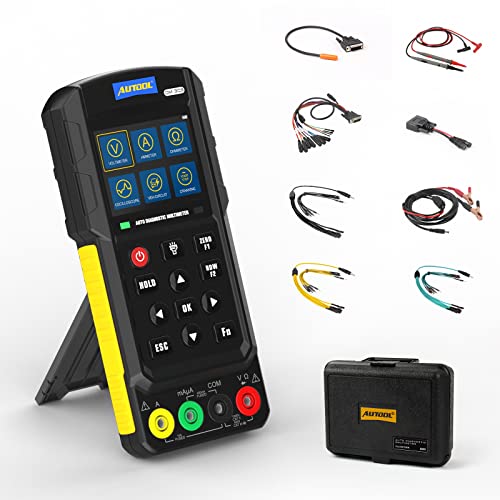
【More Powerful Detection Range】The multimeter can accurately measure AC/DC voltage, resistance, continuity, AC/DC current, capacitance, frequency, diodes, duty cycle and fire wire. DC voltage 0 ~ 1000V, AC voltage 0 ~ 700V, DC/AC Current 0 ~ 20A, 0 ~ 200mA, Resistance 0 ~ 1MΩ, Frequency 1 ~ 1MHZ, Continuity circuit test and ignition signal test to meet all test requirements.
What You’ll Learn in a Two-Year Associate Program
When I walk into a two-year automotive program, I’m not sitting through lectures about engine theory for months before touching a tool. I’m wrenching on engines by week two, because automotive technology demands muscle memory, not just book smarts. This 60-credit degree blends hands-on learning with just enough theory to troubleshoot intelligently.
Picture yourself in the shop:
- Grease under your nails at 8 a.m., diagnosing a transmission whine by noon
- Torque wrenches clicking, suspension components clicking into place
- Diagnostic tablets glowing with real-time engine data
- Classmates becoming crew, troubleshooting together until it runs right
Technician preparation here means job-ready skills, not abstract knowledge. You’ll master repair, maintenance, and manufacturing basics.
Two years later, you’re not hoping for work, you’re qualified for it.
Recommended Products
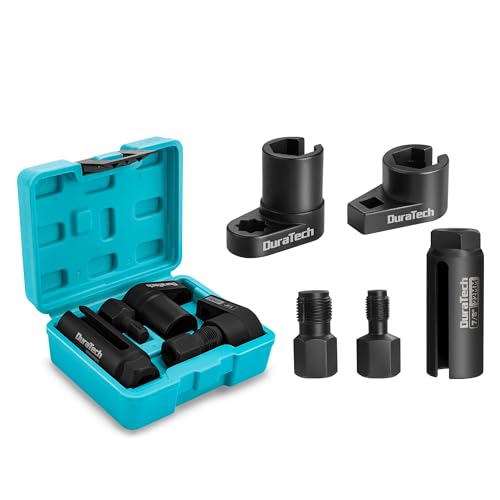
O2 Sensor Socket Set: The package includes 1PC 1/2" Dr. x 7/8" (22mm) offset oxygen sensor socket, 1PC 3/8" Dr. x 7/8" (22mm) offset oxygen sensor socket, 1PC 3/8" Dr. x 7/8" (22mm) long oxygen sensor socket, 1PC M12 x 1.25mm thread chaser and 1PC M18 x 1.5mm thread chaser

PREMIUM QUALITY: Made of premium chrome molybdenum steel, this socket allows the user to apply maximum torque to ensure precise assembly and function. The tool meets and exceeds ANSI/ASME standards.

【Advanced OBD2 Modes】Go beyond basic code reading! This scanner lets you run an EVAP system leak test and an O2 sensor performance check-two powerful diagnostic tools usually found only in professional-grade equipment. The O2 test helps fine-tune your air-fuel mixture for better gas mileage and lower emissions, while the EVAP test gives you insight into your fuel tank's seal and overall health
Should You Get a Bachelor’s or Just a Certificate?
I’ve spent two years turning wrenches and reading diagnostic codes, and now I’m staring at a choice: keep moving or stack on more school.
Here’s the straight talk: a bachelor’s degree in Automotive Technology takes four years and 120 credits. It adds management, leadership, and research skills. But here’s the thing, not every school offers one, and many shops hire on associate degrees plus certification alone.
If you’re gunning for the shop floor, certifications and hands-on experience often open those doors faster. Employers want proof you can fix what’s broken, not just talk about it.
That said, if you want to manage the shop, develop new tech, or chase advanced automotive innovations, the bachelor’s degree pays off. It positions you for leadership and higher salary ceilings.
Weigh your target role, timeline, and budget. Both paths work; pick the one that fits your endgame.
Recommended Products

BATTERY MAINTENANCE KIT: This kit includes every tool that you'll need to service or change a battery in any vehicle: 4-in-1 terminal cleaner, 10 mm ratchet, battery plier, 5/16 ratchet & battery terminal spreader/cleaner

Material: Made of quality steel, sturdy construction, durable to use.
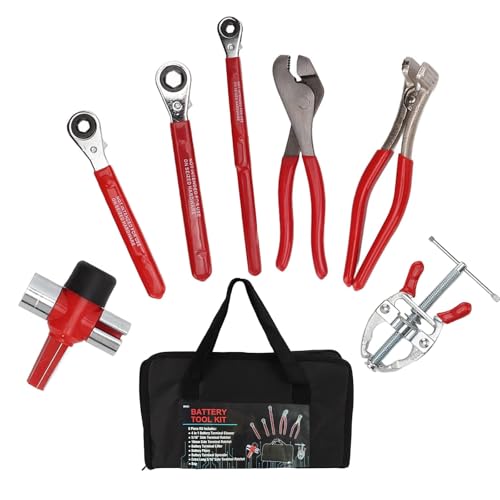
Available Sizes: Puller jaws fit under cable terminals, center screw pushes down on post to pull terminals up, durable hardened jaws open 1/4in to 1‑1/8in to fit most battery terminals. The battery service kit contains multiple tools: 1 puller; 1 x battery pliers; 1 x cross terminal brush; 1 x battery pliers; 1 x 5/16 inch wrench; 1 x 10mm wrench ; 1 x 5/16" long wrench; 1 storage bag.
How Vehicle Systems Work Together in Modern Cars
How exactly does your car know to ease off the throttle when the stability control kicks in, or prime the brakes before a collision? It’s all about vehicle networking. I’ve watched these systems collaborate in real-time, and the coordination is striking.
Modern cars rely on sensors and ECUs that chatter constantly across shared networks. Your engine management system adjusts ignition timing and fuel delivery based on input from dozens of sources. When radar detects a slowing vehicle, your adaptive cruise control talks to the brakes and throttle simultaneously.
Here’s what this integration looks like on the road:
- Cameras spotting lane drift while steering motors make gentle corrections
- Wheel-speed sensors triggering anti-lock pulses before tires skid
- Gyroscopes measuring body roll as stability control splits torque
- Lidar mapping traffic patterns for automatic braking decisions
This fluid interaction defines modern automotive technology.
Recommended Products


Used Book in Good Condition
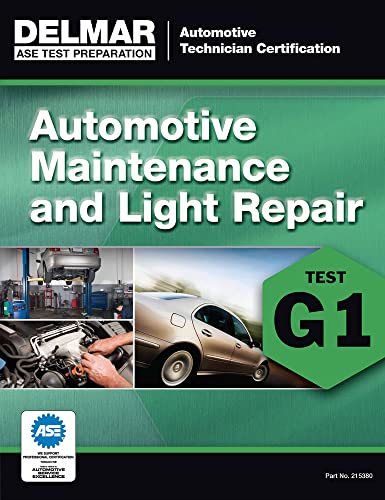
Getting ASE Certified and Job-Ready
Where exactly does your career in automotive technology begin? I found my answer through ASE certification, and you will too.
The National Institute for Automotive Service Excellence oversees 40+ certification categories, covering entry-level basics to advanced diagnostics. I’ve seen how these credentials substitute or supplement an associate degree, boosting job prospects and salary potential simultaneously.
Most programs run 6 months to 2 years, requiring 21 to 52 credit hours at roughly $2,000 to $4,000 annually. That’s manageable debt for genuine career acceleration.
Here’s what matters: certification makes you job-ready. Employers recognize ASE standards immediately. You’re not guessing; you’re proving competency.
With 46,000 technician openings projected through 2026, certified mechanics start near $40,000 median, with top performers exceeding $100,000. The investment pays back fast.
Get certified. Get working. Join us.
Recommended Products

[Easy to Use—Work Out of the Box] + [FOXWELL 2026 New Version] FOXWELL NT604 Elite scan tool is the 2026 new version from FOXWELL, designed for car owners who want to figure out the cause of issues before fixing car problems by scanning common systems like ABS, SRS, engine, and transmission. The NT604 Elite obd2 scanner diagnostic tool comes with the latest software—no need to waste time downloading software first. Plug the scanner into the OBDII port with OBDII cable to start the diagnosis.

CEL Doctor: The ANCEL AD310 is one of the best-selling OBD II scanners on the market and is recommended by Scotty Kilmer, a YouTuber and auto mechanic. It can easily determine the cause of the check engine light coming on. After repairing the vehicle's problems, it can quickly read and clear diagnostic trouble codes of emission system, read live data & hard memory data, view freeze frame, I/M monitor readiness and collect vehicle information

OBD2 SCANNER & BATTERY TESTER IN ONE – The INNOVA 5210 OBD2 scanner not only reads and clears check engine light and ABS codes (coverage may vary) but also functions as a car battery tester to check alternator health and prevent unexpected breakdowns.
Automotive Technology Salaries and Where the Field Is Headed
You’ll want to know what this field pays and where it’s going before you commit your time, so I’m breaking down the salary ranges and industry growth I see shaping this career path. Most technicians start around $40,000 annually, though I’ve watched specialists with ASE certifications push past $100,000 as systems grow more complex.
With roughly 46,000 positions projected through 2026, driven by retirements and rapid technology advances, you’re looking at solid demand across dealerships, independent shops, and manufacturing with real advancement potential into management or specialized roles.
Recommended Products


Comprehensive System Diagnostics – LUTIFIX enhanced OBD2 breakout box reads fault codes, pinpoints issues, monitors real-time voltage, and measures key parameters. It delivers full-system inspection from power supply to network communication for complete vehicle insight.
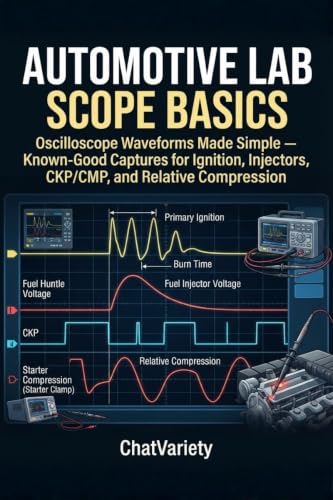
Salary Ranges
Exactly how much can you expect to pocket as an automotive technician? I am looking at solid numbers that show automotive technicians earn a median salary around $40,000 per year. That is your starting baseline, not your ceiling.
Top performers push past $100,000 annually. I have seen how certifications directly fuel that climb. Stack your credentials, specialize in hybrid systems or diagnostics, and your value jumps fast. Employers pay premiums for proven skills.
Picture where this path takes you:
- A toolbox packed with specialized scanners and torque wrenches
- Shop floors humming with lifts, air compressors, and diagnostic bays
- Paychecks that grow as you master electric drivetrains and ADAS calibrations
- Fellow technicians swapping tips on certification prep between jobs
Your earning potential scales with your commitment.
Industry Growth
How fast is this field actually expanding? I’m seeing automotive industry growth that’s creating real opportunity for people ready to join this workforce. About 46,000 technician positions are projected through 2026, and that demand isn’t slowing down.
Vehicle technology advancement drives everything now. Modern cars pack complex electronics, hybrid systems, and alternative fuel tech that older mechanics never touched. This shift creates gaps that certified technicians fill beautifully. ASE certification, specifically, opens doors to better pay and specialized roles.
Here’s what matters: median pay sits around $40,000, but top performers clear $100,000. Retirements are hitting hard, so shops compete for talent.
If you’re weighing this path, the math works. Strong maintenance demand, evolving diagnostics, and shrinking experienced labor pools mean job security for skilled hands.