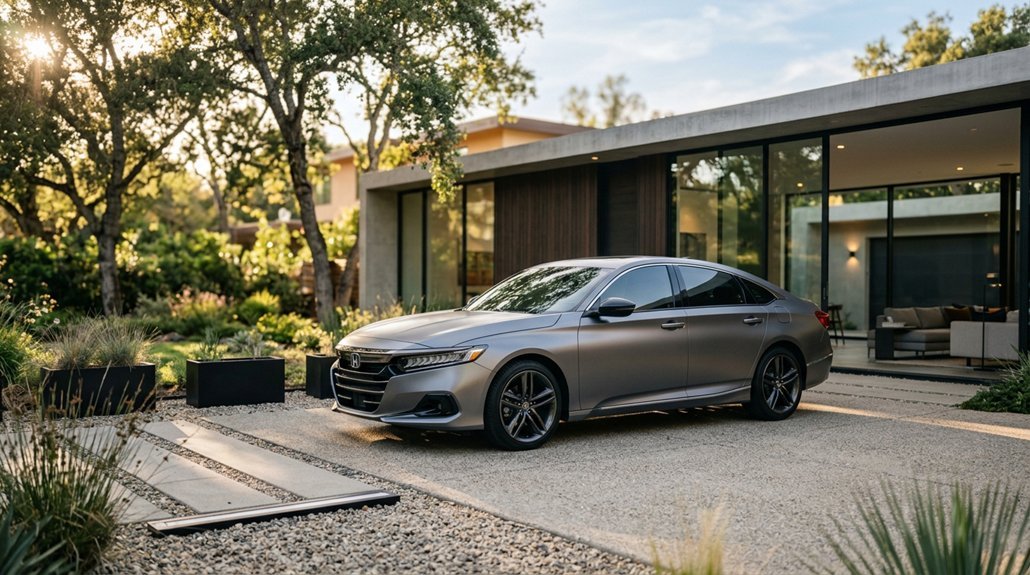
I’ve driven hybrids for years, and I’ll cut straight to what matters. Your hybrid isn’t just an engine with a battery strapped on: it’s four systems working in concert, a combustion engine, one or more electric motors, a battery pack, and power electronics that decide, millisecond by millisecond, where your power comes from.
I’ve felt the difference in stop-and-go traffic where the electric motor provides instant torque, versus highway cruising where the engine takes over directly. But here’s what most reviews gloss over: how that energy gets back into your battery in the first place.
What Makes a Car a Hybrid? The Four Core Systems
Let me walk you through the four systems that matter. We’re all trying to make smarter choices, and understanding what actually powers your hybrid puts you in the driver’s seat, literally.
First, you’ve got your internal combustion engine, the familiar gas burner that kicks in when you need steady highway cruising. Then there’s the electric traction motor, providing instant torque for stop-and-go traffic and silent EV mode around town.
Your hybrid’s gas engine handles highway cruising, while the electric motor delivers instant torque for city driving and silent EV mode.
The battery pack stores your juice, sized anywhere from 1 kWh in a Prius to larger packs in plug-in variants. Your power electronics/controller acts as the brain, blending power sources so smoothly you never feel the handoff.
Hybrid architectures vary: series setups use the engine strictly as a generator, while parallel designs let both sources drive the wheels directly. Most modern hybrids blend both for flexibility.
Recommended Products

Material: Crafted from durable, heat-resistant PC flame-retardant housing with silver-plated pure copper terminals, this 6-12 gauge connector ensures optimal conductivity, voltage stability, and a secure electrical connection for 12V/24V/36V systems

Slick MTB/Hybrid road and trail tire; 26 by 1.95 inches

Function: This car strap provides a safe anchoring point for the rescue of light vehicles. With a load-bearing capacity of up to 2 tons, our racing car hook offers reliable support in emergency situations and minimizes vibrations between vehicles, ensuring safe and stable towing operations
How Regenerative Braking Fuels Hybrid Efficiency
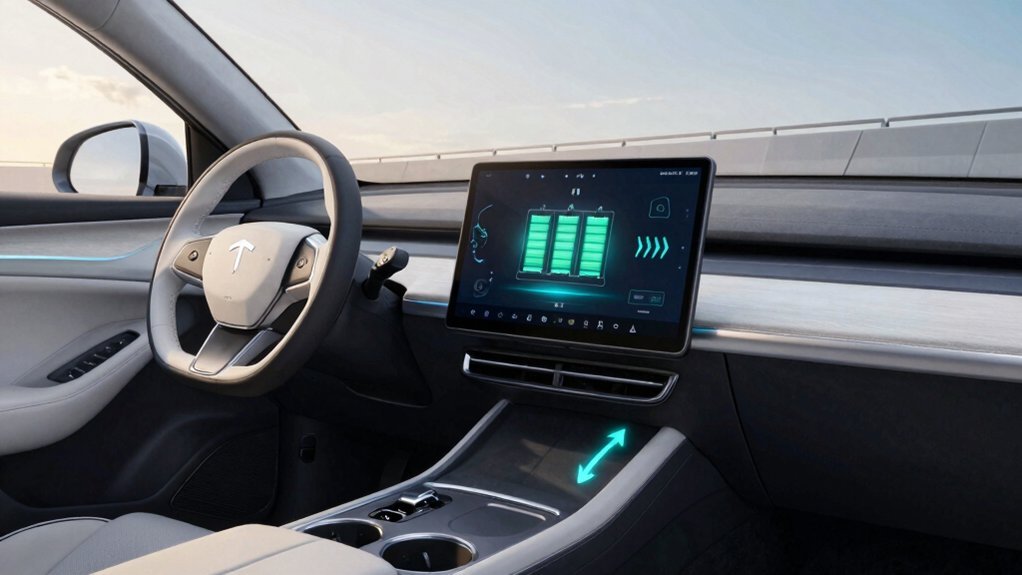
I know those four systems inside your engine bay work together well, but the real magic happens when you’re slowing down. That’s when regenerative braking kicks in, flipping your electric motor into generator mode to capture kinetic energy you’d otherwise waste as heat. This energy recovery sends power straight to your battery, typically around 1 kWh in most hybrids, for later use.
I’ve found hybrid efficiency really shines in city driving where stop-and-go traffic maximizes these gains. Your system blends regen with friction brakes smoothly, so you won’t feel the handoff. Higher speeds and gentler braking yield better results, though small battery capacity and thermal limits cap total recovery. Still, delaying gasoline engine use noticeably improves your MPG.
Recommended Products


Unique Glass Cover Design: Tempered glass upper cover with big 6.25 inch LCD display and touchable buttons, cool look with high transparency, more clear to see real-time data of your inverter

BESTEK Advantage Upgraded: Bestek is power inverter patents owner, America's leading power inverter brand. Our inverter tech upgraded to 11-17V compatible with Tesla. It provides 300 Watts continuous DC to AC power and 700 Watts instantaneous power, featuring 2 AC outlets and 2 USB ports
How Hybrids Route Power: Series vs. Parallel Designs
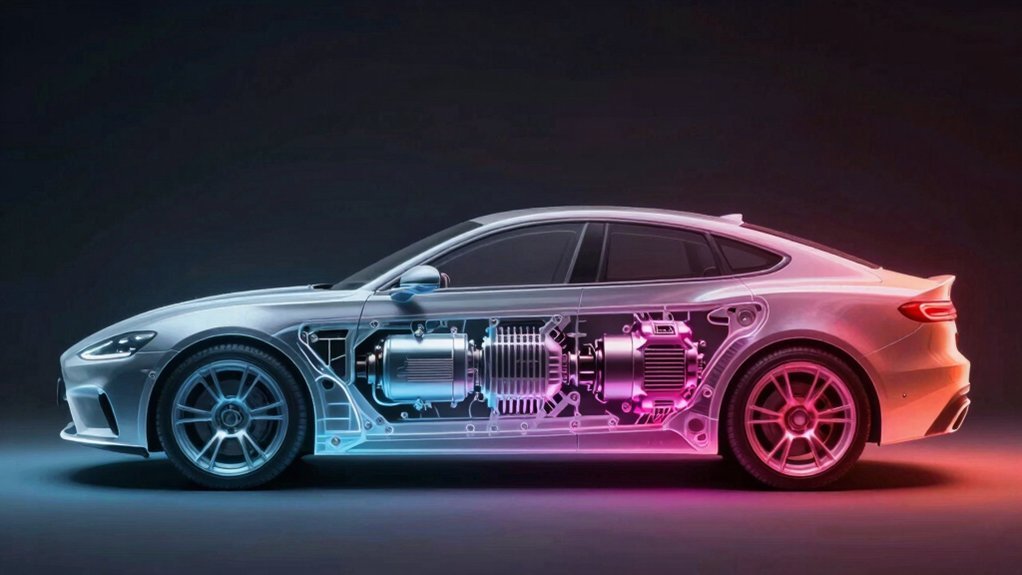
Where does your hybrid’s power actually come from? It depends on whether you’re driving a series or parallel design, and trust me, this distinction matters when you’re shopping.
In a series hybrid, I never feel the engine directly pushing me forward. Instead, that engine runs a generator, feeding electricity to my electric motor for propulsion. The wheels see zero mechanical connection to the engine, just smooth, silent torque from the motor. It’s elegant, though you carry the weight of energy conversion losses.
Parallel hybrids give me more flexibility. Here, the engine and electric motor share propulsion duties through a transmission, either tag-teaming or flying solo. I get direct mechanical drive when cruising, electric boost when accelerating, and optimized efficiency across speeds. For most buyers, parallel designs provide better real-world performance and value.
Recommended Products


【Replacement Part Number】This High Output Alternator replaces OE part numbers ML3Z-10346-A, ML3Z10346A, ML3T-10300-AB, ML3T10300AB

Premium Material: This spring kit is made of stainless steel, offering exceptional hardness and excellent tensile strength. It is highly durable and corrosion-resistant, maintaining stable performance even under demanding conditions. It resists rust and remains in good working condition over the long term, meeting the demands of extended use.
48-Volt, Full, or Plug-In? A Three-Question Hybrid Selector
How do you pick the right hybrid when the market throws three distinct flavors at you? I’ve tested all three, and here’s what actually matters.
Do you want basic efficiency without fuss? A 48-volt system uses a small battery and electric motor for mild assist and smooth start-stop. You’ll get regenerative braking, but never electric-only driving.
Need real electric range for commuting? A full hybrid pairs a larger battery with gas power, giving you substantial electric assist and stronger regenerative braking.
Got a garage and a short daily drive? A plug-in hybrid carries the biggest battery, giving you 20–50 miles of pure electric range before the engine wakes up.
Your choice shapes charging needs, trunk space, and how often you’ll visit gas stations. Match the tech to your routine, and you’ll feel like you finally belong in the hybrid club.
Recommended Products

Designed for use on electric or hybrid passenger cars

Powerful Motor Electric Bike: This electric bike has 2*2500W brushless motors that delivers instant torque for rapid acceleration and effortless hill climbing (even on 45°+ inclines). Switch between single motor (efficiency) and dual motor (max power) for optimized range or performance. 45 MiIe P-Hour Top Speed for dominates urban commutes and off-road trails with high-speed capability.

Tough-Terrain Dominator:Engineered for demanding landscapes like orchards, farms, and parks. Its rubber tracks conquer steep slopes (up to 30%), ditches, and loose soil where regular mowers can’t operate.-222
Hybrid Ownership: Five Benefits and Three Trade-Offs
Why buy a hybrid instead of sticking with a proven gas engine? I’ve driven enough miles to know that hybrid systems provide real-world fuel economy gains you can feel at the pump. The electric motor handles low-speed driving, while regenerative braking turns stop-and-go traffic into free battery recharge cycles. You’ll notice reduced brake wear within months.
Still, let’s weigh the trade-offs honestly. Added weight from the motor, generator, and batteries affects handling, and larger battery packs, especially in plug-ins, inflate purchase prices. Some designs sacrifice cargo space for that hardware.
My take? The efficiency benefits outweigh the compromises for most commuters. The technology works as promised, provides measurable savings, and keeps you moving with the crowd that’s already made the switch.