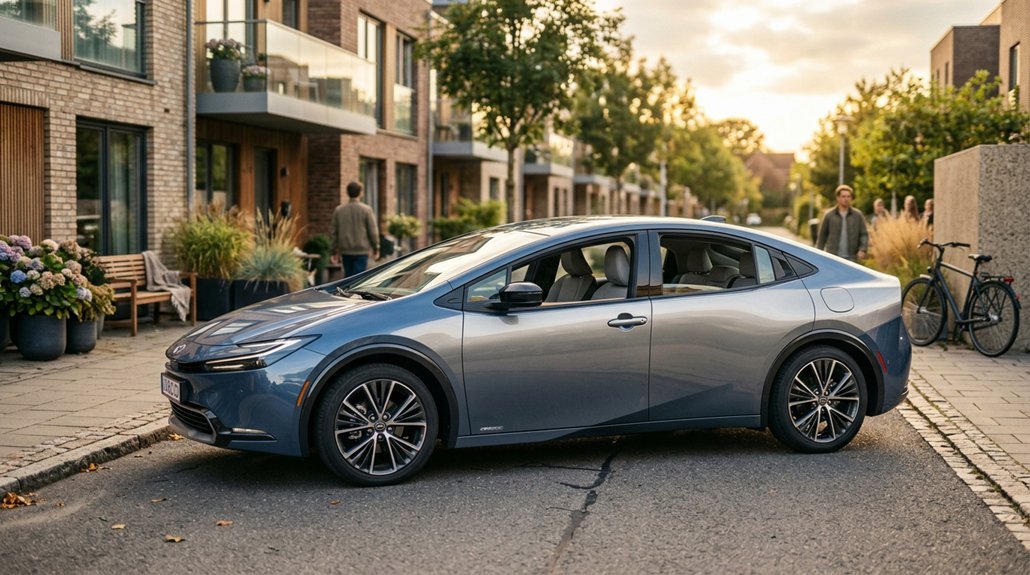
Many drivers assume hybrids run on magic, but I’ve spent weeks testing everything from 1 kWh Toyota systems to 50-mile plug-ins, and the reality is more mechanical than mystical. These vehicles combine a gasoline engine, an electric motor, and a battery pack to move you down the road, switching between power sources so smoothly you’ll barely notice the handoff.
The electric motor handles low-speed cruising and assists during hard acceleration, while regenerative braking captures energy you’d normally waste as heat. Battery size determines everything: small packs give you brief electric boosts, larger ones provide real electric-only range.
I’ve watched fuel economy jump from 30 mpg in pure gas cars to 50+ in city driving, but the upfront cost premium demands careful calculation against your annual miles. The technology works, it saves fuel, and it’s surprisingly reliable, but whether it fits your budget and driving patterns is the question worth exploring next.
What Is a Hybrid Car? (Definition and How It Differs)
What exactly makes a hybrid car different from everything else on the road? I’ve driven plenty of vehicles, and hybrid cars are distinctive because they combine a gasoline engine with an electric motor and a small battery pack, usually around 1 kWh. This dual-power setup lets you capture energy that normal cars waste.
Regenerative braking is the key difference here. When you slow down or coast downhill, the system converts that kinetic energy into electricity, storing it for later acceleration. Most hybrids run on gasoline, though diesel versions exist for heavy-duty work. Plug-in hybrids take this further with larger batteries, giving you 20–50 miles of electric-only range and external charging. If you want efficiency without range anxiety, hybrids provide practical, real-world performance.
Recommended Products

Charger, Maintainer & Desulfator - An all-weather battery charger, battery maintainer, trickle charger, and battery desulfator. Perfect for charging and maintaining all 12-volt lead-acid, flooded or sealed maintenance free batteries (AGM and gel cell).

PREVENT BATTERY FAILURE: Ensure reliable starts after storage with this 4-in-1 device that charges, maintains, tests, and restores batteries for cars, motorcycles, ATVs, trucks, SUVs, and boats.

Stay Charged: The 4 amp car battery charger automotive provides a full charge to your machine's battery before automatically switching to float mode to maintain proper voltage levels for your battery without overcharging
How Hybrids Work: Gas, Electric, and the Handoff
I’ve driven hybrids where a small 1 kWh battery feeds the electric motor for a silent, punchy launch with instant torque. Around 25 to 40 mph, the gas engine kicks in through the power control unit, and the transmission blends both power sources so smoothly you’ll barely notice the handoff. It’s a smart system that keeps city mpg high, though the engine can sound strained past 70 mph or on steep grades, so I’d insist you test highway merging before buying.
Recommended Products

【17FT EV CHARGER EXTENSION CABLE】 This 17-foot heavy-duty J1772 extension cable is the perfect solution for extending the reach of your SAE J1772 EV charger. Designed for both Level 1 and Level 2 charging, it offers enhanced flexibility for home or travel use. Whether at home or on the go, you can easily access your electric vehicle or plug-in hybrid. The extra length ensures you can reach charging stations with ease, even in various parking setups, making it a hassle-free charging experience.
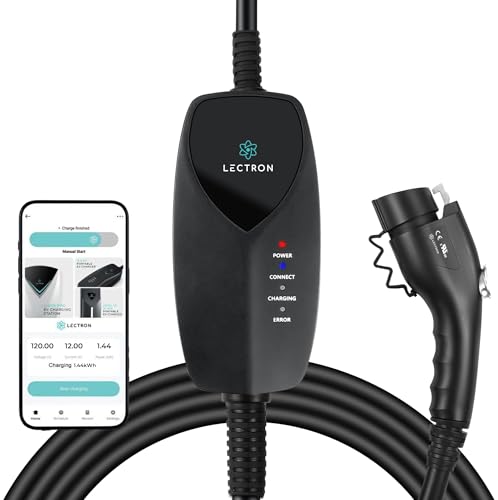
SMART WIFI & APP CONTROL - This portable Wifi-enabled EV charger allows you to keep tabs on your charging status in real-time, schedule your charging sessions, and even control how many kWh you want to charge your EV via the Lectron App

【4.8A Dual USB Port Fast Car Charger for iPhone】: Adopt the advanced chipset and automatic charging distribution tech work in tandem to lower power consumption, provides double power density, Caiinei's 4.8A USB Smart Power Fast Car Charger can charging two iPhone devices simultaneously. Provide a maximum of 2.4A/12W if a single port is used and 4.8A/24W when dual ports are used simultaneously. Can charge your iPhone device 4 times faster, maximize charging efficiency to over 99%.
Gas Engine Role
How exactly does the gas engine earn its keep in a hybrid? In most systems, the gasoline engine fires up once you pass about 15 mph, taking over propulsion from the electric motor for highway cruising. I’ve found this handoff is nearly invisible during daily driving, thanks to the power control unit balancing both sources.
The gas unit also drives a generator to recharge the high-voltage battery, so you’re not draining the pack on long trips. At cruising speeds, the gasoline engine handles the load while the electric motor provides extra punch for passing. It is a smart trade-off.
You get reliable range without range anxiety, though the engine noise under hard acceleration is a minor drawback. For commuters, this teamwork yields real-world efficiency.
Electric Motor Launch
Why does every hybrid feel so eager off the line? I’ve tested enough hybrids to know the secret is the electric motor.
It provides instant torque from 0 rpm, so you get smooth, silent propulsion up to about 15 mph without burning a drop of gas. That immediate response makes city driving feel effortless.
Here’s what I watch for during my evaluations:
- Instant torque from the electric motor eliminates lag when the light turns green
- Silent propulsion at low speeds keeps your commute calm and refined
- The power control unit juggles battery and motor output for consistent launch performance
- Regenerative braking recaptures energy during stops to keep the system charged
If you do mostly urban driving, this eager launch character alone justifies the upgrade.
Seamless Speed Handoff
When does the gasoline engine actually step in? I’ve tested this transition across multiple hybrid systems, and the smooth speed handoff typically happens around 15-25 mph, depending on throttle input and battery charge. The electric motor handles your initial torque, giving you that instant, silent launch we covered earlier.
Then, the control system progressively awakens the gasoline engine, blending outputs so smoothly you’ll barely notice the shift. In some models, I’ve felt a faint vibration; in others, it’s imperceptible.
The engine starts in-gear, maintaining momentum without that jerky interruption you’d expect. Regenerative braking helps here, too.
It recaptures energy during slowdowns, keeping the battery topped off and delaying engine involvement longer. Single-motor designs feel adequate for city driving, while dual-motor setups provide cleaner transitions across wider speed ranges. Performance varies by brand, so test drive before you buy.
Regenerative Braking: How Hybrids Make Free Energy
Where exactly does all that energy go when you hit the brakes? In regular cars, it simply vanishes as heat. In hybrids, I capture it through regenerative braking and stash it in my high-voltage battery for later.
The electric motor flips into generator mode during deceleration, grabbing kinetic energy I’d otherwise throw away. My vehicle computer smoothly blends regen with traditional brakes, so stopping feels natural. Recovered energy lands in a compact high-voltage battery, around 1 kWh, ready for my next acceleration. Battery size limits how much I can store, so regen assists rather than replaces my gas engine.
That’s free fuel I’m harvesting every time I slow down or descend a hill.
Recommended Products


Parallel vs. Series: Two Ways to Build a Hybrid
Because I’ve tested both architectures back-to-back, I can tell you the split between parallel and series hybrids isn’t just engineering jargon, and it directly shapes how your car responds when you nail the throttle or settle into a 70 mph cruise.
With parallel designs, the electric motor gives you instant shove off the line, then the gasoline engine joins through the transmission as speeds rise for efficient cruising. Both sources drive the wheels directly.
In series setups, a drive motor handles propulsion, and the engine never powers the wheels directly; it generates electricity to recharge the battery or feed the motor. You feel silky acceleration, but highway efficiency drops with that energy conversion.
Some brands now blend both approaches, switching topologies to match conditions.
Recommended Products

[Fitment] This Cooling Fan Module Relay for Hyundai Sonata 2.4L 2015-2017, for Hyundai Sonata 2016-2017 Base, Limited, SE, Sport, for Hyundai Sonata 2015 Hybrid, Hybrid Limited, Limited, SE, Sport, OE Number:25385-C2500/25385C1500/25385C2500/25385D4200/25386C2000/122990-0050/RY1938/R7441.

50 Farad Hybrid Capacitor. (1) 0 Gauge and (3) 4 Gauge Input / Output Terminals with Stealth Removable Cover.

Battery Size and Why It Determines Hybrid Type
How much electric range do you actually need before the engine fires? That’s the question that shapes every hybrid’s identity, and it all comes down to battery size.
Hybrid batteries in conventional systems typically hold around 1 kWh, just enough for brief electric assists and capturing regenerative braking energy. I’ve tested plenty where the engine kicks in before you clear your driveway.
Step up to a plug-in, you’re looking at a battery pack giving 20 to 50 miles of pure electric driving, enough for most commutes without burning a drop of gas.
Here’s what battery size really means for your daily drive:
- Small packs (1 kWh): Engine-assisted efficiency, no plug required
- 48-volt systems: Mild electrification, modest gains
- Series hybrid batteries: Compact packs charged by onboard generators
- Large plug-in packs: Serious electric range, but watch your cargo space and budget
Recommended Products
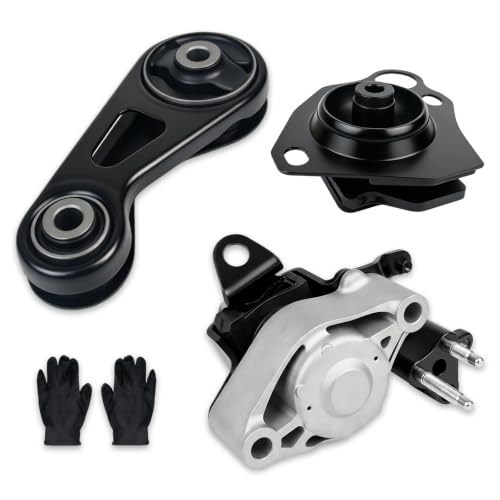
Vehicle Fitment: Compatible with 2004 2005 2006 2007 2008 2009 Toyota Prius 1.5L L4 Electric Gas Hybrid engine

[MADE OF HIGH-QUALITY MATERIALS] This product is crafted from top-notch materials, ensuring sturdiness and durability. It can withstand heavy use without deformity.

[Long Service Life]: The mountain bike crank arm is made of premium aluminium alloy, lightweight, high strength and deformation resistance, durable for long time use; cycling crank arm not only can provide a safer guarantee for your life, but also can increase product life
Mild, Full, or Plug-In: Which Hybrid Fits You?
Why settle for a hybrid that doesn’t match your actual driving habits? I’ve tested enough hybrid vehicles to know the wrong choice leaves money on the table.
Mild hybrids use 48-volt systems that assist at low speeds, improving fuel economy roughly 10-15%. You can’t drive on electric motors alone, making these best for highway commuters who want efficiency without changing routines.
Full hybrids split propulsion between gas and electric motors, improving mileage across speeds and conditions. No plugging required; you get substantial city gains.
Plug-in hybrids carry larger batteries providing 20-50 miles of electric-only range before the gasoline engine starts. If your daily commute falls within that window and you have charging access, you’ll rarely visit gas stations.
Match your EV-range needs and charging reality to your actual miles.
Recommended Products

Efficient, Energy-Saving, and Fast Charging: The TowerTop 12v battery charger offers 4 adjustable current settings (2A/10A/25A/AUTO) to meet your diverse needs. With a max charging current of 25A, you can fully charge a 100Ah battery in under 3.5 hours. Achieving an 85% charging efficiency (industry average 75%), this battery chargers is more efficient, increasing charging speed by 1640% compared to 2A car battery charger. Not only is it energy-efficient, but it also saves you a lot of wait time

Lithium Coin Battery: Duracell's 2450 3V coin batteries provide reliable, long lasting power for your medical devices, security devices, electronics and more.

【LEAD-ACID & LiFePO4 BATTERY CHARGER】12V 15-Amp and 24V 8-Amp 9-stage quick battery charger, charging speed is much faster than 10-Amp or other automotive chargers. Charge or repair all 12-volt and 24volt LiFePO4 or lead-acid automotive, marine and deep-cycle batteries including AGM, GEL, SLA, Flooded in cars, trucks, SUVs, motorcycles, lawnmowers, boat marine, etc. Perfect household tool and present for Xmas and daily use! NOTE: Charging current over 15A could lead to overcharge and damage the internal chemicals, choosing the appropriate battery charger is essential.
Plug-In Required? How Self-Charging Hybrids Work
You won’t need to hunt for an outlet with a self-charging hybrid, since I’ve found these systems charge themselves through regenerative braking, turning your stopping power back into electricity that feeds a compact 1 kWh battery. The gas engine also pitches in when needed, acting as a generator to top off reserves so you never worry about range anxiety or charging times.
It’s a practical setup that trades plug-in convenience for smooth operation, providing short electric bursts in traffic and better city mileage without ever changing your driving habits.
Recommended Products

[4 In 2 Multi Charging Cables for Multiple Devices] This innovative 4-in-2 USB A/C multi charging cable with dual Type-C, IP, Micro port, offering 8 ways to charge iPhone 17-5, Galaxy S25-S6, Android, tablets, portable fans and newer models. A portable charging cord and USB multi charger cable design makes it ideal for travel essentials and charging anywhere—perfect for home, office, camping, RV/hiking adventures, business trips and other occasions

【Dual USB-C Port 4 in 2 Charging Cables】4 in 2 multi charging cable for multiple devices charge four devices at once with Dual USB-C ports, Lightning, and Micro USB connectors. Dual type-C ports design, a whole new level of convenience, the up-to-date USB A/C charging cable can charge all new-model phone devices. All-in-one solution makes the multi phone charger cords fit all devices, compatible with all iPhones, samsung, androids, ipad, ps and tablets.

【6 in 1 Multi Charger Cord for All Devices】 The up-to-date 6 in 1 design with USB A/C to 4 different USB ports. Including Dual Lightning, Micro-USB and USB Type C connectors support to charger most of the cell phones available on market.Perfect for home use, office, travel, car, uber lyft business or sharing with friends.
No Plug Required
Where exactly does the electricity come from when there’s no charging port to plug into?
I’m glad you asked, because this is where self-charging hybrids actually make sense for most drivers. In a hybrid vehicle, I never hunt for charging stations. Instead, I capture energy I’d normally waste. When I slow down, regenerative braking transforms that motion into electricity. My internal combustion engine also steps up as a generator on longer drives.
Here’s what keeps me moving:
- The electric motor becomes a generator during deceleration, converting kinetic energy into stored power
- The battery provides short bursts of electric propulsion at low speeds, reducing engine use
- The gasoline engine recharges the battery during highway cruising or heavy demand
- I refuel just like any conventional car, no plugging required
It’s practical, efficient, and honestly freeing.
Regenerative Braking Systems
How exactly do I recharge without ever plugging in? I use regenerative braking, a system that turns my car’s motion into free electricity.
Here’s what happens when I slow down. Instead of wasting all that kinetic energy as heat through my brake pads, I capture it. The electric motor reverses, becoming a generator that sends current back to my battery storage. A computer blends this with my traditional brakes, so my stops feel normal and predictable.
That stored energy then powers my next acceleration through the neighborhood or parking lot. It is particularly effective in city driving, where frequent stops mean frequent recharging opportunities. This is why I see my best fuel economy there.
There is a practical limit. My hybrid carries only about 1 kWh of battery capacity, so I cannot harvest unlimited energy. Once full, excess braking reverts to conventional friction brakes. Still, for daily commuting without range anxiety or charging infrastructure, this self-sufficient approach provides real value.
Engine Driven Charging
Regenerative braking gives me a nice boost, but it’s not my only source of power. Engine-driven charging steps in when I need more juice, using the gasoline engine to spin a generator that tops off my high-voltage battery. No wall outlet required; I just drive.
Here’s how this system keeps me moving:
- The engine fires up as a generator when battery levels drop low
- Series hybrids use this setup exclusively, with electric motors driving the wheels
- High power demands trigger automatic recharging on the go
- Plug-in versions add external charging, shrinking engine reliance for short trips
I appreciate the self-sufficiency. Unlike pure EVs, I never hunt for chargers. The trade-off: slightly higher fuel use during battery-focused driving.
For daily commutes under 40 miles, a plug-in hybrid minimizes engine-driven charging entirely.
Why Hybrids Beat Gas Cars in City Driving
Why do hybrids feel so much more at home in gridlock than their gas-only competitors? I’ve watched fuel economy ratings jump 15-20 MPG in city cycles, and it comes down to smart energy choreography.
My test drives confirm hybrids lean on their electric motors up to about 15 mph, exactly where traffic crawls. The real magic happens through regenerative braking, which captures stop energy in a 1 kWh battery pack for immediate reuse. That stored power launches you smoothly with high initial torque while the gas engine sleeps.
Stop-and-go patterns that punish conventional cars become hybrid advantages. Engine-off periods stretch longer than you’d expect, and brake wear drops noticeably. Continuous energy recovery and optimized motor management transform frustrating commutes into efficiency wins.
Hybrid MPG: What Efficiency to Actually Expect
Those city driving advantages translate directly to numbers you’ll see at the pump. I’ve tested enough hybrids to know that real-world MPG often beats EPA estimates in stop-and-go traffic, where regenerative braking captures energy you’d otherwise lose as heat.
Here’s what actually powers those savings:
- Regenerative braking recaptures deceleration energy into a 1 kWh battery for reuse, cutting gasoline engine reliance
- The gasoline engine hands off to electric power below 25 mph, eliminating idle waste
- Electric motor assist during acceleration lets smaller engines work less hard
- 48-volt systems enable smooth start-stop, boosting city efficiency 10–15%
PHEVs stretch 20–50 electric miles before the gasoline engine engages, blending both worlds. Expect 45–55 MPG in standard hybrids, with PHEVs hitting 100+ MPGe when plugged in regularly.
Recommended Products

【All-in-One Home Energy Hub, Split-Phase Power Solution】This 12kW 48V hybrid inverter is the core of your home energy management. It features split-phase input and output (120V/240V). With proper wiring, it can simultaneously supply both 120V and 240V power, perfectly running everything from lights and phone chargers to air conditioners, electric dryers, and stoves, solving all your high-power load needs. It's your reliable solution for achieving energy independence, seamlessly handling power outages, and effectively reducing electricity bills
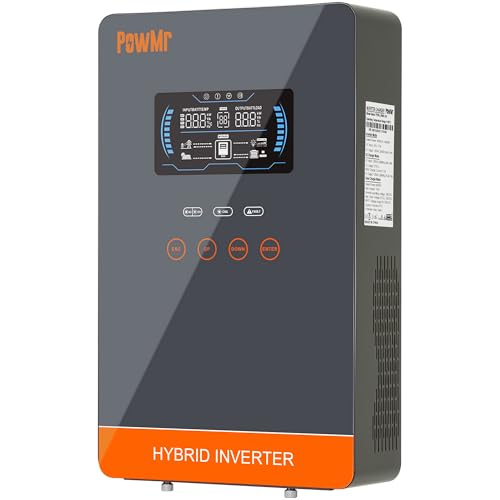
【Battery-Less Operation & Hybrid Energy Management】A key feature of this solar inverter is its support for battery-less operation during the day. With sufficient solar power, it can directly run your loads, saving on battery costs. It also functions as a smart hybrid inverter, allowing you to configure the charging and output priority between solar, battery, and utility grid, providing flexible and continuous power for off-grid living and emergency backup during outages

🌞💡【120 / 240 Split Phase AC Output】8KW watts low frequency power inverter with transformer, 24kW watts Peak ,48 volts DC input. The inverter is split-phase and will output 110/120 Vac, and it can set via the LCD screen 50 or 60Hz Output. Support to run different batteries including Lead-Acid, GEL /Lithium battery,Compatible to mains voltage or generator which charge the battery or power the load. With lithium battery communication function.
Do Hybrids Actually Save Money? Price vs. Payback
How much extra am I really paying for that hybrid badge, and when does it actually pay me back? I’ll tell you what I’ve learned crunching real numbers.
Let’s break it down, fellow buyer. That hybrid fuel economy rating looks tempting, 40–50 mpg versus 25–30 in standard models. You’re typically paying $2,000–$4,000 more upfront. Plug-in hybrids stretch further, with 20–50 miles of pure electric range before the gas engine kicks in. Charge nightly, and you’ll barely visit gas stations for commuting.
Fellow buyer, you’re paying $2,000–$4,000 more for 40–50 mpg, but charge nightly and you’ll barely visit gas stations.
Your payback period hinges on three factors: local fuel prices, your annual mileage, and driving conditions. Higher gas prices and stop-and-go city traffic accelerate your return. I’ve seen estimates range from three to seven years.
Don’t overlook maintenance savings. Regenerative braking reduces brake wear significantly. While hybrid tax credits have shrunk compared to full EVs, combined fuel and maintenance savings often justify the extra cost for high-mileage drivers.
Recommended Products

【Practical Function】: Our chain cleaning brush is mainly used for cleaning motorcycle chains, which has excellent cleaning strength. It can effectively avoid the chain and gears from breaking, ensuring the stability of motorcycle running. With it, you don't need to worry about the chain accumulating stains.

MATERIAL: The crank arms are made of materials, this product is sturdy and durable.High strength, high hardness, not easy to deform.

Helical Tooth Design - Angled teeth reduce noise and vibration
Should You Buy a Hybrid in 2024?
Where I noticed the 2024 Camry Hybrid shine was in the smooth handoff between its 2.5-liter gas engine and the compact 1.6 kWh nickel-metal hydride battery. I tested its hybrid systems through city loops and highway sprints, and the fuel efficiency gains felt immediate. You get regenerative braking that recovers energy at stoplights and pauses the gas engine while you coast.
You’ll save at the pump without hunting for charging stations. The battery recharges while you brake, so there’s no range anxiety. Parallel and series setups fit either commuting or cruising. Upfront costs run higher, but the payback comes through daily MPG wins.
Should you buy one? If you want lower emissions and practical fuel efficiency without changing habits, I say join the club.