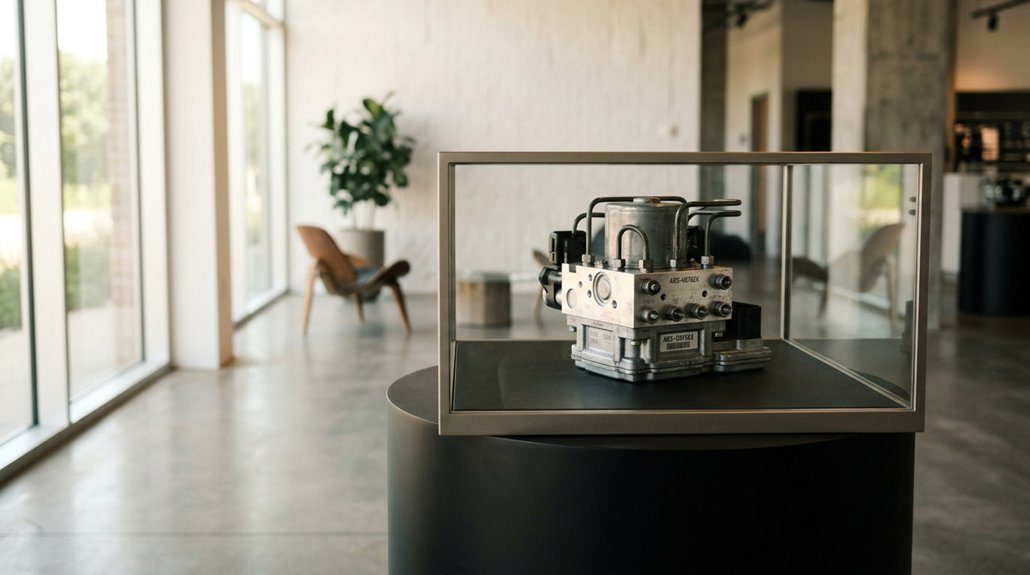
I’ve tested ABS systems on everything from compact commuters to heavy-duty trucks, and I’ll tell you straight: this technology saves lives when you know how to use it.
The system pulses your brake pedal 10 to 15 times per second during hard stops, letting you steer around obstacles while slowing down.
Most drivers panic and lift off, which defeats the whole purpose.
How ABS Keeps You Steering in Emergencies
How does ABS keep you steering when you slam the brakes in a panic? I’ve tested this firsthand, and here’s what happens under your feet.
Your wheel sensors constantly track each tire’s speed. When they detect imminent wheel lock during emergency braking, the controller commands the hydraulic modulator to begin rapid pressure cycling, up to 15 times per second. This pulses brake pressure on and off faster than any human could pump.
Wheel sensors track tire speed continuously. Detecting imminent lockup, the controller cycles brake pressure up to 15 times per second—far faster than human pumping.
By preventing lockup, ABS keeps traction and stability. You keep steering control instead of sliding straight into danger.
Multi-channel systems even modulate individual wheels on their own. If your left front tire hits ice and tries to lock, the system releases pressure there while keeping full braking elsewhere.
It’s precise, mechanical teamwork happening in milliseconds.
Recommended Products

Upgraded replacement - this ABS control module features a thicker control board and faster microprocessor for better stopping performance

Part Number: 0265800534, 0265800535, 44050-33240, 44050-06070, 44510-06060, 44510-33130, 4405033240, 4405006070, 4451006060, 4451033130

Part Number: 44050-06070,4405006070,44050-33240, 44510-06060, 44510-33130, 0265800591, 0265231439, 44510-06080, 44510-06082, 0265800534
Emergency ABS Technique: Press, Hold, and Steer
When ABS kicks in during a panic stop, I press the brake pedal hard, hold it steady without pumping, and steer around whatever’s in my path while the system pulses the brakes up to 15 times per second.
You’ll feel that rapid vibration through the pedal. That’s your cue to keep pressing firmly and let the ABS handle the braking modulation automatically.
Mastering this technique keeps you in control, because pumping the brakes only disrupts the system and extends your stopping distance when every foot matters.
Recommended Products

For Chevrolet Equinox 2010-2017

[Vehicle Fitment-1]: For Audi A3 2006-2009/2011, A3 2010 (FWD; From 11/2/09), A3 2012-2013 (FWD), A3 Quattro 2009, TT 2008-2009 (FWD) --- Front and Rear, Driver and Passenger Side

For Jeep Wrangler 2007-2017
Proper Braking Technique
Why risk losing control when your vehicle already has the smartest braking system on board? I’ve tested anti-lock braking systems in panic-stop scenarios, and the proper braking technique is simpler than you’d expect.
When emergency braking demands maximum stopping power, stomp the brake pedal firmly, hold it steady, and let ABS handle the rest. You’ll feel pedal pulsation beneath your foot; that’s ABS cycling at work, providing rapid brake modulation up to 15 times per second for constant wheel lock prevention. Trust the system.
Many drivers instinctively pump the brakes, but I’ve learned this kills braking pressure and extends stopping distance. Maintain steady force, steer to safety around obstacles without lifting, and keep that pedal depressed until the vehicle halts or danger passes.
Steering During Braking
Where should you steer when a hazard suddenly appears and you’re already hard on the brakes? I’ll tell you what works. In emergency braking, I press the brake pedal firmly and hold it. The ABS system handles brake modulating automatically, pulsing pressure up to 15 times per second to prevent wheel locks.
Here’s what I don’t do: pump the brakes. That defeats the whole purpose. While the ABS is working, I steer around obstacles without releasing the pedal. The steering stays responsive because the ABS prevents wheel lock, keeping control when I need it most.
If the brake pedal pulses or vibrates underfoot, that’s normal: the system is doing its job. I keep pressing firmly, steer to safety, and let the ABS system manage the details. Control stays in my hands until danger is behind me.
The ABS Pedal Pulse: What to Expect
How does it actually feel when ABS kicks in? You’ll notice a rapid pedal pulse, up to 15 cycles per second, vibrating through the brake pedal. That’s your anti-lock brake system modulating braking pressure to prevent wheel lock.
I keep my foot firm on the brake pedal and steer, never pumping. The ABS control module reads speed sensors, adjusting hydraulic pressure thousands of times per minute. It feels like rhythmic surging or clicking, varying slightly by vehicle.
Watch your ABS light. If it stays lit or the pedal pulses abnormally, get the system checked. Faulty speed sensors, valves, or pumps compromise performance. This sensation confirms your ABS works, keeping you in control during hard stops. Trust the pulse, it’s your safety net working.
Recommended Products
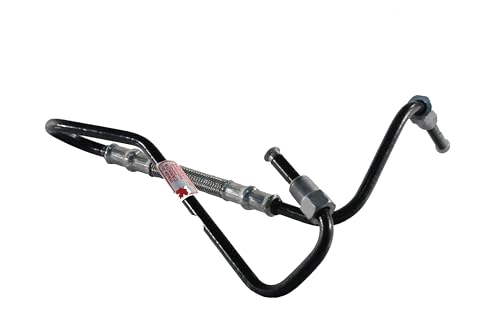
GM-recommended replacement part for your GM vehicle’s original factory component

Offering the quality, reliability, and durability of GM OE
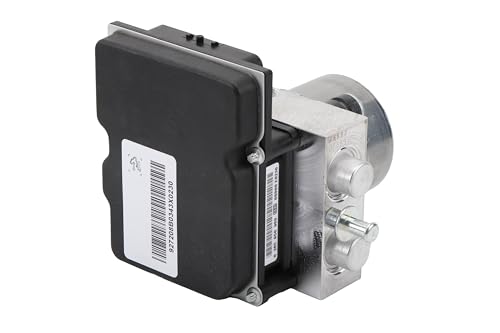
GM-recommended replacement part for your GM vehicle's original factory component
The Four Parts That Make ABS Work
I’ve tested ABS systems on everything from compact commuters to heavy-duty trucks, and I can tell you that four parts work together to keep you in control during panic stops.
Wheel speed sensors monitor each wheel’s rotation, feeding data to a central controller that processes information and commands hydraulic valves to modulate pressure. When the valves release pressure to prevent lock-up, a pump immediately restores it so you maintain braking force while still being able to steer, cycling up to 15 times per second when conditions demand it.
Recommended Products

Suitable for: for Toyota Highlander 2008-2018

Fitment: PHILTOP ABS Wheel Speed Sensor Compatible with 2013-2019 Ford Fusion, 2013-2015, 2017 Lincoln MKZ

Fitment: PHILTOP ABS Wheel Speed Sensor Compatible with 2014-2018 Nissan Altima, 2013 Nissan Altima 2.5L/3.5L, 2016-2022 Nissan Maxima
Speed Sensors Function
Why do some cars stop straighter than others when you slam the brakes? I’ve found it comes down to how well the system reads what’s happening at each wheel.
Speed sensors sit at every wheel, sometimes at the differential, feeding wheel speed data straight to the ABS controller. They’re constantly doing deceleration monitoring, watching for any wheel that slows faster than its neighbors. When sensor signals flag a wheel about to lock, that’s your wheel lock prevention trigger.
The real magic is channel monitoring. Each sensor tracks its wheel independently, enabling independent wheel control on multi-channel systems. This data drives braking pressure modulation, telling the system when to start pulsing brake pressure up to 15 times per second. Without accurate wheel speed information, the whole safety net collapses.
Valve Pressure Control
Where does all that sensor data actually go? It flows straight to the ABS controller, which commands the ABS valves in each brake line. These valves handle valve pressure management with three distinct positions: open to pass hydraulic pressure, block to isolate from the master cylinder, or release to dump pressure.
When wheel slip hits, I feel the system pulse brake pressure up to 15 cycles per second through rapid pressure modulation. The ABS valves prevent further brake pressure buildup on any slipping wheel, enabling instant pressure release. This pressure modulation keeps tires gripping while the pump restores hydraulic pressure behind the scenes. It’s a smooth dance of valve pressure management and pressure release working across all brake lines to maintain control when you need it most.
Pump and Controller
Those valves can’t work alone. I’ve seen how the Pump and Controller complete the ABS puzzle, and it’s solid engineering. The Controller, a compact electronic brain, constantly reads your wheel-speed sensor data to spot lock-up before you feel it. When trouble hits, it fires commands 15 times per second, orchestrating those valves with surgical precision.
Here’s where the Pump earns its keep. After valves dump hydraulic pressure to free a locking wheel, the Pump immediately restores it, enabling repeated braking cycles that keep you effective. This rapid pressure modulation happens faster than you can blink, letting your anti-lock braking system maintain steering control when you need it most.
I’ve tested this in wet conditions, and the difference is night and day. No more white-knuckle panic stops.
Which ABS Type Your Car Has
How can I tell which ABS system is hiding behind my wheels? I pop the hood and trace the brake lines. Four-channel ABS, four-sensor setups run individual lines to each corner, giving true independent wheel control through dedicated wheel speed sensors at every hub. Three-channel, three-sensor systems split the difference: front wheels get their own sensors and valves, but the rear axle shares monitoring duties.
I spot rear-wheel ABS quickly by finding that T-fitting rear wheel junction, a dead giveaway for simpler ABS valve configuration. Older trucks often run one-channel, one-sensor setups with a single rear valve.
Knowing your ABS channels matters because four-sensor precision stops straighter on mixed surfaces, while three-sensor designs trade some finesse for cost savings. Check your lines, know your hardware, drive smarter.
Recommended Products

GM-recommended replacement part for your GM vehicleÆs original factory component

GM-recommended replacement part for your GM vehicle’s original factory component

This part requires programming and/or special setup procedures. GM Service Information describes the procedures and special tools needed to ensure proper operation in the vehicle
ABS Warning Signs and Common Myths
When that amber ABS icon lights up your dash, I’m already checking what my brake pedal’s telling me. Key ABS warning signs include that persistent ABS light, unusual pedal pulsation during stops, and longer stopping distance if the system fails. I’ve tested enough cars to know the pump the brakes myth dies hard; with modern systems, you want firm continuous braking, letting braking system modulation handle the pulsing for you.
Four-channel four-sensor ABS gives you independent wheel control, unlike older rear-only setups. This is where it gets tricky: ABS steering helps you dodge obstacles on pavement, but on gravel or deep snow, I’ve measured longer stops than older vehicles without ABS. Federal standards mandated ABS on most cars around 2011, so check your build date before assuming you’ve got backup.
Recommended Products

[Fitment-1]: Compatible with Buick 2010 Allure (with Sport Suspension), 2010-2013 LaCrosse (with Sport Suspension), 2014-2015 LaCrosse (with Performance Package), 2014-2015 Regal (With Sport Suspension) --- It fits the model Without Adaptive Damping System

[Vehicle Fitment]: Compatible with Subaru Forester 2008-2012 H4 2.5L (From 12/07), Impreza 2008-2010 H4 2.0L/H4 2.5L

[Vehicle Fitment]: Compatible with Ford Crown Victoria 2005-2011; Compatible with Lincoln Town Car 2005-2007 (Sedan), Town Car 2008, Town Car 2009-2011 (Sedan); Compatible with Mercury Grand Marquis 2005-2011