I’ve hauled skid steers on muddy lots, squeezed through tight urban alleys, and watched crews waste hours with the wrong truck for the job.
Light-duty pickups handle crew transport and tool runs with nimble efficiency.
Mid-size rigs balance equipment hauling without the parking headaches.
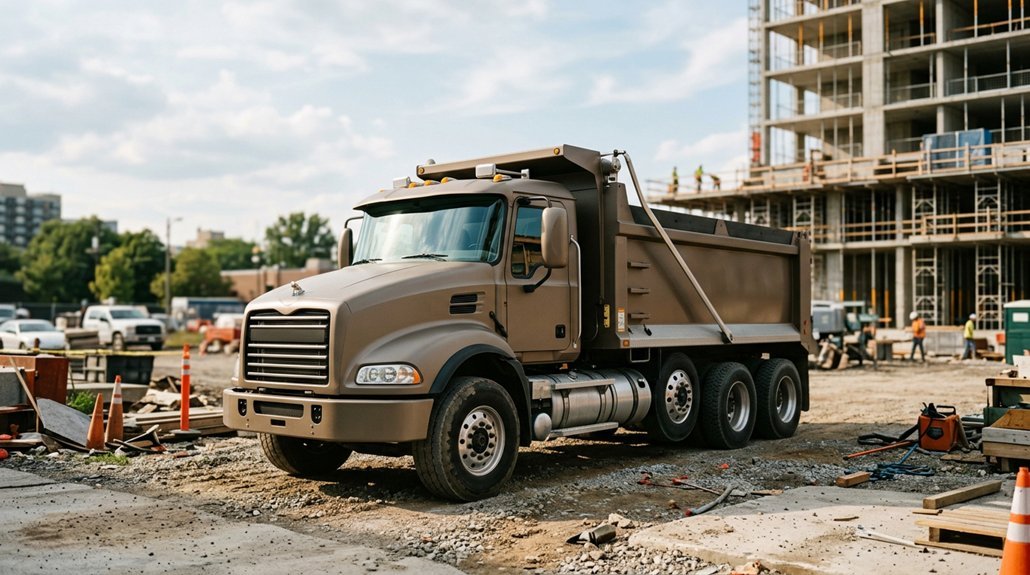
Heavy-duty dumps swallow maximum loads across brutal terrain.
Each serves a distinct purpose, and choosing wrong costs you time, fuel, and productivity.
Here’s what I’ve learned from years of matching trucks to actual site demands.
Light-Duty Construction Trucks: Crew and Tool Transport for Small Sites
Why do so many crews overbuy when a light-duty truck handles most small-site work just fine? I’ve watched teams burn cash on heavy rigs that never leave pavement, and it makes no sense. Light-duty trucks provide exactly what most of us need: reliable crew transport, efficient tool transport, and enough capability for small sites without the operational headache.
Why burn cash on heavy rigs that never leave pavement when light-duty trucks handle small-site work just fine?
Compact configurations like the Ford Maverick and Ranger nail urban accessibility, squeezing through tight streets where bigger trucks get stuck. Their fuel efficiency, especially hybrid variants, keeps daily costs manageable. I’ve found 4WD capabilities handle muddy lots and gravel access roads without drama.
Bed configurations matter more than you’d think. I’ve hauled compressors, generators, and crew gear within payload capacity limits. Know your numbers: overloading wears components fast.
For most contractors, these trucks hit the sweet spot between capability and practicality.
Recommended Products

Super brightness: Combo beam with triple row and nest reflector cup design in the middle for extreme light efficiency
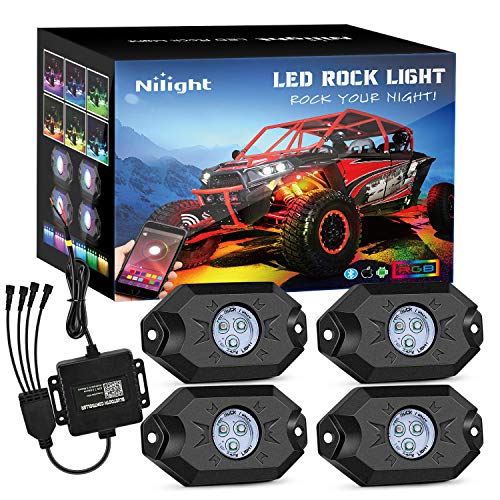
Phone APP Controlled & iPhone and Android Compatible & Timing function & Music Mode & Flashing Function & Automatic Control
Mid-Size Construction Trucks: Equipment Hauling Without the Bulk
Once a small-site setup starts hauling mini-excavators, skid steers, or palletized material loads, that light-duty truck hits its ceiling fast. That’s when I look to mid-size construction trucks for the sweet spot between capability and agility.
Mid-size dump trucks, flatbeds, and landscape trucks provide serious equipment hauling without the parking headaches. I’ve maneuvered these through tight urban jobsites where full-size rigs simply don’t fit. The bed length typically runs 12-14 feet, enough for most skid steers or bundled lumber, while towing capabilities handle 10,000-14,000 pound trailers without strain.
Site transport feels nimble yet planted. You’re getting fuel efficiency in the 15-18 mpg range, far better than heavy-duty alternatives. For crews scaling up from light-duty limits but avoiding bulk, these trucks earn their keep daily.
Heavy-Duty Construction Trucks: Maximum Loads on Rough Terrain
When a jobsite throws mud, loose rock, and steep grades my way, I don’t hesitate; I call in heavy-duty construction trucks built for exactly that punishment.
Articulated dump trucks, or ADTs, dominate off-road construction. Their pivot joint between cab and trailer lets me handle tight turns on loose ground where rigid dump trucks would struggle. I’ve watched standard dump trucks bog down in the same spots where four-wheel drive ADTs keep climbing.
Payload capacity separates real performers from pretenders. The best heavy-duty trucks pair high-torque engines with reinforced frames and advanced suspensions, maximizing dump efficiency while cutting trips. Terrain-optimized braking systems matter when you’re hauling 40 tons down a 15% grade.
For mining or major earthwork, I spec four-wheel drive and check frame ratings. These machines earn their keep where pavement never reaches.
Recommended Products

[60" x 28" Upgraded Larger Deck] This heavy duty rolling cart is an upgraded model with a spacious 60 x 27.6 in deck (6.5 in off the ground), which is significantly larger than standard platform carts on the market and provides more loading space. Built with sturdy construction, it maintains stability without wobbling under heavy loads, handling up to 2000 lbs to move bulky items efficiently. As a high-performance moving dolly, it outperforms competitors in both load capacity and loading area, meeting higher demands for industrial and commercial use.

2500 LBS Load Capacity: Crafted from robust 2mm thick steel plates, the heavy duty platform truck cart main body employs integral bending for enduring construction that withstands heavy loads and wear. Engineered with a reinforced bottom support, our platform truck ensures even weight distribution, preventing sagging, and reliably carries substantial loads up to 2500 lbs. Count on this cart for dependable performance, whether it's heavy equipment or bulk items.