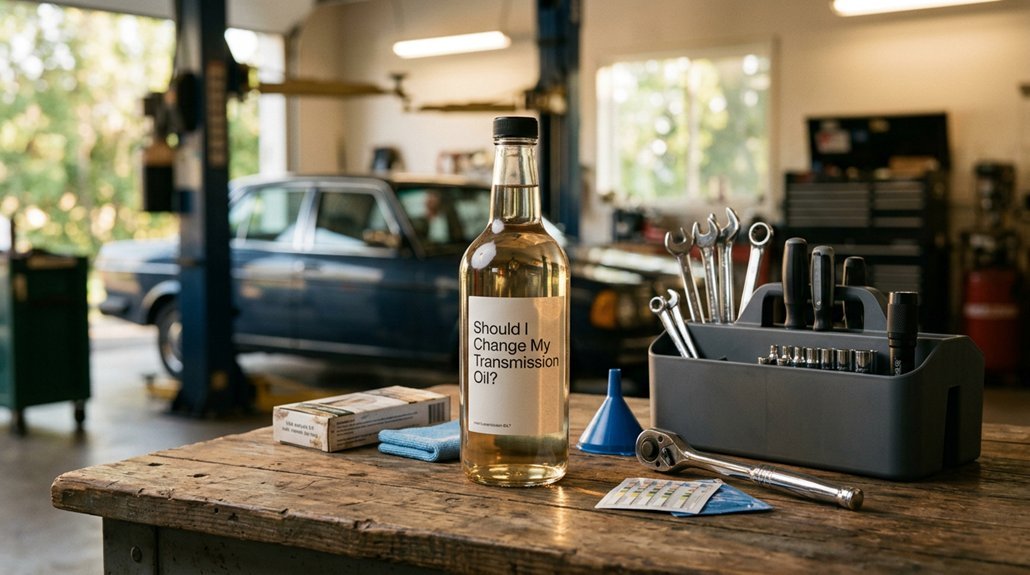
I’ve spent years under hoods, and transmission oil changes still trip people up. Fresh fluid prevents heat damage and slipping, but timing matters. Too early wastes money; too late risks failure.
I check color first: bright red is good, dark brown or burnt smell means trouble. High-mileage units need extra care; sudden flushes can dislodge debris and cause immediate problems. Your owner’s manual holds the real answer, though most drivers ignore it. I’ve seen $200 maintenance save $4,000 rebuilds, but I’ve also watched wrong methods kill perfectly good transmissions the same day.
Should You Change Your Transmission Fluid? A Decision Framework
How do you know when your transmission fluid actually needs changing? I check for dirty, brown, or burnt-looking fluid, plus warning signs like slipping, whining, or delayed shifts. These symptoms tell me it’s time for a transmission fluid change.
I’ve built a simple decision framework for this. First, I grab my vehicle manual for the manufacturer’s interval, typically 60,000–100,000 miles for automatics. Then I weigh full flush vs drain-and-fill carefully. Drain-and-fill replaces only partial fluid, leaving old fluid in the torque converter. Full flushes clean more thoroughly but can dislodge debris in neglected systems.
For a high-mileage transmission, I’m especially cautious. I prefer measured, maintenance-focused approaches, sometimes repeating partial replacements over days to gradually clean deposits without shocking worn components.
Recommended Products

[QUALITY]: Oil drip tray is constructed of high quality, recyclable polythene plastic that is resistant to corrosion so your oil pan will remain durable for carrying oil, gasoline, and antifreeze.

FLUID CATCH AND DRAIN - Collects up to 6.5 quarts (about 1.6 gallons) of used motor oil, coolant, or other shop fluids during routine maintenance and oil changes.

CAPACITY: 10-quart oil drain pan with angled neck design for efficient fluid collection and easy pouring
Flush or Drain-and-Fill: Which Method Protects Your Transmission?
I’ve weighed the decision on whether to change my transmission fluid, and now I’m staring at the service menu wondering which method actually gets the job done without creating new problems.
Here’s what I’ve learned comparing drain-and-fill versus flush approaches. A drain-and-fill replaces roughly half your old fluid, leaving some debris in internal passages but playing it safe. A full flush exchanges nearly all fluid, yet risks dislodging built-up deposits that suddenly jam valves or clutches.
I’ve seen aggressive flushing cause gear loss in neglected transmissions. Multiple drain-and-fill cycles provide a middle path, gradually reducing contaminants without shocking the system. Detergent flushes loosen deposits chemically, though underlying wear remains. For my money, patience wins: several partial changes protect better than one risky purge.
Recommended Products

Compatible with: Nissan Altima with 4 Cylinder 2.5 Engines Only 2008 2009 2010 2011 2012 2013 2014 2015 2016 2017 2018 with CVT Transmission Only

Allows CVT transmission fluid level check for the following vehicles:
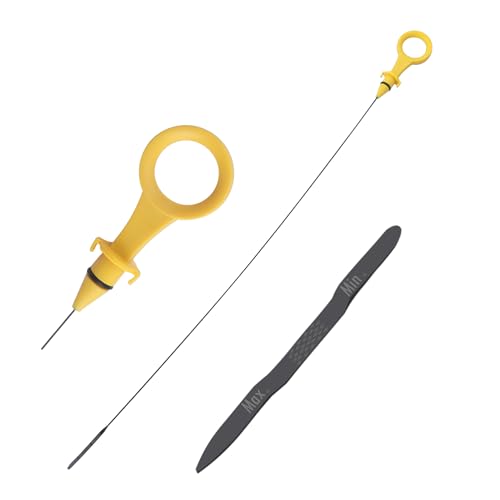
Dipstick Compatibility: Automatic transmission dipstick length is 23.9 inch and width is 0.15 inch, oil dipstick replacement OEM#06H115611E, 06H 115 611 E, and compatible with 2009-2017 Audi A4 2.0T, 2009-2017 Audi A4 Quattro 2.0T, 2009-2017 Audi A5 Quattro 2.0T. Please check the OEM and model year before purchasing so that you can get this handy checking tool
High Mileage? Check These 3 Things Before Changing Fluid
When you’re pushing past that 100,000-mile mark, swapping transmission fluid isn’t the no-brainer it once was. I’ve learned to slow down and inspect three critical things before touching the system.
First, grab that dipstick, usually red or orange, and study the dipstick color carefully. Clear or pink means you’re in decent shape. Deep red, brown, or worse, black? That’s dirty transmission fluid telling stories of deferred maintenance. Give it a sniff too. Burning odors or slipping gears spell trouble.
Second, check your service records. If this high mileage beast has never seen fresh fluid, tread lightly. Sediment has become your transmission’s weird, grimy glue.
Third, weigh your flush considerations against gentler drain-and-fill approaches. Aggressive flushing in neglected gearboxes can dislodge debris and create new problems. Sometimes incremental, repeated changes protect better than one dramatic purge.
Recommended Products

Steel funnel length: 25.6inch/650mm. Made of steel, more durable to use. Resistant to oil, and not easy to wear.

Durable Material: Made of high-quality plastic, this funnel is waterproof, impact-resistant, and flexible. It's reusable, durable, and won’t easily break or deform.

Note About Funnel Size - Please look at the 2ND picture before ordering. Will this funnel size work for your application? Be aware, it will not hold an entire quart of fluid, and is better suited for small/medium volume fluid changes. For most small to medium sized vehicles, this kit will be adequate for adding up to 5 quarts. If you plan to use this for larger applications (5+ quarts), it may take a bit longer to add all that fluid.
The Safest Approach for High-Mileage Transmission Fluid Service
Now that I’ve checked those three warning signs, I’m ready to talk about what actually works for servicing a high-mileage transmission without breaking it.
I’ve learned that a single drain-and-fill only swaps about half the old stuff, leaving gunk hiding in the torque converter and passages. That’s why I’m partial to repeating this process, spreading changes across months to gradually clean things up while keeping everything lubricated. It’s like giving your high-mileage transmission a slow, steady rinse rather than a shock.
I’ll skip aggressive fluid flushing; it can blast loose deposits that clog valves and cause shifting headaches. Instead, I follow manufacturer guidance for my specific model, factor in prior maintenance, and monitor shifting performance after each service.
Annual repeats help control debris buildup.
Recommended Products

Detects Combustion Leaks on Engines.
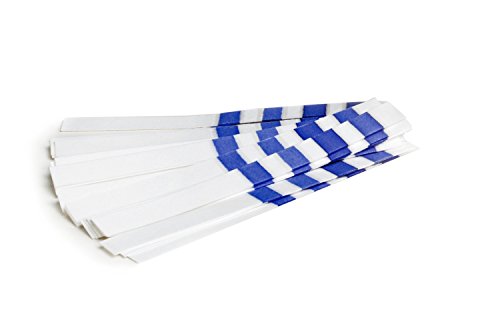
When a more precise reading of early degradation of oil is desired, try the 3M low range oil quality test strips

Coolant Test Kit, 4 PK 3-Way Strips
Is Your Transmission Slipping After the Change? What to Watch For
Why does a transmission fluid change sometimes backfire? I’ve seen it firsthand. High-mileage units can react unpredictably, and I’ve watched smooth shifters turn into slipping nightmares overnight.
Transmission slipping ranks among the most unsettling post-change symptoms you’ll encounter. I’ve tracked cases where fresh fluid improved shift feel dramatically, and others where 3rd and 4th gear simply vanished. The difference often comes down to technique.
I recommend partial drain-and-fill procedures over aggressive service. This gentler approach limits debris disturbance, protecting delicate valve bodies and clutch packs. Detergent flushes pose bigger risks; they strip deposits that were actually holding worn components together, causing temporary pressure loss and slippage.
Watch for delayed engagement, grinding, or RPM spikes after any service. These warning signs demand immediate attention before permanent damage sets in.
Recommended Products

Auto Transmission Flush Machine: Driving Force: (Electric) DC12V; Pressure Gauge: 0-60PSI


Safely removes varnish deposits