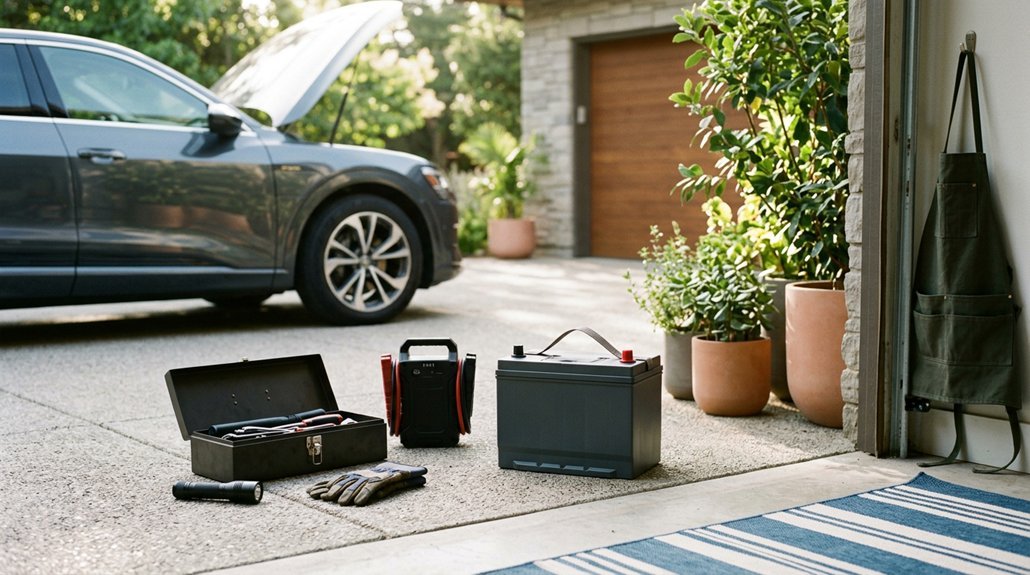
Most drivers don’t realize their car battery isn’t actually dead, just deeply discharged, and that a proper recharge can restore years of life if done correctly. I’ve tested dozens of chargers, from basic 2-amp trickle units to heavy-duty 40-amp models. The difference between saving a $120 battery or destroying it often comes down to amperage selection and connection order.
The real question isn’t whether you can recharge it, but whether you’re using the right equipment for your specific battery type. You also need to know what warning signs indicate it’s time to stop trying and replace it instead.
Safety First: Prep Your Battery and Workspace
Why risk a spark when a few minutes of prep keeps you safe? I always start by killing every electronic draw, interior lights, radio, everything. Most batteries stay right where they are, but if yours needs lifting, secure it in a tray with hold-downs where you can reach both the positive terminal and negative terminal without strain.
Battery safety means suiting up. I never skip protective gear: safety glasses, acid-resistant gloves, and a face shield if I’ve got one. Hydrogen gas builds up during charging, and that stuff ignites fast. I work only in well-ventilated spaces, fans running, with flammables cleared at least three feet back.
Your battery charger deserves respect. Treat it right, and it’ll treat you right.
Recommended Products

All In One Car Battery Charger: The portable car battery charger is an all-in-one solution: reconditioner, maintainer, trickle charger, desulfator, and trickle charger for car battery 12V ( lifepo4 battery chargers ), 12V/24V lead-Acid batteries. Notice: Not applicable to 24V lithium iron phosphate and other lithium batteries.
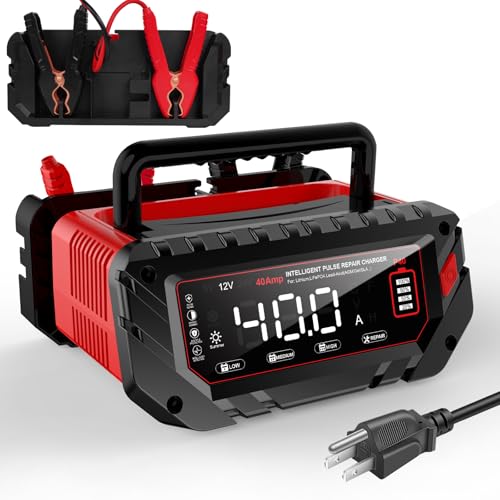
【One-Button Start】Car Battery Charger can automatically identify the type of battery, and one-click start, Max current 6V/10A, 12V/40A, 24V/16A. The ability to quickly charge your battery, easy to operate, folding grip, easy to carry and store.

🚗🔋Wide Applications: This battery charger is used for 6V/12V/24V LiFePo4 Batteries, Lithium Batteries and Lead-Acid(AGM, Calcium, GEL, MF, EFB, SLA, VRLA, WET, etc) Batteries. It can be used as battery charger, battery maintainer, trickle charger, and pulse repair charger. No complicated steps, plug and charge, and set your batteries on your own. The must-have tool for your garage. It is widely used to provide safe and efficient charging for cars, motorcycles, boats, lawn mowers, etc.
How to Connect and Run Your Battery Charger (Step by Step)
How do I keep from frying my battery or my charger? I always start with my battery charger powered off, it’s non-negotiable for charging safety.
I attach the positive clamp (red) to the dead battery‘s positive terminal first, then the negative clamp (black) to the negative terminal. This sequence prevents dangerous short circuits that could damage my equipment or worse. If I’ve removed the battery, I secure it upright before connecting anything.
Once my clamps are tight and stable, avoiding any bumping that might loosen them, I power on and select the lowest amperage setting for a gentler, more controlled charge. I keep the charger connected directly to the battery, not the vehicle frame.
When finished, I switch off and unplug first, then remove the negative clamp before the positive, reversing my connection order. I store everything safely, ready for next time.
Recommended Products

Stay Charged: Battery Tender battery chargers and maintainers provide a full charge to your powersport vehicle’s battery before switching to float mode to maintain proper voltage levels for safe, long-term storage

PREVENT BATTERY FAILURE: Ensure reliable starts after storage with this 3-in-1 device that charges, maintains, and reconditions batteries for cars, motorcycles, ATVs, trucks, SUVs, and boats.

MEET THE GENIUS1 — Similar to our G750, just better. It's 35% smaller and delivers over 35% more power. It's the all-in-one charging solution - battery charger, battery maintainer, trickle charger, plus desulfator.
How Long to Charge and What Amperage to Choose
When I’m staring down a dead car battery, my first question is always about timing: how long until I’m back on the road, and what amperage won’t cook my investment?
Charging time typically runs 1, 6 hours for a partial boost, though a full recharge can stretch overnight depending on your battery charger’s output and your battery’s capacity. Higher amperage brings speed but trades longevity, while lower settings treat your battery gently and extend its service life.
I always start at the lowest rate my battery charger provides, only bumping up if the unit or battery demands it. Match your charger to your battery type, maintenance, free or flooded, and follow any auto, identification prompts for amperage selection.
Once charge complete appears, disconnect immediately and verify the battery holds voltage before counting on it.
Recommended Products

Charger, Maintainer & Desulfator - An all-weather battery charger, battery maintainer, trickle charger, and battery desulfator. Perfect for charging and maintaining all 12-volt lead-acid, flooded or sealed maintenance free batteries (AGM and gel cell).

【Short Circuit Protection】:This charger adopts the best integrated circuit solution without worrying about overcharging. It has multiple protection functions, and its protection system can prevent short circuits, overcurrent, overheating, high voltage spikes, and low voltage drops to achieve maximum safety.

MEET THE GENIUS2 — Similar to our G1100, just better. It's 30% smaller and delivers over 140% more power. It's the all-in-one charging solution - battery charger, battery maintainer, trickle charger, plus desulfator.
What to Do If Your Battery Won’t Hold a Charge
Sometimes a battery just refuses to stay alive, and I’ve learned that’s when the real detective work begins. First, I run a proper battery test using a professional load tester or check Open Circuit Voltage to confirm actual capacity. If the numbers look off, I inspect for swollen cases, terminal corrosion, or electrolyte leaks; these physical signs mean replacement, not recharging.
Next, I hunt for parasitic draws and test the alternator with everything off. If the battery passes but still dies, I grab my battery charger matched to the type, lead-acid, AGM, or EFB, connect positive first, then the negative cable, and set an overnight charge at low amperage. Overcharging risks hydrogen buildup, so I monitor closely.
Persistent failures demand a full charging-system diagnosis.
Recommended Products

【6-AMP QUICK CHARGER】12 volt 6-Amp quick car battery charger, can charge or repair all 12-volt lead-acid automotive, marine and deep-cycle batteries including AGM, GEL, SLA, Flooded in cars, trucks, SUVs, motorcycles, lawn mowers, boats, etc.(NOT JUMP STARTER CAN NOT JUMP START BATTERIES)
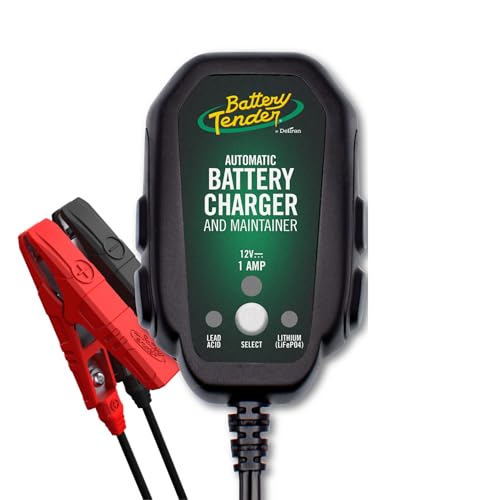
Stay Charged: 12V Battery Charger, 800mA Selectable Lead Acid/Lithium Battery Charger It will keep your battery fully charged so that it is ready to go when you are

Adaptive Smart Charging: Our battery maintainer adapts to the needs of your 12V battery, ensuring optimal charging and extending battery life. Ideal for Automotive, Motorcycle, and Lawn Mowers.