
My wallet’s been lighter than I’d like after tax season, and I’ve spent years figuring out where car insurance fits into the puzzle. You’ll want to know whether your premiums can pull double duty, protecting your vehicle and trimming your tax bill. The answer depends on one critical choice.
What Counts as Deductible Business Use of Your Vehicle?
How do you know if your car insurance qualifies for a tax break? It depends on your business use and which method you pick.
Your car insurance tax break hinges on business use and which deduction method you choose.
I’ve tracked both approaches. The standard mileage rate gives you a fixed per-mile deduction, currently $0.70 for 2025, but here’s the catch: you can’t claim separate vehicle expenses like insurance premiums under this mileage deduction. You take the rate and you’re done.
The actual expenses method works differently. You tally all deductible costs, fuel, repairs, depreciation, lease payments, and yes, insurance, then apply your business-use percentage. For mixed use, say 70% business miles, you deduct 70% of those costs.
Watch the commuting rules closely. That daily drive from home to your main workplace? It doesn’t count toward business use. Only trips between work sites, client meetings, or supply runs qualify.
Recommended Products

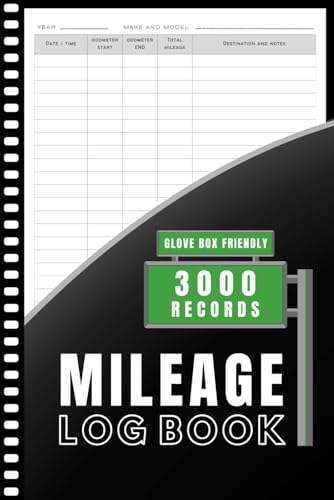

TRACK 1,674 TRIPS IN ONE ORGANIZED LOG BOOK — Keep a clear record of your business and personal driving with 128 pages and 1,674 trip entries. Each entry provides space for the date, business purpose, starting and ending odometer readings, and total mileage, making it easy to keep your mileage records organized and easy to review.
Who Can Actually Deduct Car Insurance Premiums?
Where exactly do you stand regarding writing off your car insurance? I’m glad you asked, because I’ve sorted through the rules so you don’t have to.
I’m self-employed, so I claim my auto insurance premiums on Schedule C as part of my business vehicle expenses. It’s straightforward, and it works. But I’m not alone in qualifying for these tax deductions.
You’re also in luck if you’re an Armed Forces reservist traveling up to 100 miles for duty, a qualified performing artist working between gigs, or a fee-basis state or local government official. These groups often miss out because they assume deductions are only for the self-employed. They’re not.
- You deserve every dollar you’ve earned, and these deductions prove it.
- Your service and hard work matter, and the tax code finally recognizes that.
- You’re part of a community that works hard, and this is your reward.
Recommended Products

New Set of 2 Auto Car Registration & Insurance Card Holder
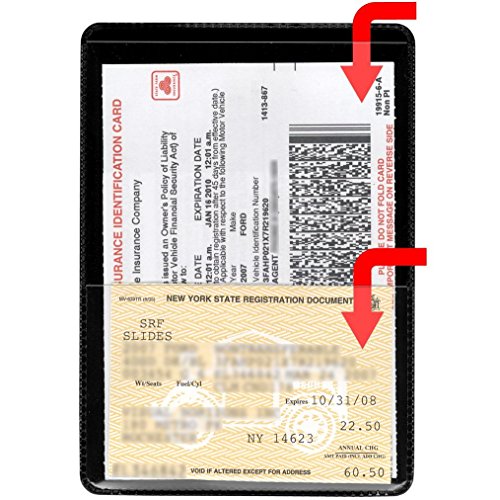
⭐ Archival Protection Each pack includes 1 sleeve made from archival-quality plastic that won’t lift ink—keeps both your insurance cards crisp, clean, and safe, day after day.

All you need to track your expenses
Standard Mileage or Actual Expenses: Which Saves You More?
I’ll walk you through comparing the Standard Mileage and Actual Expenses methods, since picking the right approach can mean a bigger tax break on your car insurance and other vehicle costs. You’ll want to look at your business-use percentage, your total miles driven, and whether you’re leasing or owning, because these factors determine which method puts more money back in your pocket.
I’ve seen taxpayers leave hundreds on the table by defaulting to Standard Mileage without running the numbers on Actual Expenses first.
Recommended Products

KEEP PERFECT RECORDS: Adams Vehicle Mileage and Expense Journals help you log business use of your car or truck with year start and year end odometer readings and flawless daily records

![Dome Auto Mileage Log, Undated, 32 Forms [Set of 3]](https://m.media-amazon.com/images/I/41sEwjitquL._SL500_.jpg)
Comparing Deduction Methods
When I’m staring at my tax software each spring, the choice between standard mileage and actual expenses feels like picking between two fuel grades, both promising savings but delivering different results depending on how I drive. I crunch numbers both ways because the standard mileage rate bundles everything into one simple calculation, while the actual expenses method lets me itemize deductible insurance premiums alongside gas, repairs, and depreciation.
For mixed personal and business use, I must track my business-use percentage carefully. Mileage tracking becomes my best friend here. I prorate costs based on actual miles driven for work. These tax deduction methods reward precision.
The actual expenses path demands more paperwork, but when my insurance runs high or repairs pile up, it often wins.
- The frustration of watching dollars slip away when you guess wrong on your method
- The quiet pride of nailing your business-use percentage down to the exact mile
- The relief of knowing you belong to the tribe of filers who never leave money on the table
Choosing Your Approach
How do you know which method puts more money back in your pocket? I run both numbers every year.
The standard mileage rate for 2025 is 70 cents per mile, simple and clean, but you cannot separately deduct insurance with this approach. With actual expenses, I track my business-use percentage, then apply that same slice to fuel costs, repairs, depreciation/lease, and yes, I deduct insurance too. If my vehicle sits heavy with insurance premiums and low mileage, actual expenses usually win. If I rack up highway miles in an efficient car, standard mileage often takes the lead.
The beauty is flexibility. I compare both calculations annually, then switch methods to whichever gives the bigger tax deduction. One year I claimed 72% business use; the next, mileage made more sense. Keep records sharp, stay nimble, and maximize what stays yours.
How to Calculate Your Car Insurance Business-Use Percentage
Why does your business-use percentage matter so much? It determines exactly how much of your car insurance you can write off.
I calculate mine by dividing my business miles by my total miles driven, business plus personal use, for the same period. If I drive exclusively for business, I hit 100% and maximize my deduction under actual expenses. When I mix uses, I apply that percentage to my total expenses.
I keep a detailed mileage log with starting points, destinations, and trip purposes. It protects me if questions arise. For the standard mileage method, I skip separate insurance claims and just multiply business miles by the IRS rate.
- The relief of knowing every mile is tracked and justified
- The confidence of walking into tax season fully prepared
- The satisfaction of claiming every dollar I’ve rightfully earned
Recommended Products

Protect Your Documents: Car registration and insurance holder protects documents from wear and tear, takes up little space in the glove compartment or on the visor. It enables your essential vehicle and insurance paperwork organized and easily accessible.

Protect Your Documents: Car registration and insurance holder protects documents from wear and tear, takes up little space in the glove compartment or on the visor. It enables your essential vehicle and insurance paperwork organized and easily accessible.

UNHAPPY? - Each HERRIAT product is inspected one by one before sale. Our responsibility covers any defect caused during product production and delivery. In case you are not satisfied with your purchase, return or replace it without any problem.
Where to Report Car Insurance Deductions on Your Taxes
I report my car insurance deductions on Schedule C if I’m self-employed, which keeps everything straightforward on my Profit or Loss From Business form. If I’m not self-employed but fall into special categories like armed forces reservists or fee-based government officials, I use Form 2106 instead to calculate these deductions.
Either way, I make sure I’m tracking my business-use percentage accurately, since that percentage determines how much of my premium I can actually write off.
Recommended Products

KEEP DETAILED RECORDS OF THE CAR'S MILEAGE - This mileage log book for car, whether you are a professional driver who needs accurate mileage reimbursement records, or you just want to track your personal vehicle usage, our mileage log book is the perfect choice for you

What You Will Receive: you will receive 2 pieces of car mileage and expense notebooks, each notebook contains plenty of pages, which are enough for your daily use and record keeping needs

60 Pages With 6 Pockets Auto Mileage Log for Accurate Odometer Tracking:Keep detailed auto mileage records for business driving with a clear and structured vehicle mileage log helping you track date odometer start end and total miles for accurate reimbursement and tax documentation
Schedule C Filing
Three distinct paths exist for reporting car insurance on your taxes, and I’ve walked each of them enough times to know which one actually saves you money.
As a self-employed filer, I report my car insurance on Schedule C, Profit or Loss From Business. I treat it as part of my business vehicle expenses, alongside gas, repairs, and depreciation. When I choose the actual expenses method, I calculate my business-use percentage by dividing business miles by total miles driven. I then multiply my annual insurance premiums by that percentage to find my deductible amount.
This expenses deduction goes directly on Schedule C, line 9 for “Car and truck expenses.”
The relief of finally claiming every mile you drove for that client meeting. The pride of running your business like the pro you’ve become. The security of knowing you’ve kept every receipt, every log, every proof.
I never mix personal trips into my business-use percentage, and I keep a mileage log to back up my numbers.
Form 2106 Usage
Where do you turn when you’re not self-employed but still need to write off car insurance on your taxes? I use Form 2106, the form designed for Armed Forces reservists, qualified performing artists, and fee-basis government officials like us.
I calculate my car insurance deductible by tracking my business use percentage throughout the year. My mileage logs separate business trips from personal driving, while receipts for auto expenses build solid documentation. I apply the percentage strictly, no guessing.
Once I complete Form 2106, I transfer that allowable amount to Schedule C or whichever form fits my situation. If I were fully self-employed, I’d skip Form 2106 and report directly on Schedule C instead. Either path works when I keep thorough records and calculate accurately.
Business Vehicle Deductions Beyond Insurance
Although car insurance often gets the spotlight, I’ve found that truly maximizing your business vehicle deduction means looking at the full picture of what you’re spending to keep that car running. When you file Schedule C, the actual-expenses method lets you claim your business-use percentage of total vehicle expenses, not just insurance. This includes depreciation, gas and repairs, and lease payments if you’re renting your ride.
For mixed personal and business driving, you’ll need to track miles carefully to split costs fairly. I recommend logging every trip: it takes discipline, but it protects you if questions arise.
- The relief of knowing every deductible dollar is captured, not just the obvious ones
- The pride of running a tight, professional operation that leaves money on the table for no one
- The confidence that comes from mastering a system many freelancers rush through and regret
Recommended Products

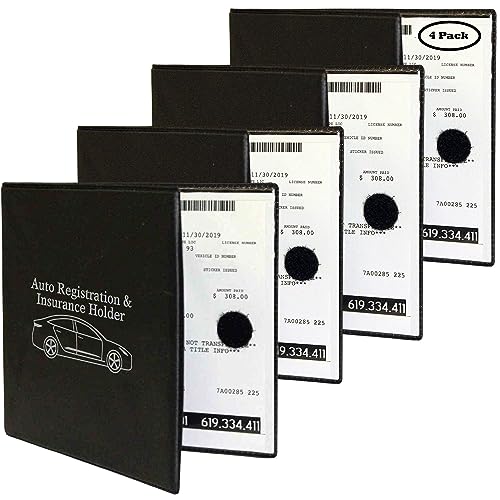
4 pack Car Registration and Insurance Card Holder for any Car, Truck, Motorcycle, or Automotive Vehicle. Easy to store In any visor or glovebox.
8.5" x 11" standard letter size