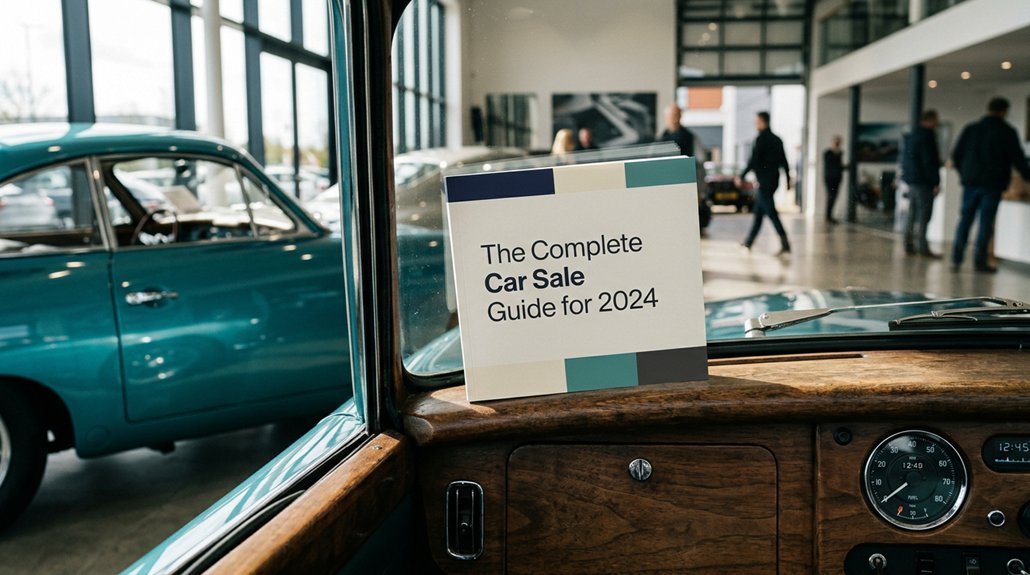
I’ve sold cars both ways, and the gap between a smooth deal and a nightmare usually comes down to preparation. Kelley Blue Book and Edmunds give you a baseline, but I always cross-check local listings to see what buyers actually pay. Clean title, full service records, and upfront condition notes build trust fast.
I’ll walk you through pricing tactics, picking your sale route, and the paperwork that keeps you protected long after the keys change hands.
How to Price Your Car for Top Dollar
How do you squeeze every dollar out of your old ride without scaring buyers away? I start pricing by digging into Kelley Blue Book, Edmunds, and local listings for my exact year, make, model, trim, and mileage. Knowledge is leverage here.
I set my ask slightly above target, leaving negotiation room while watching demand and seasonality. Spring and early summer bring eager buyers; January and February freeze interest, so I time accordingly.
For justification, I highlight low mileage, maintenance records, and recent repairs with paperwork attached. Trust closes deals. I’ll even provide a transferable warranty or short trial period to differentiate myself. Each detail signals I’m not another random seller; I’m someone who prepared, and that belongs in every serious buyer’s search.
Recommended Products


BROAD COMPATIBILITY ACROSS BRANDS - Compatible with all major car brands, fits with TOYOTA, VOLKSWAGEN, HONDA, CHEVY, BMW, HYUNDAI, KIA, FORD, LEXUS, JEEP, AND ALL OTHERS. Most of the car key fobs use this type of CR2032 batteries. Direct battery replacement for your key fob.
Dealer vs. Private Sale: Which Route Fits You
Where exactly should I sell my car to get the best deal without losing my sanity?
I have wrestled with this choice myself. Dealers move fast, they swallow the paperwork whole, and I walk away with cash in hand, sometimes the same afternoon. Certified AutoBrokers, for example, uses a purchase agreement and handles my payoff or lien directly. But that convenience costs me: their margin bites into my bottom line.
Dealers move fast and swallow the paperwork whole, but their margin bites into my bottom line.
A private sale demands more legwork on my end. I coordinate with lenders, manage DMV transfers, and stack up title, odometer disclosure, bill of sale, plus release of liability.
Buyers pay more because they want my service records, my vehicle history, and room to negotiate. If my car is clean and documented, I pocket the difference.
Recommended Products

NEW SPARQ INSIGHTS NOW INCLUDED: Go beyond basic diagnostics with vehicle history, accident reports, title records, recall alerts, repair estimates, ownership insights, and vehicle value tools built directly into the SPARQ app.

How to Find Buyers and Negotiate Safely
Once I have decided to sell privately, I need to put my car where serious buyers are actually looking, and I need to protect myself while we talk numbers. I start with a spotless vehicle, all documents ready: title, payoff info, odometer reading, maintenance records. This builds immediate trust.
I research current market data for my exact trim, mileage, and condition, then price competitively. A pre-purchase inspection from an independent mechanic justifies my asking price and heads off surprises.
The relief when a buyer shakes my hand, knowing I’ve been honest about every detail. The pride of presenting records that prove I cared for this machine. The security of a signed bill of sale with VIN, date, price, and as-is terms. The confidence that transparency about liens and repairs brings to both of us.
I stay ready to negotiate, using dealer buy-back offers as leverage.
Recommended Products

110 Sheets Log Book: This vehicle maintenance log book includes 110 record sheets to track repairs, services, fuel costs, and other vehicle-related expenses. It also comes with 36 convenient “Service Due” stickers to help remind you of upcoming maintenance schedules. Everything you need to keep your car records organized in one place.

COMPACT SIZE FITS EASILY IN GLOVEBOX - measures just 9" x 5.5"

Signing Over the Title and Protecting Yourself After
Why risk a paperwork nightmare when I am this close to closing the deal? I make sure my signature matches my printed name exactly on the title transfer document, no exceptions.
I always verify lien payoff completion first. My lender must provide a lien release before I hand over anything. If my title’s lost, I grab a duplicate from the DMV immediately.
I watch the buyer fill in their name, address, sale date, and price in the right spots. No erasures, no delays. I attach the odometer disclosure, bill of sale, and lien release to complete my title transfer package.
Then I file that Notice of Transfer with my state DMV the same day. This step protects me from tickets, accidents, or fines that aren’t mine. I’m done, I’m protected, and I’m driving away clean.
Recommended Products

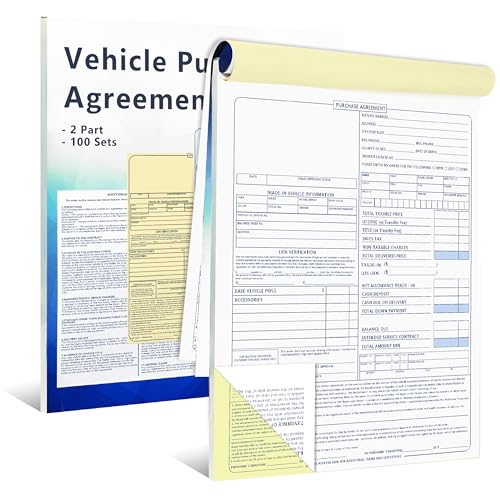
Essential Vehicle Purchase Agreement Forms for Auto Sales:Designed for car dealerships and private sales these 2 part carbonless forms clearly document vehicle purchase details with white and yellow copies for buyer and seller.Additional terms and conditions are printed on the back

【Standard Letter Size — 8.5" x 11" for Easy Filing】Each form measures 8.5" x 11" — fits perfectly in standard filing cabinets, binders, and scanners. No trimming, no hassle. Compatible with any office or dealership filing system.