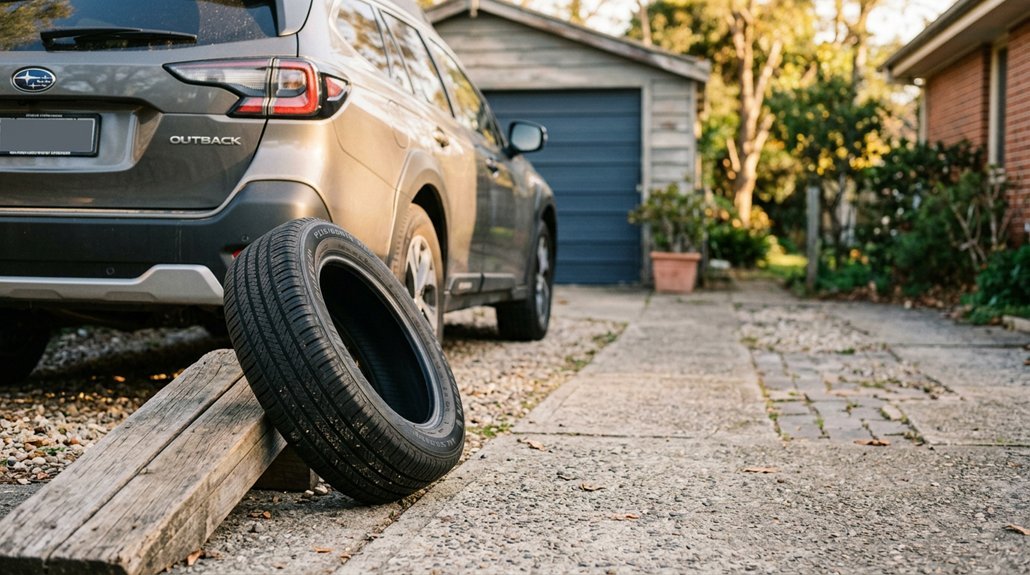
Last March, my neighbor drove through a storm on worn tires and slid straight into a guardrail. His tread had looked fine to the eye, but the depth had dropped below 2/32 inch, the legal minimum.
I’ve since learned that judging tire life by appearance alone is a gamble I won’t take again. The real triggers are hidden: rubber degrades internally, winter heat cycles harden compounds, and damage lurks in sidewalls you’ll never spot at a glance. Most drivers miss the warning signs until it’s too late.
The Penny Test: Check Your Tread in 30 Seconds
How do you know when your tires have actually hit their limit? I grab a penny and find out in thirty seconds flat.
I insert Lincoln’s head downward into the deepest tread groove, pressing firmly for an accurate read. If his entire head stares back at me, I’m at 2/32 inch or less; that’s a fail, replacement time. Anything above passes, but barely.
I test all four tires because uneven wear screams alignment trouble or inflation problems. Dry, debris-free rubber gives me the truest measurement.
This quick screening won’t catch hidden impact damage or internal failures, so I pair it with professional inspections and monthly pressure checks.
It’s not perfect, but it’s fast, free, and keeps me informed between shop visits.
Recommended Products

1.Accurate and Efficient: Different colors on the bar represents different scopes, the red range on bar: 0 - 3/ 32; Yellow range on bar: 3/ 32 - 6/ 32; Green range on bar: 6/ 32 - 32/ 32, allowing you easy and fast to read and calibrated

【ACCURATE MEASUREMENT】LUMITECO tread depth gauge is calibrated from 0 to 1 inch in 1/32 inch, allowing for precise measurements and ensuring optimal safety and performance for your vehicles. Making it effective and easy to keep an eye on tire tread wear and know when it's time for new tires.

1. Accurately measures tire tread depth gauge tool, Calibrated from 0 to 1 inch in 1/32 inch
How to Read Tire Wear Patterns
I check my tires monthly, and I’ve learned that reading wear patterns tells me far more than just tread depth. When I see uneven wear across the tread, that’s my cue to check inflation pressure or schedule an alignment before I’m forced into early replacement.
Understanding these visual cues, from center rib wear indicating over-inflation to shoulder wear showing under-inflation, helps me maximize mileage and identify suspension issues before they become safety hazards.
Recommended Products

Easy to read. Two calibration meters(inch and millimeter) in order to make people read more easily and suitable for the wider population. Color coded tire tread depth gauge clearly indicates the tire different phase by colors.
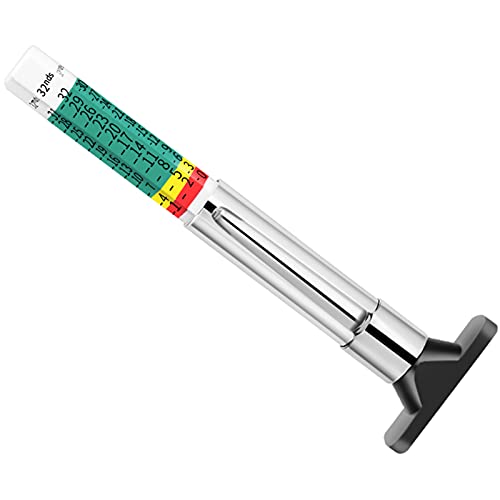
1. Accurately measures tire tread depth gauge, Calibrated from 0 to 1 inch in 1/32 inch

Premium Quality: Our stem cap is made of high-quality stainless steel material with excellent hardness and rust resistance. You don't need to worry that it will break easily. The internal chrome-plated copper core has extra-high temperature and wear resistance and can serve you for a long time
Common Wear Indicators
Where exactly do your tires exhibit wear? I check mine regularly, and you should too.
I start with the penny test: insert Lincoln head-first into the tread. If I see the top of his head, I’m at or below 2/32 inch, which means replacement time. Most tires also have built-in wear bars that become flush with the tread surface at that same 2/32 threshold, making the check even easier.
I don’t stop at tread depth, though. I scan my sidewalls for cuts, bulges, or cracks, damage that can force replacement regardless of how much tread remains. I also watch for uneven patterns across the tread face, since these hint at inflation or alignment issues I’ll want addressed.
Finally, I schedule professional inspections. Experts spot early warning signs I might miss and advise whether I need rotation, maintenance, or new rubber entirely.
Uneven Wear Causes
When you notice your tires wearing unevenly, you’re looking at a diagnostic story written in rubber. I’ve learned to spot the culprits fast. Underinflation wears those outer edges thin, while overinflation guts the center tread, robbing you of contact patch and grip. Misalignment or suspension issues leave feathered ridges or cupped patches that hum and vibrate at speed.
Here’s what your tires are telling you:
- Edge-heavy wear screams pressure problems, under or over
- Feathered patterns point to toe-out alignment faults or worn joints
- Cupped dips across the tread signal shocks or struts crying for help
I rotate my tires every 5,000 to 8,000 miles, keeping matched sets for balanced handling. Regular depth checks across all four wheels catch these issues before they cost you safety.
Reading Tread Patterns
How do you know what your tires are really telling you? I check my tread wear regularly because those patterns reveal everything about my car’s health. When I spot uneven wear, more rubber gone on one edge or heavy shoulder blocks, I know inflation, alignment, or suspension needs attention fast.
I keep a penny handy for quick checks. If I can see Lincoln’s head, my tread’s below 2/32 inches, replacement time arrives. I also watch for those built-in wear bars; they’re my visual cue when rubber meets that critical depth.
Here’s what I practice: I document wear across all four tires, comparing patterns monthly. This habit catches problems early and guides my rotation schedule. If I notice irregular wear or recall notices, I visit a professional immediately. Aging rubber and hidden damage compromise safety, so I never gamble on worn tread.
The 10-Year Rule: When Tire Age Forces Replacement
I don’t care how good your tires look, once they hit ten years old they’re done, period. That spare tucked in your trunk needs the same birthday check, because a blowout on the shoulder defeats the whole purpose.
I’ll show you how to find those date codes and why professional inspections matter even before that decade mark rolls around.
Recommended Products

Made in the USA – Designed, tested, and built for durability and long-term performance.

Emergency Sidewall Savior for Off-Roaders: Specifically designed for sudden sidewall gashes and punctures up to 1.5 inches. This 2-piece heavy-duty steel kit creates a mechanical compression seal that gets your ATV, UTV, or tractor safely back to camp or garage. No towing fees, no waiting for roadside assistance.

Emergency Use Only: Specifically designed for tire sidewall tears measuring no more than 1.5 inches in length. Sidewall slug employs an innovative "pull-in, press-out" mechanism that simultaneously clamps the puncture from both the inside and outside of the tire, generating a clamping force far superior to that of traditional rubber plugs or patches. Repairs can be completed within minutes, allowing you to safely return to camp or the nearest service center.
Maximum Tire Lifespan
Why gamble with a decade-old rubber compound that’s been slowly hardening in your garage? I don’t, and neither should you. The 10-year rule exists because rubber degrades regardless of how pristine those tires look.
Here’s what I’ve learned about maximum lifespan:
Rubber oxidizes from the inside out, creating invisible cracks that compromise structural integrity. Tread depth means nothing when the sidewall loses flexibility under load. Heat cycles, UV exposure, and ozone speed up aging even on stored spares.
I inspect my tires annually with a professional after year five, but I mark that decade deadline in my calendar without exception. Monthly inflation checks and rotations help performance, yet they can’t reverse chemical breakdown. When your tires hit ten years, replacement isn’t optional, it’s membership in the community of drivers who prioritize safety over savings.
Spare Tire Checks
That same 10-year deadline applies to the spare you’ve probably forgotten about. I’ve seen plenty of drivers with pristine-looking spares that are ticking time bombs. Age degrades rubber compounds even without road wear, UV exposure, or inflation cycles.
I check my spare monthly, same as my regular tires. I verify pressure, inspect sidewalls for cracks, and note the DOT manufacture date stamped on the sidewall. That four-digit code tells me everything: week and year of production. Anything from 2014 or earlier gets replaced, no exceptions.
Don’t let appearance fool you. A spare that looks showroom-new can fail catastrophically under load after a decade of chemical aging. I coordinate with my tire professional to confirm replacement timing, following manufacturer guidance. Your spare’s your lifeline you’re stranded, make sure it’s ready to perform.
Tread vs. Age: Which Replacement Trigger Wins?
How do I know when my tires are truly done? I’ve learned it’s never just one thing. Tread depth matters, but age quietly wins more often than you’d expect.
Tread depth matters, but age quietly wins more often than you’d expect.
I use the Pennny Test regularly, inserting Lincoln’s head downward into my tread grooves. If I see his whole head, I’m at or below 2/32 inch, time to replace. Those built-in wear bars also catch my eye; they’re flat indicators that confirm what measurements show.
Here’s what keeps me grounded in this decision:
- Tread below 2/32 inch demands immediate action for safety
- Age over 10 years means replacement, regardless of appearance
- Even my spare follows that decade rule, no exceptions
I weigh both factors during inspections. Tread tells me what’s happening now; age reveals hidden deterioration I cannot see.
Recommended Products
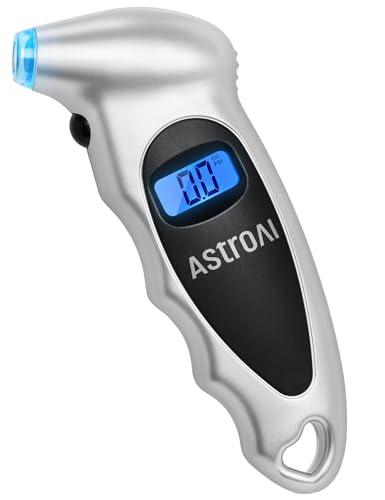
Accurate, Dependable Readings: Factory‑calibrated to ±1 PSI, so you can confidently match your vehicle’s recommended PSI (check the door jamb sticker). Ideal for monthly checks and road trips — consistent results every time, cold or warm.

PROCESS LEVEL ACCURACY: Each ETENWOLF’s digital tire pressure gauge is calibrated manually to ANSI B40.7 Grade 2A(plus-minus 1 PSI).Presta valve adapter not included, if used for bicycles, it must be purchased separately

RUGGED DESIGN: The stainless steel components prevent rust and corrosion while the precision-crafted nozzle seamlessly seals onto the valve stems for highly accurate readings (±2% span). We also provide 4 valve stem caps for convenient replacement.
Replace Two Tires or Four? The Safe Approach
When I’m staring at worn rubber and checking my bank balance, the question becomes practical fast: do I spring for four new tires or get away with two? I’ve learned the hard way that four matching tires give identical handling and traction, and that’s what the pros recommend. Tread depth at or below 2/32 inch means we’re due, so I check mine with a quarter.
If I’m forced to do just two, I mount the fresh rubber on the rear axle, even on my front-wheel drive. This prevents hydroplaning and keeps the back end planted. I always match the category and tread pattern with what’s staying on the car.
For staggered setups, I consult my manual or a tire tech to avoid unbalanced performance.
Recommended Products

Accurate and precise tire tread depth readings in 1/32 inch increments (1/128 inch resolution)

Accurate measures tire tread depth gauge tool

EASY TO READ AND ACCURATE: LUMITECO tire tread depth gauge has an easy-to-read 32nds scale, maximum tread depth of 14/32 inch. It offers precise readings in 1/32 inch increments (1/128 inch resolution). Ensure you know the exact tread depth of your tires for enhanced safety on the road.
Tire Damage That Requires Immediate Replacement
Why gamble with a blowout at 70 mph? I inspect my tires monthly because hidden damage kills confidence, fast.
Some flaws demand immediate replacement, no exceptions. I look for sidewall cuts, bulges, or nails in unrepairable zones. Even my spare gets checked. Tires age out at ten years regardless of tread.
Watch for these warning signs:
- Tread depth at 2/32 inch or below, shown by wear bars or a gauge
- Cracking, bleeding, or impact damage from potholes or curbs
- Uneven wear that rotation and alignment can’t fix
I replace damaged tires immediately. Safe handling belongs to drivers who refuse to compromise. Your crew depends on rubber they can trust.
Recommended Products

Premium Quality: Our stem cap is made of high-quality stainless steel material with excellent hardness and rust resistance. You don't need to worry that it will break easily. The internal chrome-plated copper core has extra-high temperature and wear resistance and can serve you for a long time
Smart Color Coded: 3 different colors of areas on the bar show you a clear result of your tyre condition, simple and convenient

Peace of mind - quickly checks tire tread remaining to determine how long before they need replacing
How to Check for Tire Recalls
Where exactly does tire safety start? It starts with knowing if your tires are under recall. I check the National Highway Traffic Safety Administration website for current recall information, and I recommend you do too.
If I find a recall, I don’t drive on those tires. I call Bridgestone/Firestone at 1-844-293-7514 for free replacement options. The dealer examines my tires and handles the process.
I also engage directly with my tire dealer. They explain replacement options, recall-related support, and any specials available. Professional guidance helps me understand warranties, rotation, and balancing needs tied to recalls.
Staying informed keeps me protected and connected to a community that values safety. We all want confidence on the road, and checking recalls is a simple step we share together.
Recommended Products

Quick and Easy Repair: Fix tubeless tire sidewall punctures in as little as 5 minutes without removing the tire from the vehicle. Durable and Reliable: Designed to handle...
What to Ask Before Buying Replacement Tires
How exactly do I make sure I’m getting the right tires for my money? I start by checking my owner’s manual for staggered fitment guidance, then I match new tires to my existing ones in category and performance. This keeps my handling predictable and my ride feeling right.
Here’s what I always verify before I buy:
- Do these tires match the age, brand, and performance of what I’m running now, or am I replacing all four together?
- Are my spares included in this purchase, since they age out at 10 years regardless of looks?
- Will my installer check inflation monthly and inspect professionally so I catch damage early?
I won’t settle for mismatched rubber. Identical tires on all four corners, or at least similar ones on the rear, give me the control I need.
Recommended Products

【EXTENDED REACH DUAL HEAD】LUMITECO 12" pencil-style pressure gauge is designed with the Integrated Straight foot air chuck and 30°reverse chuck. Ideal for dual wheels and other difficult reached valves. Your good choice for checking tire pressure as well as a great father's day gift.

HIGH ACCURACY: Every ETENWOLF's pencil tire gauge is calibrated to ANSI B40.1 Grade B, it is accurate to 2% of span in the middle 50% of range and 3% of span in the lower and upper 25% of range. Each ETENWOLF pencil tire pressure gauge is manually calibrated and has its unique calibration number printed on the pencil

【Accurate Digital Tire Gauge】Safeguard your every trip. HYVOHEX tire pressure gauge is certified by ANSI B40.7 Grade 2A standard and equipped with a high-sensitivity sensor to provide you with instant, error-free results (±0.1 PSI). The intelligent anti-interference chip ensures stable operation in extreme temperatures (-4°F-130°F). Whether it is daily commuting or long-distance driving, you can always know the tire condition
Maintenance Habits That Extend Tire Life
I treat my tires like the wear items they are, and I’ve learned that spending five minutes each month saves me hundreds in premature replacements. I check inflation levels with a reliable gauge, keeping pressure at manufacturer specs, which maximizes both tread life and safety.
I’ve incorporated regular professional inspections into my routine. Technicians assess aging, wear patterns, and overall serviceability, spotting issues I’d miss. I monitor tread depth closely, watching for that critical 2/32 inch minimum. I also pay attention to those built-in tread wear indicators; they tell me when replacement is truly necessary.
Here’s something many overlook: your spare tire ages too. I include it in monthly checks, and I replace it if it hits ten years, regardless of appearance. These habits keep me rolling safely, longer.
Recommended Products

1.GLOW-IN-THE-DARK SCALE: The scale bar of tire tread depth gauge absorbs ambient or artificial light during the day and emits a soft, long-lasting glow in low-light or dark environments—Suitable for nighttime tire checks, dim garages, or roadside emergencies.

【ACCURATE & EFFICIENT】Calibrated from 0 to 1 inch in 1/32 inch with clear markings, shows precise measurements 32nds and maintains the safety and performance of your tires. Supplied with four extra valve caps for replacement. An effective and easy way to monitor tire tread wear and know when it's time for new tires.

1. Accurately measures tire tread depth gauge, Calibrated from 0 to 1 inch in 1/32 inch