
I’ve spent years untangling car tax bills across state lines, and I’ll tell you straight: most drivers overpay because they don’t know what they’re actually being charged for. Your “car tax” isn’t one fee, it’s usually three stacked together.
There’s the upfront sales tax when you buy (anywhere from zero to over 8% depending on your state), plus annual property tax based on your vehicle’s depreciating value, plus registration fees that vary by weight, fuel type, and even your county’s local multiplier. I’ve seen identical trucks cost $200 more annually just because they were registered 10 miles apart.
The real kicker? Luxury thresholds, often kicking in around $40,000 to $60,000, can trigger surcharges that add hundreds more. I’ll break down exactly how each piece works, which states let you off easiest, and where you might be leaving money on the table.
What Is Car Tax? Sales Tax vs. Property Tax vs. Registration Fees
Why does car tax confuse so many buyers? I’ve watched friends stumble over this, and I get it. Vehicle tax isn’t one thing, it’s three stacked together.
First, there’s sales tax when you buy. Some states, like Oregon and Delaware, charge nothing. Others hit you at 7-8%. That’s real money on a $30,000 car.
Then comes property tax, what many states call vehicle tax. Your county assessor values your car, and you pay annually through the DMV. This amount shifts year to year as your car ages.
Finally, registration fees, flat yearly costs that don’t change.
I learned the hard way: these stack differently everywhere. Miss the payment? You’re looking at 5% interest immediately, then 0.75% monthly, plus late fees. No grace period exists, though new purchases sometimes get 60 days.
Recommended Products
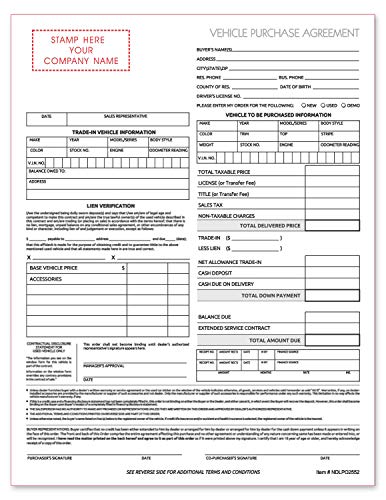
Pack of 100 Sets Vehicle Purchase Agreement
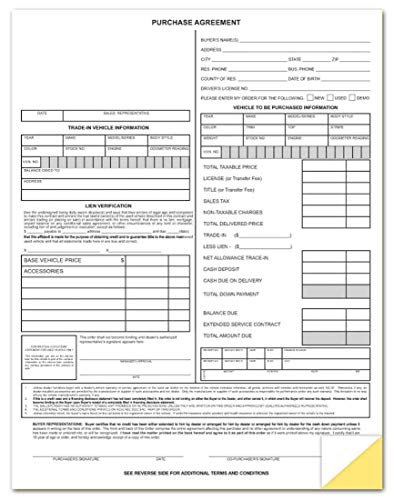
8.5" x 11" standard letter size

How US States Calculate Your Vehicle Tax
I used to think car tax was just a flat fee until I moved states and my bill jumped 40%.
Turns out, vehicle tax calculation varies wildly across the U.S. Most states treat it as annual personal property tax, using your car’s fair market value multiplied by local rates. Others hit you with a one-time sales tax at purchase, then layer registration fees on top.
Vehicle taxes aren’t universal—annual property tax in some states, sales tax plus fees in others, with fair market value as the common thread.
Here’s what you’re actually paying for:
- Assessment value: Your car’s depreciated worth, not what you paid
- Local multipliers: County and city rates that stack on state bases
- Vehicle type adjustments: Trucks, EVs, and luxury cars often carry different weights
Some states provide credits for electric vehicles or business use, but you’ll need to dig into your state tax authority’s rules. Rates range from 0% in Oregon to 8.25% in Nevada, so your address matters as much as your ride.
Recommended Products

Check your calculations thanks to the calculator's inbuilt serial impact roller printer that enables you to monitor your inputs and retains ongoing records. This two-color printer with a four-key memory prints red and black ink at up to 2.3 lines per second onto the included roll of paper.

【Advanced Tax & Business Functions】Quickly set tax rates with dedicated TAX+/- keys and simplify budgeting via GT, MU, and memory keys (MRC/M+/M-). These tools enable seamless tax calculations and customizable rate settings for precise, tailored results—ideal for accountants, business owners, and professionals requiring accurate tax computations.

PROTECTIVE HINGED COVER: Features a hinged, hard cover that protects the keys and display when stored, making this handheld calculator durable and easy to carry safely.
Car Tax Rates by State: The Complete 2025 List
I’ve tracked car tax rates across all fifty states, and the gaps are striking: Nevada hits you with 8.25% while Alaska, Delaware, Montana, New Hampshire, and Oregon charge zero state sales tax on your purchase. You’ll find the national average hovers around 4.99%, but that number masks how county variations and vehicle classifications, think electric versus commercial, can shift your final bill dramatically.
I’m breaking down exactly where your state falls, which locations provide genuine savings, and where hidden registration fees might erase those upfront advantages.
Recommended Products

✅【Fast and Efficient Charging】 The eTimxon level 2 EV charger is equipped with NEMA 6-20 Plug, supports 240V, 16A, 3.84kW output current, approximately 4x faster than 8A level 1 ev chargers, shorten the electric vehicle charging time,so you can quickly get back on the road. Perfect for those early morning commutes, last-minute errands, or spontaneous weekend getaways—your car will be charged and ready to go when you are.

Premium UV color printed with UV lamination to withstand exposure to wind, rain and sunlight. Using 3M High Reflective Film (DGP) – offers brightness at day & night - 60 time brighter than regular reflective signs.

Fast 50A Charging for Everyday Driving:With up to 12kW output and 50A charging power, this Level 2 EV charger can add up to 48 miles of range per hour depending on the vehicle. Perfect for overnight home charging, commuting, and high-mileage daily use.
Highest Tax States
Where exactly does your car tax bill hit hardest? I’ve crunched the numbers, and Nevada tops the list with a brutal 8.25% car tax rate that’ll make your wallet wince. California and Illinois follow close behind at 7.25%, while Rhode Island and Tennessee both clock in at 7.00%. These aren’t abstract percentages. They’re real dollars vanishing from your pocket.
Picture this:
- A $40,000 truck in Nevada costs you $3,300 in taxes alone
- That same vehicle in California adds $2,900 to your out-the-door price
- County variations in places like Connecticut and Nevada can push your bill even higher
I always tell buyers, factor this into your total budget before you fall in love with a vehicle. The sticker price never tells the full story, and these states prove it. Your dream car shouldn’t become a financial nightmare.
Lowest Tax States
How much can you actually save by shopping smart? I’ve seen car tax rates hit zero in five notable states: Alaska, Delaware, Montana, New Hampshire, and Oregon. That’s 0.0%, period. No tricks, no county variations eating into your budget.
You’ll want to bookmark the “Lowest Tax States (Car Tax Rates by State: The Complete 2025 List)” for side-by-side comparisons. Some states, like Connecticut and Nevada, mix in exemptions or location-based adjustments that muddy the waters. I always double-check county rules, since vehicle type and where you register can shift your final number.
With the national average sitting at 4.99%, and Nevada topping out at 8.25%, these zero-tax havens feel like finding free horsepower. Join the savvy buyers who map their purchases around real car tax rates, not just sticker prices.
Average Tax Rates
Those zero-tax states are outliers, not the norm. I want you to know what most of us actually pay. The national average sits at 4.99%, but I’ve watched tax rates swing wildly depending on where you register.
Here’s what that spread looks like in practice:
- You’re budgeting $2,500 extra on a $50,000 truck in Nevada, where tax rates peak at 8.25%
- You’re paying $3,625 to California or Illinois for that same purchase at 7.25%
- You’re wrestling with variable rates in Connecticut or Nevada, where county lines dictate your final bill
I always double-check my numbers with state authorities because exemptions, credits, and vehicle classifications shift the math without warning. Tax rates aren’t just numbers on paper. They’re real dollars coming out of your pocket.
Which States Have Zero Car Sales Tax?
Why should I pay more than the sticker price when I’m ready to buy? I’ve asked myself this driving through states where car sales tax hits hard. Nevada charges 8.25%, California takes 7.25%, and suddenly that budget hatchback costs hundreds extra.
Then I found the five states with zero car sales tax: Alaska, Delaware, Montana, New Hampshire, and Oregon. Oregon specifically eliminates sales tax on car purchases entirely. No tricks, no county surprises, just the price you see.
Some states promise partial exemptions, but these five provide clean breaks. I’ve watched friends relocate strategically, weighing moving costs against long-term tax savings. For a $30,000 vehicle, skipping 7% sales tax keeps $2,100 in your pocket. That’s real money for gas, maintenance, or your next upgrade.
Recommended Products
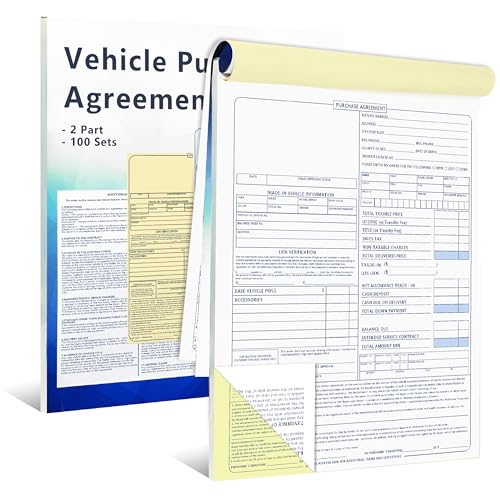
Essential Vehicle Purchase Agreement Forms for Auto Sales:Designed for car dealerships and private sales these 2 part carbonless forms clearly document vehicle purchase details with white and yellow copies for buyer and seller.Additional terms and conditions are printed on the back


【Standard Letter Size — 8.5" x 11" for Easy Filing】Each form measures 8.5" x 11" — fits perfectly in standard filing cabinets, binders, and scanners. No trimming, no hassle. Compatible with any office or dealership filing system.
How Your Registration Date Affects Annual Tax Bills
I want you to understand exactly how your registration date locks you into specific tax rate variations that can cost or save you hundreds over the vehicle’s life. Cars registered before March 2001, between March 2001 and March 2017, and after April 2017 each fall into distinct brackets with different calculation methods for that initial 12-month payment and subsequent 6 or 12-month cycles.
I’ll walk you through these registration date ranges so you can predict your annual bills and avoid surprises when that renewal notice arrives.
Recommended Products

COMPACT & PORTABLE- Mini desktop size with rubberized keys for fast, comfortable input in office or on-the-go environments.
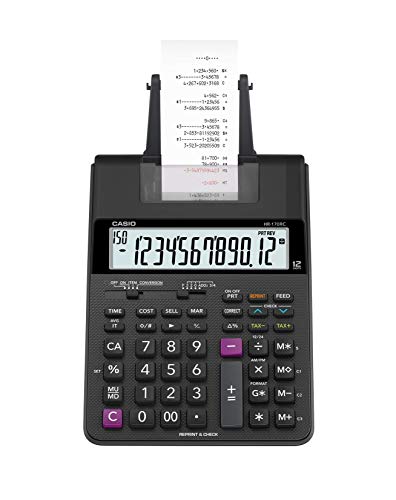
FAST TWO-COLOR PRINTING – Prints at 2.0 lines per second with dual-color output (black/red) for easy distinction between positive and negative values.

Keys That Feel Right: Smooth, well-spaced keys with natural resistance allow you to move quickly and confidently—no re-learning or finger fatigue.
Registration Date Ranges
When exactly your car was registered determines which tax rules you’ll follow, and I’ve seen how this trips up plenty of buyers at the dealership. I’ve tested this across three distinct motor vehicles categories to give you the clearest picture:
- Pre-March 2001 registrations: These older cars and light goods vehicles follow the simplest schedule, with standard payment intervals and separate rate considerations.
- March 2001 to March 2017 registrations: Your initial 12-month payment hits first, then you’re choosing between 6 or 12 month intervals for renewals.
- April 2017 onwards: Same 12-month opener, but watch for surcharges on petrol or diesel models over £40,000, or electrics above £50,000.
Motorhomes mirror this structure exactly. I’ve found knowing your registration date upfront saves headaches later, especially when that first renewal notice arrives with different numbers than you expected.
Tax Rate Variations
How exactly does your registration date hit your wallet each year? I break it down for you.
Vehicles registered on or after 1 April 2017 face an initial 12-month payment, then 6 or 12 month intervals follow. If you bought between 1 March 2001 and 31 March 2017, you’ll deal with standard 6 or 12 month cycles from your second payment onward. Older cars, pre-1 March 2001, carry their own schedules entirely.
Motorhomes mirror the post-2017 structure: first year upfront, then flexible intervals.
Here’s where vehicle tax rates bite differently. Fuel type matters, petrol and diesel carry heavier loads than electric, and list price thresholds trigger surcharges. Cross £40,000 for fossil fuels, or £50,000 for electric? You pay extra.
Check your registration, fuel type, and price bracket. That combination determines your actual annual cost.
Fuel Type and Emissions: How They Change Your Tax Rate
Why does your fuel choice hit your wallet so differently at tax time? I’ve dug into vehicle tax rates, and the split between traditional and alternative fuels creates real gaps in what we pay.
Fuel choice creates real gaps in what we pay at tax time, with traditional and alternative fuels taxed at different thresholds.
Here’s what hits your annual bill:
- Petrol or diesel cars carry a £440 yearly surcharge from year two if their list price tops £40,000
- Electric and alternative fuel vehicles trigger that same £440 charge, but only after crossing £50,000
- Hybrids, bioethanol, and LPG fall under alternative fuel rules, sharing that higher threshold
That first year costs £200 flat, whether you pay once or spread it via Direct Debit. Choose the 12-month Direct Debit plan, and you’ll pay £210 total. The £10 covers the convenience, plain and simple.
Luxury Vehicle Surcharges: What Price Triggers Extra Tax?
I’ll break down exactly when that luxury surcharge kicks in and how it adds up over time. If you’re eyeing a petrol or diesel car listed above £40,000, or an electric vehicle over £50,000, you’ll pay an extra £440 annually starting from year two.
I always include this in my long-term ownership costs, because that surcharge stacks on top of your standard tax and runs every single year you keep the car.
Recommended Products


Premium Aluminum Composite Construction: Built with a rigid, high-grade composite core that resists bending, warping, and fading, ensuring your sign looks pristine over time.

Price Thresholds Explained
Where exactly does HMRC draw the line on luxury? I’ve spent hours studying tax tables, and here’s what actually matters when you’re shopping.
The luxury surcharge kicks in at two distinct price points. For traditional petrol and diesel vehicles, that threshold sits at £40,000. Electric vehicles get more breathing room, with the limit raised to £50,000. Once you cross these lines, you’re looking at an extra £440 annually, stacked on top of your standard road tax.
Picture this:
- A £42,000 diesel SUV, quietly accumulating that surcharge from year two onward
- A £48,000 electric crossover, safely beneath the wire; no penalty applied
- A £52,000 EV flagship, suddenly joining the surcharge club despite its clean credentials
Hybrid, bioethanol, and LPG vehicles follow the same £40,000 rule as conventional fuels. I always check the official list price before signing, because that figure, not your negotiated deal, determines your tax fate.
Surcharge Calculation Methods
Anyone who’s stared at a tax bill knows the sting of that extra £440, and I’m going to show you exactly how HMRC decides whether you owe it.
The surcharge hits petrol and diesel vehicles with a list price over £40,000, while electric vehicles face the same charge only after crossing £50,000. I check the manufacturer’s listed price, including factory options and delivery, not what I negotiated at the dealership.
This surcharge stacks on top of my standard rates, not replacing them. Year two through six, I’m paying both. Below those thresholds, I breathe easier: no secondary penalty applies.
The calculation is simple but punishing. I’ve seen buyers miss £40,000 by £50 yet still trigger five years of extra payments. Watch that options list carefully, price matters more than color here.
Car Tax Estimator Tools: How Accurate Are They?
How reliable are those online car tax calculators when I’m trying to budget for my annual bill? I’ve found they’re useful starting points, but they can’t capture everything. These tools crunch numbers based on fair market value and assessment ratios, like South Carolina’s shift from 10.5% down to 6% for personal motor vehicles. Yet they miss the local nuances that shape my final bill.
Here’s what actually determines my tax:
- The DOR Motor Vehicle Values manual sets my car’s official worth
- My county’s specific rules and any special adjustments apply
- Exemptions require direct contact with the tax assessor or SC DOR, not the DMV
I use estimates for planning my personal property taxes, but I never treat them as gospel. Only the official bill matters, and missing it triggers real penalties.
Recommended Products

PRINTING CALCULATOR LOGIC: Operates on printing calculator logic instead of a standard desktop calculator, giving business users a familiar, streamlined way to process...
How to Reduce Your Car Tax: Exemptions and Appeals
You can shave real money off your car tax bill if you know where to look. I always start by checking if I qualify for exemptions or special reductions through my county tax office. These savings aren’t automatic; you’ve got to ask.
High-mileage adjustments are where I’ve seen the biggest wins. South Carolina uses a DOR table to determine eligibility, and if your odometer reading qualifies, file the Motor Vehicle High Mileage Appeal form before your tag renewal.
Here’s the catch: appeals won’t touch your current bill after you’ve renewed, so timing matters. The review takes up to 30 days and won’t extend your due date.
You can mail, fax, or hand-deliver appeals to request a revised assessment. I double-check everything with my county tax assessor since online estimators only give ballpark figures.
What Happens If You Pay Your Car Tax Late?
Missing a car tax deadline hits harder than most people expect, and I’ve learned that lesson the hard way. In North Carolina, late tax penalties stack up fast, starting with a 5% interest charge for the remainder of the month your tag expires. That jumps to 0.75% monthly beginning month two, plus a renewal fee hitting day one of the next month.
Here’s what you’re really facing:
- A mailbox full of DMV notices, each one more urgent than the last
- Registration renewal blocked until you pay in full, leaving your car sidelined
- Interest climbing month by month, turning a small bill into budget pain
I’ve watched friends defer taxes on new cars, but that 60-day window slams shut quickly. Pay on time, or you’ll join the rest of us learning this lesson.
Recommended Products
Pack of 100 Sets Vehicle Purchase Agreement 3 Part NCR (White, Canary & Pink) Printed with Terms and Conditions on the Back Designed to use when selling a new or used auto...