I’ve tested enough tire brands over 60,000-mile intervals to know the 60K promise rarely holds up in real driving. Most all-season tires I’ve rotated religiously hit replacement tread by 45,000 to 55,000 miles, with hot climates and heavy loads shaving 10,000 off that fast.
Warranties advertise 30,000 to 80,000 miles, but I’ve learned the hard way that prorated credits demand proof of every 5,000-mile rotation and monthly pressure logs.
Tire age matters just as much. After six years, rubber compounds harden and crack even with full tread depth. By year ten, I’ve sidelined tires regardless of appearance.
Your odometer tells only part of the story, and the hidden half could leave you stranded.
How Many Miles Do Tires Typically Last?
How do you know when your tires are actually done? I check tread depth first. Most all-season tires carry me 60,000 miles over 3 to 5 years with proper rotation and inflation.
That 2/32 inch minimum sneaks up faster than you’d expect, especially if I’m heavy on the gas or neglecting alignment. Aggressive driving, potholes, and skipped maintenance? I’ve seen tires tap out well shy of that mark. Manufacturer warranties typically range 30,000 to 80,000 miles, offering prorated credit if wear hits certain thresholds before the mileage promise.
I treat these numbers as rough guides, not guarantees. My real-world results depend on how I drive, where I live, and whether I stay on top of pressure checks and rotations.
Recommended Products

1.Accurate and Efficient: Different colors on the bar represents different scopes, the red range on bar: 0 - 3/ 32; Yellow range on bar: 3/ 32 - 6/ 32; Green range on bar: 6/ 32 - 32/ 32, allowing you easy and fast to read and calibrated

Accurate and precise tire tread depth readings in 1/32 inch increments (1/128 inch resolution)

Accurate measures tire tread depth gauge tool
Why Your Tires Age Faster Than Your Odometer Suggests
I used to think hitting the mileage rating meant my tires were still good to go.
I learned the hard way that tire aging doesn’t care about your odometer. Even with tread depth measuring 8/32″, my six-year-old spare showed dry rot cracks spreading across the sidewall like weathered leather. Rubber compounds break down through oxidation, UV exposure, and heat cycles regardless of miles driven.
Tire aging ignores your odometer—my six-year-old spare had 8/32″ tread but dry rot cracks like weathered leather.
Check your DOT code: four digits reveal the week and year of manufacture. Tires hitting that 6–10 year window need professional inspection, period.
Winter storage or weekend-only driving actually speeds up the problem. Without regular flexing, rubber loses conditioning while chemical degradation continues. I’ve seen garage-kept tires with 12,000 miles fail inspection due to stiffness and micro-cracking.
Being part of the informed driver community means respecting calendar age, not just tread depth. Replace aging tires before they strand you.
Recommended Products

EFFICIENT LEAK DETECTION: TECH CHEK Tire Leak Detector uses a concentrated formula to swiftly coat tire and tube surfaces, making it easy to spot hard-to-find leaks. This...
Worn Tires vs. Aged Tires: Which Failure Mode Is Riskier?
Where exactly does the bigger threat hide, beneath smooth, thinning tread or inside intact-looking rubber that’s quietly turned brittle? I’ve tested both conditions, and neither gives you a pass.
Worn tires fail predictably, their 2/32-inch depth robbing grip when you brake hard on wet pavement. You feel the slip coming. Aging tires, though, betray you differently. I’ve seen 7-year-old rubber with half its tread intact suddenly sidewall-crack on summer highways, structural integrity toast from dry rot and brittleness.
Here’s the practical truth: tread depth rarely hits zero before age gets dangerous. Past 6 to 10 years, depending on brand guidance, that supple compound turns stiff regardless of miles driven. Worn tires warn before they quit; aging tires just quit. Check your date code.
Recommended Products

Heavy-Duty Metal Construction: Made from strong, durable metal, this tire repair slug is built to handle harsh conditions and repeated use. From rocky trails to everyday yard work, you can rely on it for dependable performance when it counts

Condition and protect – the lithium way: at Lithium, our goal is to help tires keep their natural look and smooth finish. Wheely Great Tire Spray uses a balanced blend of care ingredients that keep rubber looking rich and clean, even after regular use on the road. It applies evenly, wipes off easily, and leaves a consistent, low-sheen appearance that lasts.

EXTEND THE LIFE OF YOUR TIRE - Repair existing tire by repairing slices, or punctures in your off-road tire. GlueTread products are more cost effective than buying a brand new tire.
Penny or Quarter: The Two Tests That Reveal Tread Health
What exact depth signals a tire’s final warning before hydroplaning takes the wheel from you? I grab a penny and a quarter to find out, and you should too. These two coins give you instant, no-gauge readings on tire wear.
Stick Lincoln head-first into your tread. If you see his entire head, you’re at 2/32 inches, legally worn and hydroplaning-prone. That’s your red line.
Now try Washington on the quarter. Spot his head? You’re at 4/32 inches, where wet traction drops noticeably. I swap tires here if I drive in rain often.
For snow, I aim higher, around 5/32 inches, since packed powder needs more bite.
These tests won’t replace a gauge or pro inspection, but they’ll keep you informed between checkups. I keep both coins in my glovebox. You should too.
Recommended Products

Easy to read. Two calibration meters(inch and millimeter) in order to make people read more easily and suitable for the wider population. Color coded tire tread depth gauge clearly indicates the tire different phase by colors.

1. Accurately measures tire tread depth gauge tool, Calibrated from 0 to 1 inch in 1/32 inch

Glow in The Dark: The scale uses luminescent material, allowing you to accurately read data even in indoor underground garages or dark environments. Friendly reminder: To activate the luminescent function of the tire tread gauge and ensure its optimal performance, please expose the product to sunlight or ordinary light for a few seconds before use.
When to Actually Replace Your Tires (Tread, Time, or Both?)
I look at tread depth thresholds and age-based indicators together because neither tells the whole story on its own. You’ll hit the legal minimum of 2/32 inch on your tread gauge eventually, but I’ve seen tires with decent tread fail structurally at six years due to rubber hardening and sidewall cracking.
Check your DOT date code, the last four digits showing week and year of manufacture, and don’t push past ten years even on high-quality brands like Bridgestone or Firestone.
Recommended Products

1. Accurately measures tire tread depth gauge, Calibrated from 0 to 1 inch in 1/32 inch

【ACCURATE MEASUREMENT】LUMITECO tread depth gauge is calibrated from 0 to 1 inch in 1/32 inch, allowing for precise measurements and ensuring optimal safety and performance for your vehicles. Making it effective and easy to keep an eye on tire tread wear and know when it's time for new tires.

【ACCURATE & EFFICIENT】Calibrated from 0 to 1 inch in 1/32 inch with clear markings, shows precise measurements 32nds and maintains the safety and performance of your tires. Supplied with four extra valve caps for replacement. An effective and easy way to monitor tire tread wear and know when it's time for new tires.
Tread Depth Thresholds
How do you really know when your tires are done? I measure tread depth thresholds with simple tools you already own. The penny test shows Lincoln’s head mostly visible at 2/32“, the legal minimum where I’d replace immediately.
But here’s where I get pickier: the quarter test hits 4/32“, my cutoff for wet-weather confidence. Below that, hydroplaning risk jumps fast.
Winter demands more. I want 5/32” minimum for snow grip, anything less and you’re sliding. These aren’t arbitrary numbers, they’re performance cliffs I’ve seen in testing. At 2/32″, stopping distance stretches dangerously. At 4/32″, wet roads get sketchy.
I check quarterly with a $5 gauge, it’s cheap insurance. Don’t guess, measure.
Age-Based Indicators
Why gamble with a six-year-old tire that’s hiding cracks you can’t see? I inspect my tires for age alongside tread depth, because rubber degrades even when parked. Tire age matters: manufacturers recommend checks at six years, replacement by ten.
I’ve seen tires with 5/32 inch tread still fail from dry rot, sidewall cracks, and that gray, chalky discoloration signaling brittleness.
The DOT code tells the story. Those four digits, week and year, reveal when your tire was born. Pre-2000 codes need careful reading, but most drivers handle post-2000 tires now.
Here’s my practical take: pair your tread gauge with a calendar check. Aged rubber loses flexibility, compromising structural integrity where you can’t see it. Replace on condition, not convenience. Your safety’s worth more than stretching another season.
5 Habits That Cut Tire Life in Half: And How to Stop Them
I’ve seen too many drivers burn through tires twice as fast as they should, and it usually comes down to two simple habits they skip.
Neglecting tire pressure means you’re either riding on under-inflated rubber that overheats and cracks, or over-inflated tires that wear out the center tread prematurely. Skipping regular rotations is just as costly; it lets front tires wear unevenly compared to rears, forcing you to replace pairs early instead of getting the full mileage from the whole set.
Neglecting Tire Pressure
Where exactly does half your tire’s life go? I watch under-inflation steal miles every single day. When you drive with low pressure, your tires flex too much, building heat that breaks down rubber from the inside out. The shoulders wear fast, the center stays relatively fresh, and you end up with uneven tread that handles poorly and fails early.
I check my cold pressure monthly with a quality gauge, adjusting to the manufacturer’s PSI listed on my door jamb. It takes five minutes.
This simple habit prevents sidewall damage, stops irregular wear patterns, and keeps my tires meeting the road evenly. Under-inflation costs you handling, safety, and thousands of miles of tread life. Proper pressure maintenance pays back double in longevity and performance.
Skipping Regular Rotations
How exactly do front tires end up bald while the rears still look new? I’ve seen this mismatch countless times in parking lots, and it always traces back to skipped rotation schedules.
Front-wheel-drive cars chew through front tires faster, while rear-wheel-drive vehicles punish the back pair. Without rotation, you’re essentially running two tires into the ground while the others lounge. I stick to 5,000 to 8,000 mile intervals, and it’s paid off. My current set has lasted 15,000 miles longer than my last neglected pair.
Regular rotation spreads wear evenly, keeps tread depth consistent, and catches alignment issues early. At roughly $20 per service, it’s cheap insurance against premature replacement.
Don’t treat rotation as optional maintenance. Your wallet, and your safety margins, will thank you.
Pressure, Rotation, Alignment: Maintenance That Adds Years
Why do some tires barely make it to 30,000 miles while others cruise past 60,000? I’ve found the answer lies in three habits anyone can master.
I check my tire pressure monthly, always when the tires are cold, using a calibrated gauge set to my vehicle’s recommended PSI. This prevents the uneven tire wear that destroys tread early.
I rotate every 5,000 to 8,000 miles, moving front tires to the rear on my front-wheel-drive car. This balances the faster front tire wear and keeps all four wearing evenly.
I get alignment checks regularly. Misalignment causes uneven shoulder wear and kills performance.
These three steps take maybe an hour yearly. They cost little. They add years to your tires. That’s the difference between replacement at 30,000 and cruising to 60,000.
Recommended Products
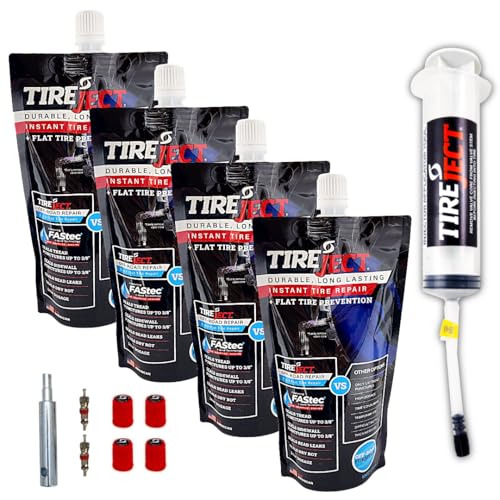
PERMANENT FLAT TIRE REPAIR TIRE SEALANT: Superior Tire Sealant with liquid rubber to permanetly seal punctures caused by nails, thorns, screws & slow leaks & bead leaks & tire dry rot

REPAIR INSTEAD OF REPLACE - EXTEND YOUR TIRE’S LIFE: Get more use out of your off-road tires by fixing sidewall punctures, slices, or gashes instead of replacing them. The GlueTread tire sidewall repair kit helps restore tire strength and performance, saving you time and money on the trail.
How Tire Warranties Really Work (And When They Save You Money)
When exactly does a tire warranty pay off? I’ve learned it rarely means a free replacement. Most tire warranties use proration, so if your 60,000-mile tire fails at 50,000 miles, you might get just 17% off a new one. That’s not nothing, but it’s not a windfall either.
You’ll need proof of proper maintenance, rotations, alignment records, and correct inflation. Skip these, and the manufacturer denies your claim. Some brands, like Bridgestone, also cap coverage at 10 years regardless of tread depth. Age matters as much as mileage.
Tire warranties help most when premature failure hits a well-maintained set. They’re safety nets, not guarantees. Read the fine print, keep your receipts, and know exactly what you’re buying into.