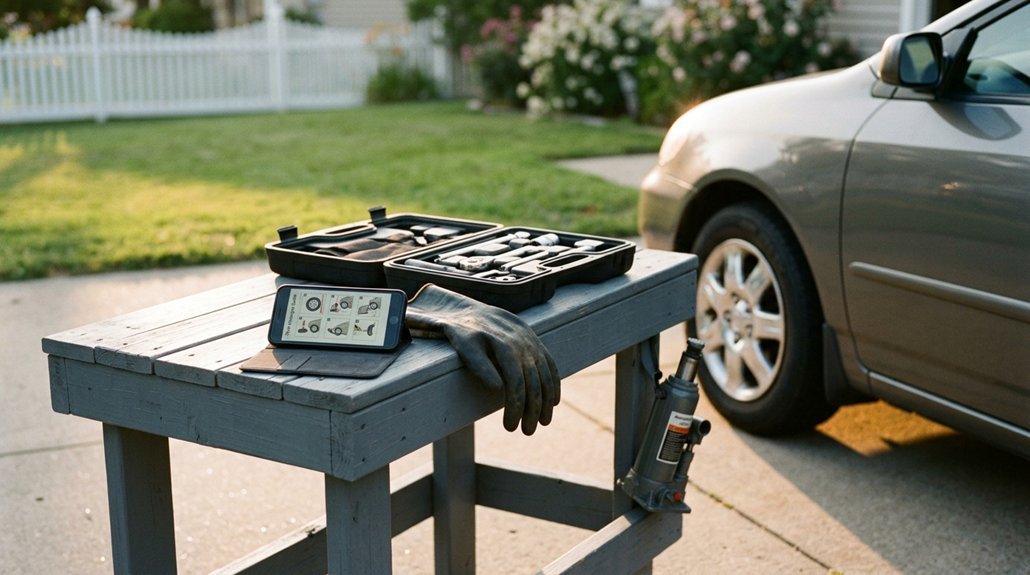
I’ve swapped tires on everything from compact commuters to lifted trucks, and I can tell you the time gap between DIY and pro shop work is no joke. You’re looking at 1 to 2 hours per axle in your driveway with hand tools, versus 30 to 45 minutes at a shop with lifts and impact wrenches.
I’ve seen rusty lugs turn a 20-minute job into an afternoon ordeal, while quality torque wrenches and proper jack stands make all the difference for safety and speed. The real question isn’t just how long it takes; it’s whether your time, tools, and tolerance for scraped knuckles justify skipping the $40 to $80 shop fee.
Stick with me, and I’ll break down exactly what determines your timeline, step by step.
How Long Tire Changes Take: DIY vs. Shop Times
How much time should I realistically block off for a tire change? I’ve found DIY tire changes usually eat up 1 to 2 hours per axle, depending on my tools and experience. Compact cars move faster, but my SUV takes closer to an hour.
Professional shop times run about 30 to 45 minutes. Their lifts, torque wrenches, and seasoned hands get it done quick.
For my own tire change, I start by picking a safe location. I follow safety steps: find the jack points, raise the car, and break the lug nuts loose with controlled force. I swap in my spare tire, tighten with care, and finish with proper torque. Missing steps means rework or worse.
Recommended Products

CAR JACK SPECIFICATION: This small car jack has a maximum weight capacity of 2 tons. The adjustable height range is 4.33 inches (11 cm) to 15.75 inches (40 cm). The wider range of adjustment allows you to easily raise your vehicle to any height you need, meeting your vehicle maintenance needs

【Car Jack Capacity】Maximum lifting weight 2 Ton (4409 lbs),This Jack for Car Lifting Range from 4.33" (11cm) to 15.75"(40cm). The scissor lift jack provides a wider range to reach under low chassis sedans or elevate high-body SUVs effortlessly.
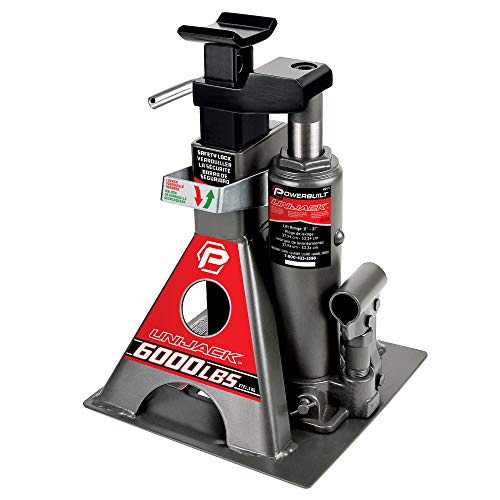
SIMPLY GENIUS: You'll love the speed and convenience of this clever jack that combines a bottle jack and jackstand in one compact unit.
What Makes Your Tire Change Faster or Slower
Several factors always dictate whether I’m wrapping up in thirty minutes or still wrestling at the hour mark. Vehicle size matters: my compact takes around 30 minutes, but a heavy pickup can push an hour with its full weight complicating lifting and access. Quality tools transform the job; a solid jack and lug wrench save time and money versus struggling with rust-seized wheel studs.
Experience counts too. I’ve spent two hours changing a tire solo, while pros finish in 30-45 minutes with lifts and torque tools. Stubborn flat tire situations, poor equipment, or skipping the safe place setup create safety issues that slow everything down. When I’m prepared with proper gear and a level surface, changing a tire feels manageable rather than miserable.
Recommended Products

ONE IMPACT SOCKET SET FOR ALL YOUR NEEDS: The LEXIVON flip side dual-end socket set features all six commonly used sizes (17mm, 19mm, 21mm, 22mm & 3/4", 13/16", 15/16", 7/8" and 3" Extension Bar).

PROFESSIONAL BRUSHLESS MOTOR IMPACT WRENCH: Delivering an impressive 579Ft-lbs (800N.m)tightening torque and 665Ft-lbs (900N.m)loosening torque! With 3300 IPM and 2400 RPM. it installs wheel bolts in just 3 seconds and removes even the most stubborn rusted bolts from construction/machinery/scaffolding in 5 seconds. 90% more efficient than manual wrenches while reducing 80% physical effort. Upgrade now to experience professional-grade impact gun - where power meets effortless operation!
Change Your Tire Step by Step
When I’m swapping a tire, I break it down into clear phases: prep, lift, swap, and drop. First, I find a flat surface and a safety spot away from traffic. I engage the emergency brake and grab my lug wrench. I loosen, but don’t remove the lug nuts before I position the jack under the frame.
I lift the vehicle, then remove the lug nuts completely. I pull off the flat tire and mount the spare. I hand-tighten the lug nuts, lower the car, then tighten the lug nuts in a star pattern with full force.
Changing your tire this way takes me about 30 minutes on my compact sedan. Larger trucks need more muscle and time, closer to an hour, but the steps stay the same.
Recommended Products

Durable Ratchet Head: Made from Hardened treated Chrome Vanadium steel alloy (Cr-V) Corrosion-Retardant: Satin Finish. Made in Taiwan

PRECISE & HIGH QUALITY - Manufactured in Taiwan, our torque wrench is engineered for superior precision. It ships pre-calibrated to +/- 4% accuracy, ensuring dependable results every time. Includes a calibration certificate with a trackable serial number for your assurance.

【SET INCLUED】 The universal 4 way lug nut wrench removal tool includes: lug wrench with extended Handle, 2 double-ended sockets provide 4 size: 17mm, 19(3/4”)mm, 21mm(13/16”), 22mm(7/8”), and a convenient carry bag.
Should You DIY or Hire a Pro?
So, you’ve got a flat and you’re weighing your options. I’ve done both the DIY tire change and the professional service route, and here’s what I’ve learned.
A DIY tire change with basic gear, manual jacks, and hand tools takes me 1 to 2 hours per axle. I wrestle with jack placement on my compact sedan, which handles easier than my buddy’s truck. Tool quality matters: cheap wrenches slip on stubborn lug nuts, and getting torque spec wrong risks wheel separation.
Professional service finishes in 30 to 45 minutes with lifts, impact wrenches, and calibrated torque tools. They catch tire tread check issues I’d miss and follow safety precautions I sometimes skip.
Road safety hazards from improper installation aren’t worth the savings. Unless you’ve got pro-grade equipment and experience, I recommend hiring out.
Recommended Products

Sturdy: Made of 45# high carbon steel, galvanized surface treatment, wear-resistant, rust-proof, strong, high hardness, anti-oxidation, so it has a long service life.

Durable construction - made of tough, durable materials and coated with corrosion-resistant finish,and material testing to ensure a quality fit and long service life
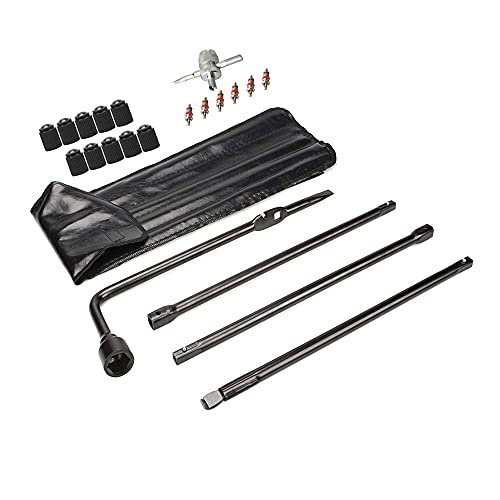
Premium OEM Upgraded Quality Spare Tire Tool: Stable strong rustproof automotive grade steel,tubing instead of soil designed made it more light,not only stong but also convenient.