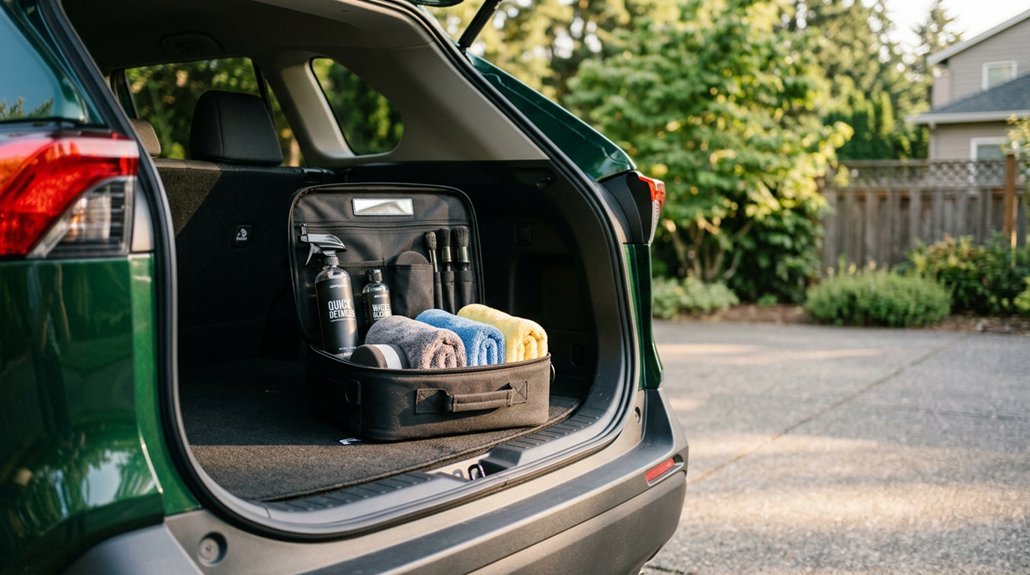
I’ve detailed enough cars to know time estimates mean everything when you’re booking around work or weekend plans. A quick exterior wash and wax runs me about 90 minutes, but that’s just surface-level work.
I’ve spent 6 hours on a single interior when pet hair and coffee stains demanded extractor passes and steam treatments. Ceramic coatings? Those are multi-day commitments with cure times.
The real question isn’t how long detailing takes, it’s what you’re actually paying for versus what your vehicle needs right now.
Car Detailing Time: From 90 Minutes to 1 Week
How long does car detailing actually take? I’ve seen it range from 90 minutes to a full week, and I’m here to break down what you’re really getting into.
Basic inside/out detailing typically runs 90 minutes to several hours. I’ve clocked exterior work at 1.5 to 3 hours, interiors at 2 to 4 hours, and full details landing between 4 to 8 hours. Your vehicle’s size and current cleanliness directly shift these numbers.
When you step up to paint correction or ceramic coatings, car detailing takes 4 to 24 hours, sometimes stretching across multiple days. In extreme cases, heavily soiled vehicles needing full restoration can demand up to a week.
The gap between a quick valet and true detailing matters. Basic tasks, wash, dry, wheel cleaning, vacuum, and wipe-downs, move fast. Deep restoration doesn’t. Know what you’re booking before you commit your schedule.
Recommended Products

THE DAMP TOWEL METHOD — SPRAY, DAMP TOWEL, DRY TOWEL: The damp towel lifts dirt up and absorbs it instead of dragging it across your finish. The dry towel finishes. We invented the waterless car wash in 1987 and developed this method with it — it handles genuinely dirty vehicles, not just dust.

Exterior Bundle: One Armor All car detailing kit with car wash and wax, car wash mitt and drying towel
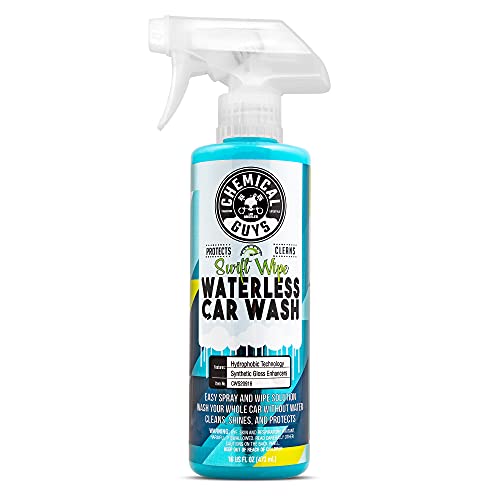
SWIFT WIPE WATERLESS WASH SPRAY (CWS20916) – Clean and shine your vehicle without water; just spray this car cleaner spray and wipe for a spotless finish anywhere.
Mobile or Shop Detailing: Which Fits Your Timeline?
I’ve tested both mobile and shop detailing across dozens of vehicles, and the time differences come down to three practical factors: travel time impact, setup efficiency differences, and scheduling flexibility options. Mobile detailers roll up with water tanks, generators, and portable extractors, cutting out your drive time but sometimes adding 15–30 minutes for equipment staging in tight driveways or apartment lots.
Shop-based operations run fixed bays with plumbed water, 240-volt polishers, and dedicated lighting, which speeds up heavy correction work but tacks on your commute and potential wait times for open slots.
Recommended Products

Strong Suction Power: With 18,000 PA of suction, effortlessly eliminate stubborn pet stains and spots from carpets, upholstery, car interiors, and more. Experience the deep clean you and your pets deserve!

CHEMICAL GUYS LIGHTNING FAST STAIN EXTRACTOR (SPI_191_16) – Professional-strength stain remover formula penetrates deep into carpet, upholstery, and fabric to quickly break down and lift stains, dirt, and odors for a restored, like-new look

ONE EASY STEP … 3D Extractor Shampoo cleans and deodorizes carpet, upholstery and more with one simple step!
Travel Time Impact
Where you get your car detailed can add serious hours to your total time commitment, and I’ve learned this the hard way from testing both options across dozens of appointments. Travel time alone can eat up 30 minutes to several hours round trip, depending on your distance from the shop and traffic conditions.
Mobile detailing eliminates this entirely, bringing the service to your driveway. However, I’ve found mobile availability tightens up for longer, multi-area jobs, as time windows constrain what they can tackle in one visit.
Shop detailing removes travel time from your schedule entirely, letting you drop off and reclaim those hours. For multiple vehicles, shops win decisively; their dedicated workspace and streamlined staff workflow shave serious time compared to coordinating mobile visits.
Setup Efficiency Differences
Why does setup time matter so much when you’re booking a detail? It directly eats into your results window, and I’ve seen it make or break tight schedules.
When I compare shop versus mobile, setup efficiency creates a real split. A dedicated bay with water, power, and ventilation running cuts my prep to 5–15 minutes, organized tools waiting, products pre-filled, containment ready. Mobile demands 15–30 minutes minimum, sometimes longer, hauling equipment, hunting hookups, managing runoff on unfamiliar pavement. That gap can inflate total job time 10–25 percent depending on site access, water availability, electrical reach.
Both formats benefit from tight organization: clear job scope, pre-staged kits, knowing exactly what each vehicle needs before wheels stop. But shops win on raw speed. If your calendar runs tight, that efficiency advantage deserves weight in your decision.
Scheduling Flexibility Options
Setup speed matters, but your calendar’s real-world constraints often decide which format wins.
I find scheduling flexibility gives mobile detailing a real edge for busy lives. You can book outside typical shop hours, fitting a 2 to 4 hour service around your day. However, travel time adds 15 to 60 minutes depending on distance and on-site logistics.
Shop detailing provides faster turnaround for standard packages thanks to dedicated workflow and full-size equipment. For heavier 4 to 8 hour jobs, shops often handle multi-step services in a single day. When timing is tight, loaner vehicles or shuttle services become tiebreakers.
I recommend mobile when your schedule demands unconventional hours. Choose a shop when you need maximum efficiency and can align with their operating windows. Either way, match the format to your actual availability, not just the service speed.
Exterior Detailing: What Drives the 1.5–3 Hour Window
I’ve found that exterior detailing lands in that 1.5 to 3 hour range because three core factors push the clock: surface preparation steps, paint condition assessment, and protective coating application. A basic wash and decon on a well-maintained sedan might clock in at 90 minutes, but once I’m checking for oxidation, claying embedded contaminants, or laying down a ceramic coating that needs flash time, I’m easily crossing into the 2.5 to 3 hour territory.
Your vehicle’s size, contamination level, and whether you’re chasing a weekend-driver shine or concours-level gloss will determine where you land on that spectrum.
Recommended Products

ULTRA-DURABLE PROTECTION: Borrowing from professional technology, this advanced formula is a premium ceramic coating for cars that delivers ultra-durable protection with increased gloss and slickness. Plus, this pro-grade coating is easy to use
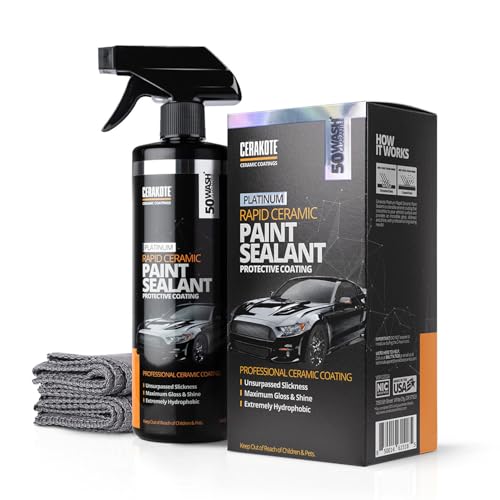
CERAMIC COATING FOR CARS: Delivers an extremely glossy, mirror-like finish on clean paint. Use as a standalone paint sealant or as a quick ceramic topper that deepens color and adds slickness. Not a one-step miracle coating and not a paint corrector

ADVANCE CERAMIC COATING: An improved CQUARTZ formula that provides resistance to chemicals, salt, and environmental damage as well as provide excellent UV protection. The high silica-quartz content creates a hard glassy layer across painted or gel-coat surfaces. CQUARTZ UK adds incredible levels of depth to the paint along with unbelievable water and dirt repellency and a rugged durability measured in years.
Surface Preparation Steps
Where does that 1.5 to 3 hour exterior detailing window actually go? I spend a solid chunk on surface preparation, and it’s worth every minute.
I start with a thorough pre-cleaning rinse and wash, blasting off loose dirt before touching paint. Then comes clay bar treatment, pulling embedded contaminants you can’t see but definitely feel. I’ve learned this step separates amateur jobs from professional results.
Surface preparation also demands deicing and tar removal from wheels and lower panels. These spots collect stubborn gunk that resists normal washing. Skip this, and you’re polishing over imperfections.
Heavily contaminated or oxidized paint pushes me past that 3-hour mark. I’ve seen vehicles needing extra passes just to achieve baseline smoothness. The time investment scales directly with contamination level, but proper prep ensures lasting protection and that mirror finish you’re after.
Paint Condition Assessment
Most of my exterior detailing time gets eaten up by what the paint actually needs, not what I wish it needed. When I assess paint condition at the start, I’m really deciding how much of that 1.5 to 3 hour window we’re actually going to use.
Heavily oxidized, scratched, or contaminated paint pushes me toward the 3-hour mark easily. I’ve seen cars that need full decontamination, clay bar work, and real polishing correction just to look presentable again. That workflow stretches time fast.
But when I’m working with well-maintained paint showing minimal defects, I can land closer to 1.5 hours. Less claying, lighter correction, faster turnaround. My efficiency matters some, sure, but the paint condition itself sets the real timeline we’re working inside.
Protective Coating Application
Why does protective coating application stretch that 1.5 to 3 hour window? I’ve learned it demands more than a quick wax and go. You’re looking at intensive surface prep, paint decontamination, and precise coating placement that can’t be rushed if you want real durability.
I’ve watched timelines balloon when oxidation runs deep or contaminants embed stubbornly. Your vehicle size matters too: a compact sedan moves faster than a crew cab truck. The specific coating product also dictates pace; some cure in minutes, others need controlled conditions and multiple hours.
Here’s what I’ve found: skip proper prep and your coating fails early. Respect the process, though, and you join owners who’ve stopped chasing monthly wax jobs. That 1.5 to 3 hour investment pays dividends in protection that lasts years, not weeks.
Interior Detailing: Why It Typically Takes 2–4 Hours
How much time should you realistically block off for interior detailing? The interior detailing duration runs 2 to 4 hours for most vehicles, which I’ve found matches what busy owners can actually schedule.
I vacuum carpets, wipe panels and windows, and treat surfaces during a standard session. The timeline stretches when I encounter heavy stains, embedded dirt, or odors needing extraction. Vehicle size matters too: a compact sedan finishes faster than a three-row SUV with complex layouts.
Basic cleans hit the 2-hour mark, while thorough jobs push 4 hours. Add-ons like leather conditioning or stain protection tack on extra time. I’ve tracked heavily soiled interiors exceeding 4 hours when deep cleaning becomes necessary. Plan your day accordingly.
Recommended Products
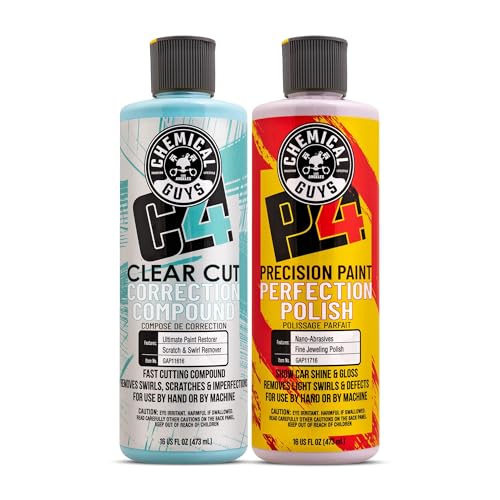
C4 & P4 PAINT CORRECTION COMBO (GAP40016) – Complete 2-step Chemical Guys polishing kit includes C4 Clear Cut Compound for removing defects and P4 Precision Polish for refining paint to a flawless high-gloss finish

Comprehensive 3-Step System: Includes HCC1000, MCC2500, and 3800 for scratch removal, swirl correction, and a glossy finish.
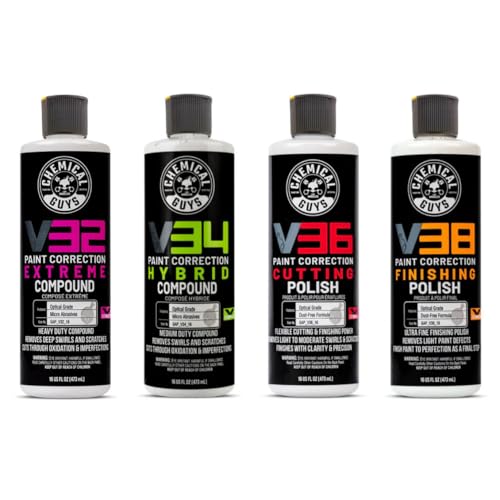
V LINE COMPOUND & CAR POLISHING KIT (GAP_VKIT_16) – Complete 4-bottle system designed to tackle everything from heavy defects to final polishing, restoring paint to a flawless, high-gloss finish
Complete Detailing: Interior + Exterior in 4–8 Hours
I’ve found that booking a full day makes sense when you want both interior and exterior work done, since complete detailing typically stretches 4 to 8 hours from start to finish. Exterior work usually eats up 1.5 to 3 hours, while interior detailing demands another 2 to 4 hours. That car detailing time window shifts based on your vehicle’s size and what you’re tackling.
Heavier contamination, stubborn stains, or adding protection services like waxing or ceramic coating will push you toward the longer end. Stain removal, odor treatments, or paint protection films can extend things beyond 8 hours entirely.
An experienced detailer with solid workflows can trim that down, but don’t bank on miracles. Plan for the full block, and you’ll avoid the frustration of rushed results or unfinished work.
Recommended Products

50 GALLON CAPACITY WITH MOLDED MARKINGS — This horizontal square reservoir delivers a true 50 gallon water tank with molded gallon/liter marks; specially molded poly shows level at a glance for potable water or other non‑flammable liquids

15L Large Capacity——Enjoy stronger ion-exchange performance and longer service life with our upgraded 15L resin capacity, perfect for frequent car washing and long-term use. When fed with 50 ppm TDS tap water, this system delivers up to approximately 1,500 gallons of purified deionized water—enough for about 300 car washes or 75 RV washes. Actual lifespan may vary based on local water quality and mineral content.

【Large capacity foldable water bladder】MXQMKL water bladder is made of double-sided PVC mesh cloth. Size: 1 x 0.6 x 0.4 m/39.3 x 23.6 x 15.7 in. Capacity: 240 L / 63.4 gallons. Weight: 5.7 lbs. The water inlet adopts an outer diameter of 32 mm, and an inner diameter of 1 inch, DN25. The outlet valve adopts an outer diameter of 25 mm, and an inner diameter of 3/4 inch, DN20. (The outlet valve is equipped with a water pipe with an outer diameter of 32 mm and an inner diameter of 25 mm)
Dirty vs. Maintained: How Condition Adds 1–3 Hours
Where condition really shows up is on the clock. I’ve seen how a neglected ride transforms car detailing time management from predictable to unpredictable. A filthy interior packed with stains, odors, and ground-in soil tacks on 1 to 2 hours beyond a quick vacuum and wipe-down. Exterior buildup like road tar, heavy grime, or oxidation demands another 0.5 to 2 hours for proper decontamination. That baseline 4 to 6 hour detail balloons to 6 to 9 hours real fast.
The gap between “basic” and “thorough” usually comes down to condition. Even two equally dirty cars can shift 30 to 60 minutes apart based on workflow and who’s holding the buffer.
I’ve learned the hard way: budget extra time, or disappoint customers who thought their forgotten daily driver would sparkle in four hours flat.
Recommended Products

LONG-LASTING RADIANT LOOK: Say goodbye to dull and faded paint and hello to the ultra-rich paint conditioners; Meguiar's Gold Class foam car wash leaves the surface looking radiant, renewed, so it's ready for your car wash kit before car show season
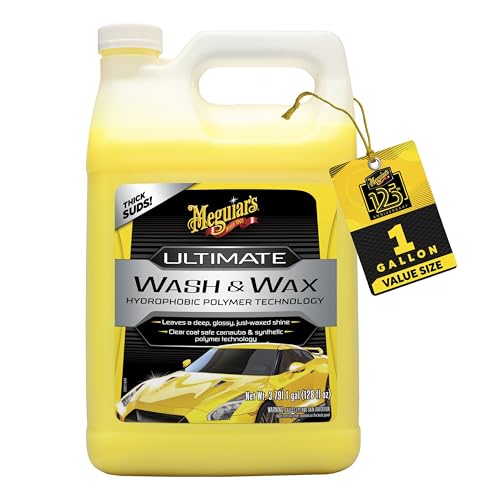
CLEAR COAT SAFE: This enhances car wash foam soap combines carnauba wax and synthetic polymers to deliver wax and protect your paint while gently cleaning and adding shine; Safe on single stage and clear coat paints for superior cleaning while adding wax

Complete Cleaning Car Care Kit: 4-piece Armor All car cleaning supplies kit
Specialty Detailing: Paint Correction, Ceramic Coating, PPF Timeframes
Standard detailing stretches your schedule, but specialty work stops the clock entirely. Paint correction demands 4 to 12 hours of focused machine polishing, removing swirl marks and scratches through multiple pad and compound stages. I’ve watched single-stage jobs finish in half a day, while severe defect removal consumes full 12-hour sessions across two days.
Ceramic coating adds 12 to 24 hours total: surface prep, application, and critical curing time before you drive. PPF installations run 6 to 10 hours depending on coverage area and template complexity.
Your actual downtime extends beyond the shop visit. Coatings need hours to days reaching full hardness, so plan accordingly. These aren’t quick washes, they’re investments requiring patience and proper aftercare commitment.
Recommended Products

【3-in-1 Portable Cleaning Machine】Works as a steam cleaner, portable carpet cleaner, and car shampooer in one compact machine. Steam-Only mode delivers 212°F pressurized steam for grease and stubborn dirt in kitchens and bathrooms. Steam & Suction mode deep cleans carpets, sofas, and upholstery without harsh chemicals. Hot & Cold Water mode removes coffee, wine, mud, and pet stains with ease. Multiple tools handle messes across home and car surfaces.

Powerful Steam Cleaner: This steam cleaner heats up in just 15 seconds, releasing 221°F (105°C) high-temperature steam with 3BAR pressure to instantly dissolve stubborn grease, grime, stains and bacteria. No long waits. Operating at 1500W, it efficiently removes dirt, making it a powerful ally for household cleaning
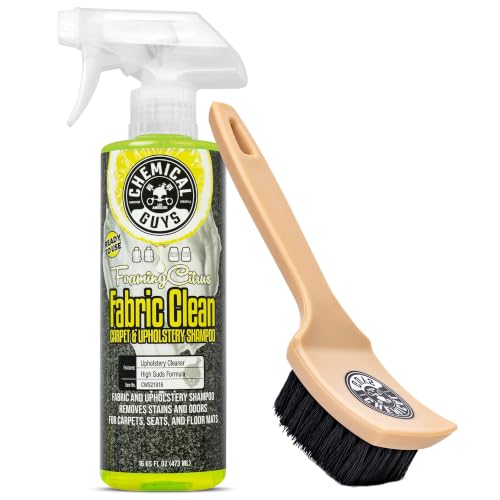
WILL IT LEAVE MY CARPET SOAKING WET: No - this car carpet cleaner has a low-moisture foaming formula, is detergent-free, and finishes with the soft feel of clean fabric rather than the wet, stiff, crusty residue low-grade cleaners leave
Why Detailer Estimates Vary (and How to Compare Them)
Why does one shop quote two hours while another demands eight for the same “full detail“? I’ve learned that “detail” means wildly different things to different shops. One might run a quick vacuum and wipe-down, while another performs thorough restoration work. This scope gap directly shapes your detail duration.
Vehicle condition and size matter too. My SUV with heavy road grime took nearly double the time of a clean sedan at the same shop. I’ve seen exterior-only jobs finish in 1.5 hours, while deep interior work stretches past four.
Add-ons create more variability. Waxing, stain removal, or ceramic coatings each extend your timeline significantly. Watch for “valet” services masquerading as full details; they’re faster but provide less.
To compare estimates fairly, I always ask shops to break down exactly what’s included. Match service lists, not just prices, and you’ll find the real value behind each quote.
Recommended Products

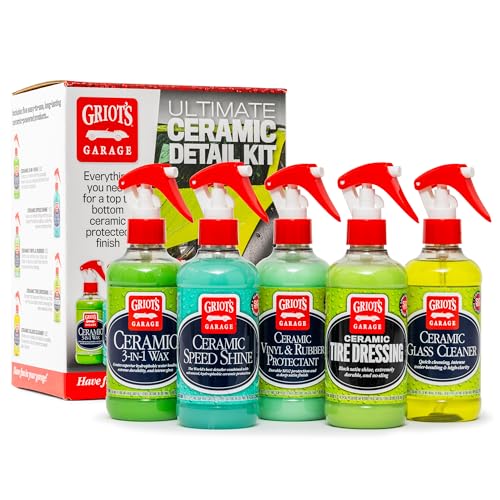
CERAMIC CAR DETAILING KIT: Includes five easy-to-use ceramic products in 8oz bottles; Ceramic 3-in-1 Wax, Ceramic Speed Shine, Ceramic Vinyl and Rubber Protectant, Ceramic Tire Dressing, and Ceramic Glass Cleaner

5 Year Ceramic Coating for Cars - A true ceramic coating, not a spray sealant or wax. One application forms a hard, permanent-bond ceramic layer proven to survive 500+ real-world washes and deliver over 5 years of paint protection.