I’ve registered cars in three states, and I can tell you the insurance rules catch people off guard every time. Most DMVs won’t hand over plates without proof of active coverage, though New Hampshire and Virginia let you skip it if you pay a fee or prove financial responsibility.
I learned the hard way that letting coverage lapse triggers immediate registration holds, even if your tags aren’t expired yet. Here’s what actually works at the counter, which states bend the rules, and how to dig yourself out if you slip up.
How Do You Register a Car With Insurance When Moving States?
When you’re hauling your life across state lines, where do you start with insurance and registration? I always begin by checking if my current insurer operates in my new state. Moving states means completing a residency update fast, since most DMVs won’t process your vehicle registration without proof of insurance that meets local minimum liability standards.
Your out-of-state policy might work temporarily if it matches the new state’s insurance requirements, but don’t count on it long-term. I’ve seen electronic verification systems flag mismatches instantly, causing registration delays that strand people at the counter. I verify my insurance coverage aligns with local rules before I arrive, swapping policies if needed. Skipping this step risks penalties or suspension, and nobody wants that headache when they’re just trying to settle in.
Recommended Products
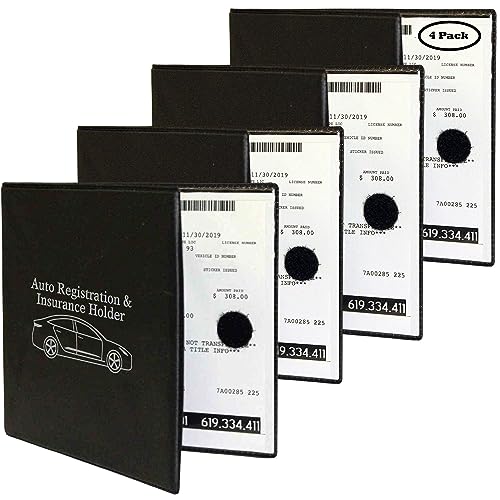
4 pack Car Registration and Insurance Card Holder for any Car, Truck, Motorcycle, or Automotive Vehicle. Easy to store In any visor or glovebox.

Auto Car Registration Insurance Holder Wallet

Paperwork doesn’t have to be folded as case is large enough to fit all forms of the registration and insurance information in 49 states (except CA).
What Documents Prove You Have Valid Insurance at the DMV?
What exactly counts as proof of insurance when I’m standing at the DMV counter? I’ve learned that acceptable insurance proof includes your insurance ID card, declarations page, or digital proof showing your insurer name, VIN, and coverage dates that match your registration period.
Most states demand this documentation before completing registration. Your proof of insurance must list the correct VIN, or you’ll face delays. Some states like Texas and Florida accept digital proof through electronic systems such as TexasSure for instant DMV verification.
Most states require insurance proof before registration completion. Verify your VIN matches, and check if your state offers digital verification systems for faster service.
I always double-check that my coverage dates extend through the full registration period. Without valid proof, jurisdictions can suspend your registration or impose penalties until you provide proper documentation.
Keep physical and digital copies ready. Requirements vary by location, and mismatches create unnecessary headaches at the counter.
Recommended Products
![ESSENTIAL Car Auto Insurance Registration BLACK Document Wallet Holders 2 Pack - [BUNDLE, 2pcs] - Automobile, Motorcycle, Truck, Trailer Vinyl ID Holder & Visor Storage - Strong Closure On Each -](https://m.media-amazon.com/images/I/41k-QvzFVuL._SL500_.jpg)
ESSENTIAL Car Auto Insurance Registration BLACK Document Wallet Holders 2 Pieces

💼 CAR ORGANIZER PRACTICALITY: Car registration and insurance holder has multi-function clear compartments which can organize various items very well. The car document holder large pocket for insurance documents and 2 pockets for vehicle registration, 3 small pockets for driver's license, ID cards, AAA cards, business cards, receipt, key contact information cards, etc. It can fully meet your needs

【HIGH QUALITY】: made of premium PU leather and durable vinyl PVC, strong and firm enough for your long-term use.
Which States Require Insurance Before You Can Register?
I’ll break down nearly every state’s insurance rules for you, starting with those demanding proof upfront at the DMV. Most require active liability coverage, think 30/60/25 splits or similar minimums, before they’ll stamp your registration.
Only New Hampshire and Virginia let you slide without a policy, though you’re still on the hook for crash costs if you drive uninsured.
Recommended Products

Crafted of archival quality polypropylene plastic. The front is crystal clear; back is a solid color

WIDE APPLICATION: Our card protector measures 3.8 inches x 2.32 inches, fits card size within 3.6“ x 2.2”. Can be used to protect social security cards, new medicare cards, credit cards, drivers license, ID cards,card covers for debit cards business cards and more.

New Medicare Card Holder Protector Sleeves, wallet size inserts; also fit social security cards, business cards, credit cards, band cards, driver's license, ID cards, membership cards or other similar standard sized cards.
State Insurance Requirements
State insurance requirements for vehicle registration vary widely, and knowing where you stand before walking into the DMV saves time, money, and frustration. Most states demand proof of insurance to register a car, with minimum liability coverage typically around 30/60/25 for bodily injury and property damage.
I’ve found that state mandates differ considerably. Eight states, including California, Mississippi, and Washington, let you register a car without active auto liability insurance, though you’ll need proof within a set window. New Hampshire and Virginia stand alone with no legal insurance requirement, though financial responsibility rules still apply.
Your out-of-state policy must meet your new state’s minimums for vehicle registration. Bring digital or paper proof at registration. Miss the deadline, and you risk license suspension. Registration requirements aren’t suggestions; they’re the gatekeepers to legal driving.
Proof Needed States
The paperwork shuffle at the DMV hits different when you’re staring down an insurance requirement. I’ve learned that most states demand proof of insurance before you can register your vehicle, and they don’t mess around with verification.
Texas wants that 30/60/25 minimum liability coverage locked in, while Florida requires PDL and PIP. These state requirements aren’t suggestions, they’re gatekeepers to your registration. Some states run electronic verification through systems like TexasSure or South Carolina’s ALIR, so they know instantly if your coverage lapses.
New Hampshire and Virginia stand alone, no insurance required, though you’ll still face financial responsibility rules. Most of us aren’t that lucky.
Skip the proof of insurance, and penalties hit fast: suspended registration, fines, or worse. Bring your documents, meet those minimums, and you’ll walk out with plates.
What Happens If Your Insurance Lapses After Registration?
How quickly can things go wrong when your insurance lapses after registration? I’ve seen it happen faster than you’d expect. One missed payment, and suddenly you’re facing real consequences that affect your standing with the DMV.
When your insurance lapses after registration, your state’s insurance verification system flags the gap almost immediately. The DMV can suspend your registration, leaving you unable to legally drive or register the vehicle until you complete reinstatement.
I’ve found this process requires current proof of insurance, ownership documents, and typically a $100 reinstatement fee. Your insurer must also update the state’s database promptly.
Don’t ignore early warnings. The penalties escalate quickly, and driving with suspended registration compounds your problems. Stay connected with your insurance provider, monitor your coverage status, and act fast if you spot a lapse. Belonging means protecting your driving privileges.
What Penalties Apply for Driving or Registering Without Insurance?
I’ve watched people underestimate what happens when they skip insurance, and the penalties hit harder than most expect. If you drive an uninsured vehicle, you’re asking for trouble that affects your wallet and your freedom.
You’ll need to show proof of insurance to register, and failing that triggers immediate consequences. DMV enforcement systems flag non-compliance fast. Registration suspension locks your plates, and your driver license hangs in the balance too.
First-time offenders face fines starting at $400, climbing to $1,000 for repeats within three years. That’s Class B misdemeanor territory. Want your registration back? Bring current liability insurance, your ID, ownership docs, and a $100 reinstatement fee.
The state verifies coverage through automated databases. No proof of insurance means no driving privileges. It’s that simple, and that serious.
Recommended Products
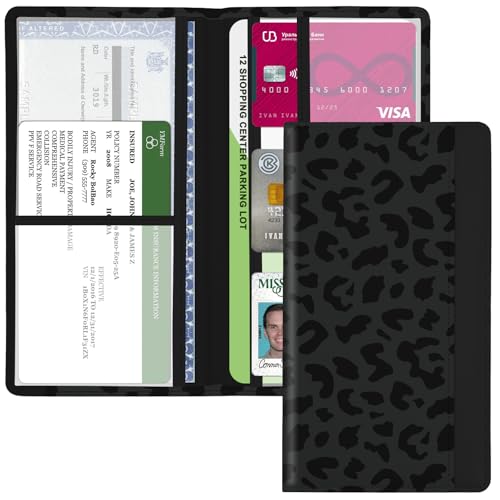
Personalized Design: The car insurance and registration card holder is designed with unique floral pattern, making your driving journey more personal and exclusive.
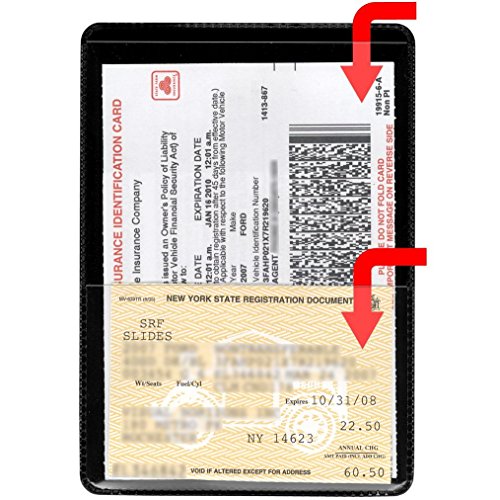
⭐ Archival Protection Each pack includes 1 sleeve made from archival-quality plastic that won’t lift ink—keeps both your insurance cards crisp, clean, and safe, day after day.

【HIGH QUALITY】: made of premium PU leather and durable vinyl PVC, strong and firm enough for your long-term use.
How Do You Reinstate Registration After an Insurance Lapse?
I know you’re wondering what it actually takes to get your registration back after an insurance lapse, and I’ll walk you through the paperwork and costs you’ll face.
You’ll need to gather your ownership proof, photo ID, and current insurance documentation, whether that’s an SR-22, policy declarations, binder, or insurance card, plus $100 for the reinstatement fee. The process isn’t complicated, but missing any of these items will send you back to square one. I’ll break down exactly what each document proves and why the DMV requires them.
Recommended Products

⭐ Twice the Clarity, Twice the Value Includes two fully transparent sleeves—perfect for multi-car households, small business fleets, or keeping a spare on hand.


Dimensions: Includes 16 clear card protector sleeves; each sleeve measures 3.54" x 2.24" inside and 3.74" x 2.4" outside; Sized for New Medicare Card, Business Cards, Social Security Cards, Gift Cards, Credit Cards and other similarly sized cards
Required Documentation
Where do you start when your registration gets pulled for a lapsed policy? I gather my proof of insurance first. This means an SR-22, policy binder, declaration page, or current insurance card. The Department of Public Safety won’t budge without solid insurance proof.
I bring my licence/driver’s license and evidence of ownership to Register Your Vehicle. After policy termination, insurers notify DPS automatically, so I stay ahead of the paperwork. If my coverage lapsed, I surrender my driver’s license to DPS and meet their reissuance requirements before proceeding.
Alternative proof works if I was actually insured on the revocation date. For registration reinstatement, DPS may withhold my license until I prove financial responsibility. Vehicle registration restoration demands current coverage documentation. No exceptions, no shortcuts.
Reinstatement Fees
How much does it actually cost to get back on the road after your insurance lapses? I pay a $100 reinstatement fee, plus I gather my ownership proof, photo ID, and proof of insurance. The DMV, or DPS in some states, wants to see my insurance card, policy, or SR-22 if I’m high-risk.
The reinstatement process feels bureaucratic, but it’s straightforward. I bring current documents showing coverage started after my lapse. If my car was insured on the revocation date, alternative proof might work.
Without completing this, my vehicle registration stays frozen. I’ve learned that delays mean more penalties. I file my paperwork, pay my fee, and wait for the green light to drive legally again.