
Most drivers glance at their license plate daily without realizing that registration number links to a living database tracking everything from your insurance status to past emissions failures. I’ve watched officers run plates in seconds, pulling up owner records, registration expiration, and even warrant flags before the traffic stop begins.
That seven-character code isn’t just metal on your bumper, it’s your vehicle’s passport through state systems, tax rolls, and enforcement networks. Without current registration, you’re grounded, period, no matter how well your car runs.
What Is a Vehicle Registration Number?
A vehicle registration number is your car’s fingerprint in the system, the unique alphanumeric code that ties everything together. I’m talking about the exact characters stamped on your plate, the identifier your state’s authority assigns to make your vehicle traceable.
This registration number links crash data to motor vehicle files, creating accountability across records. For combination trucks, it matches the tractor’s plate, keeping everything properly connected. You’ll find this number on your registration documentation, sometimes paired with a sticker for quick visual verification.
What I’ve learned matters most: your registration number works alongside Registration State and Registration Type classifications. These elements together establish your vehicle’s regulatory status for enforcement and data integrity. It’s not just paperwork, it’s your membership in the road-owning community, your proof that you belong in the system.
Recommended Products

Easily apply, peel off, transfer and re-apply windshield stickers again and again from car to car; No more solvents or scraping to remove stickers; Prevents sticker damage to tinted glass and defroster strips

Innovative Static Cling Design: Our static cling sticker securely attaches to glass surfaces without adhesives, ensuring no damage to your vehicle's tint or defroster strips. Enjoy a mess-free experience when applying and removing stickers, suitable for both temporary and long-term use

Double the Value: Each purchase contains a set of two, providing you with a pair of your unique custom vinyl decal letter stickers and dot stickers.
Where to Find It on Your Car and Documents
I’ll check your registration card first, that’s where the number sits in black and white next to your plate details.
On the car itself, look at your license plate or the corner sticker, though states put these in different spots so you’ll need to hunt a bit. I’ve seen decals crammed in the upper right, placed on the plate, or tucked in the window, so bring a flashlight if you’re squinting at dusk.
Recommended Products

【Durable Stainless】Crafted from premium 316 stainless steel, these license plate fasteners deliver superior rust resistance and long-lasting durability. Withstand rain, snow, and car washes without corrosion—keep your plate firmly mounted for years of reliable use.

For U.S. License plate - Aujen license plate frames use the high quality silicone materials, which protect license plate from rusting and damaging.

Made of chrome metal with a durable finish that resists the elements
License Plate Location
Where exactly should you look when you need to spot your registration number in a hurry? I’ve found the answer sits right on your registration plate, that metal or plastic tag mounted front and rear on most vehicles. This plate displays your unique alphanumeric code, making it the fastest visual reference you’ll get.
You’ll notice a small registration sticker affixed to the corner of the plate in many states. This decal serves as your quick status indicator, showing you’re current with fees and paperwork. Location varies by jurisdiction: some require front and rear plates, others just rear, and sticker placement differs too.
The registration plate links directly to your vehicle’s file, letting enforcement cross-reference ownership instantly. It’s practical, visible, and keeps you compliant without digging through glove compartments when time matters.
Registration Card Details
Your registration card is the paper backup you’ll reach for when the plate isn’t enough. I keep mine in the glove compartment, right where I can grab it during a traffic stop or at the DMV.
You’ll find your registration number printed clearly on this white card, separate from your VIN. It’s the unique alphanumeric code that proves your vehicle’s legally registered. I always double-check that the details match my plate exactly.
Some states require you to carry this card in the vehicle at all times. I’ve found it essential for residency verification and cross-referencing official records. The card lists your registration dates, vehicle specs, and owner information in one compact document.
Keep it accessible, keep it current. That registration card belongs in your vehicle’s document kit, period.
Sticker Placement Guide
How exactly do you spot a valid registration at fifty feet? I look for that small decal in the upper right corner of the license plate. It is your quick visual proof that the registration number is current and legal.
The registration number itself appears on your metal plate, but the sticker tells the full story. Some states use front and rear plates, others stick to rear only, so placement rules shift. I have seen decals affixed directly to the plate or on a separate sticker base, depending on local regulations.
Your documents carry the same registration number for cross-checking against state databases. When I verify a vehicle, I match the plate to the paperwork. It is a simple system, but precision matters. Know your state’s rules, and you will stay compliant without hassle.
Registration Number vs. VIN: What’s the Difference?
I often see buyers confuse these two codes, and that’s a costly mistake when you’re reviewing paperwork or checking a used car’s history. Your registration number ties the vehicle to your state’s tax and enforcement systems, while the VIN acts as the vehicle’s permanent fingerprint for ownership records, recalls, and accident history.
Both serve as unique identifiers, but they operate in completely different legal lanes. One tracks your compliance with local regulations; the other reveals the car’s entire life story.
Recommended Products
![ESSENTIAL Car Auto Insurance Registration BLACK Document Wallet Holders 2 Pack - [BUNDLE, 2pcs] - Automobile, Motorcycle, Truck, Trailer Vinyl ID Holder & Visor Storage - Strong Closure On Each -](https://m.media-amazon.com/images/I/41k-QvzFVuL._SL500_.jpg)
ESSENTIAL Car Auto Insurance Registration BLACK Document Wallet Holders 2 Pieces
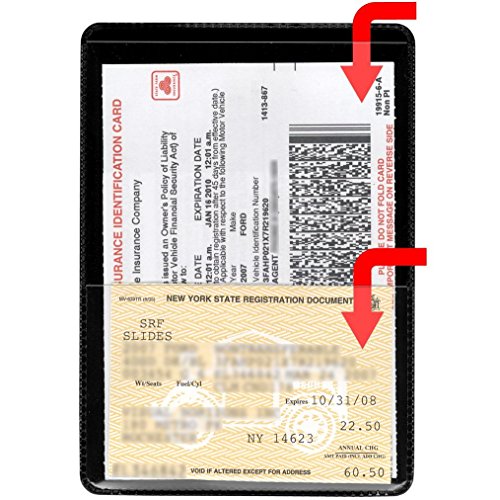
⭐ Archival Protection Each pack includes 1 sleeve made from archival-quality plastic that won’t lift ink—keeps both your insurance cards crisp, clean, and safe, day after day.

【HIGH QUALITY】: made of premium PU leather and durable vinyl PVC, strong and firm enough for your long-term use.
Unique Identifier Purposes
Why do two different codes matter when I’m trying to identify my vehicle? I need both to stay compliant and protected.
My vehicle registration number is my regional fingerprint, assigned by state authorities to link my car to tax records, plate validity, and ownership in their database. It’s what officers scan, what toll cameras capture, what I renew annually. This number proves I’m road-legal in my jurisdiction.
My VIN, stamped on the chassis, never changes. It tracks the vehicle itself through manufacturing, recalls, and resale across borders.
Here’s where I see the split in action. My registration number enables enforcement, renewals, and cross-referencing with state systems to verify I’m current on taxes and emissions. The VIN proves which physical car I own, separate from title liens.
I keep both handy. One keeps me driving legally today, the other protects my asset long-term.
Legal Documentation Roles
Three distinct documents sit in my glovebox, and each one plays a different legal role. My vehicle title proves I own the car, listing my name and the VIN. My insurance card protects me financially. But my registration, stamped with the vehicle registration number, is what actually lets me drive legally.
Here’s where drivers get confused. The VIN is permanent, etched into my dashboard, identifying the car itself no matter where it travels. The vehicle registration number, however, ties my specific car to my state’s tax and regulatory system. It connects crash data back to state files, ensures I’ve paid fees, and proves I’ve met emissions and safety requirements.
Without current registration, I’m not legally drivable, period. The registration number is my active permission slip, renewed annually, while the VIN simply states, “This car exists.”
Do You Need to Carry Your Registration to Drive?
Wherever you drive, that little registration card in your glovebox matters more than you might think. I keep mine tucked right next to my insurance card, because most states require you to carry physical proof of registration whenever you operate your vehicle.
Your registration number ties directly to this requirement. That unique alphanumeric code, printed on your registration document and often shown as a decal on your license plate, proves you’ve paid your taxes and fees, and that your vehicle is legally cleared for public roads. Officers use it to verify your status instantly.
I learned this the practical way: without that card, you’re missing the link between your registration number and your official file. It connects crash data, enforcement records, and database entries across agencies. Don’t leave home without it.
Recommended Products

Protect Your Documents: Car registration and insurance holder protects documents from wear and tear, takes up little space in the glove compartment or on the visor. It enables your essential vehicle and insurance paperwork organized and easily accessible.

[Efficient Design with Multiple Pockets & Compact Size]: Andalus compact vertical white car registration holder (9.5" x 5.15"), pack of 2 easily fits in your vehicle's glove box, ensuring quick access to essential papers. With 4 sleeves for organized storage, it's slim and lightweight, fitting seamlessly in any glovebox or console

Perfect Size: 9.5" x 5.1"(24cm x 13cm) - slim and lightweight, precisely designed to fit all of your needed documents, perfect to keep in any glove box or console.
What Happens If You’re Pulled Over Without It
I learned the hard way that forgetting your registration card changes everything about a traffic stop. The officer runs your registration number through their system first. They’ll verify if your vehicle’s properly registered and current, even without your paper proof.
If your registration number checks out clean, you might just get a warning. But here’s where it gets tricky: if the system’s slow, or your sticker’s expired, or something doesn’t match, you’re looking at citations. I’ve seen officers request updated documents on the spot to reestablish valid status.
Your registration number links directly to crash records, insurance status, and ownership files across agencies. Without physical proof, you’re banking on clean data and an officer’s patience. It’s not worth the gamble. Keep that card accessible, and double-check your expiration dates regularly.
Recommended Products

👍【Worthy to Own One】Compared to other complicated scanners on the market, Launch CR629 OBD2 scanner is designed for all US family. The diagnostic scanner with a 3.5 inch large LCD color display and built in speaker for providing a better visual and auditory effects. Besides, it supports Codes analysis and Printer compatible, Live data graphing and logging, and Lifetime free update

【Ultimate Diagnostic Scanner For Diyers & Pros】Stop wasting money at dealerships! The LAUNCH Creader Elite X500 OBD2 Scanner is the ultimate money-saving solution for DIYers, car owners, mechanics, and auto dealers. Powered by Android 8.1 (2GB+64GB, 4" touch, 3000mAh), it packs OE-Level ECU Coding, Full Bi-Directional Control, all Hot Resets, and full System Diagnostics with Live Data. Fit for BMW Mini Rolls, covering vehicles from 1996 to 2026+. One device pays for itself in 1-2 uses and saves thousands for life.
How to Replace Lost or Damaged Registration
How quickly can a lost registration derail your day? I’ve been there, and it’s frustrating. Your registration number ties your vehicle to state records, so losing that document creates real headaches.
I replace mine through the DMV portal or in person, bringing my ID and vehicle details. Most states provide online duplicates through MyDMV or mobile apps, though fees apply. Processing takes days, sometimes weeks.
Here’s what I learned: contact the issuing authority immediately when documents go missing. They’ll issue a replacement and ensure your registration number stays correctly linked. I keep digital copies now, plus photos of my plate sticker. This saves time during audits or enforcement stops.
The system works if you act fast. Don’t wait until you’re pulled over to discover gaps in your paperwork.
Recommended Products

This clear car windshield sticker can be applied not only to windows, but also to any glass surface and smooth surface, such as refrigerators, mugs, notebooks and mobile phones, etc.

Includes Two Decals – One for each side of your vehicle

DECAL PLACEMENT AND INSTALLATION: Designed for clean, flat, smooth exterior surfaces including vehicle windows, windshields, storefront glass, metal, doors, and trailers. For storefront glass and commercial doors, decals apply to the outside facing outward to be read from the exterior.
Fixing Mismatched Registration Documents
Why do mismatched registration documents cause so many headaches at the DMV? I’ve watched friends stumble through this, and it always comes down to one thing: your registration number doesn’t line up across systems.
When I fix mismatched documents, I start by checking that my registration number matches my state, plate, and owner record exactly. This unique alphanumeric code, printed on my registration card and sometimes stickered to my plate, links everything together. If it doesn’t match the database, I’m stuck in administrative limbo.
I verify the registration number on my replacement certificate mirrors what’s physically displayed. In Florida, I’ve seen this number serve as a backup identifier when other records fail. Getting this right restores data integrity, and suddenly I’m back in the system where I belong, no longer an outsider at the counter.
Recommended Products

【MAXIMUM COMPATIBILITY】: Fits for Most Domestic Cars and Trucks, EXCEPT Toyota/Honda/Audi/BMW/Tesla. Refund Request Is Accepted In Case Of Not Compatible.
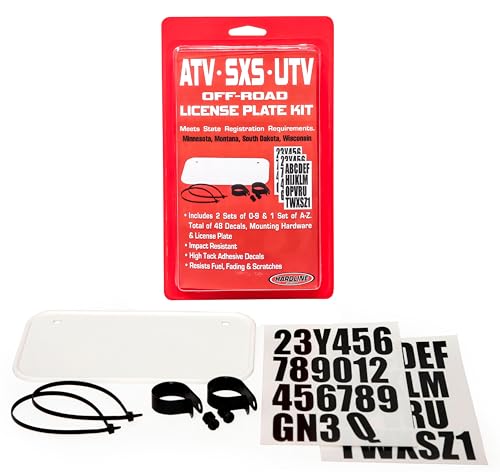
ALL-IN-ONE REGISTRATION SOLUTION: Complete off-road license plate kit includes one durable white mounting plate (4" x 7.5"), rust-proof mounting hardware, two sets of 0-9 numerals, and one set of A-Z letter decals. Everything you need to get trail-legal fast.

Designed for Vehicles that Use Plastic Screw Inserts: Fits standard license plate mounts with nylon or plastic screw inserts used by most domestic vehicles such as Ford, Chevrolet, Dodge, GMC, Jeep and other US-brand vehicles. May fit select import models that use nylon or plastic screw inserts.
State-by-State Registration Requirements
Because I’ve registered vehicles in three different states, I can tell you firsthand that “state-by-state” isn’t just bureaucratic jargon; it’s the reality that keeps you legal or gets you ticketed.
Your registration number ties directly to where you live, and each state plays by its own rules. I’ve watched renewal windows stretch from annual to two-year cycles depending on the state, with some providing slick online portals while others still demand you line up at the DMV. Fees swing wildly too; my sedan cost $65 in one state while a friend’s heavy truck hit $400+ in another. Commercial vehicles get hit even harder with weight-based brackets.
The registration number itself carries state codes and type classifications that enforcement systems scan instantly. Miss your renewal, and you’re not just late; you’re flagged across insurance databases. Trust me, I’ve learned to set calendar alerts the hard way.
Recommended Products

【Document well organized】 Perfect designed auto car document holder, keeps all important document such as registration and insurance card, business cards, emergency information, paperwork, gas card well organized and looks much better than just scattered in the glove box.
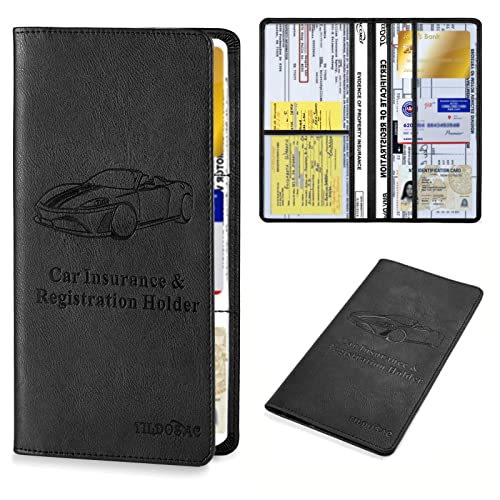
【Document well organized】 Perfect designed auto car document holder, keeps all important document such as registration and insurance card, business cards, emergency information, paperwork, gas card well organized and looks much better than just scattered in the glove box.

Premium Material: This car registration holder is made of premium PU leather, with excellent texture, wear-resistant, waterproof, which can protect your registration card well, you no longer have to worry about your card lost or worn out