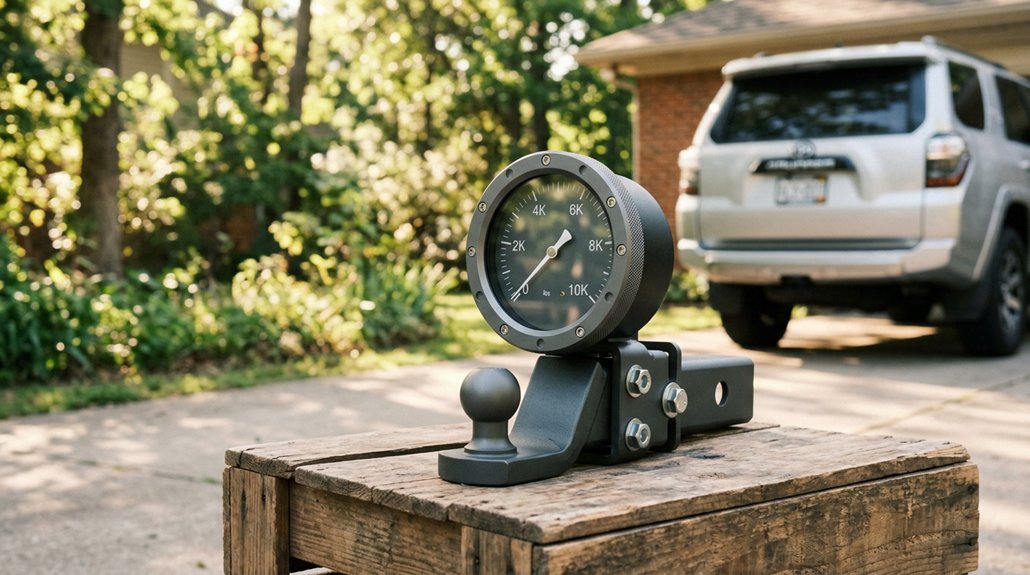
Most drivers assume towing capacity is just a single number on a spec sheet, but that figure only tells part of the story. I’ve tested trucks that could theoretically pull 12,000 pounds yet couldn’t safely handle a 7,000-pound trailer once I loaded gear and passengers inside.
The real limits involve your Gross Combined Weight Rating, tongue weight distribution, and how payload eats into your available capacity faster than you’d expect. Getting this wrong doesn’t just void your warranty. It can push your transmission past 250°F, extend braking distances by 40 feet, or trigger dangerous sway at highway speeds.
I’ll walk you through what actually matters when matching your vehicle to a trailer.
What Towing Capacity Actually Means (and Why It’s Not Your Only Limit)
Why do so many people get burned when they tow? They confuse towing capacity with their actual limits, and I have seen it happen too many times. Towing capacity is what your vehicle can pull, sure, but it is not the whole story.
You have got GVWR, which is how much your truck weighs fully loaded with passengers and cargo, no trailer attached. Then there is GCWR, the combined maximum for your rig plus whatever you are hauling.
GTW, your trailer weight, and tongue weight, roughly 10-15% of that trailer pushing down on your hitch, both factor in. Payload matters too. The real issue is GVWR vs towing limit; you might legally tow 10,000 pounds yet overload your frame, suspension, or brakes. Check all your ratings, not just the big number on the brochure.
Recommended Products

✅【High Quality】This 72" x 24" Door frame protective pad made from high-quality polyester, this product offers ample coverage and withstands daily wear and tear. Reinforced with zigzag stitching to secure filling in place, it resists shifting and sagging for long-lasting use

Optimum sizing: This 72" x 24" premium padded door jamb protector is engineered to fit most door jambs to provide optimum protection in high traffic areas.
How to Find Your Vehicle’s Exact Towing Capacity and Ratings
I always start my search for towing specs by checking the door jamb placard, where manufacturers list GVWR, GAWR, and GCWR values in plain sight. You’ll find these same ratings repeated in your owner’s manual and on the manufacturer’s website, though I prefer the placard for quick reference during test drives or inspections.
Understanding these labels matters because GCWR covers your vehicle plus trailer combined, while GVWR stops at the vehicle’s own limit with passengers and cargo. Confusing the two can leave you overloaded before you even hitch up.
Recommended Products

Adjustable Trailer Hitch: This truck hitch has a 10" drop and an 11" rise in 1" increments and comes with a Keyed Alike Dual Pin Lock, Receiver Pin Lock, Coupler Lock, and Padlock

6" Rise or 6" Drop Adjustment – Provides significant vertical correction to level hitch mounted accessories or increase ground clearance. Ideal for vehicles that sit unusually high or low.

Adjustable Trailer Hitch: This truck hitch has a 10" drop and an 11" rise in 1" increments and comes with a Keyed Alike Dual Pin Lock, Receiver Pin Lock, Coupler Lock, and Padlock
Locating Manufacturer Specifications
Precision matters when you’re sizing up what your rig can actually handle. I always start with the door jamb placard on the driver’s side; it’s your fastest reference for GVWR and the gross combined weight rating. Your owner’s manual comes next, full of trim-specific details that generic specs miss.
I cross-check against the vehicle manufacturer’s towing capacity chart online. Configurations vary wildly between engines, axles, and packages. Here’s the math that matters: GCWR minus your loaded vehicle weight equals real-world towing capacity. Don’t forget tongue weight, typically 10–15% of trailer weight, which eats into your payload.
I’ve seen owners guess and regret it. Verify every number yourself. The manufacturer built these limits for safety and longevity, not suggestions.
Understanding Weight Rating Labels
Where exactly do you find the numbers that keep you legal and safe? I always check my door jamb first. That GVWR label tells me the maximum my vehicle can handle loaded down, no trailer attached. My owner’s manual fills in the rest of the weight ratings picture.
Here’s what I’m reading on my sticker:
- GVWR: the ceiling for my truck plus everything inside it
- GCWR: the combined limit when I’m hitched up and rolling
- Curb weight: what my rig weighs empty, so I know my starting point
- Payload and tongue weight: the real-world factors that eat into my limits
I subtract curb weight from GVWR to find my actual payload. Then I verify GTW (gross trailer weight) stays within GCWR minus my loaded vehicle. These numbers aren’t suggestions; they’re my safety margin on every haul.
GVWR, GCWR, GAWR, GTW, and Tongue Weight: What Each Limits
How do you know if you’re asking too much of your truck? I start by checking GVWR, the maximum my rig can weigh with payload and passengers, no trailer attached. Exceed it, and I’m risking brake failure and steering instability.
GCWR comes next, covering my truck plus the trailer fully loaded. This number keeps my engine, transmission, and frame from catastrophic stress during long hauls.
I also watch GAWR, split between front and rear axles, since uneven loading kills handling. For the trailer itself, GTW, or Gross Trailer Weight, must stay within my towing capacity.
Finally, tongue weight matters, 10–15% of Gross Trailer Weight pressing down on my hitch. Get this wrong, and I get dangerous sway or front-end lift.
I never guess these numbers. I weigh, I verify, I tow safely.
Recommended Products

Each J-TECH DYNAMICS trailer safety cable features a 5000 lbs break strength rating, providing you with the confidence and security needed for heavy-duty towing. This ensures a robust secondary connection between your trailer and tow vehicle, making these safety chains towing trailer a non-negotiable piece of equipment for peace of mind.

Package Content: You will receive 4 trailer breakaway cables, the quantity can meet your usage and replacement needs.

Comprehensive Package for Convenience: the package includes 2 trailer breakaway cables, providing an immediate replacement option or a spare for future needs, ensuring you're always prepared
How to Calculate if Your Specific Trailer Is Safe to Tow
I start every towing decision by pulling my vehicle’s GCWR and GVWR from the door jamb sticker, then I grab a scale to measure my trailer’s loaded weight and calculate tongue weight at 10 to 15% of that total.
I check that my trailer weight plus tongue weight stays under my GTW limit. I also verify that my vehicle’s curb weight, trailer weight, cargo, and passengers combined don’t push past my GCWR or GVWR. If any number exceeds its limit, I know I’m looking at the wrong trailer or need a different tow vehicle.
Gather Vehicle Specifications
When you’re staring at a shiny new trailer at the dealership, the real question isn’t whether it’ll look good behind your truck, it’s whether your rig can actually handle the load without turning your highway merge into a white-knuckle gamble. I’ve learned the hard way that guessing gets you nowhere. You need cold, hard numbers.
I always start at the door jamb placard. Here’s what I’m hunting for:
- GVWR and GCWR: The maximums my truck can weigh alone, and combined with a trailer
- Towing capacity: The absolute limit my vehicle can pull
- Payload capacity: GVWR minus curb weight, minus tongue weight, equals what I can actually carry
- Tongue weight specs: Usually 10-15% of GTW, critical for stable handling
Understanding payload vs towing keeps me legal and my family safe.
Measure Trailer Weight
The first thing I do before hitching up is find the trailer’s Gross Trailer Weight, or GTW. That’s the total trailer weight, including everything loaded inside. I check the GVWR plate on the trailer frame, then weigh the rig at a CAT scale to confirm real numbers.
I aim for tongue weight at 10-15% of GTW, heavy enough for stability but not so much that I crush my payload capacity. I add that tongue weight to my truck’s total load. Then I check that GTW plus my vehicle’s weight stays under the GCWR, which I find on the door jamb sticker or in the manual.
If gross trailer weight pushes me past towing capacity or GCWR limits, I leave something behind. Safety margins aren’t suggestions, they’re requirements.
Verify Capacity Limits
Once I’ve got the trailer weighed and the tongue load sorted, I pull out my phone calculator and the door jamb sticker to run the actual numbers. I start with the GVWR, GAWR, and GCWR ratings printed right there on the sticker. These figures are my hard limits, the boundaries that keep me and everyone else safe on the road.
Here’s exactly what I verify:
- I add my vehicle’s curb weight to the trailer weight and confirm the total stays under GCWR
- I check that tongue weight falls between 10-15% of trailer weight for stable handling
- I subtract curb weight from GVWR to find my payload, then deduct tongue weight to see what’s left for passengers and gear
- I confirm no single axle exceeds its GAWR rating under full load
If I’m over on any of these, I’m not towing until I reduce trailer weight or lighten the truck.
Why Payload Capacity Reduces What You Can Actually Tow
Why does a truck’s payload rating directly shrink your real-world towing ability? It comes down to hard numbers baked into your vehicle weight ratings. I calculate payload capacity by subtracting curb weight from GVWR, and every pound matters.
Load up your crew cab with passengers, tools, or that heavy tonneau cover, and you’re eating into payload margin fast. Add tongue weight from your trailer coupling, typically 10-15% of trailer weight, and you’ve got genuine payload reduction before you even hit the road.
Heavier trim levels, larger engines, and luxury packages pump up curb weight, leaving less payload for actual work. That shiny max towing capacity plastered on the window sticker? It assumes an empty truck. In practice, your real towing capacity drops significantly once you account for occupants, gear, and hitch hardware. Check your door sticker, do the math, and respect both limits.
Recommended Products
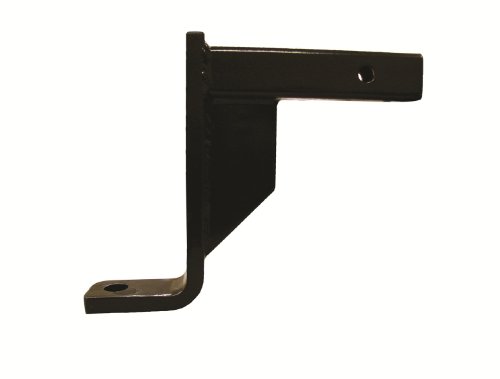
High Towing Capacity: Engineered for heavy-duty use, this Class III hitch ball mount boasts a 10-inch drop with a robust 5000 lb towing capacity and a 500 lb tongue weight, ideal for a variety of towing needs.

[4" RISE OR DROP FOR HITCH ACCESSORIES] Raises or lowers hitch-mounted accessories by 4 inches to improve ground clearance and achieve a better level position. Ideal for bike racks, cargo carriers, mobility carriers, and similar hitch-mounted equipment.

Adjustable Trailer Hitch: This truck hitch has a 10" drop and an 11" rise in 1" increments and comes with a lock set for security
What Actually Goes Wrong When You Exceed Your Tow Rating
I’ve seen what happens when drivers ignore their tow ratings, and it isn’t pretty. You’re not just pushing numbers; you’re creating real overload risk that affects every mile.
Ignoring your tow rating doesn’t bend the rules—it breaks your rig, one overloaded mile at a time.
When your payload plus tongue weight pushes past GCWR limits, here’s what breaks down:
- Your frame, suspension, axles, and braking system suffer accelerated wear or outright failure under overloaded GTW.
- Steering control fades and stopping distances stretch, turning your rig into a hazard for everyone nearby.
- Poor handling and trailer sway kick in when trailer weight exceeds towing capacity, often ending in tire blowouts.
- Engine, transmission, and cooling systems overheat, cutting performance and inviting component failure.
Beyond immediate danger, you’re shortening your vehicle’s lifespan and likely voiding your warranty. Respect your tow rating; it’s not a suggestion, it’s a safety boundary tested by engineers who understood real-world limits.
Recommended Products

Each J-TECH DYNAMICS trailer safety cable features a 5000 lbs break strength rating, providing you with the confidence and security needed for heavy-duty towing. This ensures a robust secondary connection between your trailer and tow vehicle, making these safety chains towing trailer a non-negotiable piece of equipment for peace of mind.
Each J-TECH DYNAMICS trailer safety cable features a 5000 lbs break strength rating, providing you with the confidence and security needed for heavy-duty towing. This ensures a robust secondary connection between your trailer and tow vehicle, making these safety chains towing trailer a non-negotiable piece of equipment for peace of mind.

SMOOTHER RIDE — The Center Point air-ride RV trailer suspension system by Lippert effectively dampens road shock and trailer sway, ensuring a smoother and more comfortable ride for you and your passengers