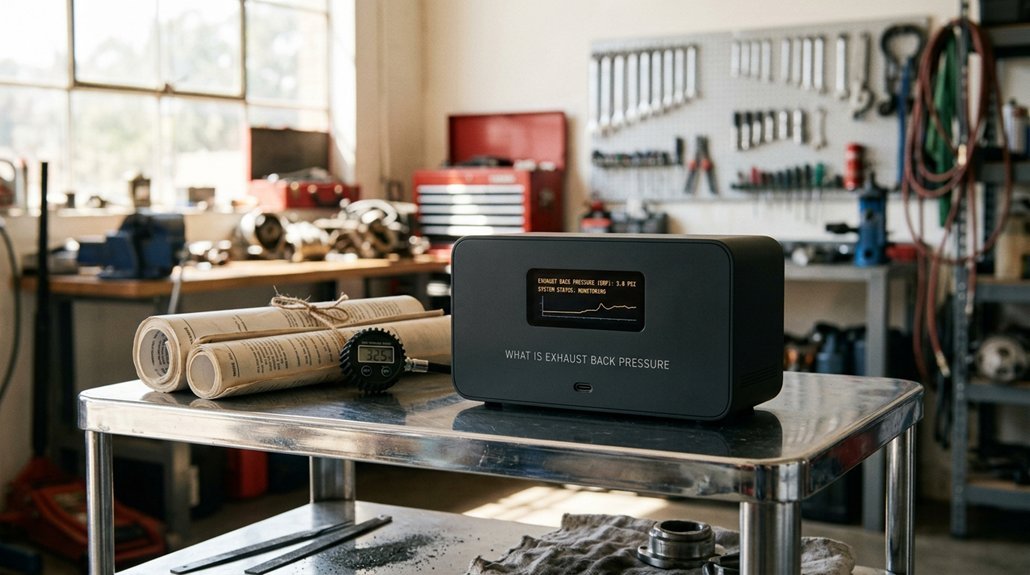
Picture hot exhaust gases fighting their way through a narrow pipe, like traffic squeezing through a single lane at rush hour. That’s exhaust back pressure in action: the resistance your engine faces pushing spent gases out through mufflers, converters, and tight bends.
I’ve measured it on diesels hitting 15 psi, watched turbos cook themselves, and felt the sluggish throttle response myself. Too much back pressure steals torque, wastes fuel, and shortens turbo life.
The real question isn’t whether you have it; it’s how much is costing you power you paid for.
What Exhaust Back Pressure Actually Means
When I’m tuning an engine or evaluating an exhaust upgrade, exhaust back pressure is one of the first numbers I check. It’s the pressure your exhaust gases need to push through the entire system, measured right at the turbo outlet or manifold. I think of it as the system’s resistance to flow.
You’ll see it listed in kPa, mbar, or inches of water, and typical mufflers run about 6 kPa. DPF-equipped trucks can run higher, especially when soot loads up.
That resistance isn’t just a number on a gauge; it costs you power. Higher exhaust back pressure makes your engine work harder to pump out spent gases, steals energy from your turbo, and hurts your fuel economy. I measure it because it tells me exactly where my build stands.
Recommended Products

600°F High Temperature Resistant Hose, No More Melting: 6 ft. double braided stainless steel hose withstands extremely high exhaust temperatures (tested to 600°F/315°C). Ideal for turbocharged engines and extended diagnostic use

【6-Foot Stainless Steel High-Temperature Resistant Hose】The hose of exhaust back pressure tester is made of high-quality double-braided stainless steel, which is not only wear-resistant but also helps with heat resistance, allowing it to function normally even in high-temperature environments near the exhaust manifold. Additionally, the 6-foot hose length allows users to perform tests directly from the driver's seat, and its flexibility makes testing convenient in confined spaces.

Carrying Case Design: This exhaust back pressure tester comes with a custom-molded black carrying case, you can easily organize every piece of this set in an orderly manner, ready for your next job. The kit can also be protected during storage to avoid damage or loss.
How Back Pressure Builds in Your Exhaust System
I’ll trace how back pressure actually forms in your exhaust system by examining the specific flow restriction sources and pressure gradient mechanics at work. I’ve watched mufflers, DPFs, and undersized piping create measurable bottlenecks, typically pushing gauge pressure readings well above 3 PSI at the turbo outlet, which forces your engine to work harder against atmospheric pressure.
Understanding these restriction points matters because each kink, tight bend, or mismatched component directly impacts pulse velocity, scavenging efficiency, and your wallet at the pump.
Recommended Products
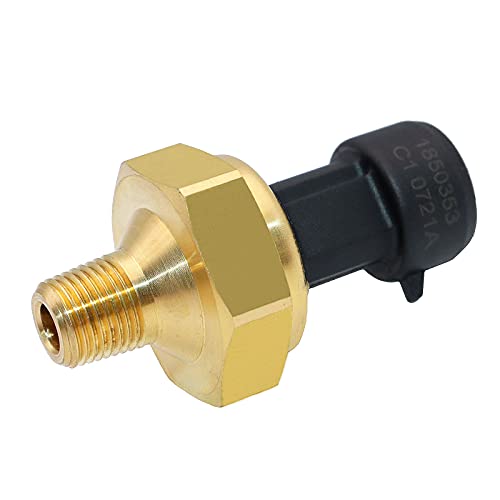
Compatible With: Exhaust Back Pressure Sensor for Powerstroke 6.0L & 7.3L V8 Diesel 1997-2003 and more. Please See description below for the full vehicle list.
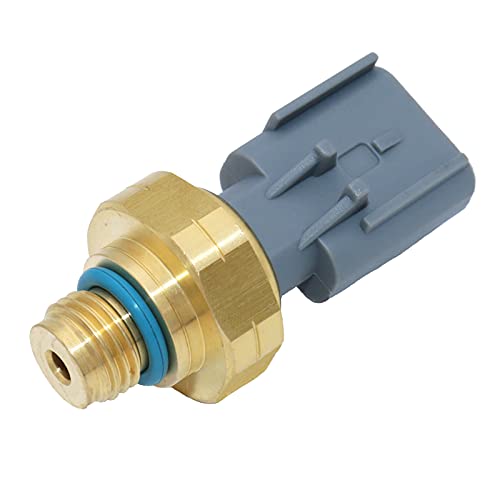
Compatible With: for Cummins Engine ISX ISM ISC ISL ISB ISF 2.8 3.8, 2007-2010 Dodge Ram 2500 3500 6.7L, 2011-2018 Ram 2500 3500 6.7L.

[Vehicle Fitment-1]: Compatible with Ford E-350 2003 V8 5.4L SOHC Petrol, E-350 1996-2003 V8 7.3L OHV Diesel, E-450 2003 V8 5.4L SOHC Petrol, E-450 1999-2003 V8 7.3L OHV Diesel, E-550 2003 V8 7.3L OHV Diesel, Econoline Super Duty 1996-1999 V8 7.3L OHV Diesel, Excursion 2003-2004 V8 5.4L SOHC Petrol, Excursion 2003-2004 V8 6.0L OHV Diesel, Excursion 2000-2003 V8 7.3L OHV Diesel
Flow Restriction Sources
Where exactly does all that resistance come from when I’m pushing exhaust out of my engine? Exhaust back pressure builds whenever flow hits a bottleneck. I see it happening at mufflers, catalytic converters, and diesel particulate filters, where accumulated pressure sits upstream waiting to escape.
Kinks and sharp bends in my tubing slow velocity and create nasty backlogs. I’ve watched a single crushed section turn a smooth system into a strangled mess. Small-diameter pipes and tight routing compound the problem.
Those restrictions cost me more than flow. They cut pulse velocity and wreck scavenging, forcing my engine to work harder just to pump spent gases.
Mufflers typically add around 6 kPa. But DPFs with heavy soot loads? I measure dramatically higher readings. Performance suffers, and I feel it in throttle response and fuel consumption.
Pressure Gradient Mechanics
Resistance at mufflers and DPFs only tells half the story. I want you to understand how exhaust back pressure actually builds through your entire system.
When your four-stroke engine fires, it creates exhaust pulses that aren’t constant. Every bend, narrow pipe, and restrictive component slows these pulses down. That slowdown creates a backlog, a traffic jam of hot gas that stacks pressure against your engine’s efforts to breathe out.
I measure exhaust back pressure at the outlet: the turbo outlet on boosted engines, or the manifold outlet on naturally aspirated setups. The higher this gauge pressure climbs above atmospheric, the harder your engine works just to push spent gases free.
Excessive restriction costs you scavenging efficiency, burns extra fuel, and spikes exhaust temperatures. I’ve seen it firsthand: a choked system turns your motor into its own worst enemy.
Why Scavenging Matters More Than Back Pressure
How often do we chase lower back pressure numbers when the real magic happens somewhere else entirely? I’ve learned that scavenging, not exhaust back pressure alone, determines how hard your engine works and how responsive it feels.
Scavenging creates low-pressure zones between exhaust pulses that literally pull the next gas charge out of your cylinder. This action improves intake efficiency and fuel economy without forcing the engine to push against resistance. Get it right, and you feel crisper throttle response across your power band.
But scavenging demands balance. Too aggressive, and it sucks your intake charge straight into the exhaust, killing power at specific RPMs. The real goal isn’t minimal back pressure. It’s preserving pulse velocity and effective scavenging where you actually drive.
Recommended Products

PERFORM DPF REGENERATION & REDUCE DOWNTIME — The HD110 helps you perform supported DPF regeneration yourself, reducing the need for frequent shop or dealer visits. Address soot-loaded or clogged DPF conditions more efficiently and get back to work with less service downtime. An essential DPF regeneration tool for owner-operators, fleet operators, and long-haul drivers who want more control over routine diesel maintenance

Built for Heavy-Duty Trucks in Commercial Service: Go beyond basic passenger-car code reading with a heavy duty truck scanner built for real diesel truck service. Helps owner-operators, fleets, repair shops, used-truck businesses, and logistics teams handle everyday truck maintenance, prepare for DPF service, and troubleshoot with more confidence

Boost DPF Performance For Smooth Truck Operation: Facing power loss, weak acceleration or constant DPF warning lights? The DPF regen scan tool offers forced DPF regeneration, DPF Reset, and DPD/DPR functions to clear soot buildup, recover engine output and keep exhaust aftertreatment working properly. Detect DPF‑related errors fast, reduce downtime, and prolong your diesel particulate filter lifespan. Vehicle compatibility varies. Please verify before purchase.
How Back Pressure Robs Your Engine of Power
Back pressure robs your engine of power in two distinct ways, and I’ve measured both on the dyno. When back pressure climbs past 6 kPa, that extra pumping work forces your pistons to fight harder on the exhaust stroke, eating up horsepower you’d feel at the wheels.
Worse, I’ve seen scavenging efficiency drop by 15-20% on big-cam engines, leaving spent exhaust gases choking the fresh charge and killing combustion quality before the spark even fires.
Recommended Products

ICONIC MAGNAFLOW SOUND - The D-Fit With Muffler Kit is engineered to deliver the resonant, throaty sound that MagnaFlow is famous for.

SIGNATURE MAGNAFLOW SOUND - The 4" x 4" Round body of muffler 10419 is engineered to deliver the deep, resonating sound that MagnaFlow mufflers are famous for.

How To Build Max Performance CHEVY Small Blocks On A Budget: CarTech Manual - Softcover
Pumping Work Increase
Why does your engine feel sluggish when you bolt on a restrictive exhaust? Excessive back pressure forces your pistons to work harder, robbing power you paid for.
When exhaust can’t exit freely, the engine wastes energy pushing spent gases through a bottleneck. That extra effort, pumping work, comes straight from your crankshaft’s output.
I measure this on the dyno: even small pressure spikes, just a few kPa, slice torque at low to mid RPMs where you drive daily. You’re burning more fuel, generating more heat, and getting less push for your dollar.
Here’s what back pressure steals from you:
- Extra fuel burned fighting resistance
- Mechanical load on pistons and rings
- Net crankshaft power you’d feel at the pedal
- Heat dumped into your cooling system
- Low-end torque you need for merging and towing
Watch your pressure readings; I won’t run anything choking flow over stock specs.
Scavenging Efficiency Loss
Where does your engine lose its snap when you choke the exhaust? I see it firsthand in every dyno pull. Exhaust back pressure kills scavenging, that critical vacuum pulse that sucks the next charge out. Stack pressure too high, and you’re fighting your own exhaust instead of using it.
I watch the cross-pulse pull collapse. Residual gases linger, oxygen starves, and your intake charge turns lazy. IMEP drops across the board, from idle to redline. I’ve tested 2.5-inch versus 3-inch systems on small blocks: oversize your pipes for the RPM range, and pulse velocity stalls at 3,000 rpm. Response dies.
The fix? Size right, flow free, restrict nothing. Scavenging recovers, combustion completes, power returns. Your throttle snaps back.
How to Spot Excessive Back Pressure Symptoms
When I’m testing engines or helping someone diagnose a power loss, I always check for exhaust back pressure first because it’s one of those sneaky problems that masquerades as other failures. You’ll feel it in the seat of your pants before any warning light appears.
Here’s what I watch for:
- Sluggish acceleration under load, especially towing or climbing hills
- Dropping fuel economy that no tune-up seems to fix
- Engine temperature climbing faster than normal on short trips
- Turbo boost falling off or oil seeping from turbo seals
- Unusual smoke patterns that point to seal failure
I measure back pressure with a simple gauge at the oxygen sensor port; anything over 3 PSI at idle or 8 PSI at 2,500 RPM tells me we’ve got a restriction. Catching this early saves your turbo and your wallet.
Recommended Products
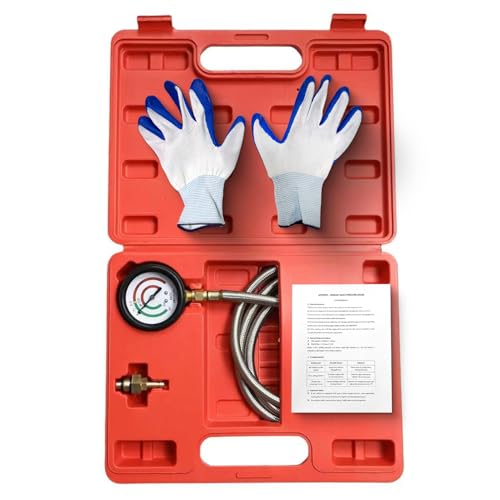
Upgraded Stainless Steel Hose: The exhaust back pressure tester uses a high-temperature resistant stainless steel braided hose, ensuring it won't melt and is more durable. The 6.2 foot hose allows you to mount the gauge directly to the driver's side window, enabling you to observe needle changes while seated in the driver's seat.

Allows quicker and more accurate testing of exhaust blockages in catalytic converters, mufflers, etc.

【PROFESSIONAL EXHAUST BACK PRESSURE TESTER】Accurately diagnose exhaust back pressure issues to identify clogged catalytic converters or mufflers, preventing engine sluggishness, poor acceleration, and overheating. Ensures smooth and safe driving for professionals, dealers, and DIY mechanics.
Why Diesel Particulate Filters Make It Worse
A clean filter creates minimal exhaust back pressure, maybe 1-2 psi, but let that soot pile up and you’re looking at 8-10 psi or worse. The real killer isn’t the filter itself: incomplete regeneration cycles that leave you with a clogged honeycomb.
That extra exhaust back pressure robs your turbo of drive energy, dropping boost by 3-5 psi in my experience. You’ll feel it as sluggish throttle response and higher EGTs, sometimes 200°F hotter than normal. Fuel economy tanks, and I’ve watched oil seals weep when pressure backs up past the turbine.
Stay on top of your regen cycles, or you’re buying a turbo rebuild.
Recommended Products

Accurate Exhaust Pressure Testing: Test Diagnose exhaust back pressure issues precisely through the oxygen sensor. Our back pressure gauge ensures optimal vehicle performance with clear psi and bar readings.

【Professional Exhaust Back Pressure Tester】The diagnostic function of the exhaust back pressure gauge can help you quickly and accurately determine the condition of the vehicle's exhaust system, which can prevent sluggish engine performance, reduced acceleration, and excessive heat. Whether you are an auto expert or a DIY mechanic, the exhaust back pressure tester kit can bring you a satisfying experience.

MaxTow 100 PSI Exhaust Pressure Gauge is Designed to Monitor & Display the Exhaust Pressure Driving the Truck's Turbo in Comparison to the Amount of Boost Pressure Produced