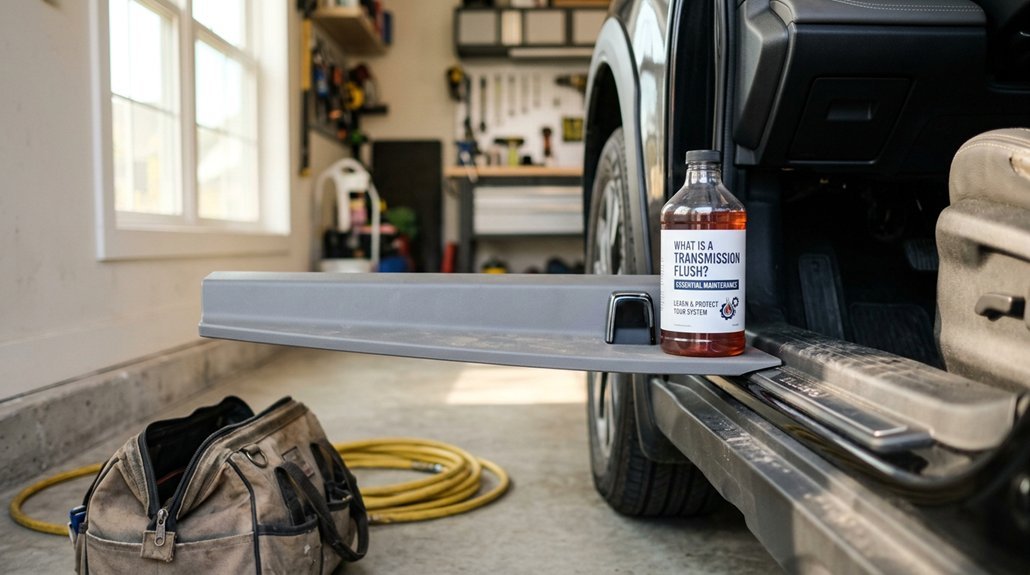
I’ve spent years testing transmission services on everything from daily commuters to tow rigs, and I can tell you most drivers don’t know what they’re actually paying for. A transmission flush isn’t just a fancy drain; it’s a complete system purge that pushes out nearly 100% of your old ATF, including the sludge hiding in your torque converter and cooler lines.
That matters because degraded fluid causes rough shifting, overheating, and premature wear. I’ll walk you through exactly what happens during the procedure, when it’s worth the extra cost over a basic fluid change, and the warning signs that mean you’re already overdue.
What Happens During a Transmission Flush
A transmission flush is one of those services you’ll hear about at the shop, and honestly, it’s worth understanding what you’re paying for. When I book this service, I’m getting old ATF removal that pulls out degraded fluid, sludge, and accumulated grime from every corner of the transmission. The equipment forces a complete debris purge through the cooler lines and torque converter, targeting near-total fluid replacement, around 100% versus the 40-50% you’d leave behind with a simple drain.
I’ve watched technicians inspect the pan and swap the filter mid-procedure, catching metal shavings and clutch material. Then comes fresh ATF circulation, pumping new synthetic or conventional fluid through the system. This cuts friction, manages heat buildup, and restores crisp shifting.
For anyone chasing smoother performance and extended transmission life, it’s a thorough, worthwhile investment.
Recommended Products

Auto Transmission Flush Machine: Driving Force: (Electric) DC12V; Pressure Gauge: 0-60PSI

【Dual Oil Tanks & Powerful Pump】This automatic transmission flush machine boasts dual 5.3-gallon tanks for storing both fresh and used oil,ensuring uninterrupted service.A robust 70W pump guarantees rapid oil replenishment,keeping your transmissions running smoothly

For All Vehicles with Automatic Transmission & CVT.
Why Choose a Flush Over a Fluid Change?
Why spend money on a service that only does half the job?
I ask because a fluid change leaves 40–50% of old ATF in your transmission, mixing fresh fluid with dirty leftovers. That incomplete cleanup defeats the purpose of maintenance.
A transmission flush replaces 100% of fluid using professional equipment, purging sludge and grime from the entire system, torque converter included. I can inspect the pan and swap the filter during the process, spotting problems before shifting issues develop.
Yes, flushing costs more upfront. But stretching your maintenance interval while protecting cooling and hydraulic pressure pays off. I’ve seen flushed transmissions outlast ones that got partial fluid changes.
For maximizing lifespan and keeping acceleration crisp, the flush wins.
Recommended Products

For use in all transmissions including automatic, CVT, DCT and manual transmissions

Fits Ford and Cadillac: Designed to disconnect transmission oil cooler lines on Ford and Cadillac vehicles, this tool fits both 3/8-inch and 1/2-inch lines with precision, helping techs speed up transmission work without damage.

【Package of Two】- One size is 3/8", the other size is 1/2".
How Often Should You Flush Your Transmission?
Once you see why a full flush beats a partial change, the next question is timing.
I recommend checking your owner’s manual first. It spells out the exact transmission flush intervals for your specific vehicle. Most manufacturers suggest a flush every 30,000 to 50,000 miles, or roughly 3 to 5 years. That’s markedly longer than a standard transmission fluid change, which some shops push every 3,000 miles.
Your driving habits matter too. Towing, stop-and-go traffic, or extreme temperatures can shorten those intervals. When I plan transmission maintenance, I weigh the cost of a flush against potential repair bills down the road.
For a precise read on your fluid condition, consider a professional inspection. They’ll measure contamination levels and recommend whether you’re due now or can wait.
Recommended Products

For use in 95% of vehicles including most CVTs in operation with US registered light duty applications

For use in 95% of vehicles including most CVTs in operation with US registered light duty applications

Enhanced friction durability for smooth transmission performance
Transmission Flush Warning Signs You Can’t Ignore
Your transmission doesn’t always scream for help, but it definitely drops hints when a flush is overdue. I’ve learned to spot these warning signs before small hiccups become expensive repairs.
Pull your dipstick and check the ATF. Fresh fluid shows bright red, but dark ATF color, brown or burnt-smelling liquid means trouble. That sludge and grime is choking your system, starving it of proper cooling and lubrication.
Feel your shifts getting rough, or hear odd sounds during gear changes? That’s your transmission slipping, losing coordination with your engine. These symptoms demand attention.
A transmission flush replaces 100% of old fluid using specialized equipment, unlike a standard change. I’ve seen vehicles transform after this service. Consider Midas Closer Look Vehicle Check for a professional fluid inspection. Don’t ignore what your car is telling you.
Recommended Products

Premium filter specified to OE levels of filtration and fluid flow

Felt filter media helps deliver high-filtration efficiency and excellent fluid flow

【Function】The TF-161 Automatic Transmission Filter Oil Pan Gasket Kit is Made of High-Quality Materials,Which can Filter the Oil,Remove the Impurities,Keep the Oil Clean,Prevent the Valve Body and Other Parts of the Blockage,Which can Effectively Extend the Service Life of the Gearbox.