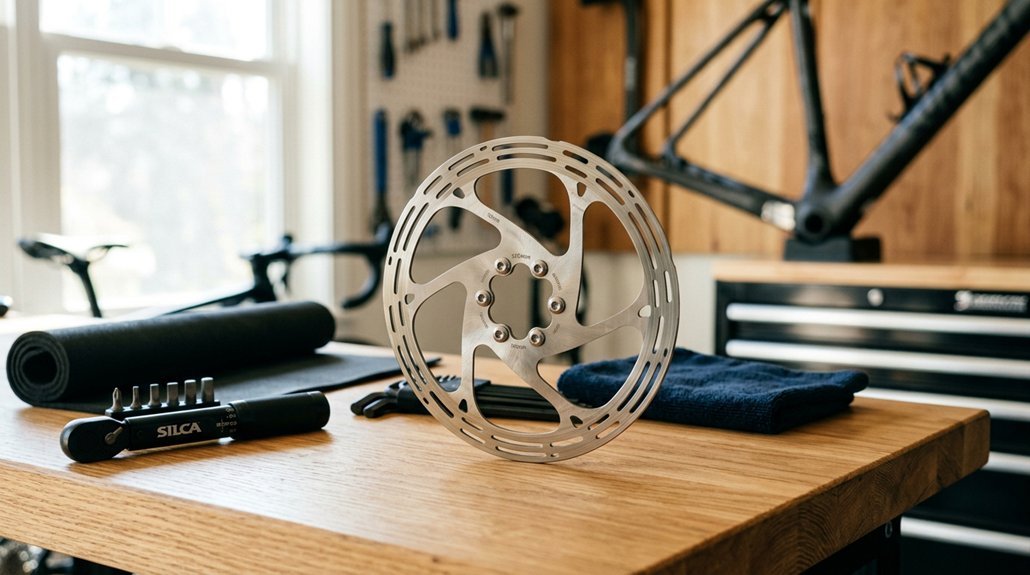
I still remember the first time I pressed my brake pedal and felt nothing but mush, panic rising as I pumped frantically to stop. That taught me brakes aren’t just pedals; they’re a precision system where rotors do the heavy lifting.
I’ve tested everything from basic cast iron discs to $8,000 carbon-ceramic setups on track days, and the difference in heat handling is staggering. Cast iron warps around 1,200°F, while ceramics laugh at 2,500°F. Your choice determines whether you stop confidently or fade into an intersection.
How Brakes and Rotors Work to Stop Your Car
Imagine stomping your brake pedal and feeling your car shed speed in seconds. That rush of controlled deceleration comes down to a surprisingly elegant energy swap happening at each wheel. I press my pedal, and hydraulic pressure surges from the master cylinder, pushing calipers to squeeze friction-lined pads against spinning rotors. That grip converts my car’s kinetic energy into heat through pure friction, slowing every wheel with mechanical precision.
I’ve tracked how rotors hit 300°F+ during aggressive stops, demanding solid ventilation to shed that thermal load effectively. My brake pads wear predictably, and I monitor thickness religiously. Worn pads kill stopping distance fast.
My ABS kicks in during panic stops, pulsing pressure to help prevent wheel lockup and maintain steering control. For fellow enthusiasts chasing reliable performance, I prioritize vented rotors, quality friction materials, and fresh fluid. Your stopping confidence depends on it.
Recommended Products
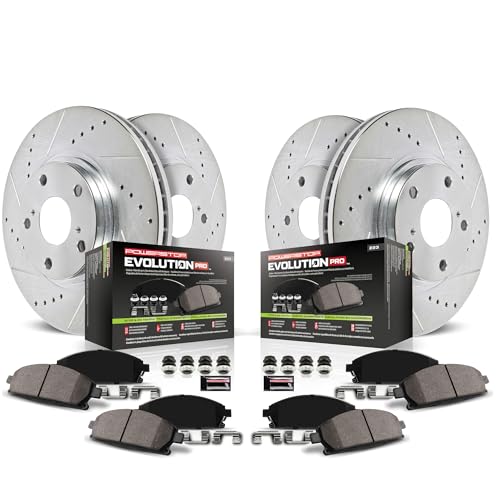
PLEASE CONFIRM YOUR FITMENT: Using the Amazon Confirmed Fit bar at the top of the page or check the Product Description to confirm your vehicle fitment. Item packaging may differ from image shown


Measurement: 13.86 inch (352mm) Front Rotor & 13.58 inch (345mm) Vented Rear Rotor
What Brake Rotors Are Made Of (And Why It Matters)
I’ve tested rotors made from everything from basic cast iron to exotic carbon-ceramic composites, and I’m here to tell you that material choice isn’t just marketing fluff; it’s what separates rotors that fade after three hard stops from ones that keep biting lap after lap.
Cast iron remains the workhorse for most vehicles because it conducts heat away from your pads effectively and won’t break the bank when replacement time comes around. When you step up to performance applications though, you’re looking at trade-offs between weight, heat tolerance, and your wallet that’ll determine whether those drilled, slotted rotors are worth your money or just expensive noise-makers.
Recommended Products

PLEASE CONFIRM YOUR FITMENT: Using the Amazon Confirmed Fit bar at the top of the page or check the Product Description to confirm your vehicle fitment. This may be delivered in multiple boxes

PLEASE CONFIRM YOUR FITMENT: Using the Amazon Confirmed Fit bar at the top of the page or check the Product Description to confirm your vehicle fitment. Item packaging may differ from image shown

PLEASE CONFIRM YOUR FITMENT: Using the Amazon Confirmed Fit bar at the top of the page or check the Product Description to confirm your vehicle fitment. Item packaging may differ from image shown
Common Rotor Materials
Why does rotor material matter so much? It determines how your rotors handle heat, resist wear, and feel during every stop.
I’ve tested rotors across all price points, and here’s what I’ve learned matters most when you’re choosing:
Cast iron dominates the market because it absorbs massive heat without breaking the bank. I’ve seen these last 50,000+ miles on daily drivers when paired with quality pads.
Carbon-ceramic costs five to ten times more, but drops unsprung weight considerably and never fades during track days. Worth it if you race regularly.
Steel rotors work fine for trucks and budget builds, though I’ve watched them warp under repeated heavy braking where iron would’ve held true.
Your driving habits should dictate your choice, not marketing hype.
Material Properties Explained
Material selection sits at the heart of every rotor’s performance, dictating how quickly heat escapes, how long the surface lasts, and whether your brakes feel confident or spongy when you need them most. I’ve tested cast iron rotors extensively, and their heat conductivity keeps daily drivers reliable without breaking the bank.
Gray iron transfers heat to surrounding air effectively, though it expands more under extreme stress. Vented channels, drilled holes, and slotted patterns boost cooling and clear debris, preventing fade during aggressive driving.
Carbon-ceramic rotors tolerate 1,000°F+ temperatures with minimal expansion and faster cooldown, but they’re prohibitively expensive and demand compatible pads to avoid glazing. Softer metals run quieter yet wear faster; harder compounds extend rotor life at the cost of accelerated pad consumption. Match your material to your driving demands and budget.
How to Spot Warped or Worn Brake Rotors
How exactly do you know when your brake rotors have seen better days? I feel that vibration in my brake pedal or steering wheel when I’m slowing down from highway speeds, and I know something’s off. That’s warping talking.
Here’s what I’ve learned to watch for:
- Pulsating feedback through the pedal or wheel, especially above 45 mph, signals warped rotors that need attention
- Deep grooves, scoring, or a rough surface mean worn rotors that can’t grip pads properly anymore
- Blue discoloration from overheating, caused by heavy braking or dragging pads, robs stopping power
I grab my micrometer and check thickness too. Most rotors need replacement below 0.787 to 0.984 inches, depending on your vehicle. When mine hit those limits, or show severe damage, I resurface or replace them.
Safe braking isn’t negotiable, and spotting these issues early keeps me confident on the road.
Recommended Products

OE REPLACEMENT: Designed and engineered to OE specifications for fit, form, and function.

Kit Includes: 1 Driver Side G-Coated Performance Brake Rotor; 1 Passenger Side G-Coated Performance Brake Rotor

OE REPLACEMENT: Designed and engineered to OE specifications for fit, form, and function. OE Reference: 43206CA000, 43206CK000
When to Replace Your Brake Pads and Rotors
I’ve spent enough time chasing down warped rotors to know that spotting the problem is only half the battle. You need to know exactly when to pull the trigger on replacement.
I replace my brake pads when they hit 2-3 millimeters of friction material, about 20-30% of original thickness. For rotors, I watch for warping, grooves, or dropping below manufacturer minimums, usually 20-25 millimeters.
I always swap both sides of the same axle together; uneven braking drives me nuts. Listen for squealing or grinding, feel for vibration in the pedal, and notice if stopping distances grow. Some rigs have wear sensors, and service intervals run 30,000 to 70,000 miles depending on conditions and pad material. Trust your hands and ears, not just the calendar.
Recommended Products

Provide 3 Essential Installation Tools: We know how inconvenient it is to buy replacement tools separately. Our package not only brings 4 pairs of bicycle disc brake pads, but also provides 1* disc brake gap regulator, 1* hydraulic brake pistion press tool and 1* hex wrench. If you buy these tools alone, you will spend twice or more

【Value Pack】: This set includes 8 brake pad spacers, providing you with ample replacements or extras for multiple bikes or future use.

【Braking System】:Two hydraulic bike brake pads clamp the disc rotor to brake, the rotor will not move while ensures great performance. One-way brake system is to brake by pushing aside the rotor which is easy to make the rotor deformed.
Which Brake Rotor Type Is Right for Your Vehicle?
I’ve tested both standard blank rotors and drilled rotors on daily drivers and track-day builds, and the differences are immediate where it counts. Blank rotors give you predictable, even wear and lower cost, making them my go-to for commuter cars that see normal braking loads without extreme heat cycles.
Drilled rotors pull heat away faster through those machined holes, which cuts brake fade during repeated hard stops, but I’ve watched them develop stress cracks after aggressive track sessions where the metal can’t handle the thermal shock. For most drivers, blanks win on longevity and value, while drilled rotors make sense only if you’re pushing hard enough to justify faster pad wear and higher replacement costs.
Recommended Products

[Vehicle Fitment]: Compatible with Chrysler Town & Country 2006-2007, Compatible with Dodge Caravan/Grand Caravan 2006-2007---Front Left Driver Side

Compatible with - 2011 20012 2013 2014 2015 2016 2017 Odyssey

[Replaces Part Number:] ALS2897 # 68250887AA 68250887AB Please Check the OEM Part Number and Make Sure Your Part Number Matches this Part Number Before Buying!
Standard Blank Rotors
Why settle for flashy upgrades when a simple, proven design gets the job done? Standard blank rotors are the plain, reliable discs I’ve installed on countless vehicles, and they keep stopping power honest without drama. They’re vented or solid discs with zero surface customization, just uniform braking surfaces that work when machined properly.
I’ve rebuilt braking systems and watched these rotors provide consistent performance at half the cost of drilled alternatives. You get two main styles:
- Solid rotors: single-piece reliability for lighter duty
- Vented rotors: internal vanes that pull heat away under stress
- Multiple diameters and thicknesses for exact vehicle matching
Common sense matters here. Match rotor diameter, thickness, bolt pattern, and hub bore to your specs, or you’ll fight brake drag and uneven wear. I always measure twice because tolerances matter. For daily drivers and budget rebuilds, I’ll pick blanks every time.
Drilled Rotors
When you’re pushing hard on backroads or lapping a track, heat becomes your enemy, and that’s exactly where drilled rotors earn their keep. I’ve watched these drilled holes pull heat away from the pad surface during repeated high-speed stops, reducing brake fade when you’re deep into a canyon run. They vent gases and dust too, keeping friction consistent when temperatures spike.
Here’s the trade-off: those same holes create stress points. I’ve seen hairline cracks form after hard track days, and these rotors run heavier and pricier than blanks or slotted options. For daily commuting, you’re carrying unnecessary risk and cost.
My recommendation? Match drilled rotors with aggressive pads for weekend warriors who see regular track time. For street-driven builds, slotted or solid rotors stop just as well without the cracking gamble.
What Brake and Rotor Replacement Actually Costs
How much should you actually expect to pay when your rotors finally give out? I’ll break it down for you. For most of us, rotor replacement runs $200 to $500 per axle, parts and labor included. That gap comes down to your rotor size, material grade, and what you drive.
Rotor replacement typically costs $200 to $500 per axle, depending on size, material, and vehicle type.
Upgrades cost extra. Slotted or drilled rotors bump your bill 20% to 50% above standard ones. I always pair rotors with fresh brake pads, which pushes typical totals to $300 to $800 per axle. Labor swings wildly by zip code; I’ve seen shops charge $80 to $150 hourly, sometimes tack on diagnostic fees.
Watch for add-ons:
- Resurfacing old rotors if you’re keeping them
- Replacement hardware, sensors, calipers, or brake lines
- Regional labor rate variations that hit your wallet harder
Budget smart, and you won’t get caught off guard.
How to Decide: DIY Brake Repair or Professional Service?
Now that I’ve walked through what brake and rotor replacement costs, let’s figure out whether you should tackle the job yourself or hand it off to a shop.
DIY brake work fits basic tasks: resurfacing rotors, swapping pads, or bleeding older non-ABS systems. I’ve done these with decent tools and a torque wrench. But get specs wrong or misalign calipers, and you’ve got real problems.
Know your limits. Warped rotors, soft pedals, ABS lights, or modern stability control systems demand shop diagnostics and professional equipment. Shops catch hidden issues you’d miss in your driveway.
Weigh parts cost against tool investment, your time, and botched installation risks. Check rotor thickness (replace near 0.75–1.0 mm minimum), pad wear, and surface damage. If anything feels uncertain, trust a pro. Your safety isn’t where you gamble to save fifty bucks.
Recommended Products

PLEASE CONFIRM YOUR FITMENT: Using the Amazon Confirmed Fit bar at the top of the page or check the Product Description to confirm your vehicle fitment. This may be delivered in multiple boxes

PLEASE CONFIRM YOUR FITMENT: Using the Amazon Confirmed Fit bar at the top of the page or check the Product Description to confirm your vehicle fitment. This may be delivered in multiple boxes
PLEASE CONFIRM YOUR FITMENT: Using the Amazon Confirmed Fit bar at the top of the page or check the Product Description to confirm your vehicle fitment. This may be delivered in multiple boxes