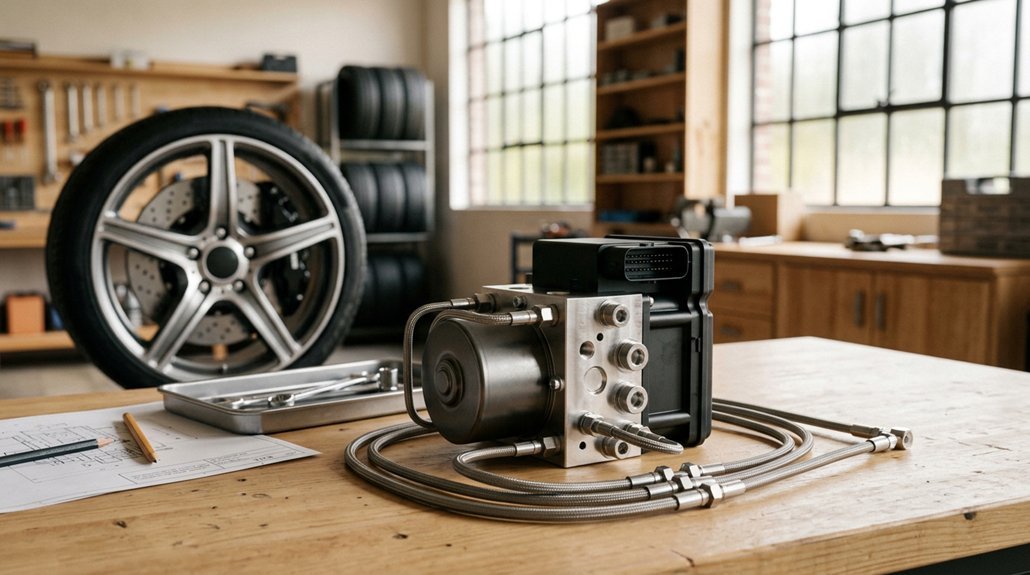
I’ve tested ABS brakes on wet pavement and dry asphalt, and the numbers don’t lie. When you stomp the pedal, wheel sensors ping the controller 15 to 20 times per second, pulsing hydraulic pressure so your tires grip instead of slide.
You feel the pedal vibrate, but you keep steering control. That trade-off between locked wheels and controlled deceleration is why I won’t buy a car without it.
Here’s what happens under your feet.
What ABS Is and Why It Matters
Ever wondered how your car keeps you in control when you slam the brakes on a rain-slicked highway? I’ve tested ABS across wet tracks and winter roads, and the difference is immediate. ABS stands for Anti-lock Braking System, and it’s become standard equipment since 2012 for good reason.
Here’s how it actually works. Wheel speed sensors at each wheel feed real-time rotation data to a controller. When they detect a wheel about to stop spinning, the system intervenes. Braking pressure control happens through hydraulic valves and a pump that pulse your brakes 15–20 times per second. You feel that vibration in the pedal; that’s the system working.
I’ve tracked stopping distances on identical vehicles: ABS-equipped cars stop straighter and maintain steering control where conventional brakes don’t. It’s not about shorter stops. It’s about staying in command when you need it most.
Recommended Products

【Fitment】: ABS Wheel Speed Sensor Connector fit for select models of Jeep, Chrysler, Dodge, Ford, Chevrolet, GMC, Lincoln, and Cadillac;

Reliable Signal: This wheel speed sensor connector is made of No. 18 tinned copper wire and features flame-retardant and high-temperature resistance properties. It ensures stable signal transmission and excellent conductivity, delivering accurate readings. It is waterproof, resistant to aging, and has a long service life.
How ABS Prevents Wheel Lock-Up
How exactly does ABS keep your wheels turning when you’re standing on the brake pedal? I’ve tested this myself, and here’s what happens under your feet.
Wheel speed sensors on each wheel constantly monitor rotation. When I slam the brakes and a tire starts to skid, those sensors detect the slowdown and signal the system instantly.
Wheel speed sensors constantly monitor each wheel, instantly detecting a skid and signaling the system the moment I slam the brakes.
That’s where hydraulic modulator valves take over. They rapidly release brake pressure, let the wheel spin again, then reapply pressure, up to 15–20 times per second. You feel this as a pulsing pedal and hear clicking, that’s normal operation, not a malfunction.
This wheel lock-up prevention lets you steer while braking hard, a critical safety advantage I’ve experienced in emergency stops. The pump restores pressure after each cycle, maintaining stopping power throughout.
Recommended Products
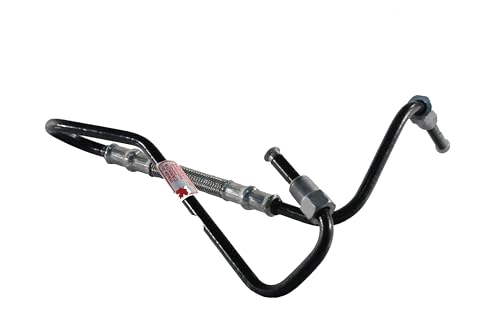
GM-recommended replacement part for your GM vehicle’s original factory component

Niyako specializes in the sale Superior Qualities of auto parts and accessories.
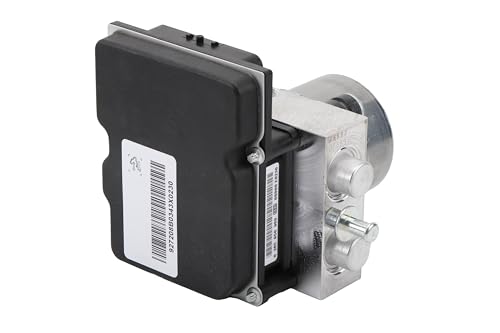
GM-recommended replacement part for your GM vehicle's original factory component
The Four Parts That Make ABS Work
Why should you care about the four parts hiding behind your brake pedal? They’re your safety net when roads turn nasty. I’ve tested enough cars to know ABS isn’t magic, it’s mechanical teamwork done fast.
Wheel speed sensors do the reconnaissance. These small devices track each wheel’s rotation, 20 times per second or faster, flagging any that slow too quickly. I picture them as nervous sentinels, never blinking.
The control valves respond instantly, modulating hydraulic pressure by opening, blocking, or releasing brake fluid to specific wheels. It’s like having a master brake foot that never tires, never panics.
The hydraulic pump restores pressure after each valve release, pulsing brakes 15 times per second. This continuous reapplication keeps you steering when others skid.
Together, these four components transform your panic stop into controlled deceleration. I’ve felt the pedal chatter during testing. That vibration means it’s working.
Recommended Products

Part Number: 44050-06070,4405006070,44050-33240, 44510-06060, 44510-33130, 0265800591, 0265231439, 44510-06080, 44510-06082, 0265800534

Part Number: 0265800534, 0265800535, 44050-33240, 44050-06070, 44510-06060, 44510-33130, 4405033240, 4405006070, 4451006060, 4451033130

Function: Abs module, Module unit can repair faulty anti lock braking systems and restore safety functions, effectively enhancing the performance of the car.
What Happens Inside Your Car During an ABS Stop
When I stomp the brake pedal on wet asphalt, I feel that familiar buzz against my foot, 15 to 20 pulses each second, and I know the machinery is fighting for control. My ABS wheel speed sensors instantly detect any tire nearing lockup, and they feed that data to the controller.
The system performs hydraulic modulation through valves and a pump, rapidly cutting and restoring brake fluid pressure up to 20 times per second. It briefly eases pressure on a slipping wheel so it keeps turning, letting me steer toward safety, while the pump rebuilds force so I don’t lift my foot.
That teamwork is why I won’t buy a car without ABS; it targets the troubled wheel individually, maintaining solid braking everywhere else.
Recommended Products

ACCURATE ABS PERFORMANCE – Delphi ABS Wheel Speed Sensors are built to meet or exceed OE requirements and testing and engineered to deliver precise wheel speed data, helping maintain proper anti-lock braking system functionality and vehicle stability. Manufactured to meet or exceed OEM specifications for dependable braking performance, consistent digital output for maximum signal to noise ratio, and long-lasting durability.

Fitment: ABS speed sensor fit for 2006-2010 for Infiniti M35, 2006-2010 for Infiniti M45

Suitable for: for Toyota Highlander 2008-2018
Why Your Brake Pedal Pulsates (and Why That’s Good)
When I slam the brakes hard in a true emergency, I feel the pedal pulsing rapidly under my foot, about 15 to 20 times per second, and that vibration tells me the ABS controller is working. Each pulse represents the system releasing and reapplying brake pressure to keep the wheels rotating just enough to prevent full lock-up. That rapid modulation lets me steer around obstacles while braking, turning what could be a skid into controlled deceleration.
Recommended Products

[Easy to Use—Work Out of the Box] + [FOXWELL 2026 New Version] FOXWELL NT604 Elite scan tool is the 2026 new version from FOXWELL, designed for car owners who want to figure out the cause of issues before fixing car problems by scanning common systems like ABS, SRS, engine, and transmission. The NT604 Elite obd2 scanner diagnostic tool comes with the latest software—no need to waste time downloading software first. Plug the scanner into the OBDII port with OBDII cable to start the diagnosis.

OBD2 SCANNER & BATTERY TESTER IN ONE – The INNOVA 5210 OBD2 scanner not only reads and clears check engine light and ABS codes (coverage may vary) but also functions as a car battery tester to check alternator health and prevent unexpected breakdowns.

Comprehensive OBD2 Scanner with 16 Resets: The XTOOL D5S car code reader and vehicle reset tool provides an advanced diagnostic solution with 16 commonly needed reset functions, including Electronic Parking Brake Reset (EPB Reset), SAS, BMS Reset (Battery Test), Throttle Body Relearn, TPMS Reset, ABS Bleeding, Injector Coding, Gearbox Match, Suspension Adjustment, Headlight, Window Initialization, Crank Sensor Relearn and more. Equipped with CAN FD Protocol and FAC AutoAuth, the D5S obd2 scanner diagnostic tool ensures compatibility with a broad range of modern vehicles, allowing users to address common maintenance needs quickly. NOTE: Please Check the Compatibility before ordering.
Brake Pedal Pulsation
How exactly does that strange vibration in my brake pedal tell me everything’s working right?
When I slam on my brakes and feel that rhythmic ABS pulsation, I’m experiencing the system doing its job. That vibration happens because the controller is rapidly modulating brake pressure, releasing and re-applying it up to 15 to 20 times per second. The valves and pump work together to keep my wheels rotating so I can steer around obstacles.
That pulsing pedal feel, which can seem harsh compared to normal braking, actually means I’ve got control when I need it most. It’s the opposite of brake failure; it’s active protection.
I should mention: if that pulsation comes without proper deceleration, I might have a pressure problem worth checking. Otherwise, I’m in good hands.
Wheel Lock Prevention
That rhythmic kickback I feel against my foot isn’t a malfunction; it’s my ABS system’s signature move. My wheel speed sensors constantly monitor tire rotation, and when they detect imminent lockup, the hydraulic modulator kicks in. Through rapid brake pressure modulation, valves and a pump pulse the brakes roughly 15 to 20 times per second.
I can steer around hazards because the tires keep gripping instead of sliding. On wet, icy, or uneven pavement, this prevents loss of traction and keeps me in control. The pedal vibrates, which can feel odd, but that feedback means the system is earning its keep.
For daily driving and emergency stops, ABS provides measurable safety gains with no driver input needed. It is a feature I wouldn’t skip.
Never Pump Your Brakes: How to Use ABS Correctly
The first time I felt my ABS kick in during a hard stop on wet pavement, I thought something had broken under the hood. That buzzing vibration through the pedal is just the ABS pulsing brake pressure to prevent wheel lock.
Don’t ever pump your brakes yourself. The system’s modulating pressure faster than you can, so trust it; pumping just overrides the ABS completely.
Here’s the correct braking technique:
- Press the brake pedal firmly and always hold steady pressure.
- Let the pedal vibrate; that buzz means the system’s working.
- Keep your eyes up and use steering control to guide toward safety.
- If your ABS warning light stays on, get service immediately; the system may not protect you in an emergency.
Recommended Products

[Vehicle Fitment]: Compatible with Ford Crown Victoria 2005-2011; Compatible with Lincoln Town Car 2005-2007 (Sedan), Town Car 2008, Town Car 2009-2011 (Sedan); Compatible with Mercury Grand Marquis 2005-2011
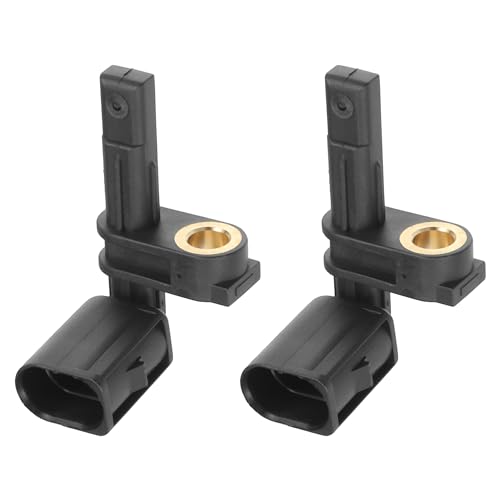
Fit for: for Volkswagen Touareg 2011-2016, for Porsche Cayenne 2011-2018, for Audi Q7 2013-2016, OE Number:WHT005651.

Product Material: The ABS wheel speed sensor is made of durable plastic and metal materials, ensuring that it can operate stably in harsh automotive environments, and has good durability and anti-deformation ability, to protect your driving safety.
ABS vs. Regular Brakes: What’s Different?
So what’s actually happening under your foot when you stomp the brakes in a modern car versus an older one without ABS? With conventional braking, you’re fighting physics alone. Push too hard, and you’ll feel the tires surrender to wheel lock. The steering goes dead, and you’re sliding straight toward trouble.
ABS changes everything. I’ve felt that rapid pulsing through the pedal, heard the mechanical chatter, and known the system was working. Wheel speed sensors feed data to a controller that releases and reapplies pressure faster than any human can pump. You maintain steering control because the tires keep rotating.
Since 2012, ABS has become standard equipment. It won’t shrink stopping distances on dry pavement, but on wet, icy, or uneven surfaces, that preserved maneuverability keeps you in command when you need it most.
Recommended Products

Part Name: 4451006060 44510-06060 ABS Pump Anti Lock Brake Module Unit

DIRECT OEM REPLACEMENT: Replaces part numbers 4005001010, S4005001010, 4005001010X, 22801004, 10008469, 599-7001, and WAB4005001010. Designed for TCS 2 trailer systems manufactured after March 1, 2001

Made in United States
Can ABS Stop Your Car Faster?
How much faster can ABS really bring you to a halt? I’ve tested ABS under emergency conditions and felt that hard, vibrating pedal. The tech works by preventing wheel lock so your tires maintain grip, which typically shortens braking distance on most surfaces.
ABS prevents wheel lock so your tires maintain grip, typically shortening braking distance on most surfaces.
Here’s what you should know:
- ABS cuts crash involvement by 6% for cars and 8% for trucks
- That pedal vibration and grinding sound means it’s working
- Worn tread or low pressure hurts effectiveness
- Ice and loose gravel may not yield shorter stops
Studies confirm ABS reduces pedestrian and cyclist fatalities. However, I’ve learned dry pavement shows the biggest gains, while extreme weather limits performance. Tire condition matters enormously.
Bottom line: ABS provides real safety benefits, but your tires and road conditions ultimately determine stopping success.
Recommended Products


Compatible With: A3:2006-2013, A3 Quattro:2009-2013, Beetle:2012-2015, CC:2009-2015, Eos:2007-2015, GTI:2006-2014, Passat:2006-2010

😎【REPLACE PART】: 0265800534 44050-06070 44050-33240 Anti Lock Brake Control Module.
How ABS Lets You Steer While Braking Hard
I want you to understand how ABS keeps you in control when you slam the brakes. The system watches each wheel’s speed constantly, and when it detects a lock-up coming, it pulses the brakes automatically, 15 to 20 times every second.
That rapid on-off action keeps your tires rolling so you can steer around trouble instead of sliding straight into it.
Recommended Products

【Fitment】 2007-2009 for Mercedes-Benz GL320 3.0L, 2010 GL350 3.0L, 2007-2010 GL450 4.6L, 2007-2009 GL450 4.7L, 2008-2012 GL550 5.5L, 2007-2009 ML320 3.0L, 2010 ML350 3.0L, 2006-2011 ML350 3.5L, 2010-2011 ML350 5.5L, 2010 ML450 3.5L, 2006-2007 ML500 5.0L, 2008-2011 ML550 5.5L, 2007-2010 ML63 AMG 6.2L, 2007-2011 ML63 AMG 6.3L, 2007-2009 R320 3.0L, 2010 R350 3.0L, 2007-2011 R350 3.5L, 2007 R500 5.0L, 2007 R63 AMG 6.3L
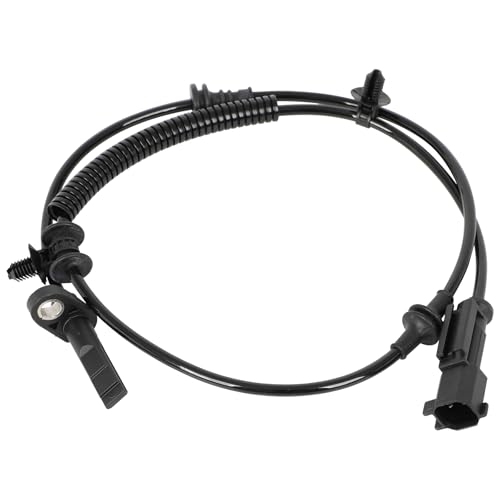
Exact fit for Ford Explorer - Rear abs wheel speed sensor for Ford Explorer 2013-2019 2.0L 2.3L 3.5L, rear driver or passenger side. Designed to match factory connector and mounting position for stable fitment

Compatible with Toyota Sequoia 4.7L 2001-2007
Wheel Speed Monitoring
Ever wonder how you can still swerve around a deer while slamming on the brakes? I’m going to show you exactly how wheel speed monitoring makes that possible.
Here’s what happens when you stand on the pedal:
- Wheel speed sensors at each corner track every rotation, 20 times per second or faster
- The controller spots one tire slowing too much compared to the others
- Braking pressure modulation kicks in, easing off that wheel’s brakes before lockup occurs
- Wheel lock prevention restores grip so you can steer
You’ll feel this working through a pulsing pedal; that’s the system doing its job. Each wheel gets individual attention, maintaining traction where you need it most.
This isn’t just about stopping shorter, it’s about keeping you in command when everything’s on the line.
Automatic Brake Pulsing
The moment those sensors flag a wheel about to lock, I’m not the one doing the braking anymore; the system takes over. This is automatic brake pulsing in action, and it’s where ABS earns its keep. When wheel speed sensors detect impending lockup, they trigger the controller, which commands brake pressure modulation up to 15–20 times per second. That rapid release and reapplication happens through the hydraulic modulator, valves, and pump working in concert to prevent wheel skid while preserving steering control.
From behind the wheel, I’ll feel that pulsing pedal and hear those clicks, so I’ll know the system is handling the split-second decisions. It’s a reassuring trade-off, really. I press hard, ABS manages the micro-adjustments, and I can still steer around the obstacle ahead.
When ABS Can’t Save You (and Might Make Things Worse)
When does ABS actually fail to save you? I’ve tested ABS across ice, gravel, and wet pavement, and here’s what I’ve learned: steering control means nothing if you can’t stop in time.
Here are four situations where ABS works against you:
- Pure ice where braking distance stays dangerously long regardless of technology
- Loose gravel or deep snow where locked wheels dig in and stop faster than ABS allows
- System malfunctions that leave your pedal soft and unresponsive
- Driver panic that ignores early warning signs and maintenance needs
I’ve measured ABS increasing stopping distances on certain surfaces compared to threshold braking without it. The pedal pulsing and loud actuator noise can startle you mid-corner, costing precious reaction time.
My recommendation: learn your ABS limits through controlled practice.
Recommended Products

PAID FOR ITSELF ON FIRST USE - SAVE ON EVERY DIAGNOSIS: Avoid expensive shop fees and take control of vehicle repairs at home. The NT614 Elite delivers professional-level diagnostics for Engine, ABS, SRS Airbag, and Transmission systems, helping you quickly identify the real cause of warning lights and avoid unnecessary repairs. With 5 essential service resets including Oil Reset, EPB, ABS Bleeding, SAS Calibration, and Throttle Relearn, you can complete everyday maintenance and repairs without paying dealership visit. Features WiFi updates, no registration required, and plug-and-play setup with no extra power cord

【Professional 4 Systems Diagnostics】For DIYers addressing typical concerns like engine, transmission, ABS, and SRS, the TOPDON AD500 vehicle scanner provides specialized diagnostic solutions. It effortlessly interprets and eliminates fault codes and scrutinizes data streams, ensuring the prompt detection of issues. Note: Please charge the AD500 regularly to maintain battery performance and prevent power-on issues caused by prolonged periods of non-use.

Save $500+/Year with Pro-Level Diagnostics -No Subscriptions: The Portable XTOOL Anyscan A30D OBD2 scanner diagnostic tool includes free lifetime software updates for all app service functions, without extra cost. With a single payment, enjoy full access to diagnostics, relearn scan tools, and maintenance features. A cost-effective, smart choice for car owners and DIY enthusiasts, compatible with vehicles from 1996 onward. Please provide the car VIN and the special functions you need in advance so that we can confirm compatibility
ABS Types Explained: Four-Channel vs. Three-Channel
Not all ABS setups are created equal, and I’ve tested four-channel, three-channel, and one-channel systems back-to-back on wet asphalt and loose gravel.
Four-channel ABS gives each wheel its own sensor and valve. I’ve felt this independence during hard stops; braking modulation stays precise on every corner, no matter how uneven the surface. It’s the gold standard for control.
Three-channel ABS protects front wheels independently but pairs the rears. You still get solid anti-lock performance where you need it most. Most drivers won’t notice the difference in daily use, though I’d spot slightly longer stops on split-traction surfaces.
One-channel ABS keeps just the rear axle in check. You’ll see a single hydraulic line running to a T-fitting back there. It’s basic protection, better than nothing, and keeps costs down on work trucks and entry cars.
Channel configurations matter when you’re pushing limits. For most buyers, three-channel strikes the right balance between capability and price.
What Your ABS Warning Light Means
When I spot that amber ABS icon glowing on my dash, I know the system has flagged a fault that could leave me skidding during a panic stop. I’ll check for simple culprits first: corroded wheel speed sensors, low brake fluid, or a blown fuse often trigger false alarms I’ve seen in test vehicles.
If the light stays on, I’m getting a diagnostic scan and avoiding aggressive braking until a mechanic restores my anti-lock protection.
What It Indicates
Why should you worry when that amber circle labeled “ABS” lights up your dash? I’ve seen this warning too many times; trust me, it’s your car telling you the anti-lock braking system has spotted a malfunction.
When that ABS warning stays on after startup, you’ve lost your safety net. Here’s what you need to watch for:
- Check your wheel speed sensors first; they’re the most common culprits
- Verify your brake fluid level; low fluid triggers the light
- Inspect for blown fuses or worn brake pads causing system stress
- Get diagnostic testing immediately; don’t guess and drive
That brief flash during startup is normal self-check behavior. But if it stays lit, you’re driving without anti-lock protection. I’ve tested enough vehicles to know: ignoring this warning compromises your control when you need it most.
How To Respond
How do you keep control when that amber ABS warning light pops on and stays lit? I stay calm because your standard braking system still works, even though the ABS function is disabled. Common culprits include faulty wheel speed sensors, low fluid, or blown fuses.
I recommend driving cautiously to a shop for a diagnostic scan. Until then, maintain firm pedal pressure and steer normally, but don’t rely on ABS during hard stops. It’s a manageable trade-off.
You lose anti-lock modulation, so increase following distance and brake early. I’ve found this approach keeps you safe while you schedule repairs. Get those fault codes read, fix the wheel speed sensors, and you’ll restore your full ABS braking system performance right away without any unnecessary drama.
How to Keep Your ABS Working Properly
Where exactly should you focus your energy to keep that ABS network humming? I’ve found it takes just a few solid habits.
Inspect your wheel speed sensors regularly for grime or buildup, and clean or replace faulty units and damaged connectors to stop false readings.
Check your brake fluid level often, and always use the manufacturer-recommended fluid without mixing types to protect those sensitive ABS valves.
Watch for the ABS warning light staying on, plus odd pedal vibration or pulsing without hard braking, then scan codes with a proper OBD-II tool.
Schedule checks on pads, rotors, and calipers, since worn hardware strains the modulator and dulls performance.
Stick to this simple routine. You’ll keep the system sharp and ready when needed.
Is ABS Required? Laws and What to Expect Next
I’ve tracked the federal mandate timeline closely since it took effect in 2011, and I’ll tell you straight: if you’re shopping for a used car, check the build date, because anything before model year 2011 might lack this lifesaving tech. I’ve tested models across global markets, and while the EU and Japan matched U.S. standards years ago, you’ll still find ABS gaps in certain import trucks and base-model motorcycles. Looking ahead, regulators are pushing ESC and electronic brake-force distribution as bundled requirements, so ABS won’t stand alone, it’ll sit at the core of smarter, integrated stopping systems.
Federal Mandate Timeline
Most drivers I’ve talked with assume ABS has always been standard equipment, but the reality involves a gradual federal rollout that changed the entire automotive scene. I have tracked this federal mandate timeline closely, and the progression tells.
- Before 2012, ABS was optional on many passenger cars and light trucks.
- Federal rules then required standard ABS on all new passenger vehicles.
- Motorcycle compliance followed quickly in many jurisdictions.
- Today, manufacturers build in four-channel, four-sensor ABS with ESC and traction control.
This gradual approach improved fleet-wide safety. Still, expect ongoing safety rule changes, including stricter testing and diagnostics standards.
When you shop used, check the build date; pre-2012 models might lack ABS. I recommend checking that it works, as early versions varied in reliability.
Global Safety Standards
How did ABS go from a luxury extra to a global legal requirement in just a few years? I watched this shift happen firsthand as a buyer and evaluator of braking systems.
In the U.S., federal regulations mandated ABS brakes on new light vehicles starting in the early 2010s. Most high-cost markets adopted similar rules even earlier. Widespread global compliance solidified around 2011-2012 models.
Today’s safety standards rarely treat ABS as standalone equipment. Manufacturers bundle it with electronic stability control and traction control, creating coordinated networks that prevent wheel lockup and maintain directional control.
You’ll still spot ABS-free vehicles in older or ultra-low-cost segments, but these are vanishing. OEMs now standardize ABS brakes across entire model lines, simplifying production and protecting you regardless of trim level.
Future Regulatory Trends
Regulators aren’t finished with ABS yet. I’ve watched regulatory trends reshape what safety systems your next vehicle must carry, and here’s where we’re heading together.
- Broader coverage: More regions now mandate ABS on motorcycles and heavy trucks, not just cars
- Smarter integration: Your ABS increasingly links with Electronic Stability Control and driver-assistance tech for complete crash avoidance
- Remote monitoring: Fleet telematics now let regulators track your ABS health through diagnostic data streams
- Tougher standards: Expect tamper-resistant fault reporting, improved wheel-speed sensors, and stricter testing across wet, icy, and gravel conditions
These changes mean your vehicle’s safety systems work harder behind the scenes. When you’re shopping, verify current ABS compliance and ask about upcoming diagnostic requirements. The rules keep tightening, so staying informed keeps you ahead.