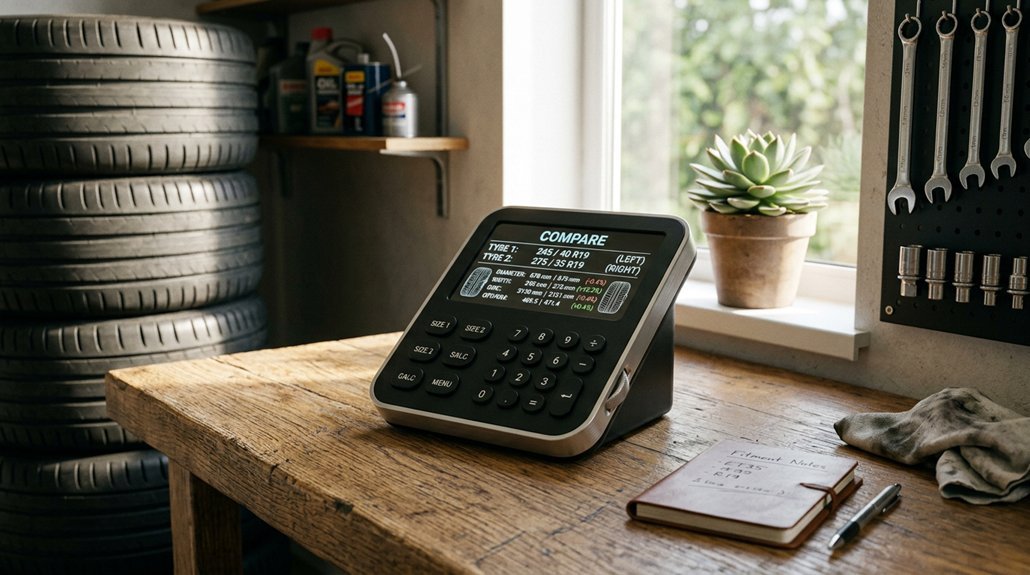
I’ve spent hours cross-referencing tire specs across five different calculators, and the gaps between them are bigger than you’d expect. TireCalculator.com nails basic sidewall math in seconds, but TireSize.com’s visual overlays saved me from a costly 35-series mistake last spring. Tire Rack tracks factory OE specs down to the load index, while 1010Tires caught a 4% speedometer error nobody else flagged.
Wheel-Size.com layers in offset and scrub radius calculations that matter when you’re pushing fitment limits. Each tool handles metric-to-standard conversions differently, and some miss critical warnings about stretch fitments or load capacity drops. The real question isn’t which calculator is “best,” it’s which three specs you’re willing to get wrong.
Quick Comparison: 6 Tire Size Calculators at a Glance
When I’m shopping for tires, I need numbers I can trust, and these six calculators give me exactly that. These tire size calculators let me run a proper side-by-side comparison between my factory setup and any replacement I’m considering.
Each tool provides section width, sidewall height, overall diameter, circumference, and RPMs. I can spot speedometer errors instantly, see how revolutions-per-mile shift, and check both metric and standard sizes. The near-size recommendations save me from hunting through endless specs.
The visualizers are where these shine. I compare fitment directly, assess rolling radius differences, and know before I buy if a taller or wider tire will rub. It’s practical, precise, and keeps me from guessing wrong.
Recommended Products

PROTECTIVE HINGED COVER: Features a hinged, hard cover that protects the keys and display when stored, making this handheld calculator durable and easy to carry safely....
TireCalculator.com: Best Tire Size Calculator for Basic Dimension Lookups
Why do I keep coming back to TireCalculator.com when I just need the numbers fast? This tire size calculator gives gearheads exactly what they want: instant sidewall height, section width, overall diameter, circumference, and RPMs without fluff.
TireCalculator.com delivers instant tire specs without fluff—exactly what gearheads need when speed matters more than style.
I punch in my OE and replacement sizes, and the tool spits out a clean side-by-side comparison. The speedometer error calculator proves clutch when I’m upsizing wheels, translating actual speed versus what my dash claims. No guesswork, no surprises at the toll booth.
The math checks out, built on solid equations, though I appreciate the reminder to verify against manufacturer specs. Bonus tools like the Tire Size Visualizer and dedicated Speedometer Error page round out the package.
For pure dimension lookups, TireCalculator.com keeps it simple, accurate, and refreshingly direct.
Recommended Products

Material: Crafted from brass, these adapters ensure maximum durability and resilience against rust and color fading, promising long-lasting performance.

The Perfect Gift - A truly unique gift sure to bring a smile

5 Haltec 8807N-4 Large Bore valve adapters
TireSize.com: Best Tire Size Calculator for Visual Side-by-Side Comparisons
I plug in my factory 225/45R17 against a potential 235/40R18 upgrade, and the calculator displays both tires profiled against each other with section width, sidewall height, and overall diameter labeled clearly. This tire size calculator excels at visual side-by-side comparison, making fitment decisions feel less like guesswork.
I appreciate how TireSize.com shows circumference and RPMs alongside that visual overlay. The speedometer correction feature proves genuinely useful; I can see exactly how far off my readings will run with the new size. Metric-to-standard conversion happens instantly, and the tool suggests practical near-sizes when my exact pick isn’t available.
The interface prioritizes safety, letting me assess wheel changes before spending money. No fluff, just accurate data I can trust. For anyone wanting to visualize fitment differences clearly, this tool gives you exactly what you need.
Tire Rack: Best Tire Size Calculator for Matching Factory OE Specs
I’ve found Tire Rack’s calculator excels at matching replacement tires to your factory OE specs by comparing sidewall height, overall diameter, circumference, and RPMs side-by-side. The visual comparison tools let you see exactly how different sizes affect your speedometer readings, while the speedometer calibration features help you understand what changes when you deviate from stock.
You simply input your original tire measurements from the sidewall or owner’s manual, and the tool flags whether your new choice stays within acceptable limits for load and speed ratings.
Recommended Products

Includes extensive holder and fitted case. Chrome plated handle. Insulated grip. Self-centering. Easily adjustable. Measures imperial and metric sizes Self-center dial...
OE Spec Matching
How do you know you’re getting the right replacement when factory specs matter most? I’ve found that tire size comparison with OE spec matching eliminates guesswork. Tire Rack’s calculator lets me punch in my factory sizes and instantly see sidewall height, section width, overall diameter, circumference, and RPMs. This matters because small variances throw off your speedometer and odometer.
The tool runs side-by-side assessments, showing exactly how replacement sizes diverge from OE measurements. It flags manufacturer requirements for load and speed ratings too, which prevents under-spec tires from compromising handling and safety. Results rely on mathematical equations, though the tool notes that actual manufacturer specs can vary.
For maintaining factory ride quality, this level of precision earns my trust. I recommend it when exact fitment counts.
Visual Comparison Tools
Why settle for numbers alone when you can actually see how a tire will sit on your wheel? Tire Rack’s visual comparison tools let me compare current and target specs side by side, showing width, tire diameter, circumference, and rolling radius in one clean diagram. I can instantly spot how a new size affects my speedometer reading and RPM at highway speeds.
The interface displays tire stretch, offset impacts, and fender clearance across multiple alloy wheel sizes. I appreciate that it flags speedometer error percentages, so I know exactly what to expect before buying. The tool also reminds me to stick with consistent tire types and brands when sizing up or down, keeping my vehicle stable and predictable. For matching factory OE specs visually, this is my go-to resource.
Speedometer Calibration Features
When I’m swapping tire sizes, getting my speedometer dialed in right matters more than most people think. Nothing ruins a setup faster than cruising at what you think is 65, only to get clocked at 72.
That’s why I lean on Tire Rack’s tire size comparison tool for speedometer calibration work. It crunches the math on RPMs and actual versus indicated speed, showing exactly how far off your readings will drift from factory OE specs. The calculator flags speedometer error when you move to alternate sizes, keeping discrepancies within acceptable ranges.
It estimates true speed using entered measurements, though I always cross-check manufacturer guidance for load and speed ratings since calibrations vary by vehicle. For maintaining accurate odometer readings and avoiding tickets, this feature gives real peace of mind.
1010Tires: Best Tire Size Calculator for Speedometer and Odometer Accuracy
Where do I turn when I need to know exactly how much my speedometer will lie after swapping tire sizes? 1010Tires’ tire size calculator belongs in my toolkit.
I punch in my OE specs, then my desired upgrade. The tool spits out sidewall height, section width, overall diameter, circumference, and revolutions per mile for both. It calculates RPMs at speed and, vitally, gives a speedometer accuracy assessment showing real versus indicated speed. That’s peace of mind when I’m running oversized all-terrains or plus-sizing for summer grip.
The interface insists on factory sidewall data or manual specs, which I appreciate; garbage inputs mean garbage outputs. The speedometer error tool translates percentage differences into actual mph variance at highway speeds. Visualizers help me grasp side-by-side proportions, and alternate size links round out planning.
1010Tires nails the calculation without bloat. For drivers who value precise speedometer accuracy above flashy graphics, this calculator earns its spot.
Wheel-Size.com: Best Tire Size Calculator for Wheel Offset and Fitment Math
How do I know if that aggressive wheel setup will actually clear my fenders without rubbing? I turn to Wheel-Size.com when I need serious fitment math that goes beyond basic tire size calculator functions. This tool visualizes exactly how alloy wheels and tires interact, showing potential fender clearance issues and suspension interference before I commit.
Wheel-Size.com delivers serious fitment math that visualizes exactly how your wheels and tires interact—spotting fender clearance issues and suspension interference before you commit.
Here’s what makes it essential for our community:
- It calculates offset, rim width, and tire width together, not as isolated numbers.
- Side-by-side comparisons reveal speedometer and RPM changes instantly.
- Visual warnings flag tire stretch risks and strut clearance problems.
- It prevents costly mistakes by highlighting unsupported wheel configurations.
I appreciate that it speaks our language: millimeters matter, poke is measurable, and rubbing ruins everything. For precise fitment math that keeps your build clean and functional, this calculator gets the job done.
Recommended Products
Please Note Before You Buy This:this is only an inflator hose adapter, was designed to convert screw-on(twist-on) air chuck to lock-on air chuck, not for connecting to tire inflator/pump directly, please refer to the left second&third product image.Hose end thread is standard us fine thread connection(0.305"x32TPI), the same as the thread on all USA standard car valve stems, compatible with screw-on(twist-on) air chuck's inner thread.

BUNDLE FEATURES- Get the 1/2-Inch impact flip side socket set (6 total lug nut sizes - 17, 19, 21-mm bundled with the Impact Socket Adapter and Reducer 4-Piece Set | 1/4" - 3/8" - 1/2" Impact Driver Conversions, Chrome Molybdenum alloy steel
Which Tire Size Calculator Should You Actually Use? 3 Decision Rules
Cut through the noise and pick the right tool for your specific situation. I’ve tested dozens of tire size calculator options, and three rules separate the winners from the clutter.
First, demand exact OE and replacement measurements: sidewall height, section width, overall diameter, circumference, and RPMs. A quality tire size calculator provides these specs without guesswork.
Second, insist on side-by-side comparison views that show how wheel changes affect speedometer readings. I’ve seen 2-inch diameter jumps throw off readings by 4 mph, enough to trigger tickets or transmission headaches.
Third, verify your chosen tool flags the 3% diameter rule. Staying within this boundary prevents mechanical grief and calibration nightmares.
Skip calculators that ignore load ratings or manufacturer guidelines. The right tool doesn’t just crunch numbers; it protects your build and keeps you rolling with confidence.