
Are you trying to figure out the correct tire size for your 2013 Ford Edge? Finding the right tires isn’t just about fit—it’s about optimizing your vehicle’s performance, safety, and fuel efficiency.
Your 2013 Ford Edge came equipped with exact tire dimensions from the factory, depending on your trim level. Whether you’re looking to replace worn tires with the same specifications or exploring alternative sizes that might work for your driving needs, understanding your Edge’s tire requirements is crucial. With the right information about your vehicle’s tire size, you’ll make an informed purchase that keeps your SUV running at its best.
Understanding the 2013 Ford Edge Tire Size Specifications
The 2013 Ford Edge comes with exact tire size designations that vary across different trim levels. These factory specifications ensure proper fitment and optimal performance for your SUV. Each tire size code contains critical information about the tire’s dimensions and capabilities.
Decoding Tire Size Markings
Tire size markings on your 2013 Ford Edge follow a standardized format that reveals important specifications. For example, a typical marking like “P235/65R17” breaks down into distinct components:
- P: Indicates a passenger vehicle tire
- 235: Represents the tire width in millimeters
- 65: Shows the aspect ratio (sidewall height as a percentage of width)
- R: Designates radial construction
- 17: Specifies the wheel diameter in inches
Understanding these markings helps you identify the exact tire specifications your Edge requires. Many Edge owners don’t realize how much information is packed into these simple codes until they need to replace their tires.
Factory Tire Sizes by Trim Level
Your 2013 Ford Edge came equipped with exact tire sizes based on its trim level:
| Trim Level | Standard Tire Size | Optional Tire Size |
|---|---|---|
| SE | P235/65R17 | N/A |
| SEL | P235/60R18 | P245/60R18 |
| Limited | P245/60R18 | P265/40R22 |
| Sport | P265/40R22 | N/A |
Each of these configurations was carefully selected by Ford engineers to complement the performance characteristics of each trim. The Sport trim, featuring the largest standard tire size, delivers enhanced handling and cornering capabilities compared to other models.
Load and Speed Ratings
Beyond size dimensions, your 2013 Edge tires include load and speed ratings that indicate performance capabilities. These ratings appear as letters and numbers after the size designation:
- Load index: A numerical value indicating how much weight each tire can support
- Speed rating: A letter that corresponds to the maximum speed capability
For example, a tire marked “P235/65R17 103T” has a load index of 103 (1,929 pounds per tire) and a T speed rating (118 mph maximum). These ratings aren’t just technical details—they’re safety parameters that shouldn’t be compromised when selecting replacement tires.
Factory Tire Size Options for the 2013 Ford Edge
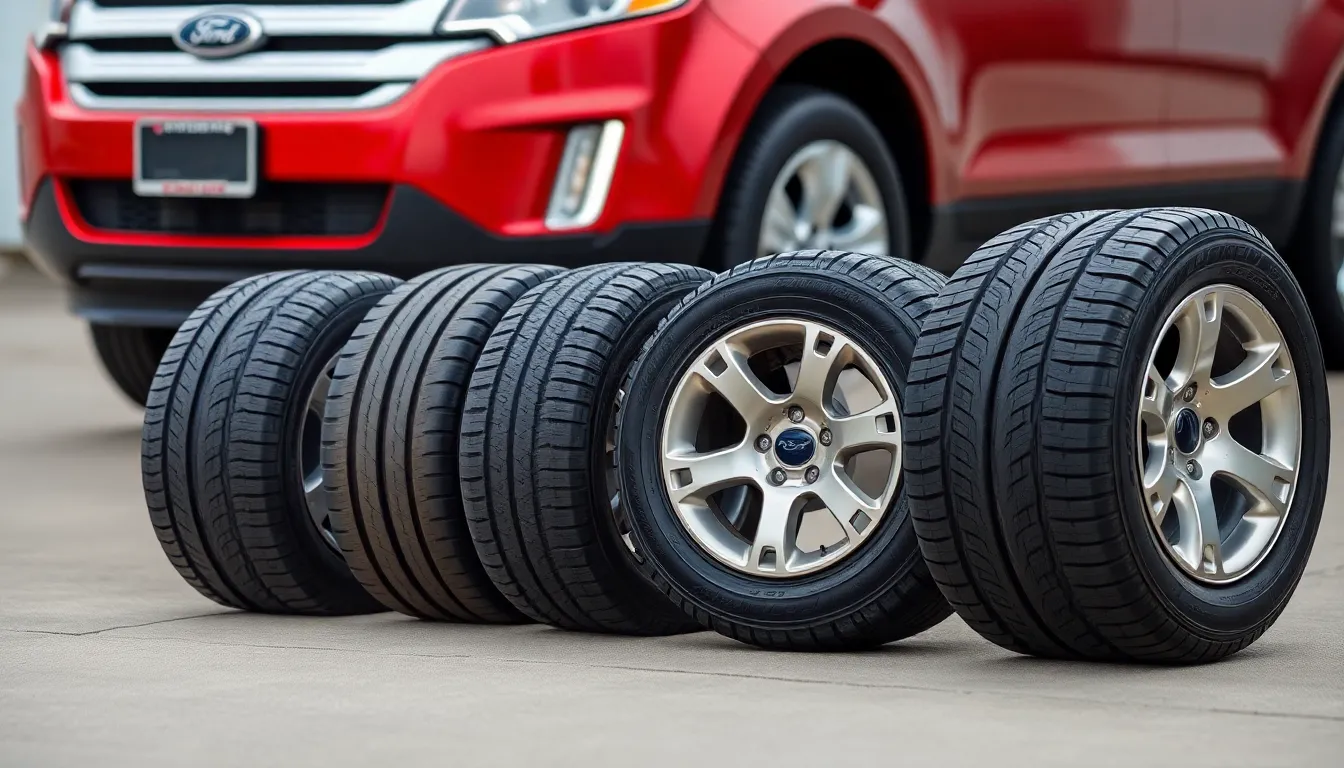
The 2013 Ford Edge comes equipped with exact tire sizes that vary across trim levels. These factory-installed options are carefully selected to complement each trim’s performance characteristics and design aesthetics.
SE and SEL Trim Tire Sizes
SE trim levels offer versatility with two tire size options depending on your drivetrain configuration. Both the SE AWD and SE FWD models come standard with 235/65R17 tires, providing a balanced combination of comfort and performance. An upgrade to 245/60R18 tires is available for drivers seeking enhanced handling and a more aggressive stance. SEL trim models, positioned as the mid-range option, standardize on the 245/60R18 tire size for both AWD and FWD configurations, delivering improved grip and responsiveness compared to the base 17-inch option.
Limited and Sport Trim Tire Sizes
Limited trim models showcase premium versatility with two tire size options. The Limited AWD and Limited FWD configurations come with either 245/60R18 tires as standard equipment or can be upgraded to 245/50R20 tires for a more commanding presence and enhanced cornering capabilities. Sport trim levels stand out with the largest factory tire option in the lineup. Both Sport AWD and Sport FWD models feature substantial 265/40R22 tires, providing maximum road contact, superior handling, and an unmistakably athletic appearance that distinguishes them from other Edge variants.
How to Read Your 2013 Ford Edge Tire Size

Understanding your Ford Edge’s tire size markings helps you make informed decisions when replacing tires. These seemingly complex codes contain essential information about tire dimensions and compatibility with your vehicle.
Decoding the Tire Size Numbers
Tire size codes like 245/60R18 follow a standardized format that reveals exact tire characteristics. The first number (245) indicates the tire width in millimeters across the tread. Following the slash, the aspect ratio (60) represents the sidewall height as a percentage of the width—in this case, the sidewall is 60% of 245mm. The letter “R” stands for radial construction, the most common tire design in modern vehicles. The final number (18) specifies the wheel diameter in inches that the tire fits. Additional examples of 2013 Ford Edge tire sizes include 235/65R17 for SE models, 245/50R20 for Limited trim options, and the larger 265/40R22 found exclusively on Sport models.
Where to Find Your Vehicle’s Tire Information
Your 2013 Ford Edge’s tire information is accessible in several locations for easy reference. Check the driver’s side door jamb for a tire information placard containing factory-recommended sizes and pressure specifications. The owner’s manual provides comprehensive details about tire options exact to your trim level. Your current tires display size information directly on the sidewall—look for markings similar to P245/60R18. Manufacturers’ websites and tire retailer databases offer lookup tools where you can enter your Edge’s year, make, model, and trim to find compatible tire sizes. Accessing this information ensures you select tires that maintain your vehicle’s handling characteristics and safety parameters.
Benefits of Maintaining the Correct Tire Size
Maintaining proper tire size on your 2013 Ford Edge directly impacts vehicle performance, safety, and longevity. The manufacturer-recommended tire sizes are specifically engineered to work with your Edge’s suspension geometry and rim specifications.
Performance and Handling Considerations
Correct tire sizing maintains the designed contact patch and sidewall height crucial for optimal handling. The 2013 Ford Edge’s recommended tire sizes like 245/60R18 (common on SE, SEL, and Limited trims) provide a balanced contact patch that ensures predictable cornering behavior. Tires with larger sidewalls, such as the 235/65R17 found on SE trims, offer more cushioning for a smoother ride over rough surfaces. Sport trims equipped with 265/40R22 low-profile tires deliver enhanced road grip and responsive handling but sacrifice some ride comfort. Tire width significantly affects traction capabilities – wider tires increase grip during acceleration and cornering but can make steering feel heavier. Using non-recommended tire sizes can lead to imprecise speedometer readings, compromised stability control system performance, and potentially dangerous driving conditions.
Fuel Economy Impact
Tire size directly influences your 2013 Ford Edge’s fuel efficiency through its effect on rolling resistance. Standard sizes like 245/60R18 are designed to balance performance needs with optimal fuel economy. Larger, wider tires such as the 265/40R22 found on Sport trims create greater rolling resistance, requiring more energy to move and potentially reducing fuel economy by 1-3%. The increased weight of larger tires further compounds this effect, as your engine must work harder to accelerate the vehicle. Maintaining proper inflation pressure with factory-recommended tire sizes helps optimize the contact patch, reducing unnecessary friction and improving fuel efficiency. Smaller diameter tires might improve fuel economy slightly but could negatively impact performance characteristics that Ford engineers carefully calibrated for your exact Edge model.
Upgrading Your 2013 Ford Edge Tires

Upgrading your 2013 Ford Edge tires offers opportunities to enhance both performance and aesthetics. Many Edge owners opt for tire upgrades to improve handling characteristics or achieve a more distinctive appearance for their SUV.
Compatible Alternate Tire Sizes
Compatible alternate tire sizes for your 2013 Ford Edge must maintain a similar overall diameter to avoid speedometer inaccuracies and preserve proper vehicle dynamics. The most popular upgrade path involves moving to larger wheel diameters with correspondingly lower profile tires, such as transitioning from 18-inch to 20-inch or 22-inch wheels. Sport trims already come equipped with 265/40R22 tires on 22-inch rims, showcasing the athletic potential of the Edge platform. When selecting alternate sizes, it’s critical to verify that your rim width and offset match or remain compatible with your chosen tires. Primary factory sizes to consider for alternates include 235/65R17, 245/60R18, 245/50R20, and 265/40R22. These dimensions serve as excellent starting points when exploring tire options from various manufacturers with performance or touring focuses customized to your exact driving needs.
Winter and All-Terrain Options
Winter and all-terrain tires for your 2013 Ford Edge come in specialized versions that match factory size categories while delivering enhanced traction in challenging conditions. Winter tires are readily available in 17-inch and 18-inch configurations (235/65R17, 245/60R18), featuring compounds and tread patterns specifically engineered for improved grip on ice and snow-covered roads. All-terrain options cater to light off-road adventures or rough terrain driving, typically offered in 18-inch or 20-inch sizes that align with factory specifications like 245/60R18 or 245/50R20. These specialized tires maintain compatibility with your Edge’s wheel dimensions while significantly improving safety and performance in adverse weather or off-pavement situations. Selecting season-exact or terrain-appropriate tires ensures your Ford Edge remains capable and confident regardless of driving conditions you encounter.
Common Tire Issues for the 2013 Ford Edge
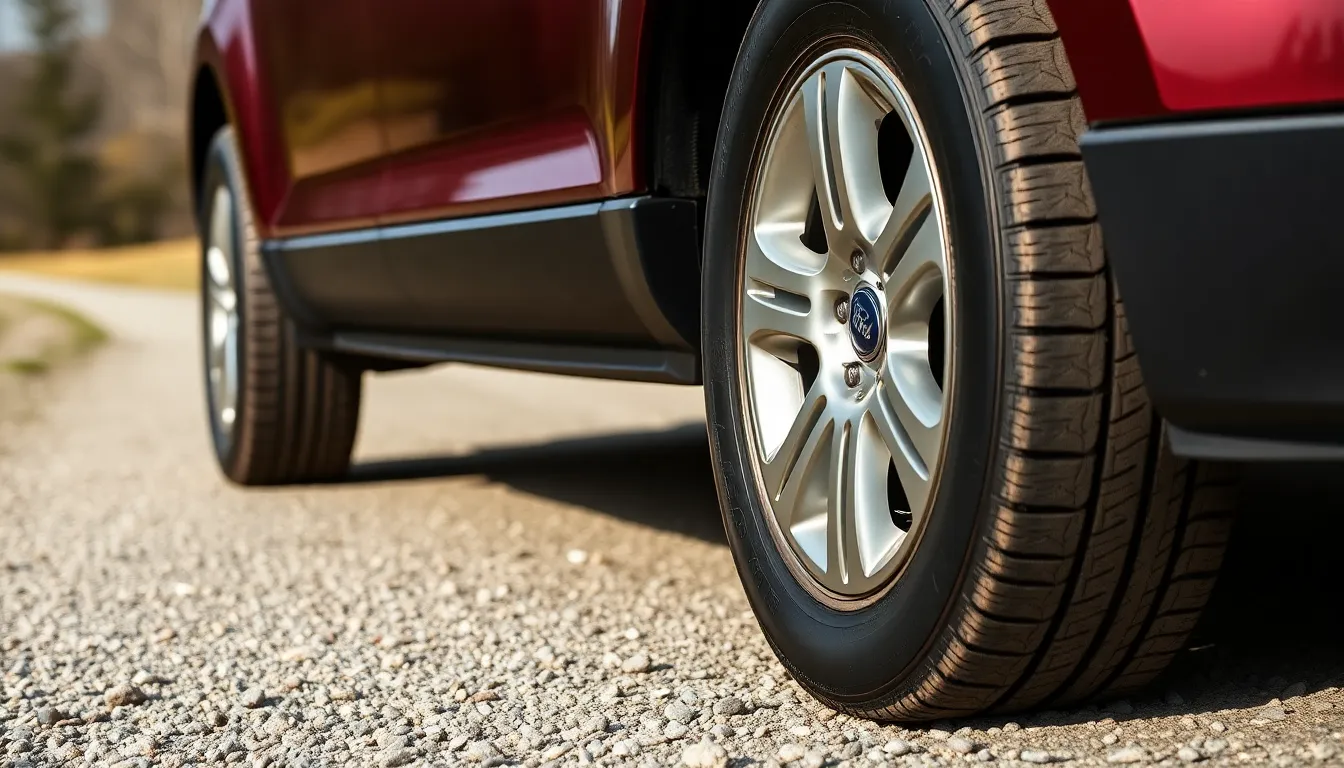
Owners of the 2013 Ford Edge often report roughness and excessive noise from their tires, particularly on Limited trims equipped with the stock P245/60R18 tires. These factory-installed options sometimes deliver less than ideal ride quality, especially on rougher road surfaces. Ride comfort concerns typically emerge after several thousand miles of use, with vibrations and road noise becoming more noticeable over time.
Tire longevity varies significantly based on driving conditions and maintenance practices. Most factory tires on the 2013 Edge last between 40,000-60,000 miles, though this range decreases with aggressive driving or poor road conditions. Regular maintenance including monthly air pressure checks and tire rotations every 6,000 miles substantially extends tire life and performance.
Safety concerns arise when tires age, regardless of visible tread depth. Tires older than 6 years should be replaced even if they appear to have adequate tread remaining, as rubber compounds deteriorate over time. This deterioration compromises handling capabilities and increases the risk of blowouts, particularly at highway speeds.
For those seeking improved ride quality, Bridgestone Ecopia tires in size 245/50R20 provide a quieter, smoother experience compared to the original equipment. These replacement options perform exceptionally well in both highway and city driving conditions, especially in dry climates where road noise is more noticeable. The price range for quality replacement tires spans from $90 for entry-level options to $300 per tire for premium models from manufacturers like Michelin, Pirelli, and Continental.
Purchasing Guide for 2013 Ford Edge Tires
Budget Considerations
Replacement tires for the 2013 Ford Edge range from $90 to $300 per tire depending on the size and brand you select. Standard sizes like the 235/65R17 found on SE trims typically cost less than the larger 265/40R22 tires for the Sport trim. Mid-range options such as the popular 245/60R18 size strike a balance between performance and cost effectiveness. Premium tire brands offer enhanced performance characteristics but come at a higher price point. Many Ford Edge owners find that allocating $600-$1,000 for a complete set of quality tires provides the best value for longevity and performance.
Where to Buy
Purchasing tires for your 2013 Ford Edge from specialized tire retailers ensures you receive proper fitment advice and installation services. Local tire shops often provide personalized service and can source the exact factory-specified sizes for your particular Edge trim level. Online retailers frequently offer competitive pricing on all the common Edge tire sizes (235/65R17, 245/60R18, 245/50R20, and 265/40R22), though you’ll need to arrange professional installation separately. Dealerships stock manufacturer-recommended tire options specifically designed for your Edge’s suspension and handling characteristics. Warehouse clubs present another option with member pricing on popular tire sizes for the Edge.
Installation Factors
Professional installation of your 2013 Ford Edge tires includes proper mounting, balancing, and alignment services crucial for optimal performance. Mounting ensures the tire beads seat correctly on your Edge’s wheels, creating an airtight seal for proper inflation. Balancing corrects weight distribution issues that might cause vibrations at highway speeds, particularly important for larger rim options on Limited or Sport trims. Alignment services verify your Edge’s suspension geometry remains properly calibrated, extending tire life and maintaining handling characteristics. Most installations include tire pressure monitoring system (TPMS) recalibration to ensure your dashboard accurately displays pressure warnings when needed.
Seasonal Considerations
Winter driving conditions demand specialized tires for your 2013 Ford Edge to maintain traction and safety. Snow tires in your Edge’s factory sizes provide enhanced grip through specialized rubber compounds that remain flexible in cold temperatures. All-season tires represent a practical year-round option for Edge owners in moderate climates, delivering acceptable performance across varied weather conditions without requiring seasonal changes. Performance-oriented summer tires enhance the Sport trim’s handling capabilities but sacrifice cold-weather performance and aren’t suitable for snow or ice. The Limited and SEL trims with 245/60R18 tires perform admirably with quality all-season options, offering versatility for changing weather patterns.
Conclusion
Choosing the right tire size for your 2013 Ford Edge isn’t just about fitting wheels to your vehicle. It’s about improving safety preserving performance and maximizing fuel efficiency across all driving conditions.
Whether you stick with factory recommendations or explore compatible alternatives remember that proper sizing directly impacts handling stability and ride comfort. Each trim level has exact tire requirements designed to complement its unique characteristics.
Regular maintenance including pressure checks and rotations will extend the life of whichever tires you select. When it’s time for replacement consider your driving habits regional weather and budget to make the most well-informed choice.
With the right tires your Ford Edge will deliver the reliable performance and driving experience you expect from this versatile SUV.
Frequently Asked Questions
What are the standard tire sizes for a 2013 Ford Edge?
The 2013 Ford Edge has different standard tire sizes depending on the trim level. The SE model comes with 235/65R17 tires, while the SEL trim features 245/60R18 tires as standard. The Limited trim offers either 245/60R18 or 245/50R20 tires, and the Sport trim comes equipped with the largest factory option at 265/40R22 for superior handling and a sportier appearance.
How do I read the tire size code on my Ford Edge?
A tire size code like “P235/65R17” breaks down as follows: “P” indicates it’s for passenger vehicles, “235” is the width in millimeters, “65” is the aspect ratio (sidewall height as a percentage of width), “R” means radial construction, and “17” is the wheel diameter in inches. Understanding this code helps ensure you purchase the correct replacement tires.
Can I upgrade to larger tires on my 2013 Ford Edge?
Yes, you can upgrade to larger tires on your 2013 Ford Edge, but it’s crucial to maintain a similar overall diameter to avoid affecting speedometer accuracy and vehicle dynamics. Popular upgrades include going from 235/65R17 to 245/60R18 or from 245/60R18 to 245/50R20, depending on your current trim level and wheel size.
How does tire size affect fuel economy in the Ford Edge?
Tire size directly impacts fuel economy. Standard sizes like 245/60R18 offer the best balance of performance and efficiency. Larger tires such as the 265/40R22 found on Sport models increase rolling resistance, which can reduce fuel economy. Maintaining proper inflation pressure with factory-recommended sizes is essential for optimizing both performance and efficiency.
How long do factory tires last on a 2013 Ford Edge?
Factory tires on a 2013 Ford Edge typically last between 40,000-60,000 miles, depending on driving conditions, maintenance practices, and tire type. Regular rotation, proper inflation, and alignment checks can extend tire life. However, tires older than six years should be replaced regardless of tread depth due to rubber deterioration.
What are common tire issues reported by 2013 Ford Edge owners?
Common issues include roughness and excessive noise, particularly with the stock P245/60R18 tires on Limited trims. Ride comfort concerns often emerge after several thousand miles. Some owners report uneven wear patterns, which can be addressed through regular rotation and alignment. The Sport trim’s low-profile 265/40R22 tires may also experience quicker wear and provide a firmer ride.
What’s the price range for replacement tires for a 2013 Ford Edge?
Replacement tires for a 2013 Ford Edge range from $90 to $300 per tire, depending on size and brand. Mid-range options like the 245/60R18 offer a good balance of performance and cost. Premium brands and larger sizes (265/40R22) typically cost more but may provide better handling characteristics and longer tread life.
Are winter tires necessary for the 2013 Ford Edge?
Winter tires are recommended for 2013 Ford Edge owners who regularly drive in snow, ice, or temperatures below 45°F. They provide significantly improved traction and braking performance in cold conditions. For the Edge, compatible winter tire sizes include 235/65R17 or 245/60R18, depending on your vehicle’s trim level and wheel size.
How often should I rotate the tires on my 2013 Ford Edge?
Tires on a 2013 Ford Edge should be rotated every 5,000-7,500 miles or as specified in your owner’s manual. Regular rotation promotes even wear across all four tires, extending their lifespan and maintaining optimal performance. This service is especially important for front-wheel drive Edge models, which typically experience faster wear on the front tires.
Can I mix different tire sizes on my Ford Edge?
No, you should not mix different tire sizes on your Ford Edge. All four tires should be the same size as specified for your particular trim level. Using mismatched sizes can cause handling problems, damage to the drivetrain, and potentially dangerous driving conditions. Always replace tires with the correct size indicated in your owner’s manual or door jamb sticker.