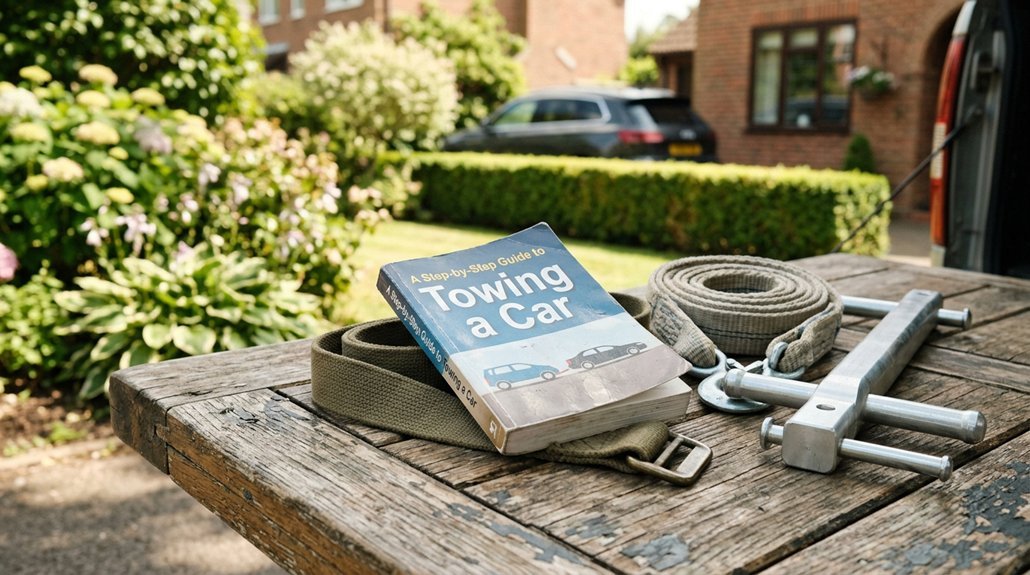
I’ve towed cars across three states and learned that one wrong strap can turn a highway trip into a roadside nightmare. You need to match your method to your vehicle’s limits, check tongue weight ratings, and never trust a rental dolly’s rusted chains without inspection.
I’ll walk you through the gear that actually holds up at 65 mph, the loading angles that prevent strap failure, and the brake controller settings that save your transmission.
Dolly, Trailer, or Flat Tow: Which Method Fits Your Vehicle?
How do you know which towing setup won’t wreck your transmission or leave you stranded on the interstate? I’ve tested enough towing equipment to tell you the dolly sits in that sweet spot between cost and capability. It lifts your front wheels, keeps the rears rolling, and works beautifully for front-wheel-drive vehicles. You’re looking at roughly $1,200-$2,500 versus $3,000+ for a full trailer.
The compact design saves garage space. I’ve crammed one into a single parking spot. You’ll need proper wheel straps, safety chains rated for your load, and chocks.
Check tire pressures religiously, drive slower than feels comfortable, and take those turns wide. Watch for ground clearance issues and never overload. Skip the dolly if you’ve got all-wheel drive or a heavy rear-biased vehicle. For everyone else, it’s practical protection without trailer bulk.
Recommended Products

Enhanced Load Capacity: This ratchet wheel dolly easily lifts vehicles up to 1500 lbs. Its robust capacity makes it suitable for cars, SUVs, home vehicles, large SUVs, pickups, ATVs, tractors, and more. It facilitates easy movement in tight spaces.

【Heavy-Duty Capacity】Built from reinforced industrial-grade steel, each dolly handles up to 1,500 lbs, giving you a massive 6,000 lbs total capacity for the set. Whether it's a pickup truck, van, or RV, move your heavy vehicles with confidence in any garage or shop.

This PATENT PENDING tire dolly is constructed from high impact, rugged injection molded polyethylene with ribbed reinforcement for strength and durability
How to Find Your Vehicle’s Car Towing Limit
Once you’ve settled on your towing method, the real work starts with knowing exactly what your vehicle can handle. I always dig into the owner’s manual first, hunting for that maximum towing capacity number. It’s your hard ceiling, not a suggestion.
Knowing your vehicle’s maximum towing capacity isn’t optional—it’s the hard ceiling that protects your transmission, brakes, and everyone on the road.
Here’s where trailer weight becomes critical. I add up everything: the trailer itself, cargo, passengers, even fuel. That total must stay under your towing capacity, or you’re risking transmission damage, brake failure, or worse.
When I shop hitches, I match the receiver class, I through V, to my vehicle’s rating. No mixing and matching. For heavier loads, I use weight distribution systems to keep things balanced and legal.
Finally, I test the brake controller setup before hitting the road. Staying within documented specs isn’t just smart, it’s non-negotiable for safe towing.
Recommended Products
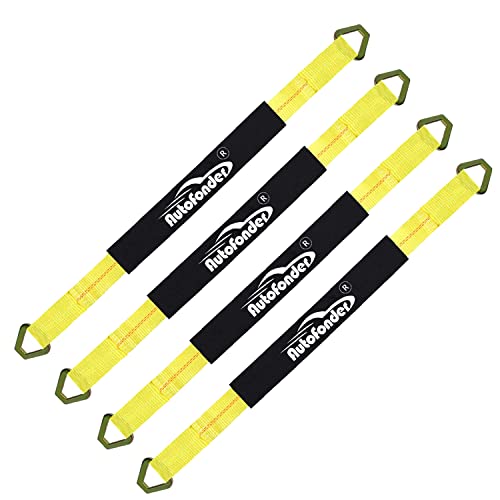
✔️Premium Material:Axle Strap is made of heavy-duty polyester webbing and rust-proof stamped steel with black nylon protective sliding-sleeve.

【2025 NEW STYLE PROFESSIONAL REFLECTIVE TRAILER STRAP】Used for Car, Truck, UTV Transportation

Ultimate Strength & Safety: Built for heavy-duty towing, recovery, and winching with a 3,333lb working load limit and 10,000lb break strength. Perfect for pulling stranded cars, UTVs, or securing motorcycles
What Towing Equipment to Rent or Buy
I frequently start my equipment hunt by matching the hitch class to my exact load, because grabbing the wrong size is an expensive mistake I’ve seen too many times. Class I handles light duty, while Class V tackles heavy trailers, so I always check my vehicle’s receiver hitch specs for a secure fit.
I never skip safety chains, crossing them under the trailer tongue to form a cradle that stops the tongue from lifting if the coupler fails. I verify wheel chocks, straps, and wheel cradles match my setup before loading front wheels onto the dolly.
I inspect every connection, hitch coupler, wiring, brake controller, and lights before departure, then recheck periodically on long hauls. Proper equipment isn’t optional; it’s what keeps us all rolling safely.
Recommended Products

Allows for easy leveraging of weight distribution hookup brackets

HEAVY DUTY TRAILER HITCH PIN LOCK – It’s a newly upgraded trailer hitch pin lock with all metal construction. Two tubular keys are included to ensure easy fit and detach.
![Torklift International Hitch Superhitch Original Ford Excursion 2In - 1,700/17K, /20K [St,Nd] - F1006](https://m.media-amazon.com/images/I/41e83qGSY+L._SL500_.jpg)
How to Hook Up a Car Dolly or Trailer
I’ll hook up a car dolly or trailer by first checking that my hitch class matches the load rating I need, since a Class III hitch handles 5,000 pounds while heavier trailers demand Class IV or V.
I position the dolly on level ground, chock the wheels, and load the towed vehicle’s front tires into the cradles before locking down the straps and safety chains. I always test the brake lights and turn signals, then drive with slow acceleration and wider turns to keep everything stable.
Recommended Products

THREADED LATCH. This safety chain hook is equipped with a threaded end and hex nut to provide enhanced security when connecting your safety chains to your trailer hitch

QUICK RELEASE. This trailer safety chain hook is equipped with a spring-loaded wire latch for secure attachment of your safety chains to your trailer hitch and quick release as needed

QUICK RELEASE. This trailer safety chain hook is equipped with a spring-loaded wire latch for secure attachment of your safety chains to your trailer hitch and quick release as needed
Equipment and Compatibility
The right towing setup starts with matching your gear to your vehicle’s actual capabilities, not just what’s sitting on the rental lot. I always verify hitch compatibility first, checking receiver size, weight class, and tongue capacity against my vehicle’s limits. Mismatched components spell trouble on the highway.
Weight distribution matters more than most folks realize. I calculate total load, trailer weight, plus cargo and passengers to stay safely under my towing capacity. I never guess here. I check the door sticker and owner’s manual.
I confirm the coupler locks securely, attach safety chains in a cross-under pattern, and test all lights and brakes before rolling. Proper wheel straps and a functional brake controller complete my pre-trip checklist. These steps keep me, and everyone around me, safe.
Loading and Securing
Setting up a car dolly right means starting on level ground with zero room for error. I position the dolly directly behind my hitch, engage the parking brake, and double-check compatibility before hooking up. I attach the coupler to the hitch ball, lock it tight, and verify the connection won’t fail under load.
Loading demands precision. I align the front wheels with the ramps, drive onto the cradle, and set the parking brake immediately. Then I secure everything that matters:
- Wheel straps: I ratchet these high-tension straps until the front wheels can’t budge, feeling the metal bite.
- Safety chains: I cross these beneath the frame, creating a cradle if disaster strikes.
- Final tug test: I yank every connection hard.
- Neutral check: I verify the transmission, free rear wheels, and working lights.
I remove the chocks only when I’m certain we’re bound together.
Safety and Driving
How do you keep everything together once you’re rolling? I’ve learned that proper hookup makes or breaks your trip, regardless of hitch types you’re working with.
I always double-check that coupler sits locked on the ball, safety chains crossed beneath the tongue, and every connection torqued tight. Before I move an inch, I verify brake lights flash properly on both vehicles; electrical failures strand you fast or worse, cause collisions.
With the towed vehicle’s front wheels cradled and parking brake set, I ease into motion deliberately. Slower acceleration prevents lurching, wider turns clear curbs, and gentle braking avoids fishtailing.
I stop every hundred miles to inspect straps, chains, and tire pressures. These habits haven’t failed me yet, and they won’t fail you either.
Preparing Your Car for Loading
Before I haul a single pound of cargo, I confirm my vehicle can actually handle the job. I check my manual for towing capacity, then add up trailer weight, cargo, and passengers to stay safely under that limit. Proper weight distribution matters more than most people realize. I aim for 60% of the load on the front axle, 40% on the rear. I use a weight distribution hitch when I’m pushing heavier limits. My hitch ball must match the trailer coupler size exactly, no exceptions.
Here’s my pre-loading checklist that keeps me grounded and confident on the road:
- I verify my total loaded weight stays 10-15% below max capacity, leaving breathing room for safety.
- I inflate all tires to the precise PSI listed on my door jamb and trailer placard.
- I connect my brake controller, adjust gain for trailer weight, and test brakes in my driveway.
- I double-check that lights, signals, and chains are secure before I roll.
Recommended Products

Slim, low-profile design for a functional, modern aesthetic
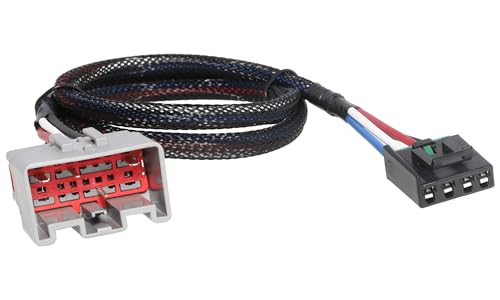
Brake Controller Adapter for Ford: This f150 brake controller harness fits select model years of the Ford Expedition, F-150, F-250 Super Duty, F-350 Super Duty, F-450 Super Duty, F-550 Super Duty, Flex, Lincoln MKT and Navigator etc

RED WOLF 4 pins brake control harness compatible with 1994-2009 Dodge Ram 1500/ Ram 2500/3500/4500, 1995-2009 Ram 1500/ram 2500/ram 3500, 1999-2008 Dodge 2500/3500 Cummins, 1995-2009 Dakota, 1995-2008 Dodge Durango, 1995-2008 Dart, 1995-2008 Avenger, 1995-2009 Charger, 1995-2009 Challenger, 1995-2009 Caliber, 1995-2009 Caravan, 1995-2009 Magnum
How to Load and Secure Your Car for Towing
I’ve learned that proper wheel alignment and strap tension make or break a safe tow. When I’m lining up a car on the dolly, I take my time getting the front wheels centered on the ramps. I always double-check that the straps are tight enough to keep everything locked in place without over-torquing the ratchets.
Recommended Products

Reliable and Long-lasting: Crafted from one-piece thickened steel panels, our car moving dolly boasts remarkable strength and sturdiness. The reinforced steel platform can effortlessly carry weighing up to 1,500 lbs, and 3,000 lbs (2-piece). No need to worry about bending or damage, even when dealing with heavy SUVs.

Licensed Under U.S. Patent No.Us USD1149251S.

HEAVY DUTY: Made of high-quality steel, it features durable and sturdy construction. Powder-coated finish prevents rust. Weight Capacity: 1,500 pounds per dolly. Acommodates wheel sizes up to 12 inches wide.
Wheel Alignment Basics
Once you’ve got your two-wheel dolly positioned on flat, stable ground with the parking brake locked, I line up my tow vehicle’s hitch directly behind the path I plan to take. Proper wheel alignment isn’t just technical jargon; it’s what keeps your tow dolly safety intact and our community of responsible towers connected.
I drive the front wheels onto the dolly ramps until they settle into the wheel cradles, then engage the towed vehicle’s parking brake. This creates that reassuring stability we all need on the road.
- Position your dolly where fellow towers would nod in approval: flat, stable, visible.
- Align your hitch path like you’re joining a convoy you trust.
- Feel that solid landing when wheels seat properly in cradles, no guesswork.
- Double-check your setup, because we’re in this together, mile after mile.
Strap Tension Essentials
Secure fastening makes the difference between a smooth haul and a roadside disaster. I’ve learned that getting the straps tension right on your wheel straps isn’t just about tightness; it’s about precision that keeps your load stable at highway speeds.
I position the front wheels firmly in the dolly cradles, then I ratchet the wheel straps to manufacturer specs, usually around 1,100 to 1,500 pounds of working load. Too loose, and you’ll get dangerous sway. Too tight, and you risk damaging the tire sidewalls or suspension components.
I always cross my safety chains underneath, forming an X between the tow vehicle and dolly, and I double-check that each hook is locked with no slack. Before I pull out, I verify ground clearance, confirm the rear wheels roll freely, and give every strap a firm tug.
Connecting Lights, Brakes, and Safety Chains
The connection phase is where I’ve seen too many weekend warriors cut corners, only to regret it miles down the highway. I’ve learned that proper setup separates the pros from the pack, and you’re about to join the ranks of those who get it right.
Proper setup separates weekend warriors from the pros who arrive safely.
I cross my safety chains under the trailer tongue, creating a cradle that’ll catch everything if the hitch fails, because I’ve witnessed the alternative and it isn’t pretty.
I verify my brake controller syncs with the trailer, testing response at 5 mph before trusting it at highway speeds.
I check every light, turn signal, and running light, knowing that visibility keeps us all alive in the caravan.
I double-check couplers, wiring, and weight distribution, because one loose connection turns your weekend into a nightmare.
We’re the ones who arrive safely.
Recommended Products

AMERICAN OWNED, FAMILY OPERATED - Join the Rhino USA Family and Support a Father/Son Business With the Best USA-Based Customer Support.

2pcs basket style tow dolly straps fit most standard wheels from 14" to 19" and feature two flat hooks on one end of each car dolly strap. Designed for use with wheel lifts and tow dollies, these tow dolly straps feature a full basket design for complete tire coverage.

AMERICAN OWNED, FAMILY OPERATED - Join the Rhino USA Family and Support a Father/Son Business With the Best USA-Based Customer Support.
Driving With a Tow: Space, Speed, and Sway Control
How do you keep three tons of trailer from pushing you around at 65 mph? I start with a weight distribution hitch. It spreads tongue load across all axles, keeping my rig level and steering responsive. Without it, I’d fight the wheel every mile.
Trailer sway terrifies every tower I’ve met. Crosswinds, semi-trucks, and steep downhills trigger it fast. I stay ahead by using sway control devices and gentle steering inputs. No sudden corrections; they make it worse.
I leave four seconds minimum between me and traffic. My stopping distance nearly doubles with a car in tow. Smooth acceleration, gradual braking, that’s my rhythm.
Lane changes happen slowly, with tow mirrors showing my blind spots. I’m driving a longer, heavier vehicle now. I give myself space, time, and respect for physics.
Recommended Products

VEHICLE APPLICATION: Fits Chevrolet Silverado 2500 HD 2001-2010, Chevrolet Silverado 2500 HD Classic 2007, Chevrolet Silverado 3500 2001-2006, Chevrolet Silverado 3500 Classic 2007, Chevrolet Silverado 3500 HD 2007-2010, GMC Sierra 2500 HD 2001-2010, GMC Sierra 2500 HD Classic 2007, GMC Sierra 3500 2001-2006, GMC Sierra 3500 Classic 2007, GMC Sierra 3500 HD 2007-2010

Provides an adjustable mount for any CURT weight distribution hitch
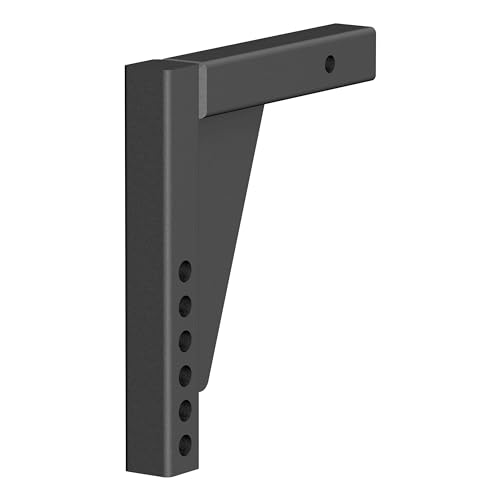
Provides an adjustable mount for any CURT weight distribution hitch
Parking and Unloading Your Towed Car
Where exactly do you unload three tons of rolling metal without ending up on a YouTube fail compilation? I always hunt for flat, stable ground first. No slopes, no soft shoulders, no drama.
Flat ground first. No slopes, no soft shoulders, no drama.
I engage the parking brakes on my towed vehicle immediately. Then I chock everything that touches asphalt: my truck’s wheels, the dolly wheels, and those rear wheels on the car I’m hauling. Triple redundancy saves reputations.
Before I pop a single strap, I verify the transmission’s in neutral, the rear wheels spin free, and my safety chains aren’t tangled. I clear the area of obstacles, check my clearances, and confirm tire pressures on both rigs.
Here’s what separates pros from viral clips:
- Feel your heart race when you realize you forgot chocks on a hill
- Trust your gut when the ground looks soft but feels wrong
- Take pride in a clean unload that your crew would respect
- Sleep soundly knowing your parking brakes held all night
Recommended Products

Each J-TECH DYNAMICS trailer safety cable features a 5000 lbs break strength rating, providing you with the confidence and security needed for heavy-duty towing. This ensures a robust secondary connection between your trailer and tow vehicle, making these safety chains towing trailer a non-negotiable piece of equipment for peace of mind.

QUICK RELEASE - This snap hook is equipped with a spring-loaded safety latch for secure attachment of trailer safety chains to a compatible hitch loop and quick release as needed.

RELIABLE STRENGTH. With high-strength, heat-treated steel construction, this 7/16-inch diameter certified S-hook is rated for 5,000 lbs. gross trailer weight