
Struggling to determine your vehicle’s wheel lug pattern? This crucial measurement can make or break your wheel purchasing decision. Getting it wrong means wasted time, money, and the frustration of returns.
Measuring your wheel lug pattern (also called bolt pattern) doesn’t require professional tools or automotive expertise. With a simple ruler or tape measure, you can accurately identify this important specification in minutes. Whether you’re shopping for new wheels, replacing damaged ones, or simply wanting to understand your vehicle better, knowing how to properly measure your lug pattern is an essential skill for any vehicle owner.
Understanding Wheel Lug Patterns
Wheel lug patterns form the foundation of proper wheel fitment for your vehicle. These patterns determine which wheels are compatible with your car, truck, or SUV, making them a critical specification to understand before purchasing new wheels.
Recommended Products

5 Precise Hole Position Scales:Features 4-1/4″,4-1/2",4-3/4",5",5-1/2" standard scales, perfectly matches most mainstream wheel bolt patterns, eliminates installation guesswork and errors

Precise Dual-Scale Measurement for Perfect Fit:This Lug Bolt Pattern Tool features SAE & Metric dual scales for precise PCD and 4/5/6 lug pattern measurements. Eliminate guesswork, avoid mismatched hubs, and ensure perfect wheel-tire fitment every time.

🎯 Covers 4-1/4″ to 5-1/2″ Bolt Patterns – Precisely measures the most common bolt circle sizes including 4-1/4″, 4-1/2″, 4-3/4″, 5″, and 5-1/2″. Eliminates costly fitment errors when buying new wheels or replacing trailer axles.
What Is a Wheel Lug Pattern?
A wheel lug pattern (also called bolt pattern) refers to the arrangement of wheel studs or bolt holes on your vehicle’s hub. This pattern consists of two key measurements: the number of lugs and the diameter of the circle they form. For example, a “5×114.3” pattern indicates 5 lugs positioned on a circle with a 114.3mm diameter. Different vehicle manufacturers use exact patterns as part of their design standards, with common configurations including 4, 5, 6, or 8 lugs. European vehicles often use patterns like 5x112mm, while many Japanese models feature 5×114.3mm patterns.
Why Correct Measurements Matter
Accurate lug pattern measurements prevent costly purchasing mistakes when buying new wheels. Installing wheels with incorrect lug patterns can lead to dangerous fitment issues, compromised vehicle handling, and potential safety hazards on the road. Many customers report spending hundreds of dollars on wheels only to discover they don’t fit their vehicles. Liam Kohn recalls a customer who bought a set of premium aftermarket wheels without checking the lug pattern, resulting in the wheels sitting unused in his garage for months until he sold them at a important loss. Beyond safety concerns, knowing your exact lug pattern expands your wheel options and helps you make more informed decisions when upgrading or replacing your vehicle’s wheels.
Essential Tools for Measuring Lug Patterns
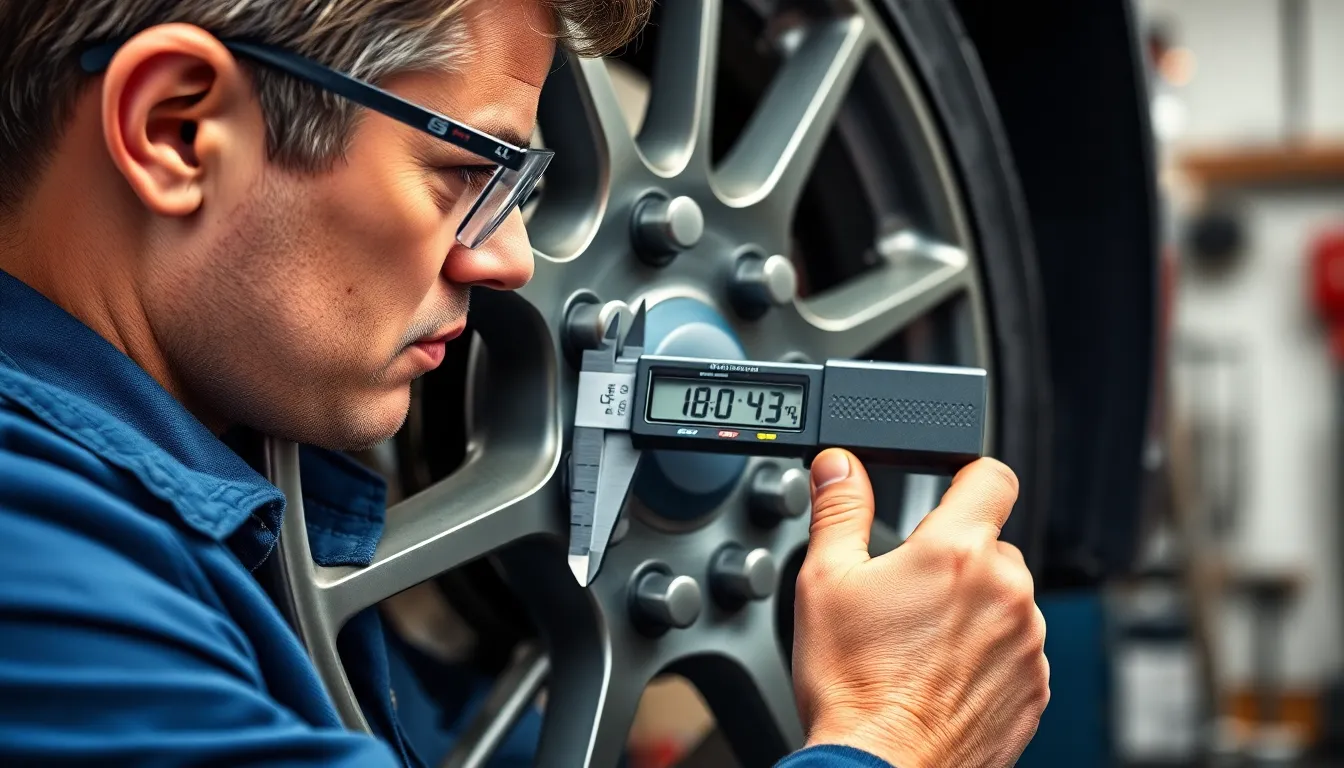
Accurate measurement of wheel lug patterns requires exact tools that provide precision and reliability. These tools make the difference between a perfect wheel fit and potentially dangerous mismatches.
Recommended Products

PCD specifications fit most 4, 5, 6, 8 lugs wheel
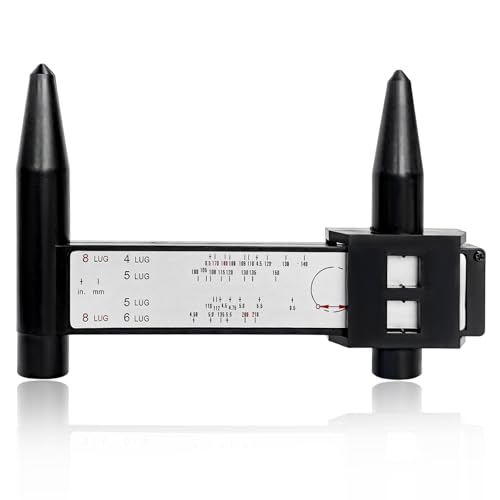
Precisely Measure: The car wheel bolt pattern measuring tool quickly measures 4-, 5-, 6-, and 8-hole wheel spacings. The clear and legible scale of the tool has high precision and minimizes manual calculation errors, ensuring reliable and accurate readings every time

What You Will Receive: two Wheel PCD Gauges are included, so you can always use them when you need to replace your wheels; The sufficient quantity allows you to avoid frequent purchases and the trouble of running to the repair shop; Whether it is daily use or emergency situations, this measuring tool can provide you with reliable support and help you easily cope with various tire and wheel measurement needs
Digital Calipers and Measuring Tapes
Digital calipers offer the most precise measurements when determining your wheel’s bolt circle diameter. Their digital display eliminates guesswork by providing readings down to fractions of a millimeter, ensuring you get the exact measurements needed for proper wheel fitment. Measuring tapes can also work in a pinch, though they’re slightly less precise than calipers. For best results, use a rigid measuring tape that won’t bend or flex during measurement, as even small inaccuracies of 1-2mm can lead to incompatible wheel purchases.
Specialized Lug Pattern Tools
Dedicated lug pattern measuring tools simplify the process with purpose-built features designed specifically for bolt pattern measurements. These specialized tools often include pre-marked measurements for common patterns and contoured edges that fit perfectly against lug nuts or wheel studs. Bolt pattern gauges typically feature multiple measurement arms that adjust to different lug configurations, allowing you to quickly determine both the number of lugs and the bolt circle diameter in one step. Many professional mechanics prefer these tools because they reduce measurement time from minutes to seconds while maintaining accuracy comparable to digital calipers.
How to Measure 4-Lug Wheel Patterns
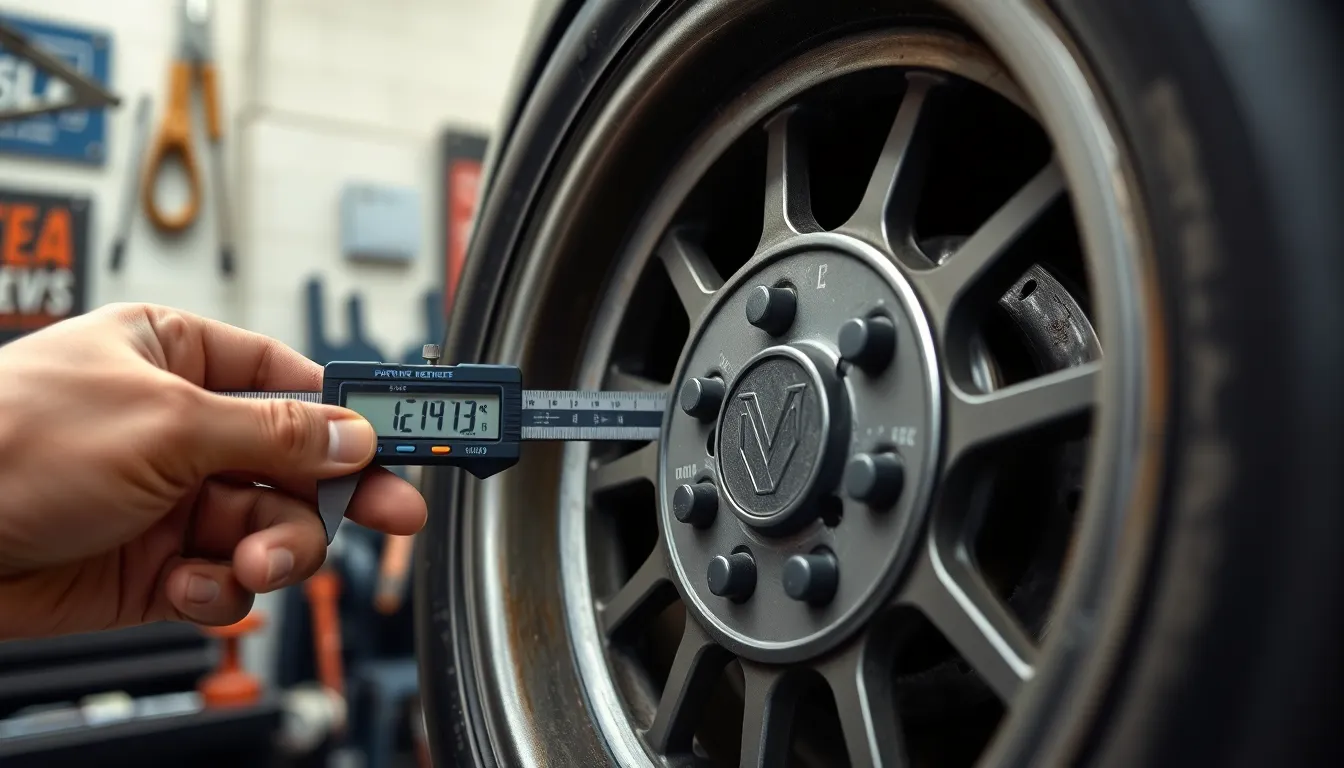
Measuring a 4-lug wheel pattern is straightforward and requires just a few simple steps. You’ll need to identify both the number of lugs and the bolt circle diameter (BCD) to determine the exact pattern for your wheel.
Recommended Products
📏【9999.11 Maximum Capacity】– U.S. Measuring units, Measures in feet and inches. Measure distance wheel against a usual tape measure and it will be the same measurements. Whether private or industrial purposes, the measurement of straight line and curve line is easy.

Non-stretch, wear-resistant, vinyl-coated fiberglass tape (1/2-inch wide) for reliable strength and flexibility

📏【Feet and Inches】 U.S. Measuring units, Measures in feet/ inches - "Duodecimal number system",Not feet and tenths of feet. Measure distance wheel against a usual tape measure and it will be the same measurements. Whether private or industrial purposes, the measurement of straight line and curve line is easy.
The Diameter Method
The diameter method offers the simplest approach for measuring 4-lug wheel patterns. Start by counting the lug holes to confirm you’re working with a 4-lug wheel. Position your measuring tool (preferably digital calipers) across the wheel, measuring from the center of one lug hole directly to the center of the opposite lug hole. This straight-across measurement gives you the bolt circle diameter immediately. Record your measurement in millimeters for precision—for example, if you measure 100mm across opposite lugs, your wheel has a 4x100mm bolt pattern. This method works particularly well for 4-lug wheels because the holes are perfectly aligned across from each other, creating a true diameter.
The Bolt-to-Bolt Method
While the bolt-to-bolt method is primarily used for 5-lug wheels, understanding the difference helps prevent measurement errors. Unlike 5-lug wheels where lugs aren’t directly opposite each other, 4-lug wheels feature symmetrically positioned lugs at 90-degree angles. For 4-lug patterns, you don’t need to measure from one lug to the edge of another (as you would with 5-lug wheels)—simply measure straight across between centers of opposite lugs. The direct center-to-center measurement provides your bolt circle diameter without additional calculations. After obtaining this measurement, express your complete lug pattern as “4 x [diameter]”—such as 4x100mm or 4×114.3mm—which represents both the number of lugs and the circle they form when properly measured.
How to Measure 5-Lug Wheel Patterns
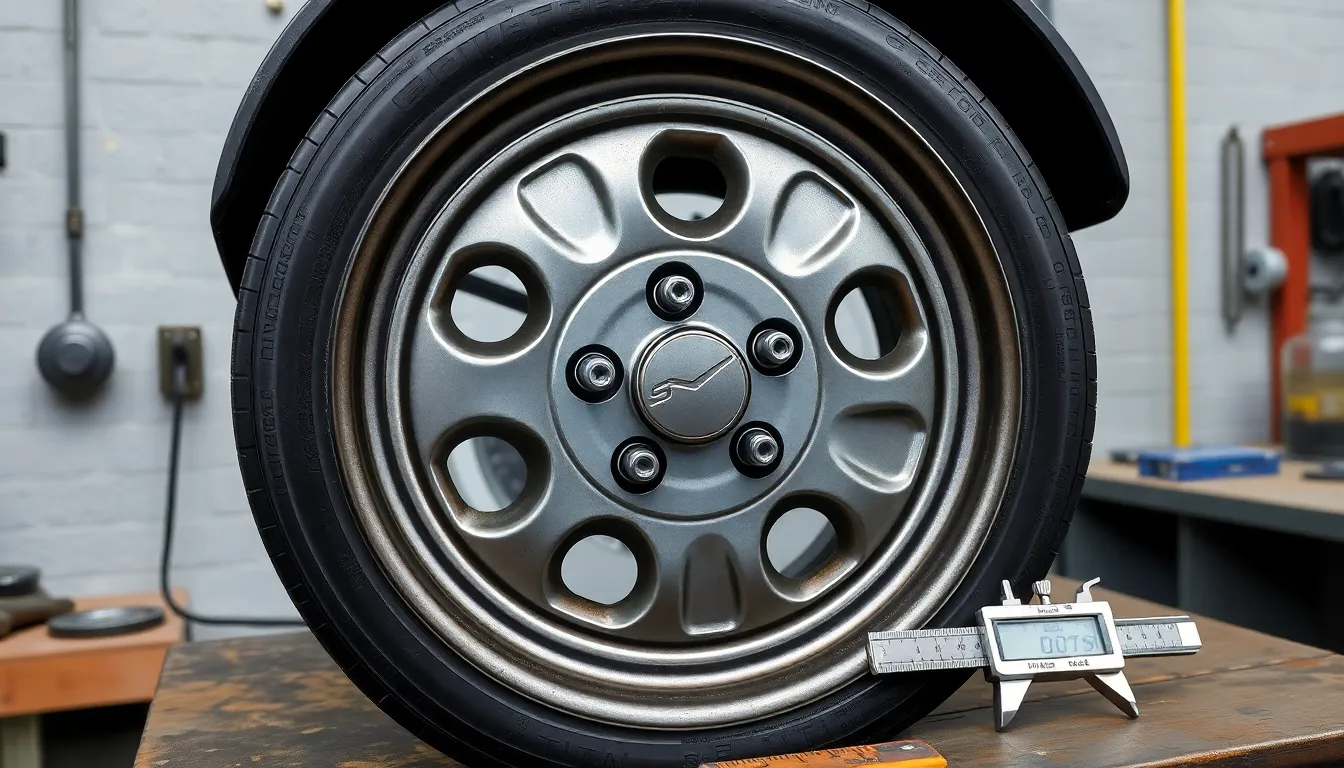
Measuring a 5-lug wheel pattern requires a different approach than even-numbered patterns due to its asymmetrical design. Accurate measurement ensures proper wheel fitment and prevents potential safety hazards when purchasing new wheels.
Recommended Products

[VEHICLE FITMENT] Fits Honda Accord 1998-2026, CR-V 1997-2026, S2000 2000-2008 rear hubs only, Civic 2005-2026, Element 2003-2011, Odyssey 1995-2004 and Crosstour 2010-2015; Acura RSX 2002-2006, TL 1995-2008, TSX 2004-2014, TLX 2015-2020, Integra Type R 1997-2001, Integra Base/A-Spec 2023-2026 and NSX 1992-2005 rear hubs only. At 20mm, check factory-stud and wheel back-pocket clearance. Confirm trim, brakes and wheels through Amazon fitment.

StanceMagic Universal Wheel Spacers for 5/4.5" (5/114.3) or 5/4.75" (5/120.65) vehicles. Not Hubcentric (No Lip). Can fit as long as: 1) Vehicle has 5/4.5" (5/114.3) or 5/4.75" (5/120.65) bolt pattern; 2) Vehicle Hub Lip is no larger than 82mm diameter; 3) You have 1/2" (0.50 inch) of space between your fender and the wheel/tire; 4) Your wheel studs are the correct length to ensure safe lug nut thread engagement (Note: Extended Wheel Studs may be needed, but not included in this listing).
【Bolt On Wheel Spacers Parameter】-- VEHICLE Bolt Pattern = WHEEL Bolt Pattern : 5x4.5"(5x114.3mm) || Thickness: 2 inch(50.8mm) || Threaded Studs/Nuts: M12x1.5 || Center Bore: 82.5mm (without lip) || Recommended torque: 70-80 ft/lbs || Quantity: 2Pcs. Please use a professional tool (micrometer) to measure your car
Using the Star Pattern Technique
The star pattern technique is essential for correctly measuring 5-lug wheels. First, confirm you have a 5-lug wheel by counting the number of lug holes around the wheel. Unlike 4, 6, or 8-lug patterns where you can measure straight across, 5-lug patterns require a exact measurement method. Select one lug hole as your starting point, then measure from the center of this hole to the outer edge of the lug hole that’s two positions away (skipping one hole in between). This approach accounts for the uneven spacing inherent in 5-lug configurations. For precise results, use a tape measure or caliper to record this measurement in millimeters. Your bolt pattern is expressed as “5x” followed by the measured distance—for example, 5×114.3 indicates a 5-lug wheel with a 114.3mm bolt circle diameter.
Converting Millimeters to Inches
Converting your 5-lug wheel measurements from millimeters to inches helps when comparing specifications across different markets. The standard conversion factor is 1 inch equals 25.4 millimeters. To convert your measurement, simply divide the millimeter value by 25.4. For example, a 5×114.3mm bolt pattern converts to 5×4.5 inches (114.3 ÷ 25.4 = 4.5). Many manufacturers list bolt patterns in both metric and imperial measurements, making this conversion knowledge particularly useful when shopping for wheels from international suppliers. Understanding both measurement systems gives you flexibility when searching for compatible wheels and ensures you’re comparing the correct specifications regardless of how they’re presented.
How to Measure 6-Lug and 8-Lug Patterns
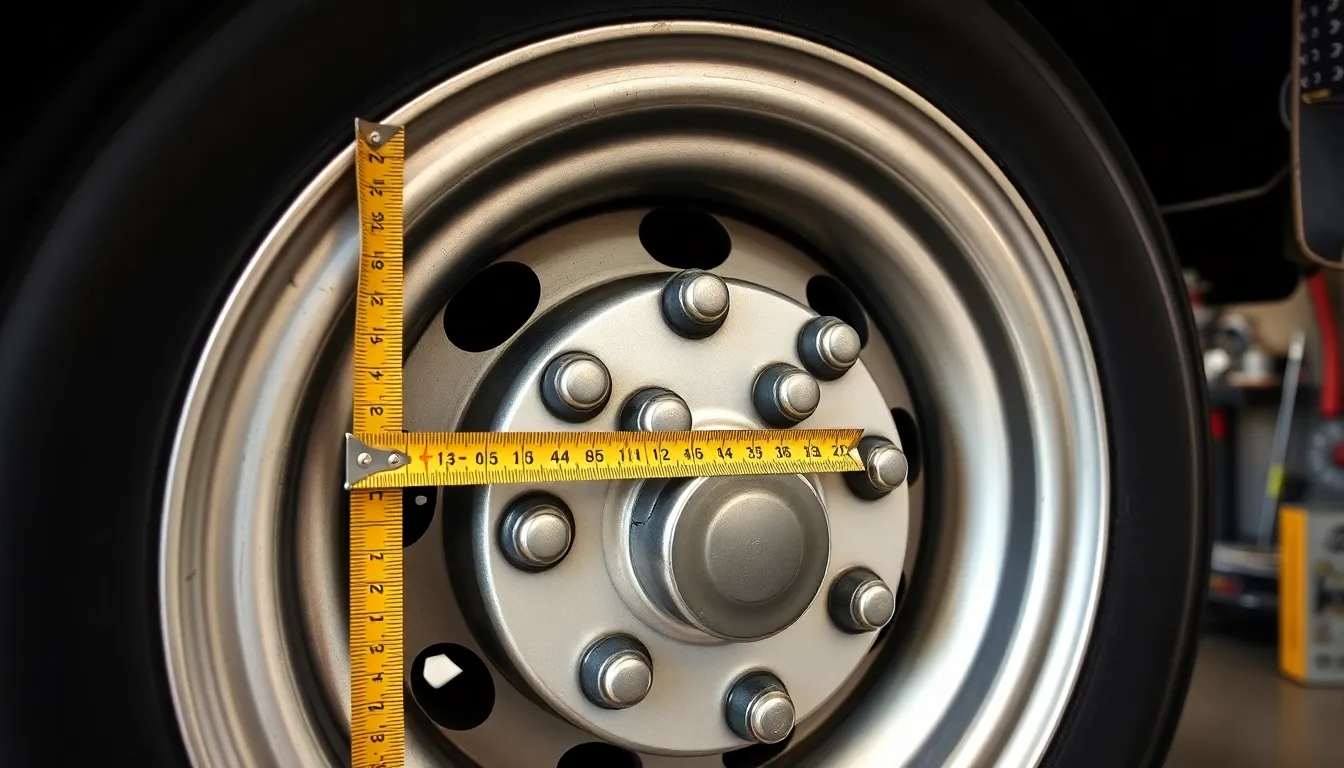
Measuring 6-lug and 8-lug wheel patterns follows a straightforward approach that’s essential for proper wheel fitment on trucks and larger vehicles. These patterns are common on pickup trucks, SUVs, and heavy-duty vehicles where strength and load capacity are paramount.
Recommended Products

❌ SAFETY INSTALLATION NOTE: All spacers require longer lug studs or extended thread / extra thread lug nuts to ensure proper thread engagement. For safety, verify full lug nut engagement before driving and re-torque all hardware after 250–500 miles.

Universal Fitment: Fit Front and Rear: (W204) 2008+ C300,C350,C63 AMG (W208) 1997-2002 CLK320,CLK430 | 1999-2006 CLK36 AMG, CLK43 AMG,CLK55 AMG

【Adapters Parameter】: Vehicle Bolt Pattern Must Be 5x4.5 | Wheels Bolt Pattern Must Be 5x112mm | Threaded Studs/Nuts: M12x1.5 | Thickness: 1 inch(25mm) | Center Bore with lip: 57.1mm | Recommended Torque: 70-80 ft/lbs | Bolt Grade: 12.9. . Only for 5x4.5" models with 5x112mm wheels, change bolt pattern. NOT for original wheel, ONLY work with 5x112mm wheel. ONLY for aftermarket wheels, NOT for OEM factory wheels
Diameter Measurement for Larger Patterns
Six and eight-lug wheels offer a simple measurement technique due to their even number of lugs. To measure these patterns accurately, locate two lug holes directly opposite each other across the wheel. Place your measuring tape or digital caliper from the center of one lug hole to the center of the opposing lug hole. This center-to-center measurement gives you the bolt circle diameter (BCD), a critical dimension for wheel compatibility. Larger bolt patterns typically exceed 130mm in diameter, reflecting the heavier duty requirements of the vehicles they support. Precision matters tremendously with these measurements—even small errors can lead to improper fitment issues that compromise vehicle safety and performance.
Common Sizes for Trucks and Heavy Vehicles
The most prevalent 6-lug pattern found on many trucks and SUVs is 6×139.7mm (also expressed as 6×5.5 inches in imperial measurements). Ford F-150s, Chevrolet Silverados, Toyota Tacomas, and Nissan Titans commonly use this configuration. Eight-lug patterns appear on heavier duty vehicles, with 8×165.1mm (8×6.5 inches) being a standard size for Ford Super Duty trucks, GMC Sierra HD models, and similar heavy-duty pickups. These standardized sizes enable manufacturers to produce compatible wheels across various vehicle models. Understanding your exact lug pattern opens up more options when searching for replacement wheels or custom rims for your truck or SUV. Recording your measurement as “number of lugs × diameter in millimeters” (like 6×139.7mm) ensures you’ll communicate the exact pattern when shopping for new wheels.
Common Wheel Lug Pattern Sizes
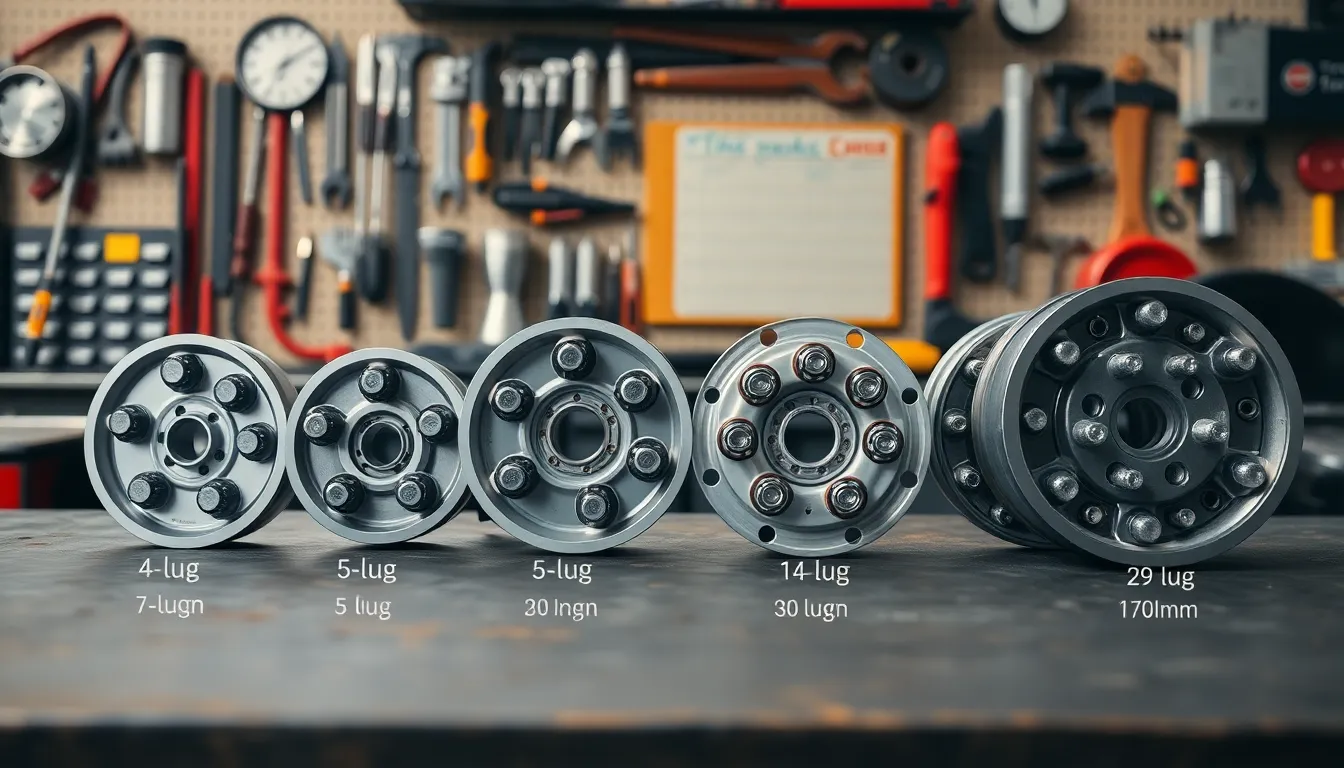
Wheel lug patterns vary widely across different vehicle types and manufacturers. These standardized measurements ensure proper wheel fitment and safety on the road, with exact patterns designed for different vehicle classes and performance requirements.
Recommended Products
Precise Measurements With Wheel Bolt Pattern Measuring Tool Set: Our templates accurately determine Pitch Circle Diameter (PCD) and wheel bolt patterns (4/5/6 lug) with SAE & Metric dual scales, ensuring proper fit for wheels and tires. Eliminates guesswork for perfect wheel fitment every time—no more mismatched hubs or incorrect replacements

FSQLB Wheel Bolt Pattern Measuring Tool, 5 Lug Bolt Pattern Template, Lug Pattern Measuring Tool, Trailer Axle Bolt Circle Template for 4, 5, 6, 8 Holes Lug Bolt Pattern Measuring 2 PCS
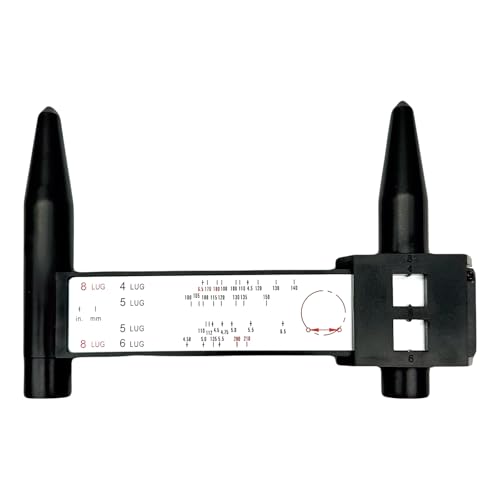
PCD gauge is a necessary tool for Tire and wheel stores, Car dealers and person who likes to change wheels by him/herself.
Passenger Cars and Light Trucks
Passenger vehicles typically feature one of several standard lug patterns based on their size and design requirements. For 4-lug configurations, the most common measurements include 4x100mm (3.94 inches) found on many compact cars and 4x98mm (3.86 inches) seen on certain European models. Mid-size vehicles and crossovers often use 5-lug patterns, with 5x100mm appearing on many Japanese and American cars, while 5×114.3mm (4.5 inches) remains one of the most widespread patterns across multiple manufacturers. Larger vehicles and trucks frequently employ 5x120mm (4.72 inches) patterns for added strength. Pickup trucks and SUVs commonly feature 6-lug designs, particularly 6×114.3mm on mid-size trucks and 6×139.7mm (5.5 inches) on full-size models. Heavy-duty trucks and commercial vehicles use 8-lug patterns such as 8×165.1mm (6.5 inches) to support greater loads and provide enhanced durability.
Performance and Import Vehicles
Performance vehicles and imports often feature distinctive lug patterns optimized for handling characteristics and structural integrity. European performance cars frequently use 5x112mm patterns (Audi, Mercedes-Benz) or 5x120mm (BMW), creating a brand-exact wheel fitment standard. Japanese performance models commonly employ 5×114.3mm patterns, offering excellent strength-to-weight ratios for spirited driving. Less common but still important patterns include 5x108mm (found on various Volvo and Ford models) and 5x100mm (popular on Subaru and certain VW models). These specialized patterns enable manufacturers to optimize wheel hub designs for particular handling characteristics, brake clearance requirements, and performance targets. High-performance vehicles benefit from these precisely engineered bolt patterns that complement their suspension geometry and power delivery systems.
Avoiding Common Measurement Mistakes
Measuring wheel lug patterns requires precision and attention to detail to avoid costly and potentially dangerous mistakes. Even small errors in measurement can lead to improper wheel fitment, causing safety hazards on the road. Here’s how to avoid the most common measurement pitfalls when determining your vehicle’s lug pattern.
Recommended Products

High Grade Material: This car wheel PCD gauge is crafted from premium plastic, featuring a robust construction with outstanding wear and impact resistance. It resists damage and cracking, maintaining stable measurement performance over time. It remains reliable under various usage conditions, providing solid assurance for long-term use.
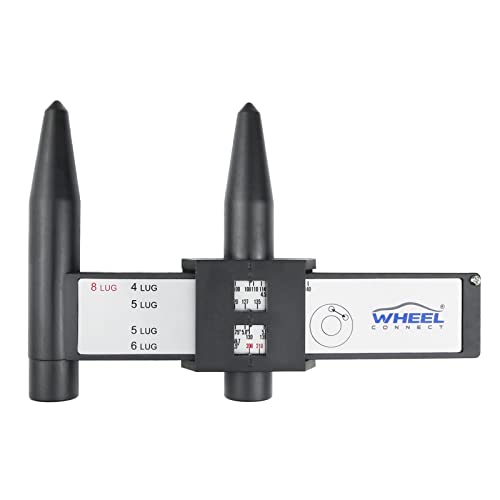
[WHAT IS IT FOR?] Wheel / Rim PCD gauge is a handy tool for measuring the PCD data of the car and wheel. Simply slide the caliper to match the wheel lug holes or wheel hub holes, you will read the data in Metric or Imperial.

【High-Quality Materials】: The automotive rim bolt measurement tool is made of high-quality plastic, featuring a stable structure, good toughness, and impact resistance. It is not easy to break or deform, which would otherwise affect measurement accuracy. Meanwhile, it is corrosion-resistant and can maintain good performance during long-term use in complex environments.
Accounting for Hub-Centric Rings
Hub-centric rings play a crucial role in properly centering wheels on your vehicle’s hub. These rings fill the gap between the wheel’s center bore and the hub, preventing vibrations and ensuring proper weight distribution. When measuring your lug pattern, remember that these rings don’t affect the bolt pattern itself but are essential for proper wheel installation. Many aftermarket wheels come with larger center bores to fit multiple vehicle applications, making hub-centric rings necessary for a precise fit. The correct ring size ensures your wheels remain perfectly centered during driving, eliminating wobble and potential bearing damage. Our customer Liam Kohn once shared how forgetting about hub-centric rings led to severe vibrations at highway speeds, requiring him to return to the shop for proper installation.
Verifying Before Purchasing New Wheels
Double-checking your measurements before buying new wheels saves time, money, and frustration. Cross-reference your measured bolt pattern against manufacturer specifications for your exact vehicle make, model, and year. Vehicle databases and wheel retailer websites offer reliable information about compatible lug patterns. Examine wheel offset and backspacing measurements alongside the lug pattern, as these factors also determine proper fitment and clearance. Consider using bolt circle templates or specialized gauge tools to verify your measurements with absolute certainty. Professional wheel retailers can help confirm your measurements if you’re uncertain about your results. Taking photos of your current wheels and hub assembly provides valuable reference points when shopping for replacements. Many customers report that verifying measurements multiple times prevented expensive purchasing mistakes, especially when ordering custom or specialty wheels online.
Conclusion
Measuring your wheel lug pattern doesn’t need to be complicated. With the right tools and techniques you can confidently identify your vehicle’s exact pattern whether it has 4 5 6 or 8 lugs. This knowledge empowers you to make smart wheel purchases avoiding costly mistakes and ensuring proper fitment.
Remember that precision matters when measuring bolt patterns. Using digital calipers or specialized lug pattern tools delivers the most accurate results. Always double-check your measurements against manufacturer specifications before ordering new wheels.
By understanding your vehicle’s lug pattern you’ll unlock more options for wheel upgrades while maintaining safety and performance. This simple measurement makes all the difference between a perfect fit and an expensive lesson learned.
Recommended Products

📏【10,000 FT Capacity】 U.S. Measuring units, Measures in feet/ inches-Duodecimal Number System. Measure distance wheel against a usual tape measure and it will be the same measurements. Whether private or industrial purposes, the measurement of straight line and curve line is easy.

📏【Portable & Accurate】Through 2 times folds can be folded to 16 inches into a backpack(included) for easy carrying and transport. Unfolded it extends to 40 inches. Adopts a precise gear structure design with an accuracy of±0.5%. the forward count increases, and the backward count decreases, effectively avoiding errors.

📏【Adjustable and Easy to Use】The Zozen 6-Inch Measuring Wheel has 3 adjustable sections of rods that can be fixed to any length, with a one-key reset, stronger bracket, perfect joints, TPR tires, and an original location marker. It comes with an exquisite carrying bag for easy transport and storage, making it lightweight and portable.
Frequently Asked Questions
Recommended Products

Compatible with 2003-2016 Mitsubishi Lancer (Evo & Ralliart); 1995-2012 Eclipse; 2004-2016 Outlander; 2004-2011 Endeavor; 5x114.3 bolt pattern; 67.1mm hub bore; 12x1.5 studs

Compatible with 2003-2016 Mitsubishi Lancer (Evo & Ralliart); 1995-2012 Eclipse; 2004-2016 Outlander; 2004-2011 Endeavor; 5x114.3 bolt pattern; 67.1mm hub bore

✔ 2PCS Wheel Spacers: Thickness: 1" (25mm) | Vehicle Bolt Pattern: 5x4.5 (5x114.3mm) | Wheel Bolt Pattern: 5x4.5 (5x114.3mm) | Center Bore: 70.5mm | Thread Pitch: 1/2"x20.
What is a wheel lug pattern and why is it important?
A wheel lug pattern (or bolt pattern) is the measurement that describes the number of lug holes and the diameter of the circle they form on your wheel. It’s crucial for determining wheel compatibility with your vehicle. Knowing your exact pattern is essential when purchasing new wheels to ensure proper fitment, safety, and performance. Without the correct measurements, you risk buying incompatible wheels that won’t fit your vehicle.
How do I measure a 4-lug wheel pattern?
For a 4-lug wheel, count the lug holes and measure directly across from the center of one lug hole to the center of the opposite lug hole. This gives you the bolt circle diameter. The measurement combined with the number of lugs (4) forms your complete pattern, such as “4x100mm.” This straightforward center-to-center measurement works because 4-lug patterns are symmetrically designed.
What’s the proper way to measure a 5-lug wheel pattern?
For 5-lug wheels, use the Star Pattern Technique due to their asymmetrical design. Measure from the center of one lug hole to the outer edge of the lug hole that is two positions away (not directly opposite). Multiply this measurement by 1.051 to calculate the bolt circle diameter. This gives you an accurate 5-lug pattern measurement like “5×114.3mm.”
How do I measure 6-lug and 8-lug wheel patterns?
For 6-lug and 8-lug wheels, common on trucks and larger vehicles, measure directly across from the center of one lug hole to the center of the opposing lug hole. This straight-line measurement gives you the bolt circle diameter. Common sizes include 6×139.7mm for many trucks/SUVs and 8×165.1mm for heavy-duty vehicles. These patterns are designed for increased load-bearing capacity.
What tools do I need to measure wheel lug patterns accurately?
Digital calipers are ideal for precise measurements down to fractions of a millimeter. A rigid measuring tape can work in a pinch but is less accurate. Specialized lug pattern measuring tools are available that simplify the process with pre-marked measurements for common patterns. These tools quickly determine both the number of lugs and the bolt circle diameter, offering professional-level accuracy.
What are common lug pattern sizes for different vehicles?
Compact cars typically use 4x100mm or 4x98mm patterns. Mid-size vehicles and crossovers usually feature 5-lug patterns like 5x100mm and 5×114.3mm. Pickup trucks and SUVs commonly utilize 6-lug designs (6×139.7mm), while heavy-duty trucks employ 8-lug patterns. European performance cars often use 5x112mm, and BMWs typically feature 5x120mm patterns. Different manufacturers standardize around specific patterns.
How can I avoid mistakes when measuring wheel lug patterns?
Double-check measurements against manufacturer specifications before purchasing new wheels. Use bolt circle templates or specialized gauge tools to verify your measurements. Consider consulting with professional wheel retailers for confirmation. Pay attention to hub-centric rings for proper wheel centering. Taking these precautions prevents costly and potentially dangerous fitment errors, especially when ordering specialty wheels online.
Do I need to convert measurements between millimeters and inches?
Yes, if you’re comparing wheels from different markets. To convert millimeters to inches, divide by 25.4. For example, a 5×114.3mm pattern equals approximately 5×4.5 inches. Most modern wheels use metric measurements, but some older American vehicles use imperial units. Being able to convert between the two ensures you can accurately compare wheels from international suppliers.
What happens if I install wheels with the wrong lug pattern?
Installing wheels with incorrect lug patterns can be extremely dangerous. The wheels won’t properly align with the hub, creating unsafe driving conditions, wheel wobble, and potential wheel detachment while driving. Even small discrepancies can cause stress on lug bolts, leading to premature failure. Additionally, you’ll waste money on incompatible wheels that require return shipping or exchange fees.
Are hub-centric rings important when considering wheel lug patterns?
Yes, hub-centric rings are crucial companions to proper lug patterns. These rings fill the gap between your wheel’s center bore and vehicle’s hub, ensuring the wheel is perfectly centered. Without the correct hub-centric rings, wheels may appear to fit based on lug pattern alone but will create vibrations and uneven wear. Always verify both your lug pattern and hub center bore diameter when purchasing new wheels.