
Do you know how to measure wheel lug pattern size correctly? Identifying this crucial measurement can save you time, money, and frustration when purchasing new wheels for your vehicle.
When shopping for replacement wheels or upgrading to custom rims, getting the lug pattern right is essential. This measurement, also known as bolt pattern or bolt circle diameter (BCD), indicates how many lug nuts your wheel has and how they’re arranged. Measuring it incorrectly can lead to purchasing incompatible wheels that simply won’t fit your vehicle. With a few simple tools and techniques, you’ll be able to determine your exact lug pattern and shop with confidence.
Understanding Wheel Lug Patterns
Wheel lug patterns define how your wheels connect to your vehicle. These patterns are essential to know before purchasing new wheels to ensure proper fitment and safety.
What Is a Lug Pattern and Why It Matters
A lug pattern (also called bolt pattern or bolt circle diameter) refers to the exact arrangement of lug holes on your wheel. It’s described by two numbers: the number of lugs and the diameter of the circle they form. For example, a 5×114.3 pattern means the wheel has 5 lugs positioned in a circle with a 114.3mm diameter. Knowing your exact lug pattern prevents purchasing incompatible wheels that won’t fit your vehicle. Mismatched patterns can lead to improper mounting, unsafe driving conditions, and unnecessary expenses from returns and exchanges. Some vehicles use uncommon patterns, making wheel selection more challenging without accurate measurements.
Common Lug Pattern Configurations
Lug patterns vary widely across vehicle makes and models. The most common configurations include 4x100mm (found on many compact cars like Honda Civics), 5×114.3mm (popular among Japanese vehicles and many SUVs), 5x112mm (standard on many European cars like Volkswagen and Audi), and 6×139.7mm (typical for trucks and larger SUVs). American vehicles often use 5×4.5″ (5×114.3mm) or 5×5″ (5x127mm) patterns. European luxury brands like BMW frequently use 5x120mm configurations. Trucks and heavy-duty vehicles typically feature patterns with more lugs, such as 8×6.5″ (8×165.1mm) for enhanced load-bearing capacity. Knowing these standard configurations helps narrow down your options when shopping for replacement wheels.
Essential Tools for Measuring Wheel Lug Patterns
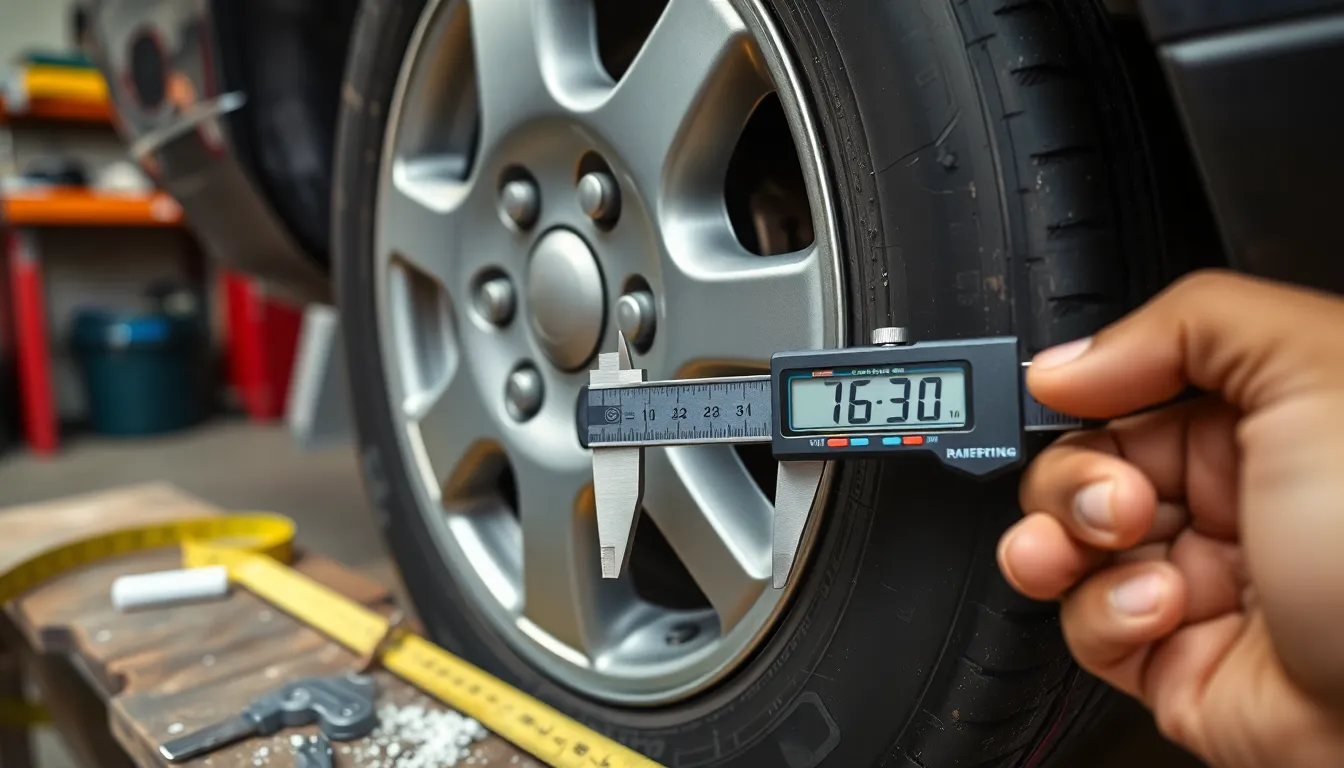
Measuring wheel lug patterns accurately requires exact tools to ensure precise results. Having the right equipment on hand makes the process straightforward and helps you avoid costly mistakes when purchasing new wheels.
Basic Household Tools You Can Use
Most homeowners already possess the basic tools needed for measuring wheel lug patterns. A tape measure or ruler serves as the primary tool for determining distances between lug holes. For better visibility during the measuring process, grab a marker or chalk to mark reference points on the wheel. These simple tools provide sufficient accuracy for most casual measurements, especially when you’re just doing a preliminary check before visiting a wheel shop.
Professional Measuring Tools
Digital calipers offer superior precision when measuring bolt patterns compared to standard household tools. These instruments provide readings down to fractions of a millimeter, eliminating guesswork that can lead to fitment issues. Specialized wheel bolt pattern gauges are available for enthusiasts and professionals who regularly work with different wheels. These purpose-built tools simplify the measurement process and typically include templates for common bolt patterns, allowing for quick and definitive identification of your wheel’s exact specifications.
Step-by-Step Guide to Measuring Bolt Patterns
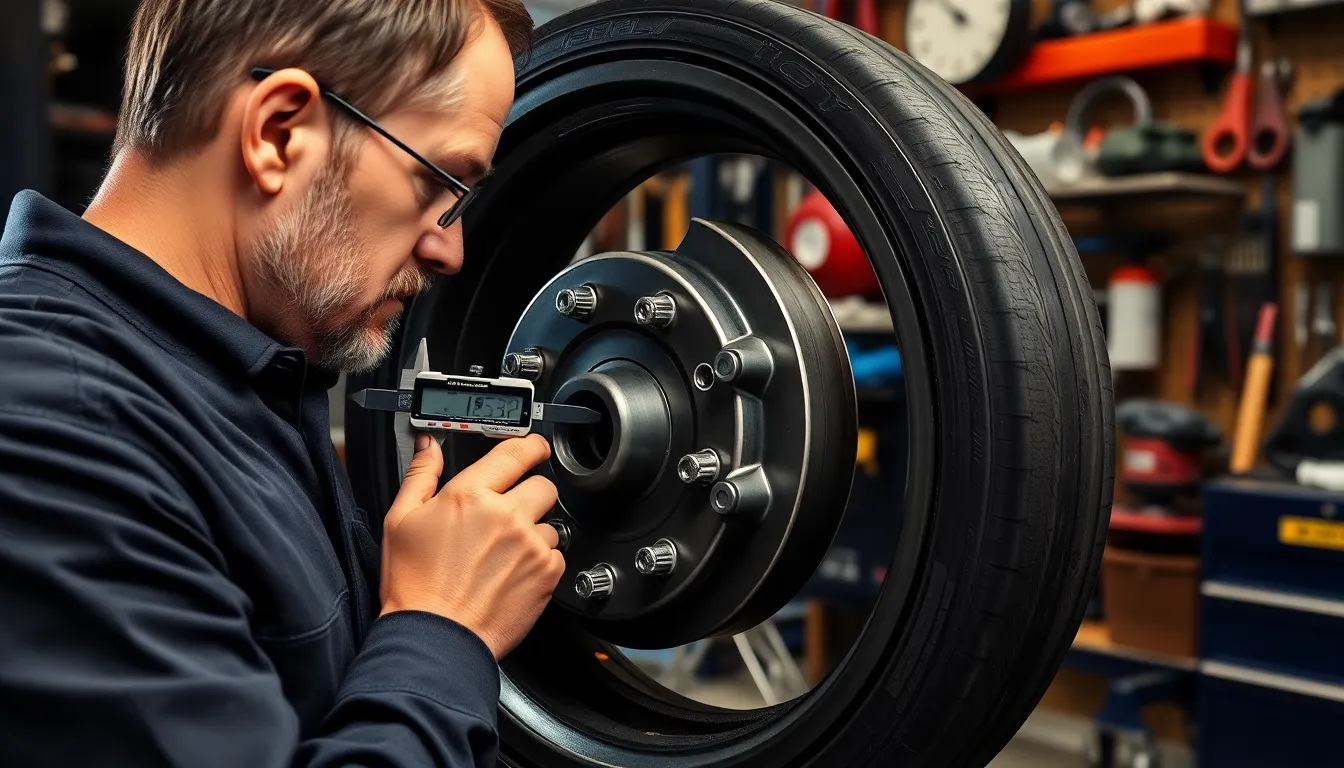
Accurate bolt pattern measurements ensure you get the perfect wheel fit for your vehicle. Follow these exact methods based on the number of lugs your wheel has for precise results.
Measuring 4, 5, and 6-Lug Patterns
For 4-lug patterns, measure directly from the center of one lug hole to the center of the hole directly across from it. This straight-line measurement gives you the bolt circle diameter you’ll need when shopping for replacement wheels.
Five-lug patterns require a different approach due to their asymmetrical arrangement. Measure from the back of one lug hole to the center of the second lug hole across the circle (skipping one hole). This adjustment accounts for the irregular shape and provides the accurate bolt circle diameter.
Six-lug wheels follow the same principle as 4-lug patterns. Measure from the center of one lug hole to the center of the opposite lug hole directly across the circle. Always use millimeters for greater precision, though inches can be converted if needed (for example, 6-139.7mm equals 6-5.5 inches).
Measuring 8-Lug Patterns
Eight-lug patterns, commonly found on heavy-duty trucks and larger vehicles, also use the direct measurement method. Take your measuring tool and place it at the center of one lug hole, then extend it to the center of the lug hole directly opposite. This straight-across measurement gives you the bolt circle diameter.
For all patterns, always measure center-to-center of the lug holes rather than edge-to-edge for accurate results. Using digital calipers offers the most precise measurements compared to standard rulers or tape measures. Double-check your findings against manufacturer specifications whenever possible to confirm you’ve measured correctly before purchasing new wheels.
Alternative Measurement Methods

Beyond traditional measuring techniques, alternative methods provide simpler and sometimes more accurate ways to determine your wheel’s lug pattern. These approaches eliminate much of the guesswork associated with manual measurements and help ensure you get the right wheel fit for your vehicle.
Using Bolt Pattern Templates
Bolt pattern templates offer a straightforward solution for identifying lug patterns without precise measuring tools. These physical stencils come pre-marked with common lug configurations that you simply place over your wheel. When the template’s holes align perfectly with your wheel’s lug holes, you’ve found your exact pattern. Templates prove especially valuable if you lack calipers or struggle with taking accurate measurements. Many automotive shops and wheel retailers keep these templates on hand, making pattern identification quick and virtually error-free compared to manual measurement techniques.
Digital Measurement Apps
Modern technology has introduced smartphone applications specifically designed to measure wheel lug patterns using your phone’s camera. These apps leverage augmented reality (AR) technology to calculate bolt circle diameters with impressive accuracy. To use these apps, you’ll typically position your phone camera over the wheel, follow on-screen calibration instructions, and receive an instant bolt pattern reading. The convenience factor makes these apps increasingly popular among DIY enthusiasts, though their precision depends on proper positioning and your phone’s hardware capabilities. While not quite as accurate as high-quality calipers or dedicated templates, these digital tools provide a quick reference point that you can verify with other measurement methods for complete confidence.
How to Interpret Your Measurements
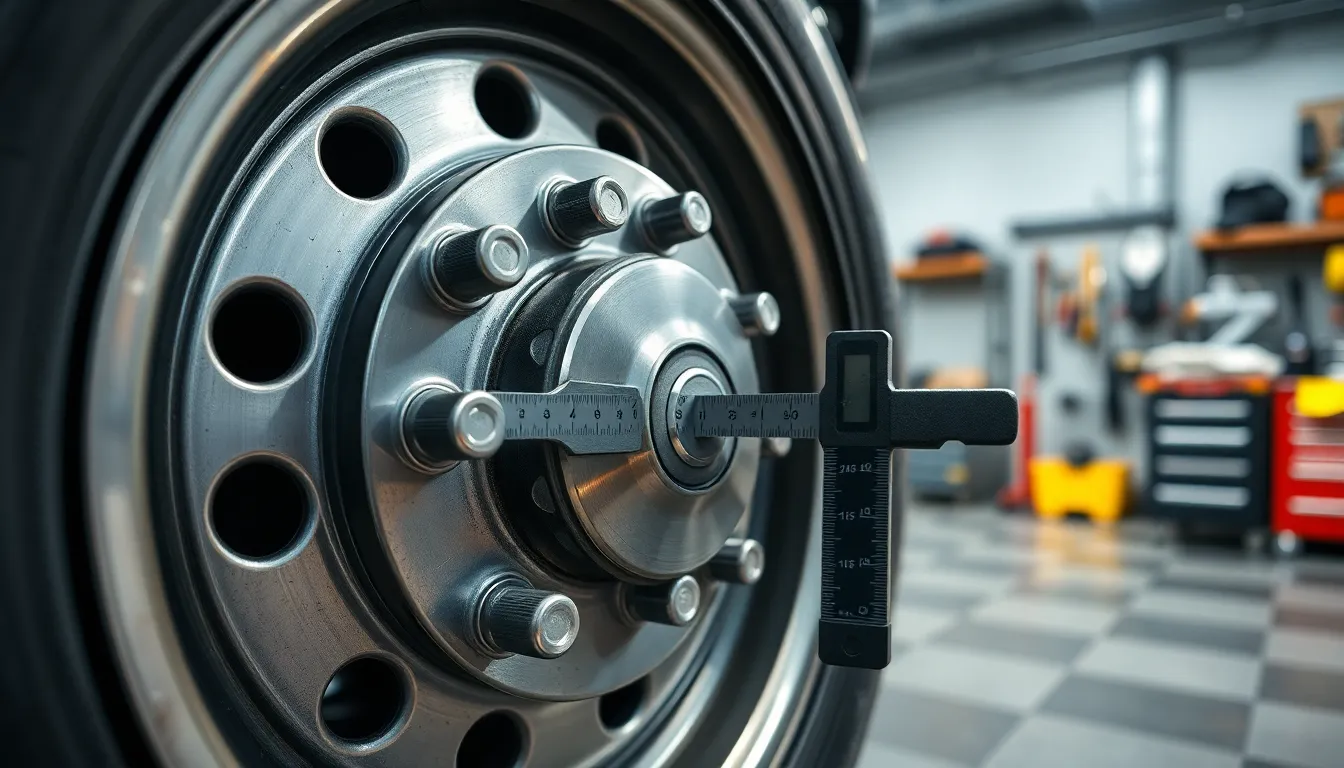
After measuring your wheel’s lug pattern, understanding what those numbers mean ensures you’ll select compatible wheels for your vehicle. The lug pattern represents two key pieces of information: the number of lug holes and the diameter of the circle they form.
Converting Between Metric and Standard Units
Wheel measurements frequently appear in both metric (millimeters) and standard (inches) units, creating potential confusion when comparing specifications. Most vehicle manufacturers use metric measurements for bolt patterns, particularly those from Europe and Asia. To convert millimeters to inches, simply divide the millimeter value by 25.4. For example, a 100mm bolt circle diameter equals approximately 3.94 inches, while 98mm converts to about 3.86 inches. This conversion capability proves especially useful when comparing wheels made to different regional specifications or when dealing with older vehicles that might use imperial measurements rather than metric ones.
Reading Bolt Pattern Notations
Bolt patterns follow a consistent format expressed as “Number of lug holes – diameter” in either millimeters or inches. Common examples include 4-100 (indicating 4 lug holes on a 100mm diameter circle) or 5-4.5 (representing 5 lug holes on a 4.5-inch diameter circle). The first number always refers to the lug count, while the second number indicates the bolt circle diameter. Some manufacturers and retailers express this same information with an “x” instead of a dash, such as 5×114.3mm. Both notations communicate identical information—in this case, 5 lugs positioned on a 114.3mm diameter circle. Understanding these standardized notations allows you to quickly identify whether a particular wheel will fit your vehicle without additional measurements.
Common Mistakes to Avoid When Measuring

Measuring wheel lug patterns correctly prevents costly errors when purchasing new wheels. Many DIYers make several common mistakes that lead to inaccurate measurements and potentially incompatible wheel purchases.
Measuring Edge to Edge
Measuring from the outside edge of one lug hole to the outside edge of another gives incorrect results. Always measure from the center of one lug hole to the center of the opposite hole for accurate bolt circle diameter readings. This center-to-center measurement provides the true bolt pattern dimension that wheel manufacturers use in their specifications.
Ignoring Odd-Numbered Lug Spacing
Five-lug wheels have asymmetrical spacing that requires special measurement techniques. Many people incorrectly measure 5-lug patterns the same way as 4-lug patterns. For 5-lug wheels, you must measure from the center of one lug hole to the farthest edge of the lug hole that’s two positions away (skipping one hole in between). Failing to account for this asymmetry results in incorrect bolt pattern identification.
Using Inappropriate Measuring Tools
A standard ruler often lacks the precision needed for accurate lug pattern measurements. Digital calipers provide much greater accuracy down to fractions of a millimeter. Measuring tapes can bend or sag during measurement, introducing errors that affect wheel fitment. Using specialized bolt pattern gauges eliminates guesswork and improves measurement reliability.
Measuring Removed Wheels Only
Wheel holes sometimes differ slightly from the actual hub patterns on your vehicle. Checking measurements on both the wheel and the hub ensures complete compatibility. This verification step catches potential mismatches between aftermarket wheels and your vehicle’s hub design.
Accuracy Tips for DIYers
Digital calipers offer precision down to 0.01mm, making them ideal for lug pattern measurements. Measure at least twice to confirm your readings before making any wheel purchases. When working with odd-numbered patterns like 5-lug wheels, mark your starting lug hole with tape to maintain consistent reference points throughout the measurement process.
Position your measuring tool perfectly straight when taking measurements to avoid angular distortion that skews results. Though both measurement systems work, millimeters provide better precision than inches for wheel specifications. Most modern vehicles use metric measurements for their bolt patterns, making millimeter readings more directly comparable to manufacturer specifications.
Conclusion
Measuring your wheel lug pattern accurately is a skill that saves time money and frustration. With the proper tools and techniques you’ve learned you can now confidently identify your vehicle’s exact bolt pattern specifications.
Remember to measure from center to center always double-check your measurements and consider using digital tools for enhanced precision. Whether you’re replacing a damaged wheel or upgrading your vehicle’s appearance knowing your correct lug pattern ensures perfect fitment.
Armed with this knowledge you can now shop for wheels with confidence avoiding costly mistakes and ensuring your new wheels will fit perfectly the first time. Your vehicle deserves wheels that not only look great but are safely and properly mounted.
Frequently Asked Questions
What is a wheel lug pattern?
A wheel lug pattern (also called bolt pattern or bolt circle diameter) is the measurement that indicates the number of lug nuts on a wheel and their arrangement. It’s represented by two numbers, such as 5×114.3, where the first number is the count of lug holes and the second is the diameter of the circle they form in millimeters.
Why is measuring the lug pattern accurately important?
Accurate lug pattern measurements ensure you purchase compatible wheels for your vehicle. Incorrect measurements can lead to wheels that don’t fit, unsafe driving conditions, wasted money, and frustration. Proper fitment is crucial for both safety and vehicle performance.
What tools do I need to measure a wheel lug pattern?
Basic measurements can be done with a tape measure or ruler, but for greater accuracy, use digital calipers or a specialized wheel bolt pattern gauge. These professional tools eliminate guesswork and provide precise measurements, helping you avoid costly mistakes when purchasing new wheels.
How do I measure a 5-lug wheel pattern?
For a 5-lug pattern, measure from the center of one lug hole to the center of the lug hole that’s two positions away (not directly opposite). Then multiply this measurement by 1.051 to calculate the bolt circle diameter. Use millimeters for precision, and consider using digital calipers for the most accurate results.
How do I measure 4, 6, or 8-lug patterns?
For even-numbered patterns (4, 6, or 8 lugs), measure from the center of one lug hole directly to the center of the opposite hole. This straight-across measurement gives you the bolt circle diameter. Always use millimeters for the most precise measurement.
Are there easier ways to determine my lug pattern?
Yes, bolt pattern templates and digital measurement apps offer simpler alternatives. Templates are pre-marked stencils that align with wheel lug holes for quick identification. Smartphone apps use cameras and augmented reality to measure bolt patterns, though their precision may vary based on positioning and phone capabilities.
How do I convert between metric and standard measurements?
Most manufacturers use metric measurements (millimeters), but some use inches. To convert millimeters to inches, divide by 25.4. For example, a 114.3mm bolt pattern equals 4.5 inches. Understanding these conversions helps when comparing wheel specifications from different manufacturers.
What are common lug patterns for different vehicles?
Common patterns include 4x100mm for compact cars, 5×114.3mm for many Japanese vehicles and SUVs, 5x112mm for European cars, and 6×139.7mm for trucks and larger SUVs. Knowing these common configurations can help narrow down your options when shopping for replacement wheels.
What common mistakes should I avoid when measuring lug patterns?
Avoid measuring edge-to-edge instead of center-to-center, using incorrect techniques for odd-numbered patterns, and relying on imprecise measuring tools. Always check measurements on both the wheel and hub, measure multiple times, and maintain consistent reference points to ensure accuracy.
Can I determine my lug pattern without measuring?
Yes, you can often find your vehicle’s lug pattern in the owner’s manual, on the manufacturer’s website, or through online wheel fitment databases. Vehicle-specific forums and automotive parts retailers can also provide this information based on your make, model, and year.