
Wondering how to measure rim lug pattern correctly? Identifying your vehicle’s bolt pattern is crucial before purchasing new wheels—get it wrong, and those expensive new rims won’t fit your car.
When you’re upgrading wheels or replacing damaged rims, understanding your vehicle’s lug pattern (also called bolt pattern) is essential. This measurement describes how many lug nuts or bolts your wheel has and the diameter of the circle they form. While it might seem complicated at first, measuring your rim’s lug pattern can be done with simple tools you likely already have at home. With the right technique, you’ll confidently know exactly what size wheels will fit your vehicle.
Understanding Rim Lug Patterns and Their Importance
Rim lug patterns represent the exact arrangement of bolt holes on your vehicle’s wheel that connect to the hub. This crucial measurement consists of two components: the number of bolts and the diameter of the circle they form. Most passenger vehicles feature either 4, 5, or 6 lugs arranged in a circular pattern.
The importance of correct lug patterns can’t be overstated when shopping for new wheels. Incorrect measurements lead to wheels that simply won’t fit your vehicle, regardless of how perfect they might otherwise be for your needs. Even a small discrepancy in the bolt pattern means the wheels won’t align properly with the mounting holes on your vehicle’s hub.
Vehicle manufacturers design exact lug patterns for different models based on factors like vehicle weight, performance requirements, and intended use. Larger, heavier vehicles typically use more lugs (5 or 6) arranged in a wider diameter pattern to distribute weight and stress more effectively. Sports cars often feature unique lug patterns engineered to withstand higher performance demands.
Regional differences exist in lug pattern standards, with many American vehicles using inch-based measurements while European and Asian manufacturers often employ metric measurements. This distinction makes knowing the exact specifications even more crucial when shopping across different wheel manufacturers.
Many car enthusiasts learn about lug patterns the hard way. I’ve heard from customers who purchased beautiful, expensive wheels only to discover they didn’t fit their vehicle’s bolt pattern. These costly mistakes are completely avoidable with proper measurement techniques.
Recommended Products

5 Precise Hole Position Scales:Features 4-1/4″,4-1/2",4-3/4",5",5-1/2" standard scales, perfectly matches most mainstream wheel bolt patterns, eliminates installation guesswork and errors

PCD specifications fit most 4, 5, 6, 8 lugs wheel

Precise Dual-Scale Measurement for Perfect Fit:This Lug Bolt Pattern Tool features SAE & Metric dual scales for precise PCD and 4/5/6 lug pattern measurements. Eliminate guesswork, avoid mismatched hubs, and ensure perfect wheel-tire fitment every time.
Essential Tools for Measuring Rim Lug Patterns
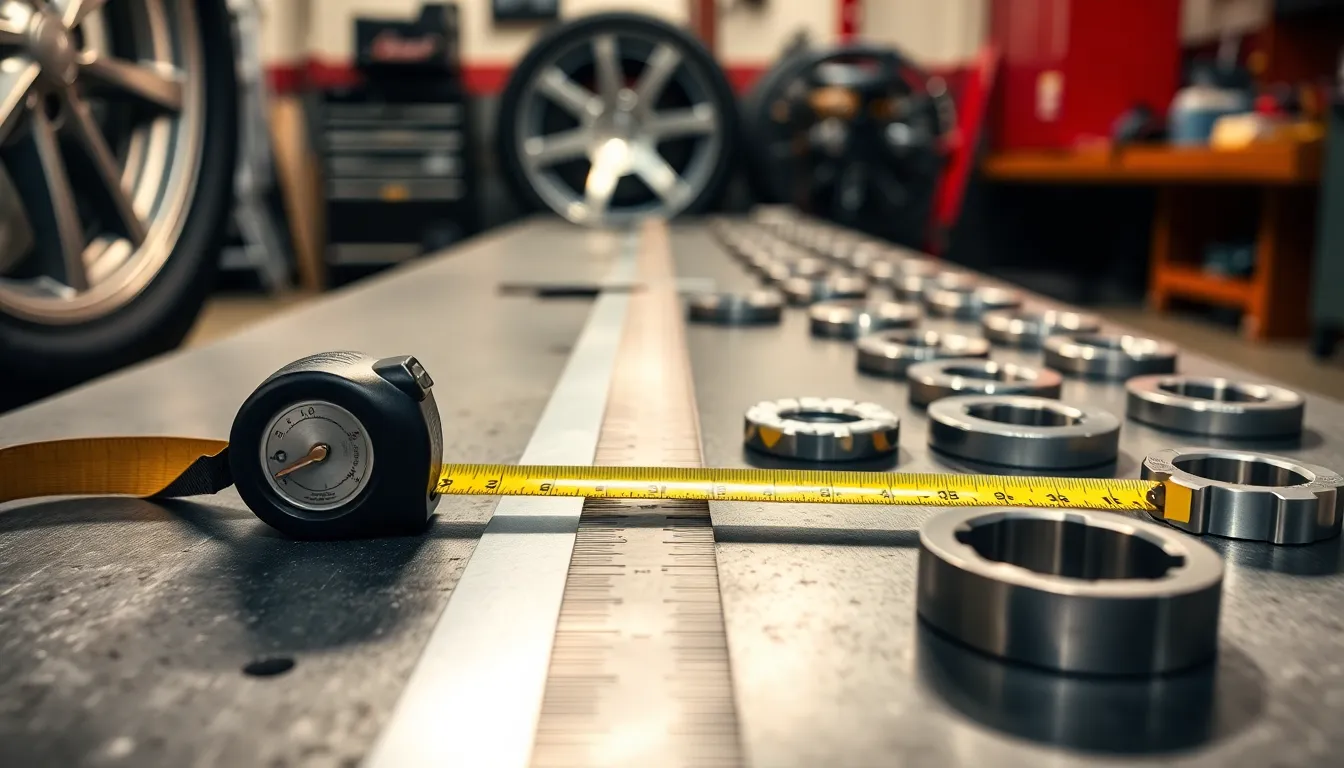
Measuring rim lug patterns accurately requires exact tools that help determine both the number of lugs and their circular arrangement. With the right instruments, you’ll get precise measurements that ensure your new wheels fit perfectly on your vehicle.
Recommended Products

【High-Quality Materials】: The automotive rim bolt measurement tool is made of high-quality plastic, featuring a stable structure, good toughness, and impact resistance. It is not easy to break or deform, which would otherwise affect measurement accuracy. Meanwhile, it is corrosion-resistant and can maintain good performance during long-term use in complex environments.

5 Precise Hole Position Scales:Features 4-1/4″,4-1/2",4-3/4",5",5-1/2" standard scales, perfectly matches most mainstream wheel bolt patterns, eliminates installation guesswork and errors

Durable Material: These automotive wheel PCD measuring tools are constructed from plastic and alloy materials. The alloy material offers high strength, ensuring the tool maintains its shape during use. The composite design combining plastic and alloy components balances lightweight construction with structural integrity, enhancing ease of assembly and disassembly.
Measuring Tape and Rulers
A standard measuring tape or ruler serves as the most accessible tool for measuring lug patterns at home. Digital calipers offer greater precision when measuring between lug centers, especially for 5-lug patterns that require the additional calculation. Metal rulers provide more accuracy than flexible tape measures because they don’t bend or distort during measurement. For best results, position your measuring device directly across the centers of the lug holes, ensuring it remains straight and level throughout the process. Many car enthusiasts prefer rulers with both imperial and metric markings since lug patterns are commonly expressed in both inches (like 5×4.5) and millimeters (like 5×114.3).
Lug Pattern Gauges
Specialized lug pattern gauges eliminate guesswork and complex calculations when determining bolt circle diameters. These purpose-built tools feature pre-marked measurements and adaptable arms that conform to different lug configurations. Professional mechanics often use bolt pattern gauges that can instantly measure 4, 5, 6, and 8-lug wheels without conversion math. Some advanced gauges include digital displays that provide readings in both imperial and metric units simultaneously. Portable pocket gauges make excellent companions for enthusiasts visiting junkyards or wheel shops to verify compatibility before purchase. Many experienced mechanics consider these gauges indispensable time-savers, especially when working with 5-lug patterns that can’t be measured with a simple straight-line measurement across opposite holes.
Step-by-Step Guide to Measuring Bolt Patterns

Measuring your rim’s bolt pattern requires precision and the right approach based on your wheel configuration. Follow these straightforward steps to determine your vehicle’s bolt pattern accurately and avoid costly wheel fitting mistakes.
Recommended Products

Accurate Bolt Pattern Markings: This wheel bolt pattern measuring tool features five accurate bolt pattern markings: 5 on 4 1/2 inches, 5 on 4 3/4 inches, 5 on 5 inches, and 5 on 5 1/2 inches. This eliminates the guesswork when finding out your wheel or hub's 5 bolt pattern. Simply align with your wheel's bolt holes or slide the template over the bolts and read the marked measurements
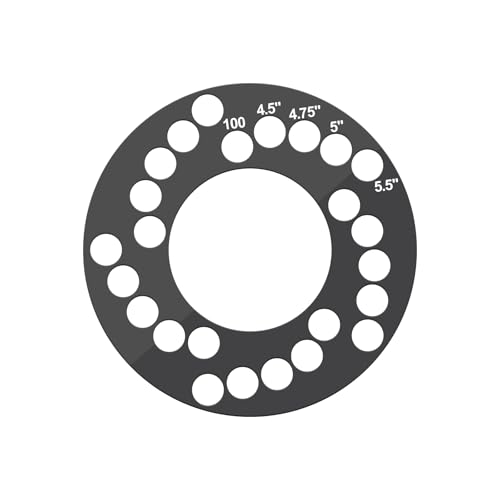
【5 precise hole position markings, no more guesswork】: Provides five professional hole position scales of 100mm/4.5"/4.75"/5"/5.5", accurately matching mainstream wheel specifications. Align with the bolt hole or slide the template to read instantly, without complicated measurement and calculation, completely eliminating the risk of installation error.

What You Will Receive: two Wheel PCD Gauges are included, so you can always use them when you need to replace your wheels; The sufficient quantity allows you to avoid frequent purchases and the trouble of running to the repair shop; Whether it is daily use or emergency situations, this measuring tool can provide you with reliable support and help you easily cope with various tire and wheel measurement needs
Counting the Number of Lugs
The first step in measuring a bolt pattern is counting the number of lug holes on your wheel. Most passenger vehicles come equipped with 4, 5, or 6 lugs arranged in a circular pattern around the center of the wheel. This number forms the first part of your bolt pattern designation (e.g., “5×100” indicates 5 lugs arranged on a 100mm diameter circle). Simply examine your wheel and count the mounting holes to determine this value before proceeding to the measurement phase.
Measuring 4-Lug Patterns
Four-lug patterns are the most straightforward to measure because the holes sit directly across from each other. To measure a 4-lug pattern, place your measuring tape or ruler from the center of one lug hole directly across to the center of the opposite hole. This straight-line measurement gives you the bolt circle diameter in millimeters. For accuracy, take multiple measurements across different pairs of holes and confirm they match. Four-lug patterns are common on compact cars and lighter vehicles, with typical measurements including 4x100mm and 4×114.3mm configurations.
Measuring 5-Lug and 6-Lug Patterns
Five-lug patterns require a different approach since the holes aren’t directly opposite each other. For a 5-lug wheel, measure from the back edge (inside edge) of one lug hole to the center of the second lug hole over. This diagonal measurement approximates the bolt circle diameter and provides the critical second number in your pattern designation. Six-lug patterns return to the simpler measurement method—measure directly across from the center of one lug hole to the center of the hole directly opposite, similar to the 4-lug approach. Always use millimeters for the most precise measurements, as this is the standard unit used by manufacturers worldwide when specifying bolt patterns. After taking your measurements, it’s wise to verify your findings against your vehicle’s owner manual or manufacturer specifications to ensure complete accuracy.
Common Rim Lug Pattern Sizes

Rim lug patterns vary significantly across different vehicle types, with exact configurations designed for different weight capacities and performance requirements. Understanding these common patterns helps you identify the correct wheels for your vehicle without costly trial and error.
Recommended Products
Precise Measurements With Wheel Bolt Pattern Measuring Tool Set: Our templates accurately determine Pitch Circle Diameter (PCD) and wheel bolt patterns (4/5/6 lug) with SAE & Metric dual scales, ensuring proper fit for wheels and tires. Eliminates guesswork for perfect wheel fitment every time—no more mismatched hubs or incorrect replacements

Bolt Pattern Measuring Tool Markings:It Has Markings Corresponding to The Positions of Five Bolts as Well as Bolts of Different Sizes, Such as 5 on 4 1/4″ |5 on 4 1/2″ | 5 on 4 3/4″ | 5 on 5″ | 5 on 5 1/2″And so on, In Order to Adapt to The Specifications of Different Vehicles or Trailers
🎯 Covers 4-1/4″ to 5-1/2″ Bolt Patterns – Precisely measures the most common bolt circle sizes including 4-1/4″, 4-1/2″, 4-3/4″, 5″, and 5-1/2″. Eliminates costly fitment errors when buying new wheels or replacing trailer axles.
Standard Patterns for Passenger Vehicles
Passenger cars typically feature 4-lug or 5-lug configurations that balance performance needs with weight considerations. The most prevalent pattern for compact and midsize vehicles is the 5×114.3mm (also known as 5×4.5″ in imperial measurements), found on many Japanese and American cars. European vehicles often use 5x112mm patterns, particularly common in Volkswagen, Audi, and Mercedes models. Smaller cars frequently use 4x100mm patterns, which provide adequate strength while reducing overall wheel weight. Performance vehicles sometimes employ 5x120mm patterns to accommodate larger brake components and handle increased torque loads.
Truck and SUV Lug Patterns
Trucks and SUVs require more robust lug patterns to support heavier loads and withstand tougher conditions. Full-size trucks commonly use 6×139.7mm (6×5.5″) patterns, providing superior strength distribution across the wheel hub. Heavy-duty trucks and commercial vehicles often feature 8-lug patterns with diameters ranging from 165mm to 170mm for maximum durability. Popular patterns for midsize SUVs include 5x127mm (5×5″), particularly in American models, while many Japanese SUVs use the 6×114.3mm configuration. European SUVs frequently employ 5x120mm or 5x130mm patterns, balancing strength with precision engineering. The larger bolt circle diameters in these vehicles distribute stress more effectively across the wheel, essential for towing and off-road applications.
How to Use Bolt Pattern Measurements When Shopping for Wheels
Recommended Products

【Replacement Part Number】 - 611-005, 610-405, 611-006, 610-573, 53182366, 6509933AA, 6511051AA, 6106146AA. Before ordering please confirm whether the accessories are suitable for your car.
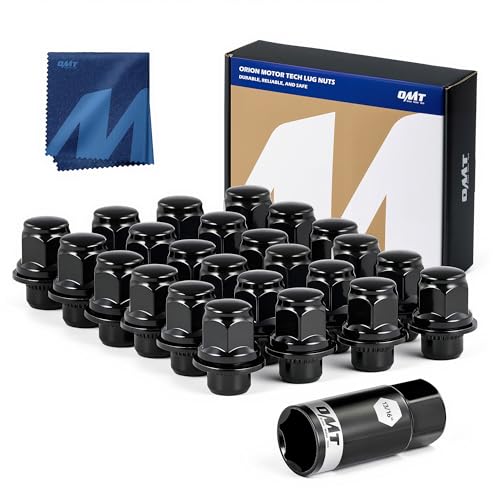
SET OF 24 LUG NUTS: This package includes 24 Orion Motor Tech 12mm x 1.5 lug nuts with a mag seat (1.46" high by 1.18" wide), a socket, and instructions for use to get all your wheels back on the road as soon as possible

Set of 4. Phoenix USA Brand Chrome Plated ABF Plastic, Quick Trim, Trailer Hub Covers.
Match Exact Specifications
Matching both the lug count and bolt circle diameter exactly ensures proper wheel fitment. Your vehicle’s bolt pattern isn’t negotiable—a 5×114.3mm pattern won’t work with wheels designed for 5×112mm or 4×114.3mm. Many enthusiasts learn this lesson the hard way after purchasing expensive wheels only to discover they don’t fit their vehicles. Always verify your measurements against manufacturer specifications before making a purchase.
Consider Additional Fitment Factors
Bolt pattern compatibility represents just one aspect of proper wheel fitment. Wheel offset determines how the wheel sits in relation to the suspension components and fender wells. Backspacing affects clearance between the wheel and inner suspension components. Hub center bore diameter must match or be larger than your vehicle’s hub (with hub-centric rings if needed). Taking these measurements into account prevents rubbing issues and ensures optimal performance.
Shop With Confidence
Armed with accurate bolt pattern measurements, you can browse wheel options confidently. Online retailers typically list bolt patterns prominently in their specifications. Physical stores offer measurement verification services to confirm your findings. Some performance shops maintain extensive databases of vehicle-exact fitment information, making wheel selection even easier for popular makes and models.
Avoid Common Mistakes
The most frequent error occurs when confusing similar but incompatible patterns. For example, 5×4.5″ (imperial) and 5×114.3mm (metric) represent the same measurement in different units, but 5×112mm and 5×114.3mm are completely different patterns even though appearing similar. Another mistake involves attempting to use adapters to force-fit incompatible wheels—this approach often compromises safety and handling characteristics. Trusting accurate measurements over visual assessment prevents these costly errors.
Common Mistakes to Avoid When Measuring Lug Patterns
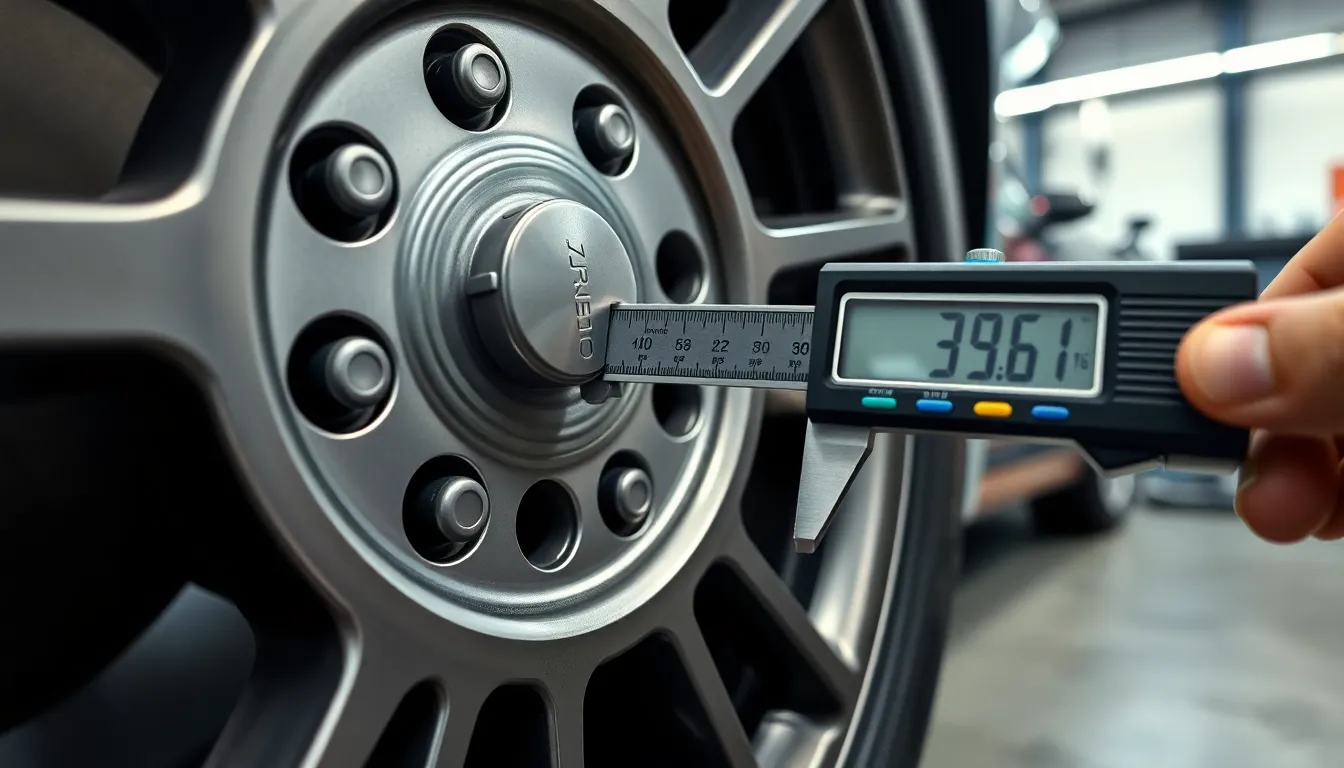
Accurate lug pattern measurement ensures proper wheel fitment and road safety. Many car owners make several critical errors during this process that lead to costly mistakes and potential safety hazards.
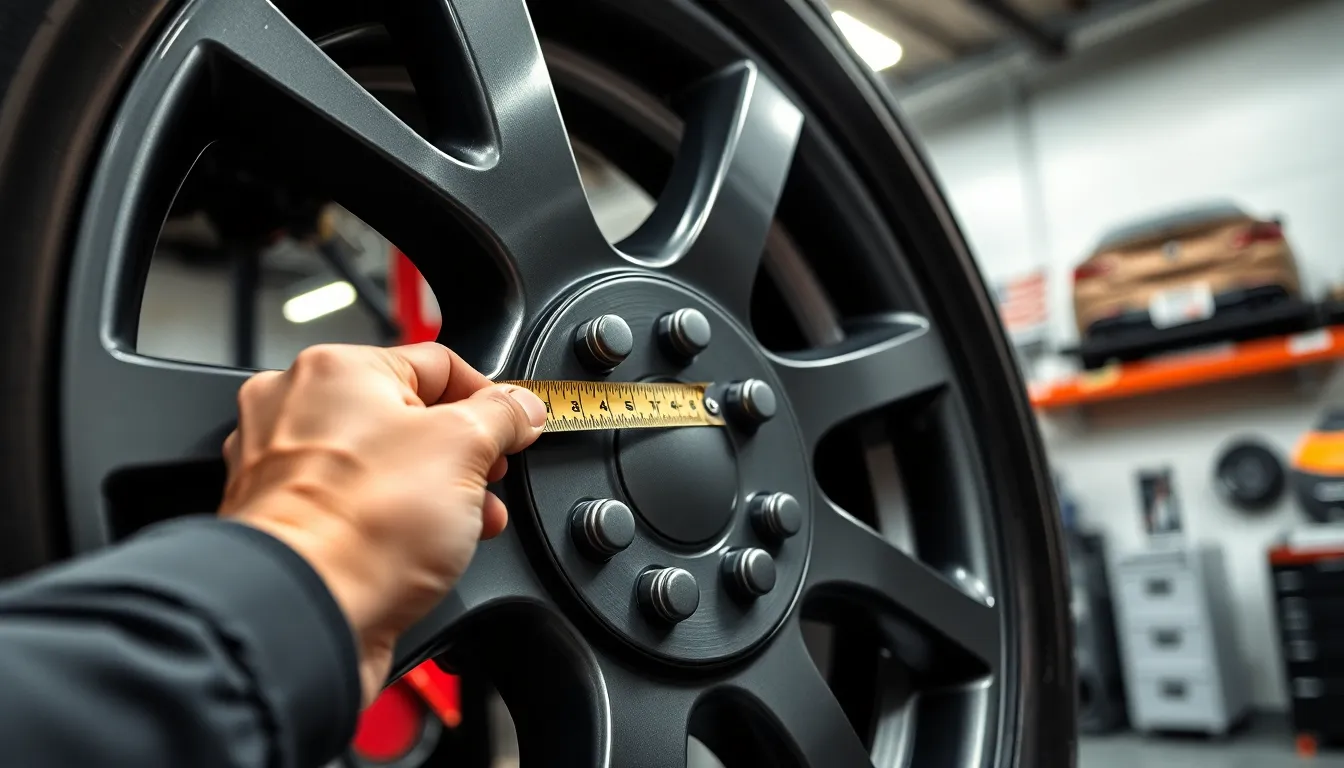
Measuring from edge to edge instead of center to center creates inaccurate readings. Always measure from the center of one lug hole to the center of the opposite hole for even-numbered patterns to get the true bolt circle diameter.
Incorrect measurement technique for 5-lug wheels trips up many enthusiasts. Since 5-lug patterns don’t have directly opposing holes, you’ll need to measure from the center of one lug hole to the outer edge of the hole across from it—not center to center as with even-numbered patterns.
Using imprecise tools compromises your measurements. Digital calipers or precision measuring tapes provide the accuracy needed for proper wheel fitment, while rough estimates with household rulers often lead to incompatible wheel purchases.
Miscounting lug holes seems simple but happens frequently. Take a moment to carefully count the exact number of lugs before proceeding with measurements, as this forms the first part of your bolt pattern notation.
Confusing measurement units creates fitment disasters. Many European and Asian vehicles use metric measurements (millimeters), while some American vehicles use imperial measurements (inches). Always specify which unit you’re using and maintain consistency throughout the measurement process.
Recommended Products

【Premium Material】: Manufactured from high-quality plastic material, this wheel bolt pattern measuring tool is durable and long-lasting. The use of this material not only makes the rulers resistant to wear and tear but also provides a smooth surface and neat interfaces.
🎯 Covers 4-1/4″ to 5-1/2″ Bolt Patterns – Precisely measures the most common bolt circle sizes including 4-1/4″, 4-1/2″, 4-3/4″, 5″, and 5-1/2″. Eliminates costly fitment errors when buying new wheels or replacing trailer axles.
Conclusion
Measuring your vehicle’s rim lug pattern doesn’t have to be complicated. With the right tools and techniques you can confidently determine the exact bolt pattern needed for your next wheel purchase. Remember to count lug holes carefully and measure precisely using the center-to-center method appropriate for your configuration.
Taking a few minutes to get this measurement right saves you from expensive mistakes and ensures your new wheels will fit perfectly. Whether you’re upgrading for style or replacing damaged rims your attention to this critical detail makes all the difference.
Armed with your vehicle’s precise bolt pattern measurements you’re now ready to shop with confidence knowing you’ll find wheels that fit perfectly the first time.
Recommended Products

【High-Quality Materials】:Automotive rim bolt measurement tools are made of high-quality plastic materials, lightweight and sturdy, stable structure, accurate measurement, and can be used for a long time.
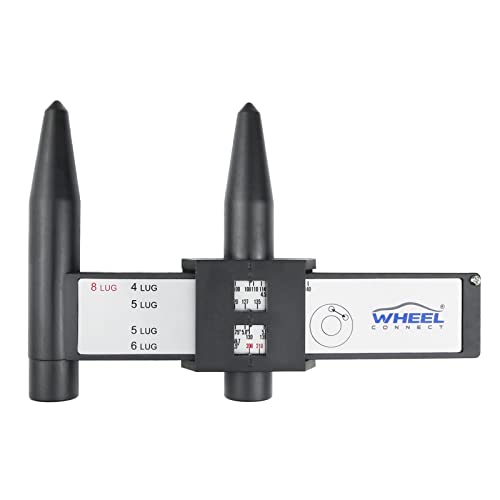
[WHAT IS IT FOR?] Wheel / Rim PCD gauge is a handy tool for measuring the PCD data of the car and wheel. Simply slide the caliper to match the wheel lug holes or wheel hub holes, you will read the data in Metric or Imperial.

【Wide Application】: Hub Bolt Slide Caliper is used to measure and read PCD metric or imperial size data of automobile wheels, suitable for most 4, 5, 6, and 8 hub bolt patterns.
Frequently Asked Questions
What is a rim lug pattern?
A rim lug pattern, also known as bolt pattern, refers to the arrangement of bolt holes on a vehicle’s wheel that connect to the hub. It consists of two components: the number of bolts (typically 4, 5, or 6 in passenger vehicles) and the diameter of the circle they form. This measurement is crucial when upgrading or replacing wheels.
Why is measuring the lug pattern important?
Measuring your vehicle’s lug pattern correctly is essential because an incorrect fit will result in wheels that don’t mount properly, regardless of their size or style. This can lead to wasted money and time. Vehicle manufacturers design specific lug patterns based on weight, performance requirements, and safety standards, making accurate measurement crucial for proper wheel fitment.
What tools do I need to measure a rim lug pattern?
You can measure rim lug patterns using common household tools or specialized equipment. Basic tools include a measuring tape, ruler (preferably metal), or digital calipers for greater precision. For enthusiasts and professionals, dedicated lug pattern gauges provide quick and accurate readings across various lug configurations. Digital calipers are particularly helpful for 5-lug patterns.
How do I measure a 4-lug bolt pattern?
To measure a 4-lug pattern, first count the lug holes to confirm the configuration. Then, measure directly across from the center of one lug hole to the center of the opposite hole. This straight-across measurement gives you the bolt circle diameter. For accuracy, measure in millimeters and double-check your measurements against manufacturer specifications.
How do I measure a 5-lug bolt pattern?
For a 5-lug pattern, direct measurement isn’t possible because no two lugs are directly opposite each other. Instead, measure from the center of one lug hole to the farthest edge of the second lug hole (not the adjacent one). Multiply this measurement by 1.051 to calculate the bolt circle diameter. Alternatively, use a specialized bolt pattern gauge for more accuracy.
What are common rim lug patterns for passenger cars?
Most passenger cars use either 4-lug or 5-lug configurations. Popular patterns include 4x100mm (common in compact cars), 5×114.3mm (prevalent in Japanese and American midsize vehicles), and 5x112mm (standard in many European cars). Compact and midsize vehicles typically favor the 5×114.3mm pattern for its balance of strength and weight.
What lug patterns do trucks and SUVs use?
Trucks and SUVs require more robust lug patterns to support heavier loads. Full-size trucks commonly use 6×139.7mm patterns, while heavy-duty vehicles often feature 8-lug patterns for maximum durability. Many SUVs use 5x127mm (5×5″) patterns, especially American models. Larger vehicles generally have wider bolt circle diameters to distribute weight and stress more effectively.
Can I use adapters if my wheels don’t match my vehicle’s lug pattern?
While adapters exist to fit wheels with different lug patterns, they’re not recommended for everyday use. Adapters can compromise safety by introducing additional failure points, altering wheel offset, and potentially causing handling issues. For optimal performance and safety, it’s best to purchase wheels that directly match your vehicle’s lug pattern specifications.
What other measurements matter besides the lug pattern?
Beyond lug pattern, you should consider wheel offset (distance from mounting surface to centerline), backspacing (from mounting surface to back edge), and hub center bore diameter (center hole that centers the wheel on the hub). These measurements affect wheel fitment, tire clearance, handling, and brake component clearance. All must be correct for optimal performance and safety.
What are common mistakes when measuring lug patterns?
Common mistakes include measuring from edge to edge instead of center to center of lug holes, using imprecise tools like fabric measuring tapes, miscounting lug holes, and confusing millimeters with inches. Additionally, people often forget to verify measurements against manufacturer specifications. Always double-check your measurements and use the correct units to avoid costly purchasing errors.