
Ever wondered how to measure rim bolt pattern accurately? This crucial measurement ensures your new wheels will fit perfectly on your vehicle. Getting it wrong can lead to wasted money and frustrating returns.
Determining your vehicle’s bolt pattern isn’t as complicated as it might seem. With a few simple tools and the right technique, you’ll be able to identify the exact specifications needed for your next wheel purchase. Whether you’re upgrading your rims or replacing damaged ones, knowing how to measure this pattern is an essential skill for any car enthusiast or DIY mechanic.
Understanding Rim Bolt Patterns
A bolt pattern refers to the arrangement of lug holes on your vehicle’s wheel that allow it to attach to the hub. Every vehicle has a exact bolt pattern that’s determined by two key measurements: the number of bolt holes and the diameter of the circle they form. These measurements are typically expressed as a combination like “5×114.3,” where 5 represents the number of lugs and 114.3 indicates the diameter in millimeters.
Bolt patterns vary widely across different manufacturers and models. American vehicles often use patterns measured in inches (like 5×4.75), while European and Asian manufacturers typically use metric measurements (like 5x120mm). This distinction is crucial when shopping for new wheels, as using an incompatible bolt pattern can lead to improper fitment.
Beyond the basic bolt pattern, several additional factors influence wheel compatibility:
- Center bore: The hole in the middle of the wheel that centers it on the hub
- Offset: The distance between the wheel’s mounting surface and centerline
- Thread size: The diameter and pitch of the lug nuts or bolts
Correctly identifying your vehicle’s bolt pattern eliminates the guesswork when purchasing new wheels. Many drivers discover their bolt pattern specifications during their first wheel upgrade, often after initially assuming all wheels would fit their vehicle. Manufacturers design these exact patterns to ensure proper weight distribution and optimal performance characteristics for each particular vehicle model.
Recommended Products

【Compatibility】Compatible with [Honda] 1998,2003,2005 Accord 3.0L EX; 1999-2000,2002,2005 Accord 3.0L Coupe; 1999-2002 Accord 3.0L LX; 2003,2005,2016 Accord Coupe EX; 2003-2005 Accord DX; 2004,2006,2008,2010,2013-2019 Accord LX; 2005 Accord 2.4L Sedan LX; 2006,2008,2010 Accord 2.4L EX; 2006-2007 Accord Hybrid; 2007 Accord Sedan EX-L/LX; 2007 Accord 2.4L LX; 2007,2017-2019 Accord EX; 2008,2010,2017 Accord 2.4L Sedan EX-L; [Toyota] 1995,1997,1999,2001,2003,2009,2012 Avalon; 2002,2007,2010 Avalon XLS; 2004-2008 Avalon XL; 2005-2006,2008,2013-2020 Avalon Limited; 2011 Avalon Base; [Ford] 2001-2002,2004,2006 Escape 3.0L; 2003 Escape 3.0L XLS; 2003-2005,2009 Escape Limited

【Compatibility】 : 5x4.5 Wheel spacers 1/4 inch fit for ALL For: [Nissan]; 2002-2006,2008-2023 Altima; 1995-2014,2016-2019 Maxima; 2003-2007,2009-2018 Murano; 2013-2020 Pathfinder; 2008-2020 Rogue; 2013-2019 Sentra; [Ford]; 2001-2012 Escape; 1991-1994,2004-2010,2020-2022 Explorer; 2006-2010 Fusion; 1964-1973,2018-2020 Mustang; 1991-1997 Ranger; [Hyundai]; 2007-2010,2013-2015,2017-2020 Elantra; 2001-2018 Santa Fe; 2006-2010,2014-2019 Sonata; 2006-2014,2016,2018-2021 Tucson; [Kia]; 2010-2015 Forte
What You’ll Need to Measure a Bolt Pattern

Measuring a rim bolt pattern requires only a few simple tools that you likely already have at home. Gathering the right equipment before you start ensures accurate measurements and prevents frustrating errors when ordering new wheels.
Recommended Products

Important Notes: This product is compatible with 4-hole bolt patterns 4 x 114.3, 4 x 100 and 5 hole patterns 5 x 10⁸, 5 x 115, 5 x 120, 5 x 112, 5 x 10⁵, 5 x 114.3. Ensure tightening by at least 6 turns during installation; otherwise, loose spacers may pose safety hazards.

CAR WHEEL COMPATIBILITY: AWC’s 83B is an ideal solution for drivers seeking crash replacement or winter black Steel wheels. The 83B is engineered to be a bolt-on passenger car replacement steel wheel for late model FWD & AWD, as well as a SUV and CUV replacement steel wheel and comes with a lifetime structural assurance. Uses 60° Conical Seat Lug Nuts

❌ SAFETY INSTALLATION NOTE: All spacers require longer lug studs or extended thread / extra thread lug nuts to ensure proper thread engagement. For safety, verify full lug nut engagement before driving and re-torque all hardware after 250–500 miles.
Basic Measuring Tools
A tape measure or ruler marked in both inches and millimeters serves as your primary tool for measuring bolt patterns. These common household items provide sufficient accuracy for most DIY wheel measurements. You’ll also need a flat, level surface where you can lay your wheel down completely horizontal. This positioning guarantees that your measurements follow a straight line across the wheel, avoiding angle-related discrepancies that might lead to incorrect readings.
Optional Advanced Tools
For more precise measurements, specialized bolt pattern gauges offer greater accuracy than standard measuring tools. These purpose-built devices feature pre-marked measurements for common bolt patterns, eliminating guesswork when identifying your wheel’s configuration. Digital calipers provide extremely accurate measurements down to fractions of a millimeter, particularly helpful when distinguishing between similar metric patterns like 5×114.3mm and 5x115mm. A wheel bolt pattern template tool works especially well for odd-numbered lug patterns, featuring cutouts that match standard bolt configurations for quick visual confirmation of your wheel’s pattern.
Identifying Your Wheel’s Bolt Pattern Format
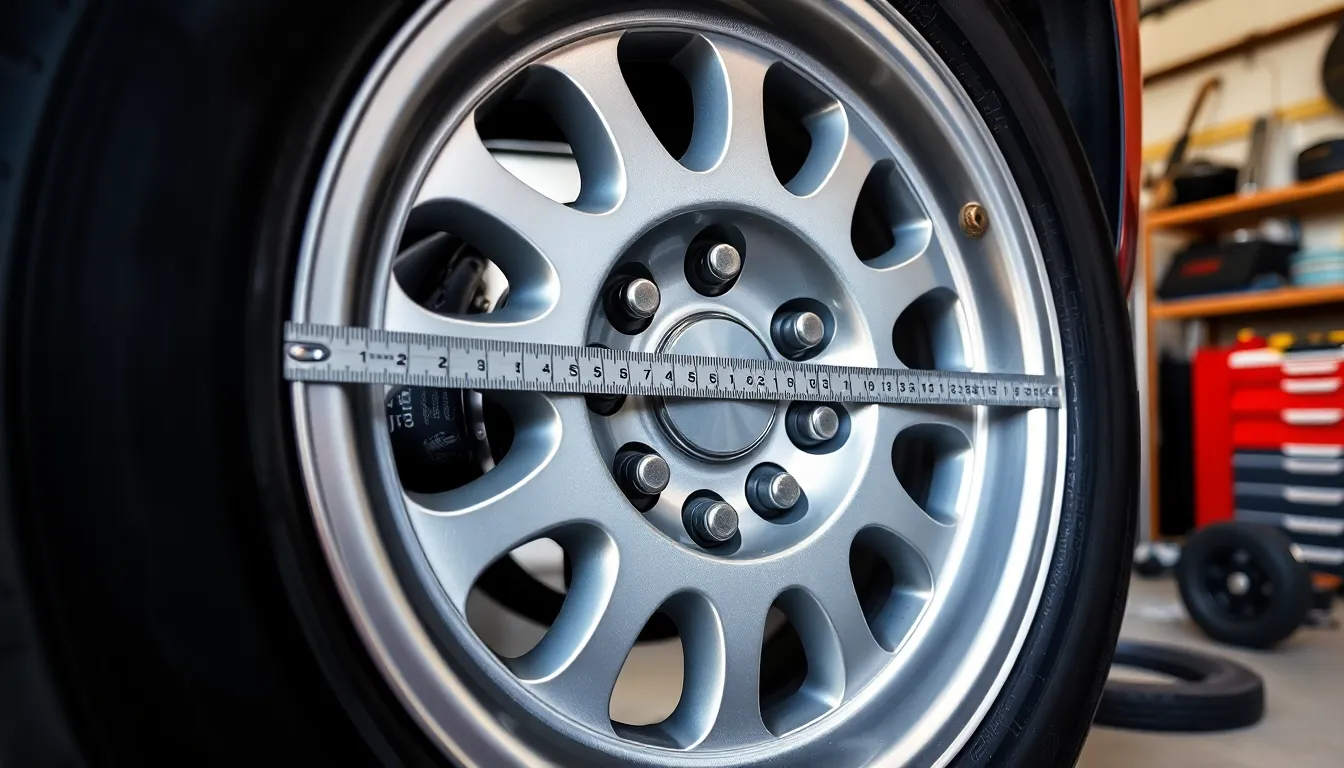
Bolt patterns are unique identifiers that determine which wheels fit your vehicle. Understanding how to read and measure these patterns is essential for finding compatible replacements or upgrades.
Recommended Products
Wide compatibility: for 3.75" (3-3/4") wheel bore. Check the measurements of your wheel center caps to verify if this item will work on your vehicle

Dimensions: A kit containing 2 curved hubcaps and 2 open hubcaps that fit wheels with a mounting diameter of 4.25 inches. The curved hubcaps have a height of 4.11 inches, while open hubcaps have a height of 4.22 inches. If in doubt, use digital calipers to measure center hole dimensions. For vehicle hub center cap diameter parameters within 0.5 mm error for a successful installation
Size: 3.31 inches diameter, 3.03 inches height, total measurement across the back of the flange is 3.64 inches. Please use a digital caliper to check the center bore size if you are not sure. For the models with the diameter of the wheel center hub cover parameters errors are within 0.5 mm for the success of fitment.
4, 5, 6, and 8-Lug Patterns
Wheel bolt patterns come in several common configurations, with 4, 5, 6, or 8 lugs being the most prevalent. Each configuration requires a different measurement technique to accurately determine the pattern. Four-lug wheels are measured by taking a straight line from the center of one lug hole directly across to the center of the opposite hole. Five-lug patterns require measuring from the center of one lug hole to the center of the second hole (skipping one in between), as this gives you the approximate diameter of the bolt circle. Six and eight-lug wheels can be measured straight across from one lug to the opposite one, creating a direct diameter measurement across the bolt circle. The number of lugs is always the first part of your bolt pattern identification, so counting them correctly is your first step in the measurement process.
Reading Bolt Pattern Specifications
Bolt pattern specifications follow a standard format that combines two crucial measurements. They’re written as two numbers separated by an “x” (such as “5×4.5” or “5×114.3″), where the first number indicates the lug count and the second represents the diameter of the imaginary circle formed by the lug holes. American manufacturers typically express this diameter in inches (like 4.5″), while European and Asian vehicles often use millimeters (like 114.3mm). These measurements must be precise, as even small variations can make a wheel incompatible with your vehicle. For example, a 5×114.3mm pattern (common on many Japanese vehicles) is very similar to a 5×4.5” pattern (roughly 114.3mm), but they’re not interchangeable due to the slight difference. When shopping for wheels, you’ll need to match both numbers exactly to ensure proper fitment, as manufacturers design these exact patterns to distribute weight evenly and provide optimal performance for each vehicle model.
How to Measure 4-Lug Bolt Patterns
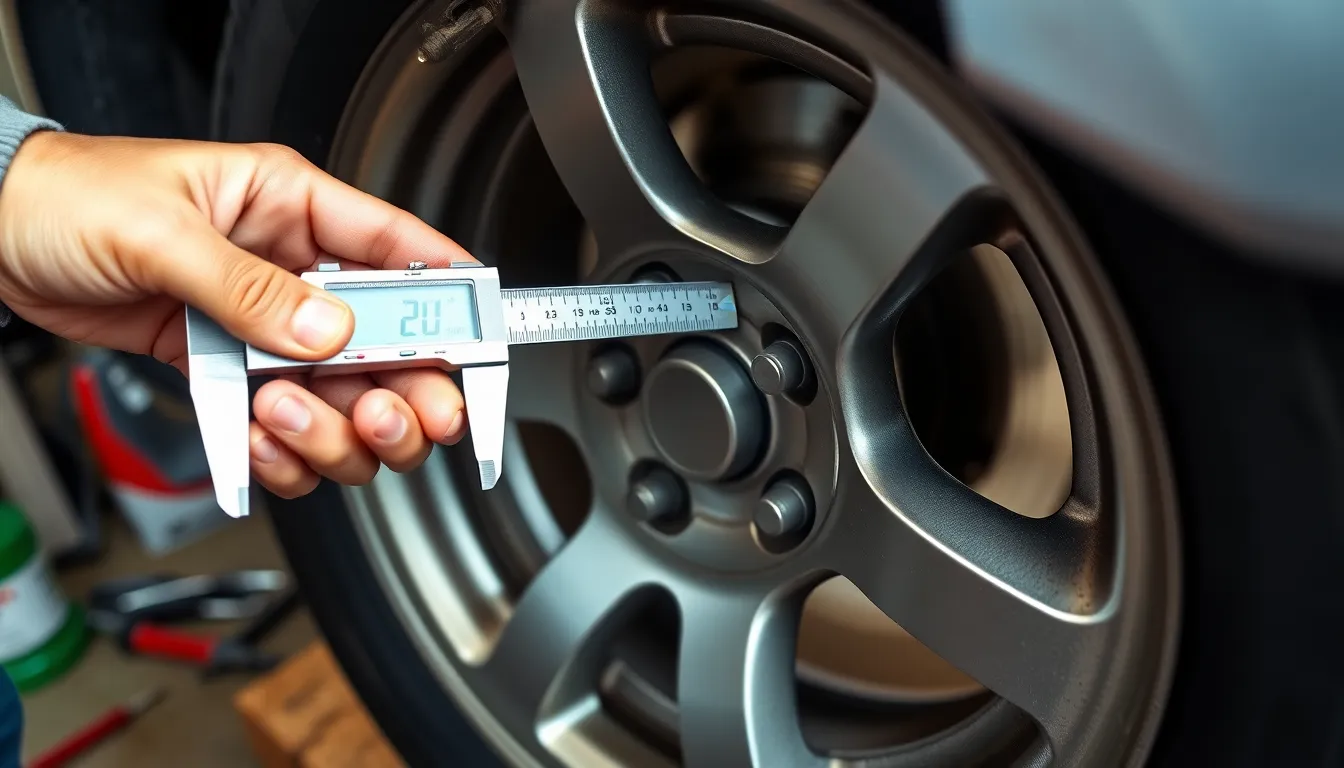
Measuring a 4-lug bolt pattern is straightforward because the lug holes are positioned directly opposite each other. This configuration makes it one of the easiest patterns to measure accurately with simple tools.
Recommended Products

PCD specifications fit most 4, 5, 6, 8 lugs wheel
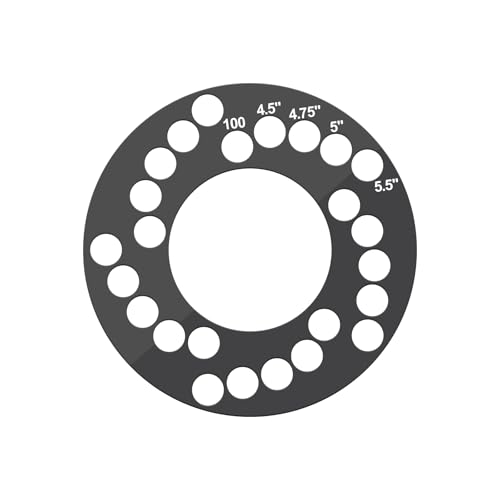
【5 precise hole position markings, no more guesswork】: Provides five professional hole position scales of 100mm/4.5"/4.75"/5"/5.5", accurately matching mainstream wheel specifications. Align with the bolt hole or slide the template to read instantly, without complicated measurement and calculation, completely eliminating the risk of installation error.

5 Precise Hole Position Scales:Features 4-1/4″,4-1/2",4-3/4",5",5-1/2" standard scales, perfectly matches most mainstream wheel bolt patterns, eliminates installation guesswork and errors
Using the Center-to-Center Method
The center-to-center method offers the most accurate way to measure a 4-lug bolt pattern. First, locate two lug holes that sit directly opposite each other on your wheel. Position your measuring tool to capture the distance between the centers of these two holes in a straight line. This measurement represents the pitch circle diameter (PCD) – the critical number that defines your bolt pattern. For example, if you measure 100mm between opposite holes, your bolt pattern is expressed as “4x100mm,” indicating 4 lug holes arranged on a circle with a 100mm diameter.
Most modern vehicles use metric measurements for bolt patterns, so your result will typically be in millimeters. But, some trucks and older American vehicles might use inch measurements instead. When recording your measurement, remember that the complete bolt pattern always includes both the number of lugs (in this case, 4) and the diameter measurement (e.g., “4x100mm” or “4×4.5”).
While measuring the bolt pattern, it’s also beneficial to note your wheel’s centerbore size – the diameter of the center hole that fits over your vehicle’s hub. This measurement ensures proper centering of the wheel, sometimes requiring centering rings if sizes differ between your wheel and vehicle hub.
How to Measure 5-Lug Bolt Patterns
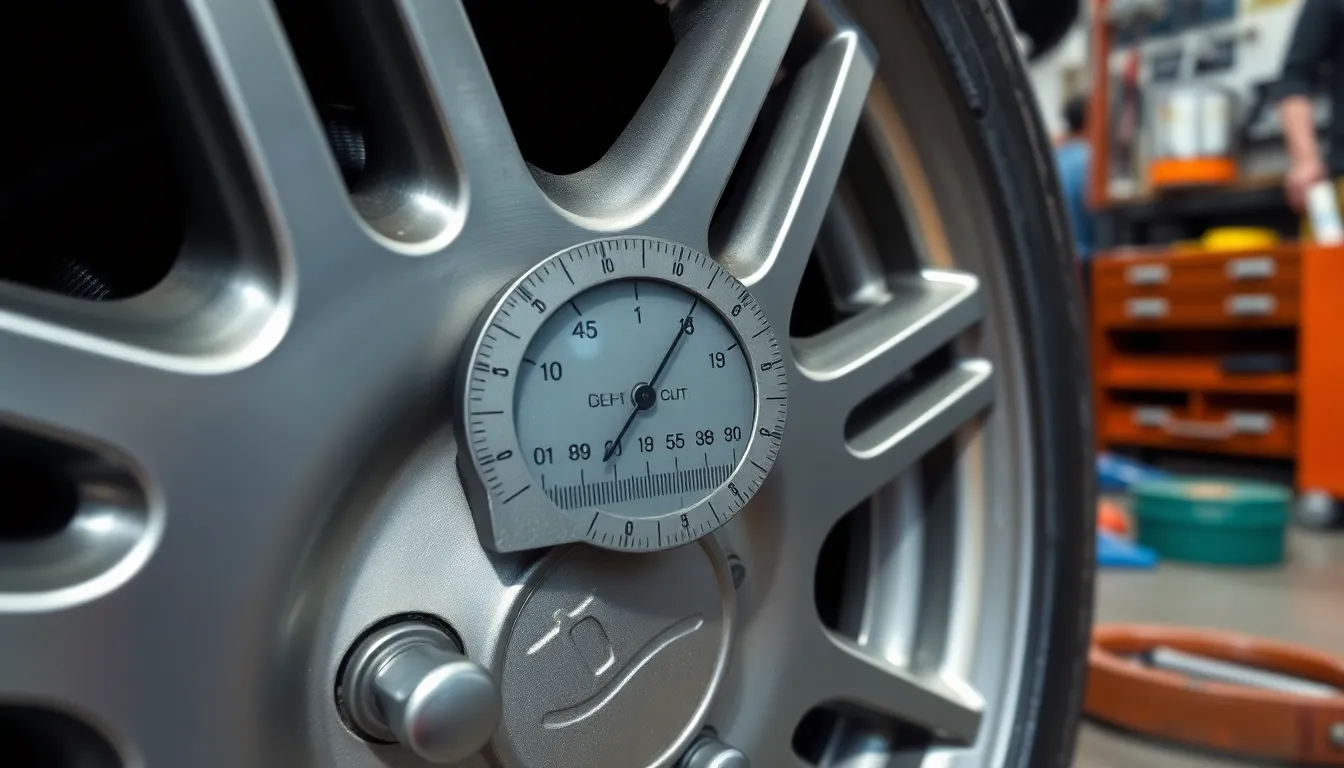
Measuring 5-lug bolt patterns requires a exact technique since the lug holes aren’t directly opposite each other. This unique configuration creates an uneven spacing that needs a different approach than 4-lug patterns.
Recommended Products

Accurate Wheel & Tire Fitment Testing: Simulate exact backspacing and offset by mounting the tool inside your actual tire to confirm fitment against body, frame, and suspension
📏【9999.11 Maximum Capacity】– U.S. Measuring units, Measures in feet and inches. Measure distance wheel against a usual tape measure and it will be the same measurements. Whether private or industrial purposes, the measurement of straight line and curve line is easy.

Universal Compatibility: Works with Most 4, 5, 6 and 8 lug Wheels, Provides Inch and Metric Dimensions
The Star Pattern Measurement Method
The star pattern method provides the most accurate way to measure 5-lug wheels. Start by selecting any lug hole as your reference point. Measure from the center of your chosen lug hole to the outer edge of the lug hole that’s directly across from it (the third lug hole in sequence). This measurement represents the bolt circle diameter (BCD) that passes through the centers of all five lug holes. For accurate results, skip one lug in between when measuring across the pattern, creating a star-like measurement path. Express your final measurement as “5 x [measurement in millimeters]” – for example, if you measure 114.3 mm, your bolt pattern is 5×114.3mm.
Using Bolt Pattern Gauges
Bolt pattern gauges eliminate guesswork and improve measurement accuracy for 5-lug wheels. These specialized tools come as templates designed to match common lug patterns, allowing you to quickly verify bolt circle diameters by visually matching the lug hole positions. Simply place the gauge over your wheel’s lug pattern until you find a perfect match. Commercial options like Wheel Bolt Pattern Circle Template Gauge Tools are readily available and particularly useful when shopping at swap meets or visiting wheel shops. Gauges provide instant identification without the need for complex measurements, ensuring you get the exact 5×114.3mm or other pattern specification your vehicle requires.
How to Measure 6 and 8-Lug Patterns
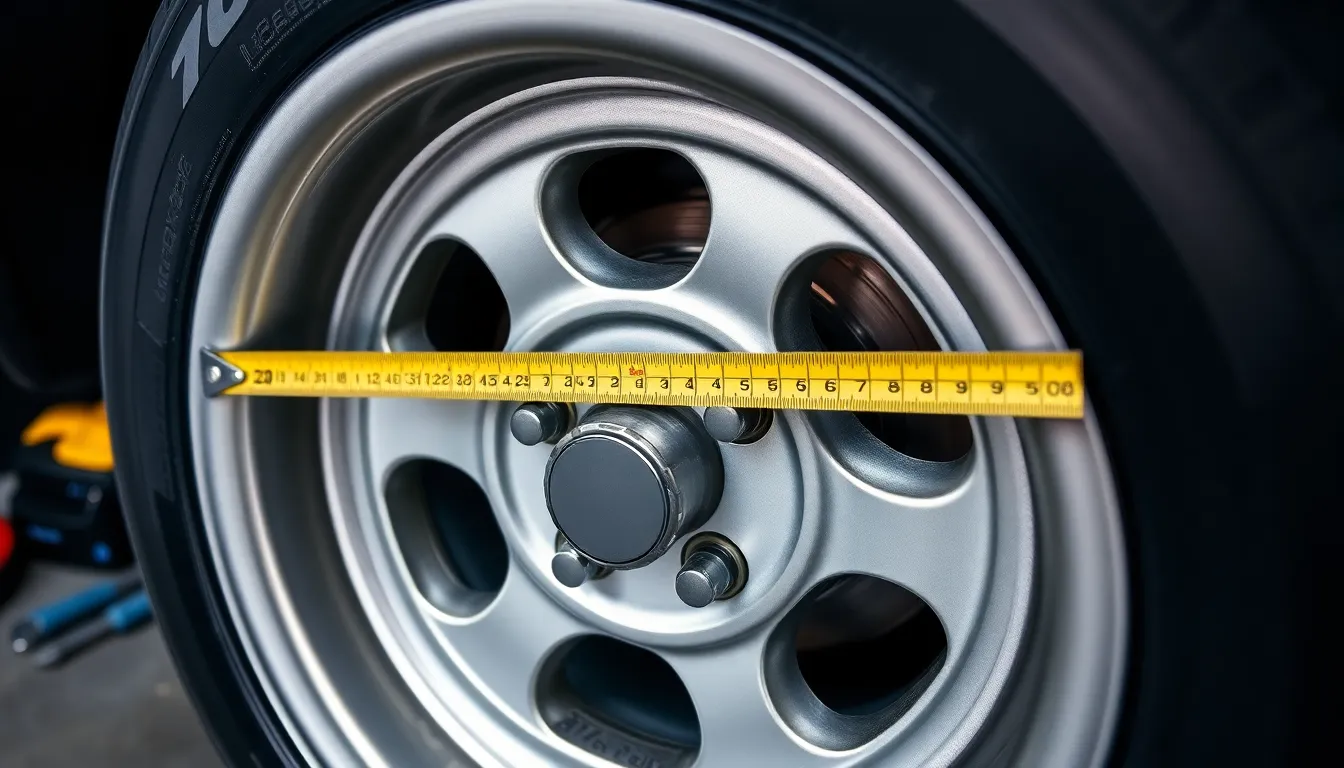
Measuring 6 and 8-lug wheel patterns follows a straightforward process thanks to their even number of lugs. These configurations create perfectly opposite lug hole pairs, making measurement simpler than odd-numbered patterns.
Recommended Products

Hubcentric Wheel Spacers - Fits vehicles with 5/114.3 (5/4.5") bolt pattern and 60.1mm Centerbore. Compatible with Scion 2011-2016 tC, 2008-2015 xB. Compatible with Toyota Avalon, Camry, RAV4, MR2, Solara, Supra, Tacoma. Compatible with Lexus ES300h ES330 ES350 GS300 GS350 GS400 GS430 IS250 IS300 IS300 IS350. Also compatible with Lexus LS400 LS430 NX200t NX300 NX300h SC300 SC400 SC430. Check Year/Make/Model in Description. Check Year/Make/Model in Description.
StanceMagic Hubcentric Wheel Spacers for vehicles with 5x114.3 (5x4.5") or 5x120.65 (5x4.75") bolt pattern and 70.5mm Centerbore. Compatible with Chevrolet Blazer Camaro Corvette El Camino S10 Blazer. Compatible with Ford Mustang Edge Crown Victoria Ranger Explorer Sport Trac. Compatible with GMC S15 Jimmy Sonoma Envoy. Compatible with Pontiac Firebird Grand Am Grand Prix GTO Phoenix Trans Am Trans Sport. Check Year/Make/Model in Description. May fit others, verify using spacer specifications.
Step-by-Step Measurement Process
- Count the lug holes on your wheel or hub to confirm you have a 6 or 8-lug pattern.
- Locate two directly opposite lug holes across the center of the wheel. For 6-lug patterns, these holes sit directly across from each other at the 12 and 6 o’clock positions.
- Measure from center to center of these opposite lug holes using a measuring tape, ruler, or caliper. This measurement gives you the Bolt Circle Diameter (BCD).
- Record your measurement in millimeters for precision, though you can convert to inches if needed.
For example, if your 6-lug wheel measures 139.7mm between opposite lug centers, your bolt pattern is 6×139.7mm. This pattern is common on many trucks and SUVs.
Tips for Accurate Measurements
Positioning your measuring tool precisely at the center of each lug hole ensures accuracy. Even small measurement errors can lead to fitment issues when purchasing new wheels.
Unlike 5-lug patterns that require special measuring techniques, 6 and 8-lug patterns can be measured directly across opposite holes without calculations or conversions.
The center-to-center measurement method works equally well for 4, 6, and 8-lug wheels because these even-numbered configurations always have holes directly opposite each other across the wheel’s center.
Common Bolt Pattern Sizes for Popular Vehicles
Vehicle manufacturers use exact bolt patterns based on the type and size of the vehicle. Popular vehicles typically fall into standard bolt pattern categories that vary by the number of lugs and the diameter of the bolt circle.
Recommended Products
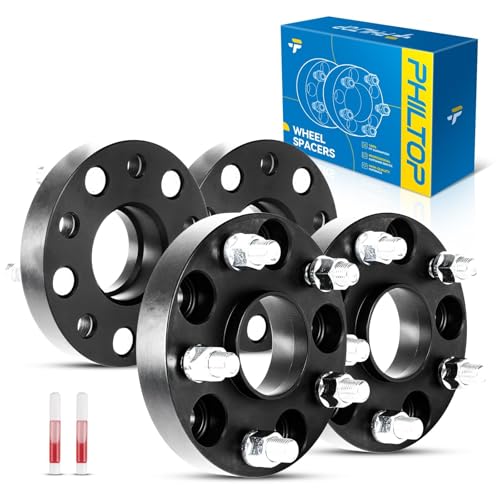
【Compatibility】 : 5x120 Wheel spacers 1 inch fit for ALL For: 2005-2024 Odyssey; 2009-2015 Pilot; 2017-2024 Ridgeline; 2007-2013 MDX; 2023-2025 Pilot; 2006-2014 Ridgeline; 2022-2024 MDX; 2021-2024 TLX; 2024 Passport; 2014-2020 RLX; 2010-2013 ZDX; Rear For: 2016-2022 Pilot; 2017-2020 MDX; 2019-2023 Passport; 2009-2014 TL; 2005-2012 RL
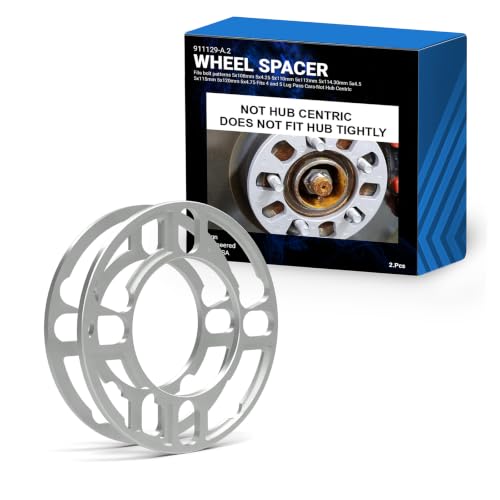
❌ All spacers require use of longer lugs (ET / Extended Thread / Extra Thread Lugs) to insure proper thread engagement with OE Wheel Stud. Please refer to the Infographics for more information.

Universal Fitment - Fit for most 4 lug & 5 lug wheels/rims with a PCD (the span on bolts) range of 98mm to 120mm, This kit is not Wheel Adapters, it only widens the wheels and does not change bolt pattern
4-Lug Configurations
4-lug wheels commonly appear on compact cars and older model vehicles. These configurations typically use bolt circle diameters of 4.0″, 4.25″, or 4.5″. Many Honda, Toyota, and Nissan compact models feature 4-lug patterns, making them easy to identify when shopping for replacement wheels.
5-Lug Configurations
5-lug patterns dominate the market for midsize cars, trucks, and SUVs. Common 5-lug bolt circle diameters include:
- 4.5″ (114.3mm): Found on many Ford, Dodge, and Japanese vehicles
- 4.75″ (120.6mm): Common on GM vehicles and some European models
- 5.0″ (127.0mm): Used on various American trucks and SUVs
- 5.5″ (139.7mm): Popular on larger Jeep models and full-size trucks
Ford vehicles typically use 5×4.5″ patterns, while many GM models opt for 5×4.75″ configurations. Checking your exact vehicle’s specifications ensures compatibility when purchasing new wheels.
6-Lug Configurations
Full-size trucks and SUVs often feature 6-lug patterns. The most common bolt circle diameters for these vehicles are 5.5″ and 6.0″. Toyota Tacoma and Tundra, Chevrolet Silverado, and GMC Sierra commonly use 6-lug patterns, providing enhanced load-bearing capacity for heavier vehicles.
8-Lug Configurations
Heavy-duty trucks primarily use 8-lug wheel configurations with a bolt circle diameter of 6.5″. Ford F-250, F-350, and similar heavy-duty models from Chevrolet and GMC employ this pattern to support substantial towing and hauling capacities.
Manufacturer-Exact Patterns
| Manufacturer | Common Patterns | Popular Models |
|---|---|---|
| Ford | 5×4.5″, 5×5.5″, 8×6.5″ | Mustang, F-150, F-250 |
| Chevrolet | 5×4.75″, 6×5.5″, 8×6.5″ | Camaro, Silverado, Suburban |
| Dodge | 5×4.5″, 5×5.5″, 8×6.5″ | Charger, Ram 1500, Ram 2500 |
| Jeep | 5×4.5″, 5×5.5″ | Wrangler, Cherokee, Grand Cherokee |
| Toyota | 5×4.5″, 6×5.5″ | Camry, Tacoma, Tundra |
Identifying your vehicle’s bolt pattern before purchasing new wheels saves time and prevents costly mistakes. Manufacturer-exact charts provide the most accurate information for your particular make and model, helping you find the perfect wheel fit for your vehicle.
Why Accurate Bolt Pattern Measurement Matters
Accurate bolt pattern measurements ensure your safety on the road by preventing wheel detachment during driving. Incorrect measurements can lead to wheels being improperly mounted, causing dangerous vibrations, compromised handling, and potentially catastrophic failures while you’re behind the wheel. These safety risks aren’t worth taking when a simple, precise measurement can eliminate them entirely.
Perfect compatibility between your wheels and vehicle hub depends on getting the bolt pattern right. Mismatched patterns create fitment problems that damage wheel components and hubs over time. Even small measurement errors of just a millimeter can make the difference between wheels that mount securely and those that don’t align properly with your vehicle’s mounting points.
Your vehicle’s performance improves significantly with correctly matched wheels. Proper bolt pattern alignment enhances handling responsiveness, optimizes braking efficiency, and maintains driving stability across various road conditions. The connection between wheel and hub acts as a crucial transfer point for all driving forces, making accurate measurements essential for maintaining your vehicle’s engineered performance characteristics.
Measuring your bolt pattern correctly saves money by preventing costly purchasing mistakes. Buying wheels with incorrect specifications means dealing with returns, additional shipping costs, and delayed projects. Taking a few minutes to measure properly the first time eliminates these headaches and ensures you get the right parts immediately.
The integrity of your entire wheel system relies on this fundamental measurement. Properly matched bolt patterns distribute weight evenly across lug nuts, preventing uneven wear and extending the lifespan of both your wheels and the vehicle’s hub assembly. This balanced loading keeps stress evenly distributed across all mounting points, exactly as automotive engineers intended.
Recommended Products

PREMIUM CENTER CAPS: Podoy push-through wheel center caps are made from high-quality carbon steel. They are scratch-resistant, solid, and durable, ensuring long-lasting performance. These caps are securely designed to stay in place and not easily fall off.

360° Painted: Premium Carbon Steel Trailer Center Caps feature full internal&external painted black coverage with salt-corrosion resistance, ideal for harsh weather. Shields hubs from moisture, dirt, and road salts while enhancing durability. Rust-proof, easy to clean, and built for long-lasting trailer wheel protection

NOTE: Aluminum alloy has lower hardness than steel, it is easy to deform in strong impact or collision, please gently push it from the back of the wheel through the center hole of the wheel, it can be easily installed. Replace the damaged or detached old wheel center cap and make your car brand new.
Conclusion
Mastering the art of measuring rim bolt patterns is an essential skill that’ll save you time money and frustration. With the right tools and techniques you can confidently identify your vehicle’s exact pattern whether it has 4 5 6 or 8 lugs.
Remember that accuracy isn’t just about convenience—it’s a safety issue. Even small measurement errors can lead to dangerous driving conditions and expensive damage to your vehicle.
Take the time to double-check your measurements before purchasing new wheels. Consider investing in specialized tools like bolt pattern gauges for the most precise results. Your efforts will pay off with properly fitted wheels that enhance your vehicle’s performance handling and overall driving experience.
Recommended Products

5 Precise Hole Position Scales:Features 4-1/4″,4-1/2",4-3/4",5",5-1/2" standard scales, perfectly matches most mainstream wheel bolt patterns, eliminates installation guesswork and errors

What You Will Receive: two Wheel PCD Gauges are included, so you can always use them when you need to replace your wheels; The sufficient quantity allows you to avoid frequent purchases and the trouble of running to the repair shop; Whether it is daily use or emergency situations, this measuring tool can provide you with reliable support and help you easily cope with various tire and wheel measurement needs

Precise Dual-Scale Measurement for Perfect Fit:This Lug Bolt Pattern Tool features SAE & Metric dual scales for precise PCD and 4/5/6 lug pattern measurements. Eliminate guesswork, avoid mismatched hubs, and ensure perfect wheel-tire fitment every time.
Frequently Asked Questions
Recommended Products

📏【10,000 FT Capacity】 U.S. Measuring units, Measures in feet/ inches-Duodecimal Number System. Measure distance wheel against a usual tape measure and it will be the same measurements. Whether private or industrial purposes, the measurement of straight line and curve line is easy.
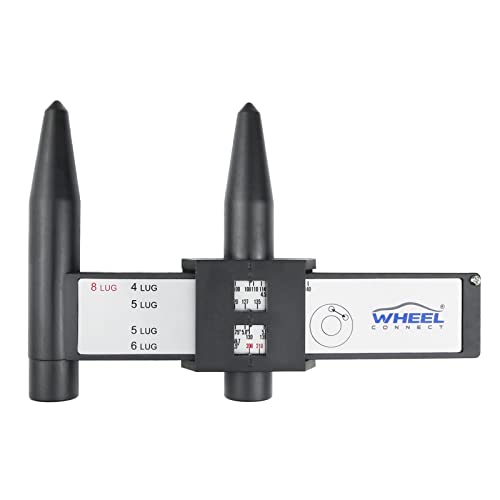
[WHAT IS IT FOR?] Wheel / Rim PCD gauge is a handy tool for measuring the PCD data of the car and wheel. Simply slide the caliper to match the wheel lug holes or wheel hub holes, you will read the data in Metric or Imperial.

Universal Fitments: Support 14" to 20" tire diameters and 7" to 17" tire widths for 5-lug wheel bolt patterns including 5x4.5, 5x4.75, 5x5 and 5x5.5, can meet a wide range of custom requirements, making it an versatile for different vehicle owners
What is a wheel bolt pattern?
A wheel bolt pattern refers to the arrangement of lug holes on a vehicle’s wheel. It’s determined by the number of bolt holes and the diameter of the circle they form. Typically expressed as a combination like “5×114.3,” the first number indicates lug hole count, while the second represents the diameter of the bolt circle in millimeters or inches.
Why is it important to measure bolt patterns accurately?
Accurate bolt pattern measurements ensure proper wheel fitment, preventing safety hazards like wheel detachment and compromised handling. Precision also saves money by avoiding costly purchasing mistakes, ensures optimal vehicle performance, and maintains the integrity of your wheel system by distributing weight evenly across lug nuts.
What tools do I need to measure a bolt pattern?
Basic tools include a tape measure or ruler marked in both inches and millimeters, and a flat, level surface. For greater precision, consider using specialized bolt pattern gauges or digital calipers, which provide more accurate readings and help distinguish between similar patterns.
How do I measure a 4-lug bolt pattern?
For 4-lug wheels, measure from the center of one lug hole directly across to the center of the opposite lug hole. This center-to-center measurement gives you the pitch circle diameter (PCD). Also note the wheel’s centerbore size to ensure proper centering on your vehicle’s hub.
What’s the best way to measure a 5-lug bolt pattern?
For 5-lug wheels, use the star pattern measurement method. Select a reference lug hole and measure from its center to the outer edge of the lug hole directly across (skipping one lug in between). This gives you the bolt circle diameter (BCD). Bolt pattern gauges can improve accuracy.
How do I measure 6 and 8-lug wheel patterns?
Count the lug holes, then locate two directly opposite holes. Measure the distance between these opposite holes (center to center) to determine the Bolt Circle Diameter (BCD). This method works well for both 6 and 8-lug patterns because they have an even number of lugs.
How are bolt patterns formatted?
Bolt patterns follow a standard format combining lug count and diameter, expressed as two numbers separated by an “x” (e.g., 5×114.3). The first number is the count of lug holes, while the second is the diameter of the bolt circle in millimeters or inches.
Do bolt patterns vary between vehicle manufacturers?
Yes, bolt patterns vary across manufacturers. American vehicles often use inch measurements (like 5×4.5″), while European or Asian vehicles typically use metric measurements (like 5×114.3mm). Always check manufacturer specifications for your exact vehicle model to ensure compatibility.