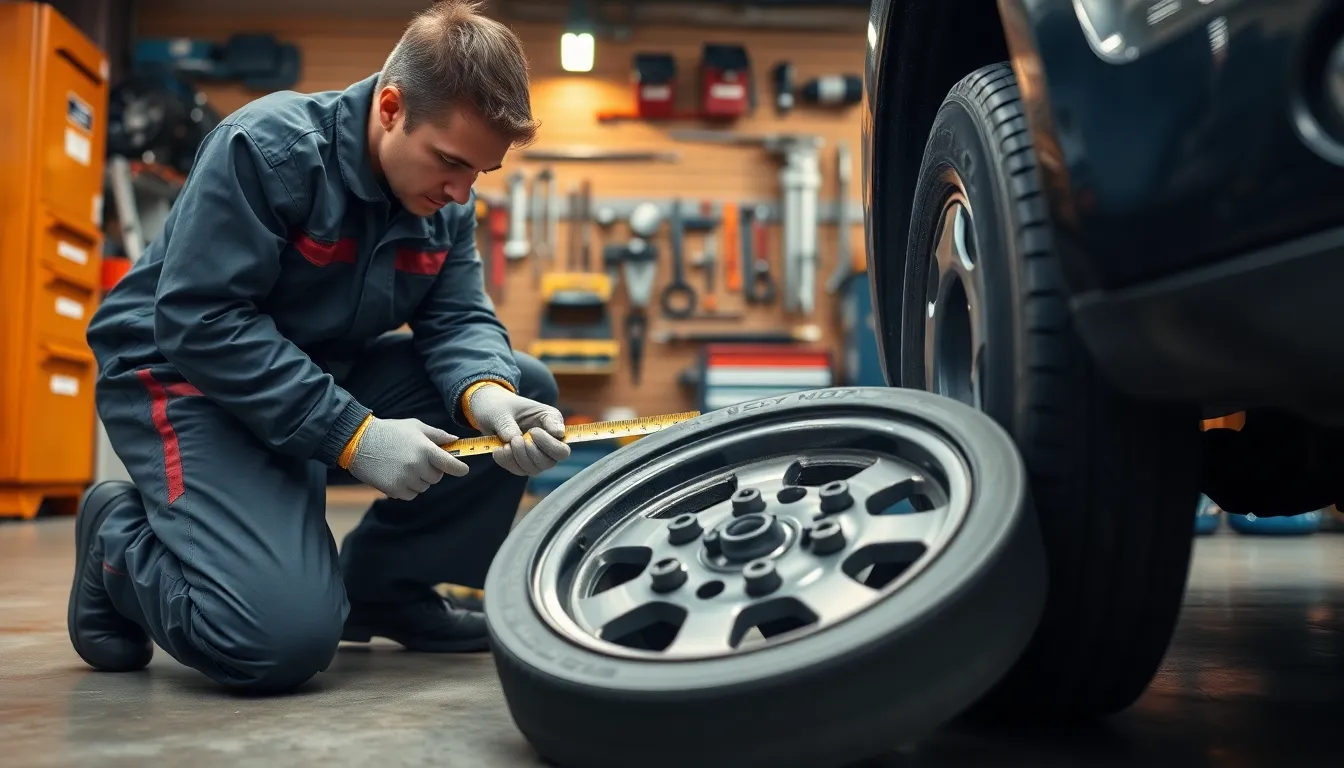
Wondering how to measure lug pattern on your vehicle’s wheels? This critical measurement determines which wheels will fit your car, truck, or SUV—and getting it wrong can be a costly mistake.
Whether you’re upgrading your rims, replacing a damaged wheel, or simply preparing for future purchases, knowing your vehicle’s exact lug pattern is essential. You’ll need this information to ensure proper fitment and maintain safety on the road. With just a few simple tools and techniques, you can accurately measure your wheel’s bolt pattern in minutes, saving yourself time, money, and potential headaches at the auto shop.
Understanding Wheel Lug Patterns
Wheel lug patterns define the arrangement of bolt holes on your vehicle’s wheel. These patterns consist of two key measurements: the number of lugs (or bolts) and the diameter of the circle they form. For example, a common pattern like “5×114.3” indicates 5 lugs arranged in a circle with a 114.3mm diameter.
Lug patterns vary significantly across different vehicle makes and models. American vehicles often use patterns measured in inches (like 5×4.5″), while European and Asian manufacturers typically use metric measurements (such as 5×114.3mm). This distinction becomes crucial when shopping for replacement wheels.
Most passenger vehicles feature 4, 5, 6, or 8 lug patterns. Smaller cars and economy models commonly use 4-lug configurations, mid-size vehicles and light trucks typically have 5-lug patterns, and heavier trucks or SUVs often use 6 or 8 lugs for additional strength and load-bearing capacity.
Your vehicle’s lug pattern directly impacts wheel compatibility and performance. Using wheels with incorrect lug patterns creates unsafe driving conditions, leading to vibrations, handling issues, and potential wheel detachment. Proper measurement ensures you select wheels that mount securely and safely on your vehicle.
Recommended Products

PCD specifications fit most 4, 5, 6, 8 lugs wheel

What You Will Receive: two Wheel PCD Gauges are included, so you can always use them when you need to replace your wheels; The sufficient quantity allows you to avoid frequent purchases and the trouble of running to the repair shop; Whether it is daily use or emergency situations, this measuring tool can provide you with reliable support and help you easily cope with various tire and wheel measurement needs

5 Precise Hole Position Scales:Features 4-1/4″,4-1/2",4-3/4",5",5-1/2" standard scales, perfectly matches most mainstream wheel bolt patterns, eliminates installation guesswork and errors
Essential Tools for Measuring Lug Patterns
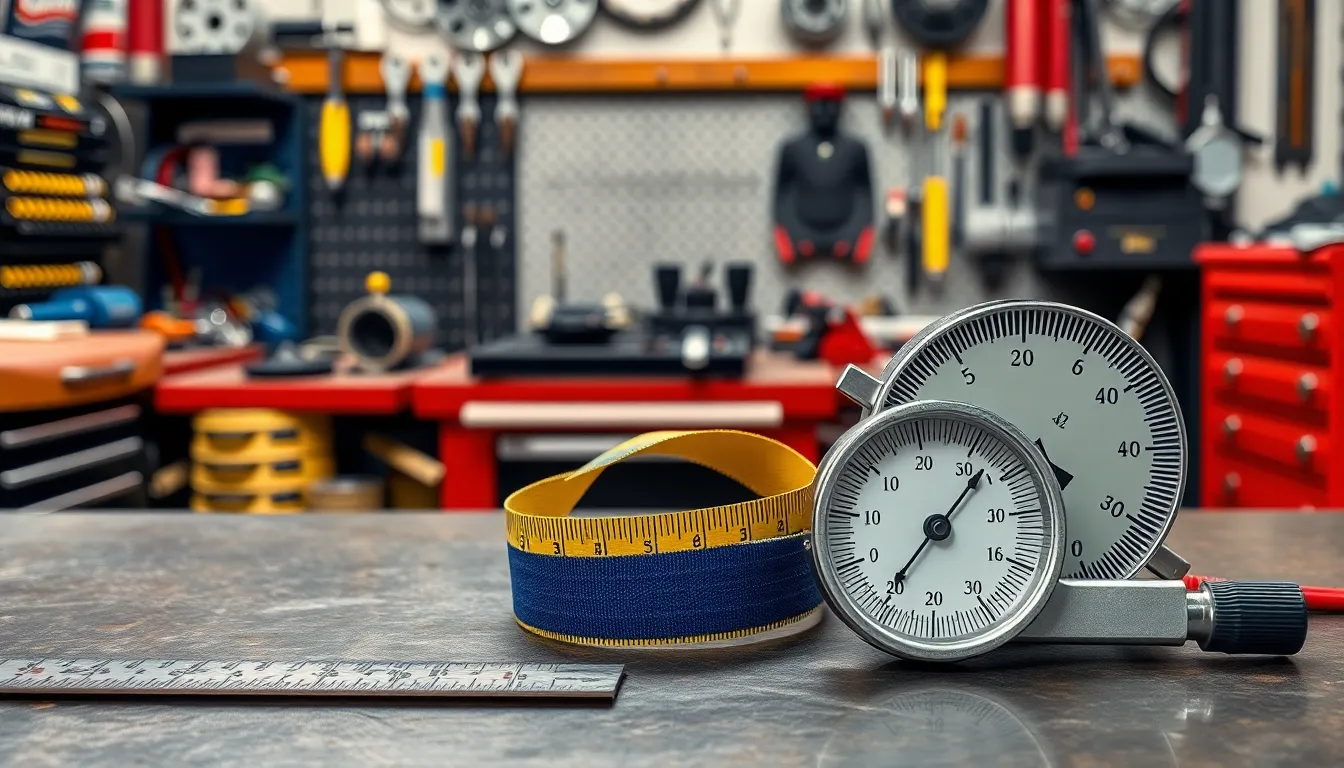
Accurate lug pattern measurement requires a few key tools to ensure you get precise readings every time. Having the right equipment on hand makes the process straightforward and helps prevent costly wheel-fitting mistakes.
Recommended Products
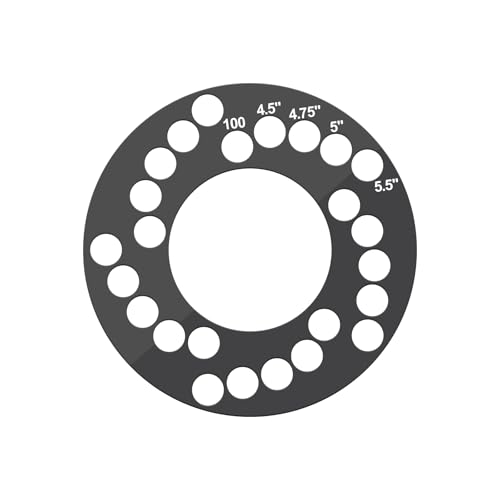
【5 precise hole position markings, no more guesswork】: Provides five professional hole position scales of 100mm/4.5"/4.75"/5"/5.5", accurately matching mainstream wheel specifications. Align with the bolt hole or slide the template to read instantly, without complicated measurement and calculation, completely eliminating the risk of installation error.

5 Precise Hole Position Scales:Features 4-1/4″,4-1/2",4-3/4",5",5-1/2" standard scales, perfectly matches most mainstream wheel bolt patterns, eliminates installation guesswork and errors

Precise Dual-Scale Measurement for Perfect Fit:This Lug Bolt Pattern Tool features SAE & Metric dual scales for precise PCD and 4/5/6 lug pattern measurements. Eliminate guesswork, avoid mismatched hubs, and ensure perfect wheel-tire fitment every time.
Measuring Tape and Ruler
A quality measuring tape or ruler marked in millimeters provides the foundation for accurate lug pattern measurements. Millimeter measurements offer greater precision than inches, particularly when dealing with metric bolt patterns common on European and Asian vehicles. Metal rulers tend to maintain their accuracy better than flexible measuring tapes, though either option works for basic measurements. Position your measuring tool to align perfectly with the centers of the lug holes for the most accurate readings.
Specialized Lug Pattern Tools
Dedicated lug pattern gauges simplify the measurement process significantly, especially for wheels with five or more lugs. These purpose-built tools feature pre-marked measurements and multiple arms that align with different lug configurations. Bolt pattern gauges eliminate guesswork by directly indicating your exact pattern measurements. Digital calipers offer another precise option, particularly useful for professional mechanics or enthusiasts who frequently work with different wheel types. For occasional measurements, smartphone apps with measurement features can serve as helpful alternatives when paired with a straight edge for reference.
How to Measure Bolt Patterns on 4-Lug Wheels

Measuring the bolt pattern on 4-lug wheels is straightforward and requires just a few simple tools. With accurate measurements, you’ll ensure proper wheel fitment and maintain optimal safety standards for your vehicle.
Recommended Products

【Compatibility】Compatible with [Honda] 1998,2003,2005 Accord 3.0L EX; 1999-2000,2002,2005 Accord 3.0L Coupe; 1999-2002 Accord 3.0L LX; 2003,2005,2016 Accord Coupe EX; 2003-2005 Accord DX; 2004,2006,2008,2010,2013-2019 Accord LX; 2005 Accord 2.4L Sedan LX; 2006,2008,2010 Accord 2.4L EX; 2006-2007 Accord Hybrid; 2007 Accord Sedan EX-L/LX; 2007 Accord 2.4L LX; 2007,2017-2019 Accord EX; 2008,2010,2017 Accord 2.4L Sedan EX-L; [Toyota] 1995,1997,1999,2001,2003,2009,2012 Avalon; 2002,2007,2010 Avalon XLS; 2004-2008 Avalon XL; 2005-2006,2008,2013-2020 Avalon Limited; 2011 Avalon Base; [Ford] 2001-2002,2004,2006 Escape 3.0L; 2003 Escape 3.0L XLS; 2003-2005,2009 Escape Limited

➤KAX Wheel Adapters Parameter : Changes Bolt Pattern || Vehicle Must Be 5x5"(5x127mm) || Wheels Must Be 5x4.5"(5x114.3mm) || M12x1.5 Threaded Studs/Nuts || 1 inch(25mm) Thick || 82.5mm Center Bore with NO lip || Recommended torque:70-80 ft/lbs. Package includes 4pcs wheel adapter, 12.9 class split nuts and professional instruction manual

❌ SAFETY INSTALLATION NOTE: All spacers require longer lug studs or extended thread / extra thread lug nuts to ensure proper thread engagement. For safety, verify full lug nut engagement before driving and re-torque all hardware after 250–500 miles.
Direct Measurement Method
The direct measurement method is the most common technique for determining the bolt pattern on 4-lug wheels. Take your measuring tape or ruler and measure directly across the wheel from the center of one lug hole to the center of the opposite lug hole. This measurement represents the diameter of the imaginary circle that passes through the centers of all four lug holes. For example, if you measure 100mm across opposite lug holes, your bolt pattern is 4x100mm. Many compact cars and smaller sedans use common patterns like 4x100mm or 4x108mm, making this measurement crucial when looking for replacement wheels.
Diagonal Measurement Technique
The diagonal measurement technique offers an alternative approach for 4-lug wheels. Measure from the center of one lug hole to the center of the hole diagonally opposite it to determine the bolt circle diameter. This method proves particularly useful when the holes aren’t perfectly aligned across from each other or when you want to verify your direct measurement results. For accurate readings, place your measuring device precisely at the center of each lug hole. The resulting diagonal measurement helps confirm your bolt pattern identification, especially important when dealing with less common patterns that might be easy to misidentify through visual inspection alone.
How to Measure Bolt Patterns on 5-Lug Wheels
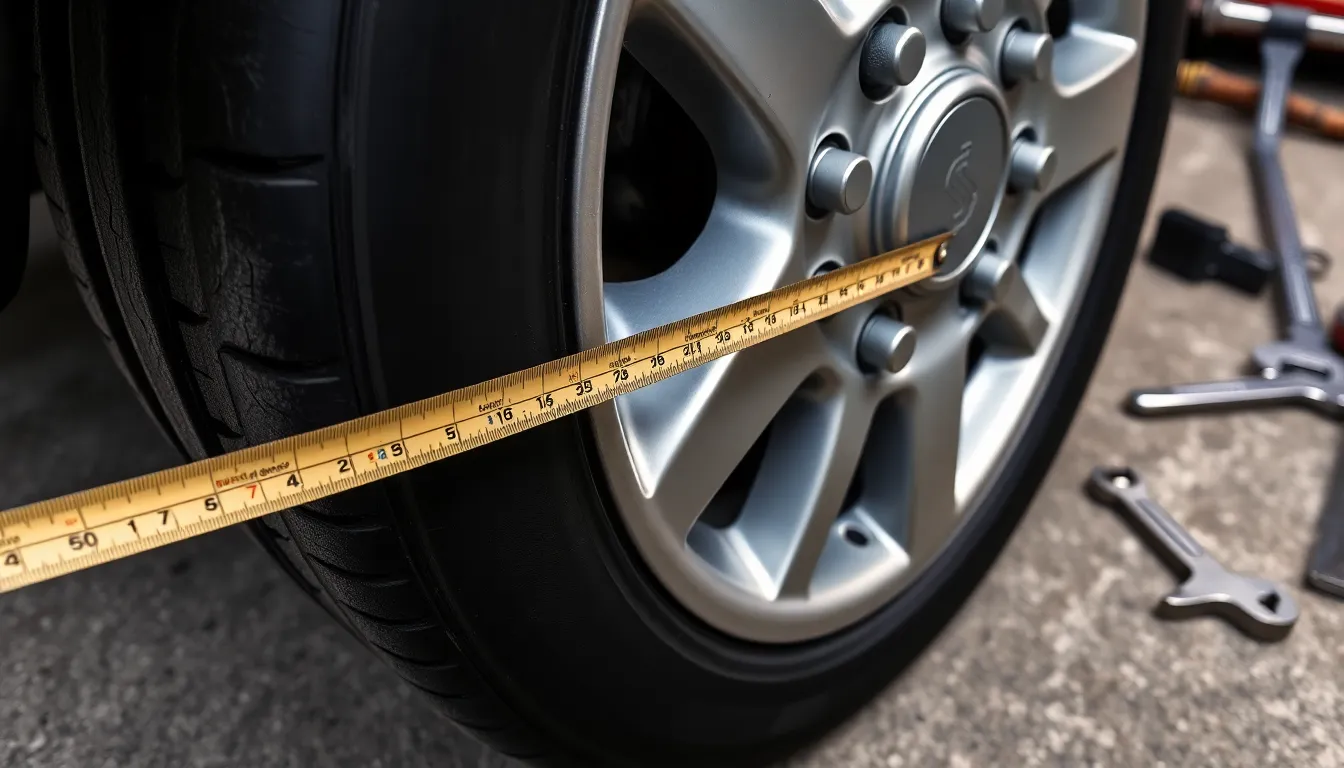
Measuring a 5-lug wheel’s bolt pattern requires determining both the number of lugs and the bolt circle diameter (BCD). Five-lug patterns are arranged in a circular formation that creates an uneven spacing, making measurement slightly more complex than 4-lug wheels.
Recommended Products

Wheel Bolt Pattern: 5 x 4.5 Inches (5-Lug)

Wheel size: 13 x 4.5

Center-to-Center Method
The center-to-center method is the most practical way to measure a 5-lug bolt pattern accurately. You’ll need to skip one lug hole when taking measurements because of the uneven spacing in 5-lug configurations. Start by identifying any lug hole as your first position, then count two holes over (skipping one hole in between), and measure from the center of the first hole to the center of the third hole. This measurement represents the diameter of the bolt circle, giving you the second number in your bolt pattern. For example, if your measurement equals 4.5 inches, your wheel has a “5×4.5” bolt pattern (also commonly expressed as 5×114.3mm in metric).
Bolt Circle Diameter Approach
The bolt circle diameter approach visualizes an imaginary circle passing through the center of all five lug holes. Place your measuring tool carefully to determine the exact diameter of this circle, which forms the second part of your bolt pattern specification. Many automotive enthusiasts use this conceptual understanding to verify their measurements. When working with 5-lug wheels, you’ll frequently encounter common patterns like 5×114.3mm (5×4.5″), 5x100mm, or 5x112mm depending on your vehicle’s make and model. For precise results, specialized tools like bolt pattern gauges can simplify this process by eliminating guesswork. Always double-check your measurements against your vehicle’s specifications to ensure proper wheel fitment and maintain safety on the road.
Measuring 6, 7, and 8-Lug Patterns
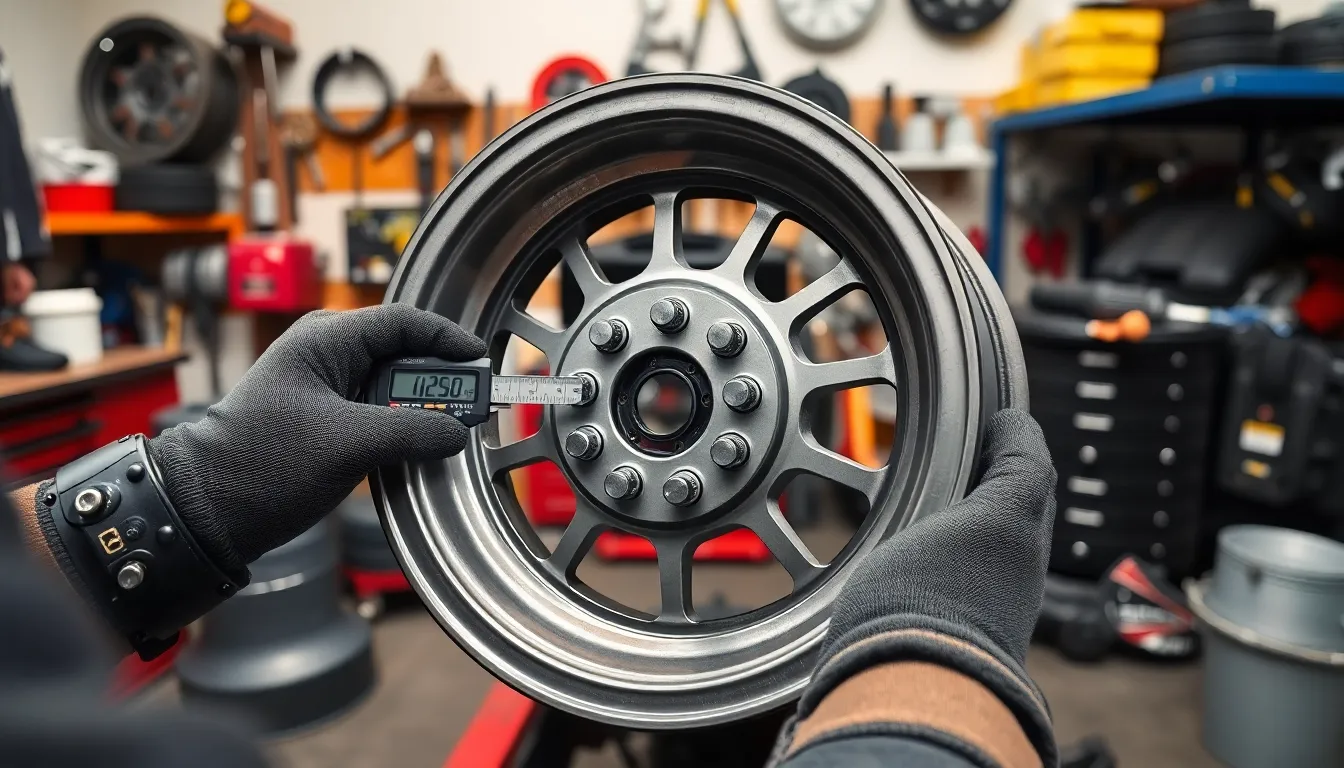
Larger vehicles like trucks and heavy-duty SUVs typically feature wheels with 6, 7, or 8 lugs for additional strength and load-bearing capacity. Measuring these multi-lug patterns requires exact techniques depending on whether you’re dealing with an even or odd number of lugs.
Recommended Products

🚗 Package Includes: 2x Rear Wheel Bearing and Hub Assemblies – 512332

Direct replacement - these wheel hub bolts are designed to match the performance of the original bolts on specified vehicles

Universal Fitments: Support 14" to 20" tire diameters and 7" to 17" tire widths for 5-lug wheel bolt patterns including 5x4.5, 5x4.75, 5x5 and 5x5.5, can meet a wide range of custom requirements, making it an versatile for different vehicle owners
Even-Number Lug Patterns (6 and 8 Lugs)
Even-numbered lug patterns follow a straightforward measurement approach. Start by identifying two lug holes positioned directly opposite each other across the wheel’s center. Using a tape measure or caliper, measure the center-to-center distance between these opposing lug holes to determine the bolt circle diameter (BCD). For example, if the measurement between opposite holes on a 6-lug wheel equals 135 mm, the complete bolt pattern is expressed as 6×135 mm.
Common 6-lug patterns include:
- 6×135 mm (Ford F-150)
- 6×139.7 mm (Toyota Tacoma, Chevy Silverado)
Popular 8-lug patterns include:
- 8×165.1 mm (Ford Super Duty trucks)
- 8×170 mm (newer Ford heavy-duty trucks)
Odd-Number Lug Patterns (7 Lugs)
Seven-lug wheels require a different measurement technique since they lack directly opposing holes. To measure a 7-lug pattern, select any lug hole as your starting point. Measure from the center of this starting lug hole to the outer edge of the second lug hole across from it (skipping one lug hole). This measurement provides the bolt circle diameter for your 7-lug wheel. For instance, a measurement of 139.7 mm results in a bolt pattern of 7×139.7 mm.
Seven-lug patterns are less common but appear on vehicles like:
- Ford F-250 (older models)
- Dodge Ram 2500 (certain years)
Tips for Accuracy
Taking precise measurements becomes increasingly important as the lug count increases. Small errors can lead to important fitment issues with these multi-lug wheels. Digital calipers offer the best accuracy for determining these measurements, especially for 7-lug patterns where the measurement points aren’t directly opposite each other.
Always verify your measurements against your vehicle’s specifications before purchasing new wheels. The bolt pattern is always noted as “Number of lugs” x “Distance in millimeters or inches,” such as 6×139.7 mm or 8×165.1 mm.
Common Lug Pattern Sizes for Popular Vehicles
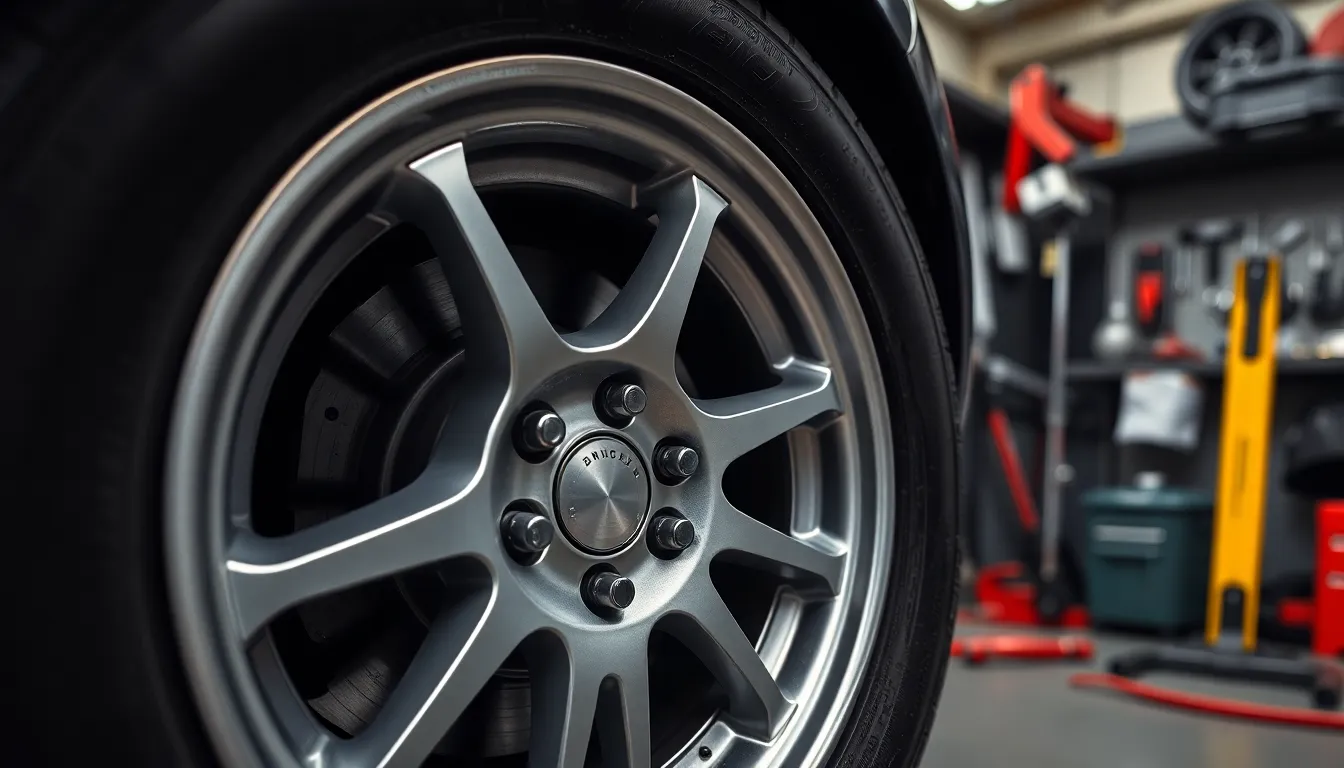
Lug patterns vary significantly across different vehicle types, with exact configurations designed for particular weight capacities and performance requirements. Four-lug patterns frequently appear on compact cars and lightweight trucks, providing adequate strength for smaller vehicles while maintaining a clean aesthetic. Five-lug patterns dominate the passenger car market, appearing on most sedans, SUVs, and small to mid-sized pickups due to their optimal balance of strength and weight.
Larger vehicles demand more robust mounting answers, which is why six and eight-lug patterns are standard on heavy-duty trucks and full-sized SUVs. These additional mounting points distribute the vehicle’s weight more effectively across the wheel hub, improving durability during towing and hauling operations.
Each manufacturer implements exact lug patterns for their vehicle lineup, with distinct variations across different models and production years. Here’s a breakdown of common lug pattern measurements you’ll encounter:
| Number of Lugs | Common Diameter (mm) | Typical Vehicle Type |
|---|---|---|
| 4 | 100, 108, 114.3 | Compact cars, older sedans |
| 5 | 100, 112, 114.3, 120 | Passenger cars, SUVs, pickups |
| 6 | 114.3, 135 | Trucks, SUVs |
| 8 | 165.1, 170 | Heavy-duty trucks |
European manufacturers often favor 5x112mm patterns, while many Japanese vehicles use 5×114.3mm configurations. American trucks commonly feature 6x135mm or 8x170mm patterns, especially in Ford F-Series models. Chevy and GMC trucks typically use 6×139.7mm or 8×165.1mm patterns, creating a notable difference between the major truck manufacturers.
Identifying your exact lug pattern before purchasing new wheels prevents costly mistakes and ensures proper fitment. Specialized tools like bolt pattern templates simplify the measurement process, allowing you to verify your pattern even with the wheel mounted on the vehicle. Always cross-reference your measurements with manufacturer specifications for complete accuracy when selecting replacement wheels.
Recommended Products

Durable Material: These automotive wheel PCD measuring tools are constructed from plastic and alloy materials. The alloy material offers high strength, ensuring the tool maintains its shape during use. The composite design combining plastic and alloy components balances lightweight construction with structural integrity, enhancing ease of assembly and disassembly.
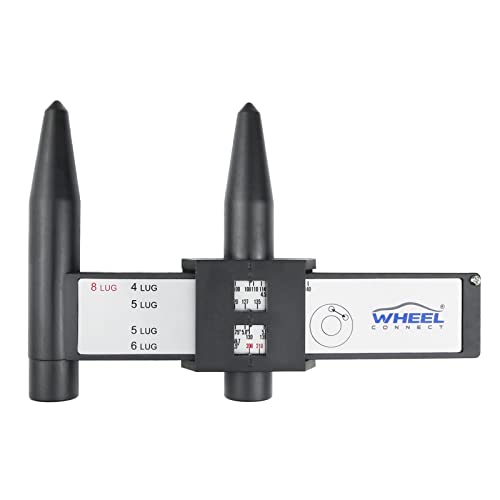
[WHAT IS IT FOR?] Wheel / Rim PCD gauge is a handy tool for measuring the PCD data of the car and wheel. Simply slide the caliper to match the wheel lug holes or wheel hub holes, you will read the data in Metric or Imperial.

【Premium Material】: Manufactured from high-quality plastic material, this wheel bolt pattern measuring tool is durable and long-lasting. The use of this material not only makes the rulers resistant to wear and tear but also provides a smooth surface and neat interfaces.
Avoiding Common Measurement Mistakes
Accurate lug pattern measurements prevent costly wheel fitment errors and ensure your safety on the road. Several pitfalls can affect your measurement accuracy, but knowing these common mistakes helps you avoid them.
Never measure from the edge to edge of lug holes, as this produces inaccurate results. Always take measurements from the center to center of the holes to get the precise bolt circle diameter.
Five-lug wheels require special attention since none of the lug holes sit directly opposite each other. Measuring across adjacent holes gives incorrect readings; instead, skip one hole and measure to the next for accurate results.
Digital calipers or rulers with millimeter markings provide the best precision when measuring lug patterns. Standard rulers without fine gradations often lead to approximations rather than exact measurements.
Multiple measurements ensure consistency and accuracy in your results. Taking at least two measurements helps identify any potential errors before you make a wheel purchase.
Vehicle manuals and manufacturer specifications offer the most reliable lug pattern information. Many wheels also include markings that indicate the bolt pattern, saving you the trouble of measuring manually.
Converting between measurement systems creates another opportunity for error. American vehicles typically use imperial measurements (inches), while European and Asian manufacturers prefer metric measurements (millimeters), making proper conversion essential for correct fitment.
Digital tools like bolt pattern smartphone apps can simplify the measurement process. These tools often include databases of common patterns and can help verify your manual measurements.
Recommended Products

Universal Compatibility: Works with Most 4, 5, 6 and 8 lug Wheels, Provides Inch and Metric Dimensions

【High Quality Material】: Our products are made of ABS. ABS material has high impact strength and toughness, which means that PCD calipers maintain good structural integrity and are not easily damaged by accidental impacts or stresses encountered during the measurement process. ABS has good stability and is not prone to deformation that could affect the accuracy of the measurement.

🎯 Covers 4-1/4″ to 5-1/2″ Bolt Patterns – Precisely measures the most common bolt circle sizes including 4-1/4″, 4-1/2″, 4-3/4″, 5″, and 5-1/2″. Eliminates costly fitment errors when buying new wheels or replacing trailer axles.
Using Lug Pattern Measurements When Buying Wheels
Accurate lug pattern measurements play a crucial role when purchasing new wheels for your vehicle. Armed with the correct measurements, you’re able to confidently select wheels that fit your vehicle perfectly, avoiding costly mistakes and ensuring safety on the road.
Recommended Products
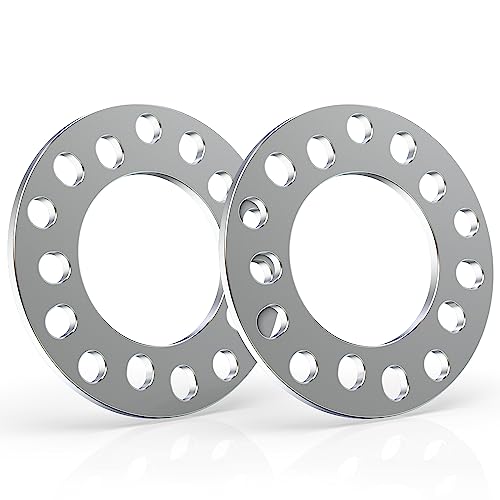
Important Note: For more specific models and years, please CHECK FITMENT above amazon filter to make sure these wheel spacers fit your vehicle. Not adapter, only widen the wheels, do not change bolt pattern.

✨[Wheel Adapters Specification] --- Vehicle Bolt Pattern: 5x4.5"(5x114.3mm) ; | Wheel Bolt Pattern: 5x100mm ; | Thickness: 1 inch(25mm) ; | Thread Pitch: M12x1.5 ; | Hub Bore: 73.1mm ; | Recommended torque: 70-80 ft/lbs. !!! Note: If the length of the vehicle bolts exceed the thickness of the wheel adapters, you need to cut the vehicle bolts

【5 Lug Adapters Parameter】: Vehicle Bolt Pattern Must Be 5x4.5" | Wheels Bolt Pattern Must Be 5x5.5" | Threaded Studs/Nuts: 1/2"x20 | Thickness: 1 inch(25.4mm) | Center Bore with no lip: 73.1mm | Recommended Torque: 75-85 ft/lbs | Bolt Grade: 12.9. Only for 5x4.5" models with 5x5.5" wheels, change bolt pattern. NOT for original wheel, ONLY work with 5x5.5" wheel
Verifying Compatibility with Retailers
When shopping for wheels, provide your exact lug pattern measurements to retailers for verification. Many wheel shops use your measurements to cross-reference with their fitment databases, confirming compatibility before purchase. Online retailers typically offer search filters that allow you to enter your lug pattern (e.g., 5×4.5 or 5×114.3mm) to display only compatible options for your vehicle.
Using Bolt Circle Templates
Bolt circle template tools serve as invaluable resources during the wheel shopping process. These specialized gauges provide instant confirmation of your vehicle’s lug pattern when browsing wheels in person. Templates eliminate guesswork by letting you physically match potential wheels to your exact bolt pattern before making a purchase decision.
Considering Additional Fitment Factors
While lug patterns are essential, wheel backspacing and offset measurements also determine proper wheel fit. Backspacing refers to the distance from the mounting surface to the back edge of the wheel, affecting clearance between the wheel and suspension components. Offset measures the distance from the wheel’s centerline to the mounting surface, impacting how the wheels sit within your wheel wells. Both measurements ensure your new wheels maintain proper clearance and alignment.
Consulting Manufacturer Specifications
Vehicle manufacturers provide exact lug pattern specifications that remove all doubt about proper fitment. The owner’s manual or manufacturer’s website contains precise information about your vehicle’s bolt pattern requirements. Manufacturer specifications often include additional details about recommended wheel sizes, offset ranges, and other important fitment considerations that prevent clearance issues.
Using Vehicle-Exact Bolt Pattern Guides
Comparing your measurements against vehicle bolt pattern guides confirms you’ve measured correctly. These comprehensive guides list lug patterns by vehicle make, model, and year, offering a quick way to verify your findings. Most automotive parts retailers provide these guides online or in-store, giving you an additional layer of confidence before finalizing your wheel purchase.
Conclusion
Measuring your vehicle’s lug pattern might seem technical but it’s a skill worth mastering. With the right tools and techniques you can confidently identify whether you need a 4x100mm pattern for your compact car or an 8x170mm for your heavy-duty truck.
Remember to always measure from center to center of the lug holes and double-check your measurements before making any wheel purchases. Taking this extra time now prevents costly mistakes and ensures your new wheels will fit perfectly.
By understanding your vehicle’s exact lug pattern you’re empowered to make informed decisions when upgrading or replacing wheels while maintaining optimal safety on the road.
Recommended Products
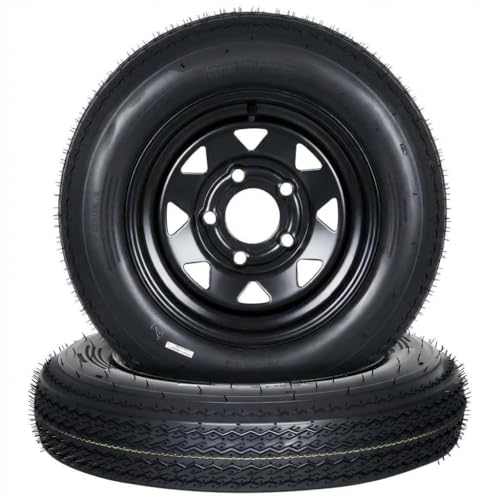
Heavy-Duty Load Rating: Built with a rugged 6-ply structure and Load Index 80, each 4.80-12 trailer tire with rim supports up to 990 LBS at 90 PSI, great for hauling boats, campers or heavy loads on highways and backroads

2026updates: 1. Colorful printing. 2. Add sizes: 4x98, 4x4.0", 4x101.6, 4x156, 5x98, 5x160, 6x115, 6x120, 6x127, 6x132, 8x275.

Frequently Asked Questions
Recommended Products
Bolt Pattern Measuring Tool Markings:It Has Markings Corresponding to The Positions of Five Bolts as Well as Bolts of Different Sizes, Such as 5 on 4 1/4″ |5 on 4 1/2″ | 5 on 4 3/4″ | 5 on 5″ | 5 on 5 1/2″And so on, In Order to Adapt to The Specifications of Different Vehicles or Trailers
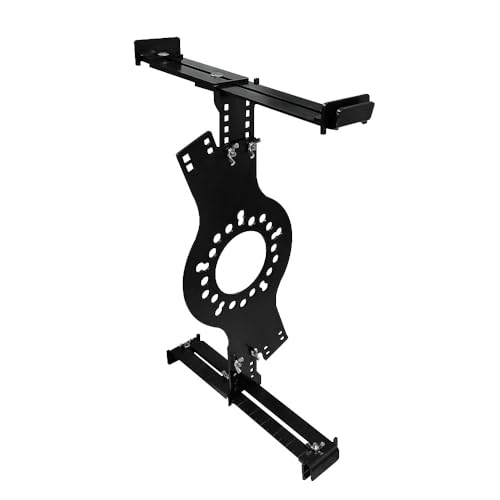
【Quality 10-gauge Steel】Laser cut and press bent from 10-gauge steel in house. Compared with ordinary plastic tools, metal tools are more wear-resistant and durable.
Direct replacement - these wheel hub bolts are designed to match the performance of the original bolts on specified vehicles
What is a wheel lug pattern?
A wheel lug pattern defines the arrangement of bolt holes on a vehicle’s wheel. It consists of two key measurements: the number of lugs (bolts) and the diameter of the circle they form. For example, “5×114.3” indicates 5 lugs arranged in a circle with a 114.3mm diameter. This pattern varies across different vehicle makes and models, with American vehicles often using inch measurements while European and Asian manufacturers typically use metric measurements.
Why is measuring the lug pattern important?
Measuring the lug pattern is crucial for ensuring proper wheel fitment and safety. Using wheels with incorrect lug patterns creates unsafe driving conditions as they won’t mount securely. Accurate measurements are essential when upgrading rims, replacing damaged wheels, or preparing for future purchases. Knowing your exact lug pattern helps you save time and money while avoiding potential issues at the auto shop.
What tools do I need to measure a lug pattern?
You’ll need a quality measuring tape or ruler marked in millimeters for precision. Specialized lug pattern gauges simplify the process, especially for wheels with five or more lugs. Digital calipers provide excellent accuracy for center-to-center measurements. Smartphone apps can also serve as useful alternatives. Having the right equipment prevents costly wheel-fitting mistakes and ensures safe vehicle operation.
How do I measure a 4-lug wheel pattern?
For 4-lug wheels, measure from the center of one lug hole directly across to the center of the opposite lug hole. This straight-line measurement gives you the bolt circle diameter. For verification, you can also measure diagonally from the center of one lug hole to the center of the diagonally opposite hole. Common 4-lug patterns include 4x100mm and 4x108mm, typically found on compact cars and smaller sedans.
How do I measure a 5-lug wheel pattern?
For 5-lug wheels, measure from the center of one lug hole to the center of the lug hole that’s two positions away (skipping one hole). This works because 5-lug patterns have uneven spacing. Alternatively, visualize an imaginary circle passing through the center of all five lug holes. Specialized bolt pattern gauges are particularly helpful for 5-lug wheels. Always double-check measurements against your vehicle’s specifications.
How do I measure lug patterns for trucks and SUVs?
For 6 or 8-lug patterns (even numbers), measure from the center of one lug hole to the center of the directly opposite hole to determine the bolt circle diameter. For 7-lug patterns (odd numbers), measure from the center of one lug hole to the outer edge of the second lug hole, skipping one hole. Common patterns for trucks include 6x135mm, 6×139.7mm, 8×165.1mm, and 8x170mm. Digital calipers provide the best precision for these measurements.
What are common lug patterns for different vehicles?
Four-lug patterns (4x100mm, 4x108mm) are typical for compact cars. Five-lug patterns (5×114.3mm, 5x120mm) dominate the passenger car market, including sedans and crossovers. Larger vehicles like heavy-duty trucks and full-sized SUVs utilize six-lug (6x135mm, 6×139.7mm) or eight-lug (8x170mm, 8x180mm) patterns for improved durability. Identifying the correct lug pattern before purchasing new wheels prevents costly mistakes.
What common mistakes should I avoid when measuring?
Avoid measuring from the edge of lug holes instead of center-to-center, which causes inaccuracies. Use precision tools like digital calipers rather than standard rulers. Take multiple measurements for consistency. Consult vehicle manuals and manufacturer specifications for reliable information. Be careful when converting between measurement systems (inches to millimeters). Consider using digital tools and smartphone apps to simplify the process and verify results.
What else should I consider when buying wheels?
Beyond lug patterns, consider wheel backspacing and offset, which affect how wheels sit in relation to the suspension and body. Provide accurate measurements to retailers for compatibility verification. Use bolt circle templates to confirm fitment before purchasing. Consult manufacturer specifications and vehicle-specific bolt pattern guides. Remember that proper wheel fitment involves multiple factors beyond just matching the lug pattern.