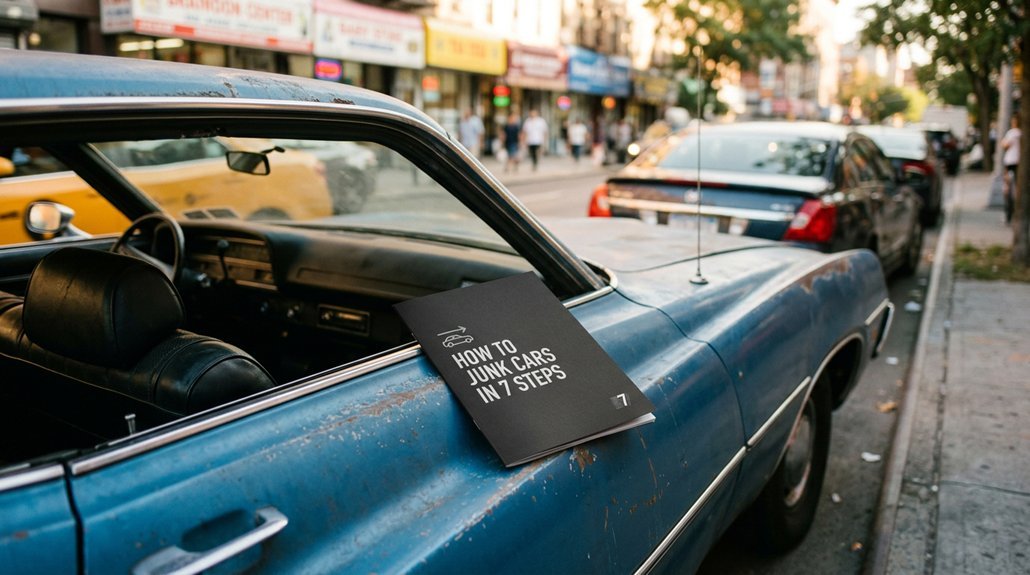
I’ve junked more cars than I care to count, and I can tell you the difference between a smooth $500 payout and a frustrating month-long headache comes down to following a clear process.
Most sellers leave money on the table by accepting the first quote or forgetting to pull that aftermarket stereo.
I’ll walk you through seven practical steps that protect your wallet, your legal liability, and your sanity.
We’ll start with the single most important decision you’ll make: whether to sell whole or part out.
Assess Your Junk Car’s Value and Decide: Sell Whole or Part Out?
How much is my clunker really worth? I’m asking myself this before making any moves on my junk car. I start by checking scrap metal prices and my vehicle’s specifics: make, model, year, condition, and mileage. This gives me a baseline salvage value for the whole thing.
Before selling my junk car, I check scrap metal prices and my vehicle’s specifics to establish a baseline salvage value.
Then I dig deeper. I’ve got aftermarket parts worth something: stereos, batteries, wheels, electronics. I research demand in my area. Popular models mean hungry buyers for components.
Here’s where it gets real. I compare junkyard offers for the complete vehicle against my calculated part-out total. Will dismantling and selling piece by piece actually pay more? Factor in time and effort.
Sometimes the straightforward junk sale wins. Other times, patience with parts pays off. I choose what fits my situation.
Recommended Products

Vehicle Compatibility - CADILLAC - Escalade 1999-02, Escalade EXT 2002-02, CHEVROLET - Astro 1996-05, Avalanche 2001-02, CK Pickup Fullsize 1995-98, Crewcab/Dually 1995-99, Express Van 1996-00, Silverado 1500-3500 1999-02, Suburban 1995-02, Tahoe 1995-03

Perfect Fit - Designed to fit any flat surface measuring 11' wide and 9' Deep, the UDEB installation dash kit ensures a stylish fit for your new aftermarket car stereo. See Dimension Guide in images to verify compatibility. Does Not Fit Double DIN Radios

Convenient Solution - Scosche FD02BCB Radio Installation Harness with allows a new aftermarket radio to be installed in select Non-Amplified 1985-2004 Ford, Lincoln, Mazda, Mercury and Nissan vehicles using the factory radio harness.
Gather Your Title and Paperwork to Prove Ownership
Where’s that title? I’ve learned the hard way that you can’t complete a transfer of ownership without it. First, I dig out my pink slip and confirm the VIN matches my junker exactly. If it’s buried in a drawer or gone missing, I head straight to the DMV for a duplicate. No shame in that, we’ve all been there.
Next, I pull together my registration, any lien release papers, and a bill of sale template. Some states want extra forms, so I double-check local rules. I stack everything neatly. One time I scrambled for documents during pickup, never again.
Getting this right means faster cash, no headaches, and a clean break from your old ride.
Recommended Products

MADE FOR EVERYONE: Designed specifically for our Recycling Rules Multi Recycler, however, these stickers can be used on any recycling container.

Our Recycling Signs support the Government led Waste & Resources Action Programme (WRAP)
Get Multiple Quotes From Junk Car Buyers Near You
With my paperwork locked down, I move fast on quotes. I contact 3 to 5 junk car buyers or salvage yards to compare offers side by side. I share accurate details: year, make, model, mileage, and condition. This ensures fair, comparable numbers I can actually use.
I demand written estimates spelling out free towing, payment method, and any hidden fees. No surprises. I prioritize buyers with transparent terms, solid reviews, and clear pickup timelines.
If a quote seems too high, I dig deeper. Some buyers bait you with big numbers, then slash them at pickup. I verify the final price before handing over my title. Smart comparison protects my wallet and keeps the process smooth.
Recommended Products

Perfect Fit - Designed specifically for Select 1998-2007 Chrysler, Dodge Jeep and Plymouth Vehicles, the CR1277B dash kit ensures a seamless fit for your new car stereo. See Fit Guide in images to verify vehicle compatibility. Does Fit not Double DIN.

Perfect Fit - Designed specifically for Select 2004-12 GM Vehicles, the Scosche GM1599B dash kit ensures a seamless fit for your double din car stereo radio. See Fit Guide and Notes in images to verify that your vehicle is compatible.
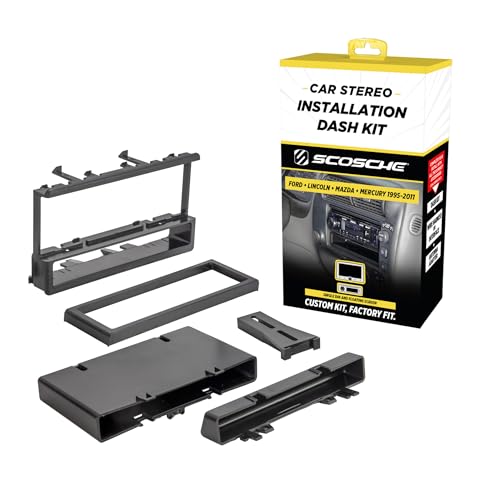
Perfect Fit - Designed specifically for Select 1995-2011 Ford, Lincoln, Mazda and Mercury Vehicles, the Scosche FD1327B dash kit ensures a seamless fit for your single DIN car stereo radio. See Fit Guide for a complete list of compatible vehicles
Remove Personal Belongings and Optional Valuable Parts
Before I hand over my keys, I do one last sweep that’s saved me more than once. I check the glove box, center console, under seats, trunk, and door pockets for personal belongings. Receipts, registration papers, and small electronics hide in the strangest spots.
I lift floor mats and inspect cargo areas in SUVs and trucks. I’ve found sunglasses, charging cables, and even cash tucked away. I gather everything I want to keep, listing items so nothing walks off to the salvage yard with my car.
Once the vehicle leaves, those personal belongings are gone for good. I transfer valuables to my new ride or storage before the tow truck arrives. This ten-minute habit prevents headaches, lost memories, and wasted money.
Cancel Insurance, Return Plates, and Notify the DMV
The moment my junk car rolls away, I am on the phone with my insurance company. I cancel insurance right away to stop charges and ask about refunds for unused premiums. Every dollar counts when you are part of this smart, practical community.
Next, I take care of the license plates. State rules vary, so I check whether I return them to the DMV or surrender them during deregistration. I handle this before pickup to protect myself from liability if something happens later.
Here is my checklist for closing this chapter cleanly:
— Cancel insurance the same day to avoid extra charges
— Remove license plates before the tow truck arrives
— Return plates to DMV or surrender them per state law
— Notify DMV online or in person with title and bill of sale ready
I file the DMV notification right away. This creates a formal record that I am no longer responsible. No loose ends, no surprises, just clean ownership transfer.
Recommended Products
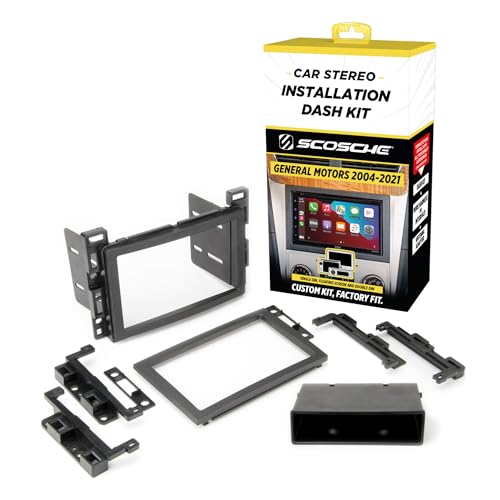
Perfect Fit - Designed specifically for select 2004-2021 GM Vehicles, the Scosche GM2500B dash kit ensures a seamless fit for your Single or Double DIN car stereo radio. See Fit Guide in images to verify compatibility.

Perfect Fit - Designed specifically for Select 1995-2011 Ford, Lincoln, Mazda and Mercury Vehicles, the FD1423B dash kit ensures a seamless fit for your new car stereo. See Fit Guide in images to verify that your vehicle is compatible.

Bluetooth Connectivity - With built-in Bluetooth technology, connect your smartphone wirelessly. This allows for convenient hands-free calling, enabling you to make and receive phone calls while keeping your hands on the wheel and eyes on the road.
Schedule Free Pickup and Confirm the Details
I’ll arrange free pickup with a buyer who includes towing, locking in the exact date, time window, and meeting spot so nobody’s left waiting. I make sure I’ve got the title and any required paperwork ready to hand over. I confirm upfront whether I’ll get cash or a bank transfer when they arrive.
I also clarify who signs what and how the ownership transfer gets recorded. A smooth handoff depends on nailing these logistics down before the truck shows up.
Pickup Logistics Coordination
Where exactly will the tow truck meet you? I always pick a spot with clear access, no gates or tight turns blocking the way. Free towing makes this easy, but pickup coordination still demands attention to detail.
Here’s what I verify before the driver arrives:
- Confirm the date, time, and exact address where I’ll wait
- Remove obstacles like parked cars or debris from the pickup zone
- Have my signed title ready for immediate transfer
- Designate myself or a trusted person to sign paperwork and hand over keys
I double-check that payment comes on or before pickup, cash or bank transfer, and I grab a receipt. This keeps everything smooth, legal, and stress-free. Solid logistics mean no surprises when the tow truck rolls up.
Final Confirmation Steps
Why rush the final call when a ten-minute checklist saves hours of headaches later? I always walk through my final confirmation steps before handing over any vehicle.
First, I schedule free pickup with my buyer and lock in the exact date, time window, and any access instructions for my property. I verify payment happens on-site, whether cash, transfer, or check, and I get that in writing.
I gather my title, ID, and state forms like REG 256 before the truck arrives. I confirm the ownership release completes at pickup, protecting me from future tickets or liability.
Finally, I reconfirm everything in writing: date, time, location, contact, and towing terms. I keep copies. This discipline keeps me clean, confident, and part of the smart seller community that never gets burned.
Collect Payment and File Your Final Release of Liability
I’ll collect my payment using cash or a verified bank transfer, and I’m getting that receipt with the VIN and sale price locked down before the tow truck leaves my driveway. I’ve learned the hard way that without proper documentation, I’m still on the hook if that hunk of metal ends up somewhere it shouldn’t.
Filing the release of liability with my DMV is the final step that officially cuts my ties to the vehicle, and I won’t skip it even if the junkyard says they’ll handle everything.
Recommended Products

Dakota dash bezel face plate is designed for mounting a new single din radio and replacing the old radio housing in factory location; Outer Housing Frame Bracket: 8.4 inch x...
Secure Payment Methods
How do you make sure you actually get paid, and stay protected long after the tow truck leaves? I’ve learned that securing your final payment demands the same attention you gave to finding a buyer.
Here’s how I protect myself every time:
I demand payment at pickup, never after, choosing cash, bank transfer, or a company check I verify on the spot. I get a detailed receipt showing the exact amount paid and vehicle info before I hand over keys. I confirm the buyer has everything needed to transfer ownership and secure my release of liability. I keep copies of all paperwork, the bill of sale, receipt, and release forms, stored safely for years.
This routine gives me peace of mind, knowing I’m truly done with that old vehicle.
Liability Release Filing
You’ve got your cash in hand, and the tow truck’s pulling away. But I’m not done yet. I file my liability release immediately, typically within five days.
I grab my state’s Final Release form from the DMV website, then fill in every detail: VIN, make, model, year, sale date, buyer info, and “dismantled for parts” as the disposal method. I double-check my work. One wrong digit delays my protection.
I submit online or mail it certified, then save my stamped confirmation like gold. This paper proves I’m legally clean if tickets or accidents surface later.
If my junker handles the filing, I demand copies before they leave. No paperwork, no deal. This step protects my wallet and my peace of mind. I never skip it.