
Are you struggling to find your vehicle’s wheel bolt pattern? Knowing this crucial measurement is essential when shopping for new wheels or rims. Don’t risk purchasing incompatible parts that won’t fit your vehicle!
Finding your wheel bolt pattern doesn’t have to be complicated. Whether you’re a DIY enthusiast or simply trying to save money on your next wheel purchase, understanding how to measure your bolt pattern will save you time, frustration, and potentially expensive mistakes. In this guide, we’ll walk you through several foolproof methods to determine your wheel bolt pattern correctly.
Understanding Wheel Bolt Patterns
Wheel bolt patterns represent the exact arrangement of lug holes on your vehicle’s wheels. These patterns are critical measurements that determine wheel compatibility and proper fitment for your exact vehicle make and model.
What Is a Bolt Pattern?
A bolt pattern consists of two key measurements: the number of bolt holes and the diameter of the imaginary circle they form. For example, a “5×114.3” pattern indicates five lug holes positioned on a circle with a 114.3mm diameter. Different vehicle manufacturers use exact bolt patterns as part of their design standards, with common configurations including 4×100, 5×114.3, 6×139.7, and 8×170. The pattern isn’t just about the number of holes—the precise spacing between these lugs creates a unique geometric arrangement that must match exactly for wheels to fit properly on your vehicle’s hub.
Why Bolt Patterns Matter for Your Vehicle
Correct bolt patterns ensure optimal safety and performance for your vehicle. Using wheels with mismatched patterns can lead to dangerous driving conditions, excessive vibration, and potential wheel detachment while driving. Performance enthusiasts know that proper fitment affects handling characteristics, while everyday drivers benefit from the peace of mind that comes with correctly matched components. The financial implications are important too—purchasing wheels with incorrect bolt patterns often means returning them at your expense or paying for expensive adapters. Many drivers learn this lesson the hard way, like Tom from Colorado who purchased a set of premium aftermarket wheels online only to discover they wouldn’t fit his truck even though matching the diameter and width specifications. Knowing your exact bolt pattern saves both time and money when shopping for replacement or upgraded wheels.
Methods to Find Your Vehicle’s Bolt Pattern
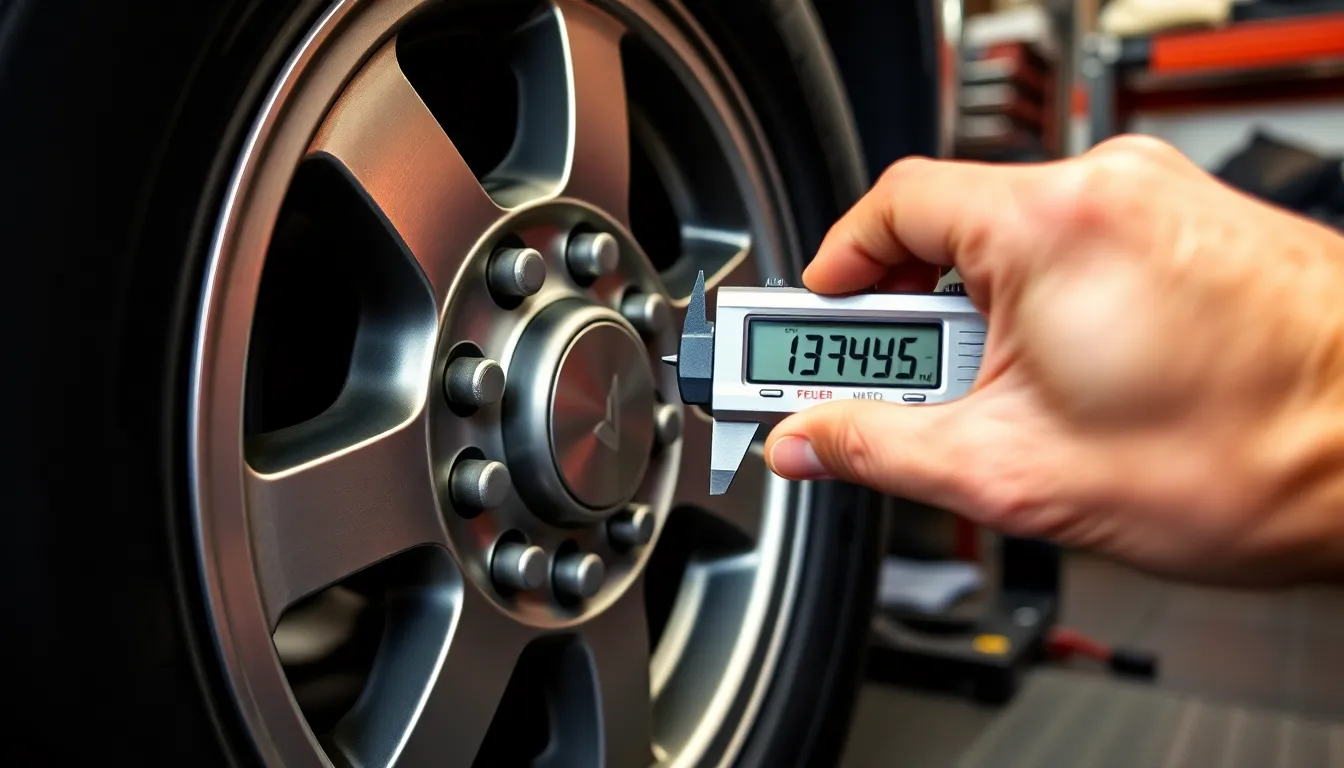
Finding your vehicle’s bolt pattern doesn’t require specialized knowledge or expensive tools. Here are three reliable methods to determine this crucial measurement for proper wheel fitment.
Using Your Vehicle’s Manual or Documentation
Your vehicle’s owner manual contains precise bolt pattern specifications in the technical section. Manufacturer websites offer detailed information about your exact make and model’s bolt pattern when you enter your vehicle identification number. Dealership service departments can also provide this information instantly if you call with your vehicle details. The documentation method is the most accurate as it relies on factory specifications rather than manual measurements.
Measuring the Bolt Pattern Yourself
Physical measurement provides a hands-on approach when documentation isn’t available. Start by counting the lug holes on your wheel, noting whether you have 4, 5, 6, or 8 lugs. For even-numbered patterns (4, 6, or 8 lugs), measure directly across between opposite holes from center to center to find the bolt circle diameter. A 4-lug wheel measuring 100mm across would be designated as 4x100mm. Odd-numbered patterns like 5-lug wheels require a different approach – measure from the center of any lug to the outer edge of the furthest lug hole (not directly opposite). For example, a measurement of 114.3mm indicates a 5×114.3mm pattern. Use digital calipers for the most accurate measurements, though a tape measure works in a pinch.
Online Resources and Databases
Tire retailer websites feature comprehensive bolt pattern databases searchable by vehicle make, model, and year. Automotive forums often contain threads dedicated to bolt pattern information for exact vehicles, with enthusiasts sharing precise measurements. Wheel fitment apps like “Wheel-Size.com” and “Tire Rack’s Wheel Guide” let you find your pattern with a few taps on your smartphone. These digital resources save time compared to manual measurements and often include additional specifications like center bore diameter and lug nut size that complement your bolt pattern information.
Tools Needed to Measure Bolt Pattern

Finding your wheel’s bolt pattern requires a few simple tools to get accurate measurements. The right equipment ensures you’ll get precise readings when determining compatibility for new wheels or rims.
Measuring Tape or Ruler
A standard measuring tape or ruler works perfectly for basic bolt pattern measurements. You’ll need one that displays both inches and millimeters since bolt patterns are commonly expressed in both measurement systems. For most DIY measurements, a flexible tape measure offers better maneuverability around the wheel and helps reach between lug holes with greater precision. Metal rulers provide more stability when measuring straight across between lugs on wheels with an even number of holes.
Specialized Bolt Pattern Gauges
Bolt pattern gauges eliminate guesswork when measuring complex wheel configurations. These purpose-built tools feature pre-marked measurements and multiple measurement arms designed specifically for determining bolt patterns. Professional mechanics often use specialized gauges like the five-lug pattern tool that instantly measures the diameter of the bolt circle. Automotive parts stores sell affordable consumer versions that include templates for common bolt patterns. The benefit of using these specialized tools lies in their ability to provide instant, accurate readings without complex measuring techniques, especially helpful for wheels with odd numbers of lugs where standard measurement techniques can be confusing.
Step-by-Step Guide to Measuring Bolt Pattern
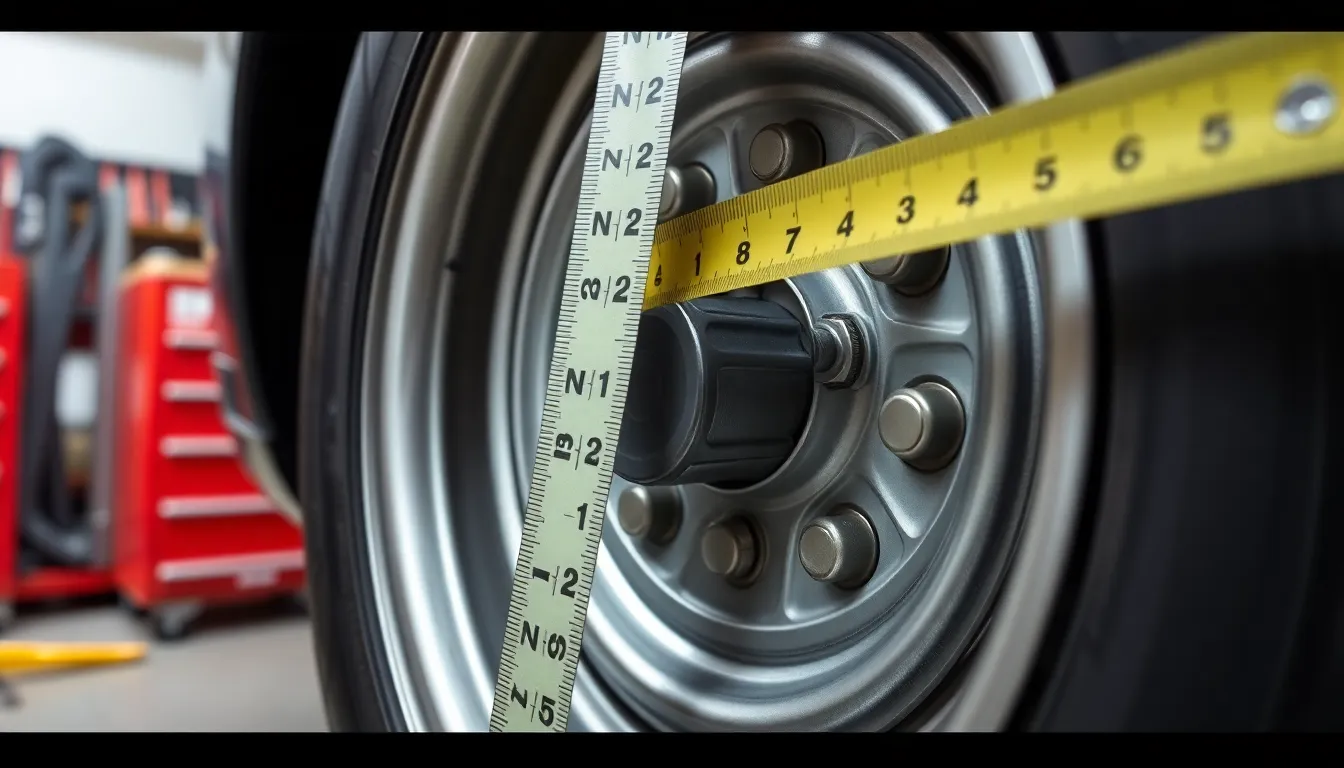
Measuring your wheel bolt pattern accurately ensures you’ll find compatible wheels for your vehicle. Follow these straightforward methods based on the number of lugs your wheels have for precise measurements.
For 4-Lug Wheels
Four-lug wheels feature a simple measurement approach that anyone can master. Place your measuring tape from the center of one lug hole directly across to the center of the opposite lug hole to determine the bolt circle diameter. This straight-line measurement gives you the pitch circle diameter (PCD) needed for your bolt pattern specification. For instance, if you measure 100mm between opposite lug centers, your bolt pattern is 4 x 100mm. Many European vehicles commonly use this configuration, making it essential to get an exact measurement when shopping for aftermarket wheels.
For 5-Lug Wheels
Five-lug patterns require a different measuring technique since no lug sits directly opposite another. Start by identifying any lug hole as your reference point, then measure from its center to the farthest edge of the lug hole that would be opposite if the pattern had an even number of lugs. This measurement represents the diameter of the imaginary circle passing through all lug centers. A common five-lug measurement is 4.5 inches (or 114.3mm), resulting in a 5 x 4.5″ bolt pattern. Five-lug configurations are prevalent in many modern passenger vehicles and light trucks, so mastering this measurement technique proves particularly valuable for most car owners.
For 6 and 8-Lug Wheels
Six and eight-lug wheels follow the same measurement principle as four-lug patterns due to their even number of lugs. Measure from the center of one lug hole straight across to the center of the opposite lug hole to find the bolt circle diameter. For example, measuring 139.7mm on a six-lug wheel gives you a 6 x 139.7mm bolt pattern. These larger lug configurations typically appear on trucks, SUVs, and heavy-duty vehicles. Getting precise measurements becomes especially important with these vehicles since their wheels often carry heavier loads and incorrect fitment could compromise safety. Many truck enthusiasts find that using a dedicated bolt pattern gauge tool provides the most reliable results for these larger wheel configurations.
Common Bolt Pattern Sizes and Vehicle Applications
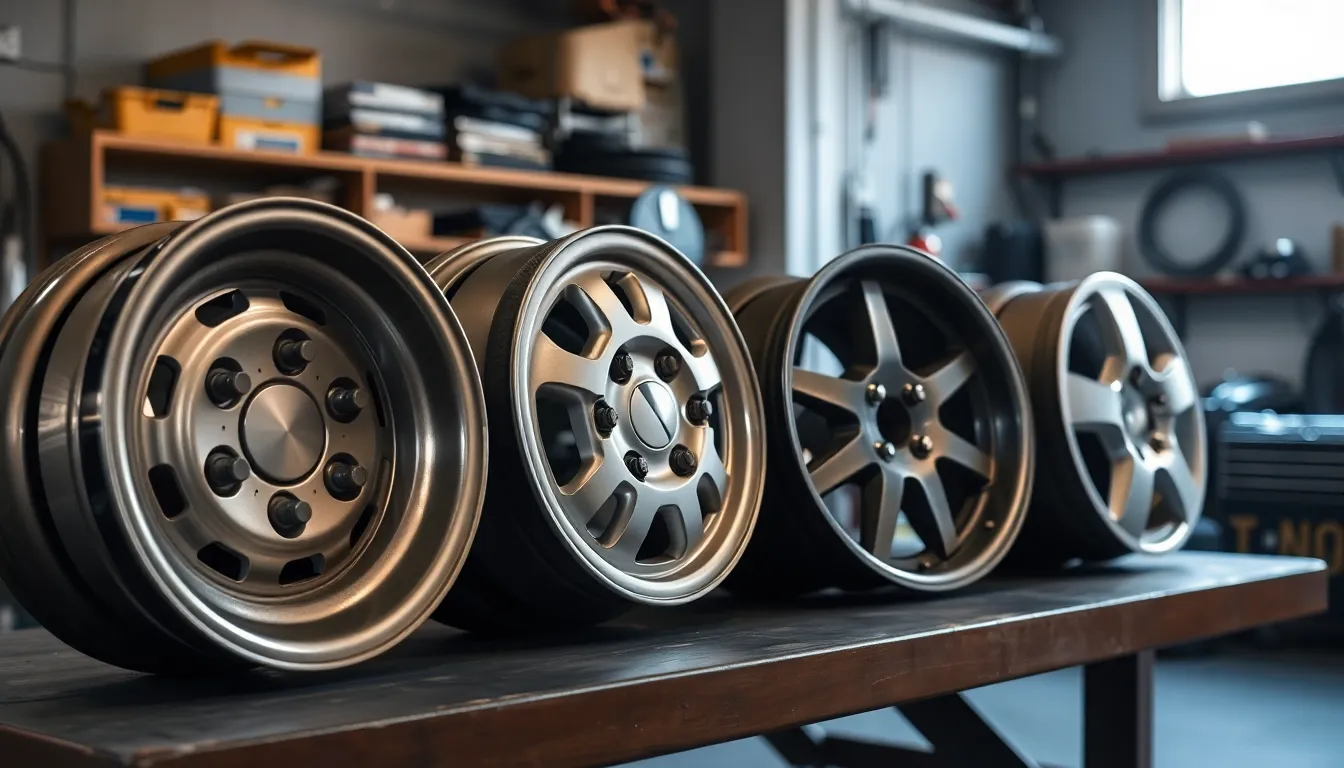
Bolt patterns vary significantly across different vehicle makes and models. Understanding the common sizes helps you identify compatible wheels for your exact vehicle without wasting time on options that won’t fit.
5-Lug Patterns
5-lug patterns dominate the passenger car market and many SUVs. These configurations balance strength and weight distribution effectively for daily driving vehicles.
- 5x100mm: Common on Subaru models, Toyota compact cars, and various Volkswagen vehicles
- 5x108mm (5×4.25″): Frequently found on Ford sedans, Volvo models, and Jaguar vehicles
- 5x112mm: Standard for Audi, Mercedes-Benz, and many Volkswagen models
- 5×114.3mm (5×4.5″): Extremely widespread across Japanese and Korean manufacturers including Honda, Toyota, Nissan, Hyundai, and Kia
- 5x120mm: BMW’s standard pattern, also appearing on select GM vehicles and newer Honda models
6-Lug Patterns
6-lug configurations provide enhanced strength for vehicles carrying heavier loads or used in demanding conditions.
- 6x135mm: Primary pattern for Ford F-150 trucks and Ford Expedition SUVs
- 6×139.7mm (6×5.5″): Widely used on Chevrolet and GMC trucks, plus Toyota and Nissan trucks and larger SUVs
4-Lug and 8-Lug Patterns
4-lug patterns typically appear on smaller, lighter vehicles while 8-lug designs support the heaviest applications.
- 4-lug patterns: Found on compact cars, smaller sedans, and economy vehicles
- 8x180mm and other 8-lug configurations: Reserved for heavy-duty trucks and commercial vehicles, particularly in GM’s truck lineup
American vs. European Patterns
American and European manufacturers follow distinct standards when designing wheel bolt patterns. American vehicles typically use measurements originally based on the imperial system, often expressed in fractional inches but now commonly converted to metric equivalents. Popular American patterns include 5×4.5″ (114.3mm) on many Ford models and 5×5″ (127mm) on many GM vehicles.
European manufacturers consistently use the metric system for their bolt patterns. The 5x112mm pattern dominates German brands like Audi, Mercedes-Benz, and Volkswagen, while BMW stands apart with its distinctive 5x120mm pattern. Volvo and Jaguar frequently use 5x108mm across their model ranges.
Truck and SUV Patterns
Trucks and SUVs use stronger bolt patterns designed to handle increased weight and torque. The 6-lug configuration remains the standard for half-ton pickups and mid-sized to full-sized SUVs. Ford trucks typically use the 6x135mm pattern, while Chevrolet, GMC, Toyota, and Nissan trucks employ the 6×139.7mm (6×5.5″) configuration.
Heavy-duty trucks and commercial vehicles rely on 8-lug patterns for maximum strength and load-bearing capacity. These robust configurations prevent wheel stress under extreme conditions and heavy loads. Popular patterns include 8×165.1mm for older heavy-duty pickups and 8x180mm for newer GM 2500 and 3500 series trucks.
Avoiding Common Bolt Pattern Mistakes
Measuring your wheel bolt pattern incorrectly leads to expensive and frustrating wheel fitting issues. Many DIY enthusiasts make several common errors that are easily avoidable with proper knowledge.
Measuring Between Wrong Lug Holes creates important inaccuracy in your bolt pattern readings. Always measure center-to-center for even-numbered lug patterns (4, 6, 8), and for 5-lug wheels, measure from the center of one hole to the outer edge of the hole farthest away. Using the wrong reference points can result in measurements off by several millimeters – enough to make your new wheels incompatible.
Confusing Metric and Imperial Units happens frequently when recording measurements. Bolt patterns are typically expressed in millimeters, but some older American vehicles use inches. Double-check your measurements and note whether they’re in mm or inches to avoid conversion errors that can make the difference between a perfect fit and a useless purchase.
Focusing Only on Diameter neglects the equally important lug count. A 5×114.3mm pattern is completely different from a 4×114.3mm pattern – the wheels simply won’t mount properly even though having the same diameter. Always document both the number of lugs and the bolt circle diameter for complete accuracy.
Neglecting Other Fitment Factors beyond the bolt pattern can cause serious issues. Even with a matching bolt pattern, differences in wheel offset, center bore diameter, and brake caliper clearance can prevent proper installation. These additional specifications must be verified for a safe, functional wheel setup.
Relying on Visual Estimation rather than precise measurement tools often results in mistakes. Using a quality caliper or bolt pattern gauge eliminates guesswork and provides the exact measurements needed for proper wheel selection. Visual comparisons between wheels can be misleading and don’t account for subtle but critical differences in pattern dimensions.
By avoiding these common mistakes and following proper measurement techniques, you’ll save time, money, and frustration when purchasing new wheels for your vehicle.
Conclusion
Finding your wheel bolt pattern doesn’t have to be complicated. With the methods outlined in this guide you can confidently identify the correct measurements for your vehicle. Whether you check your owner’s manual use proper measuring techniques or consult online databases you’ll avoid the costly mistakes that come with purchasing incompatible wheels.
Remember that accuracy is crucial when determining bolt patterns. Taking the time to get precise measurements now will save you headaches later. Plus knowing this exact detail about your vehicle empowers you to make informed decisions when upgrading or replacing your wheels.
Keep these techniques handy for future reference and you’ll join the ranks of savvy vehicle owners who understand the importance of proper wheel fitment for both safety and performance.
Frequently Asked Questions
What is a wheel bolt pattern?
A wheel bolt pattern represents the arrangement of lug holes on your vehicle’s wheels. It consists of two measurements: the number of bolt holes and the diameter of the circle they form (e.g., “5×114.3”). This measurement is critical for ensuring wheel compatibility and proper fitment on your vehicle.
Why is knowing my correct bolt pattern important?
Knowing your correct bolt pattern prevents purchasing incompatible wheels, which can lead to dangerous driving conditions, excessive vibration, and potential wheel detachment. Proper fitment ensures both optimal performance and safety while saving you time and money when shopping for new wheels or rims.
How can I find my vehicle’s bolt pattern?
You can find your bolt pattern through three reliable methods: checking your vehicle’s owner manual or manufacturer websites, measuring the bolt pattern yourself using proper tools, or utilizing online wheel fitment databases and resources. The manual method is most accurate when done correctly.
What tools do I need to measure a bolt pattern?
You’ll need a standard measuring tape for straight measurements, a flexible tape measure for curved surfaces, and ideally a specialized bolt pattern gauge for the most accurate results. Digital calipers can also be helpful for precise measurements of bolt hole diameters.
How do I measure a 4-lug bolt pattern?
For a 4-lug pattern, measure straight across from the center of one lug hole to the center of the opposite lug hole. This direct diameter measurement gives you the bolt circle diameter. Make sure to measure in millimeters for most accurate results.
How do I measure a 5-lug bolt pattern?
For a 5-lug pattern, measure from the back of one lug hole to the center of the second lug hole (not the adjacent one). Multiply this measurement by 1.051 to calculate the bolt circle diameter. This method works because you can’t measure directly across with an odd number of lugs.
What are common bolt pattern sizes for passenger cars?
Common passenger car bolt patterns include 4x100mm (Honda, Mazda), 4×114.3mm (Nissan, Toyota), 5x100mm (Subaru, VW), 5×114.3mm (many Japanese cars), and 5x120mm (BMW). European and American manufacturers typically have their own standard patterns that differ from Asian vehicles.
What are common mistakes when measuring bolt patterns?
Common mistakes include measuring between incorrect lug holes, confusing metric and imperial units (mm vs inches), focusing only on diameter while ignoring lug count, neglecting other important fitment factors like center bore and offset, and relying on visual estimation instead of precise measurement.
Can I use wheels with a slightly different bolt pattern?
No, you cannot use wheels with even slightly different bolt patterns. Bolt patterns must match exactly for proper fitment. Adapters exist for some configurations, but they add complexity, may affect handling, and aren’t recommended for all situations due to safety concerns.
Besides bolt pattern, what other measurements matter for wheel fitment?
Beyond bolt pattern, you need to consider wheel offset (ET value), center bore diameter, wheel width, and diameter. These measurements together determine proper fitment. Ignoring any of these factors can result in clearance issues, improper handling, and potential damage to your vehicle.