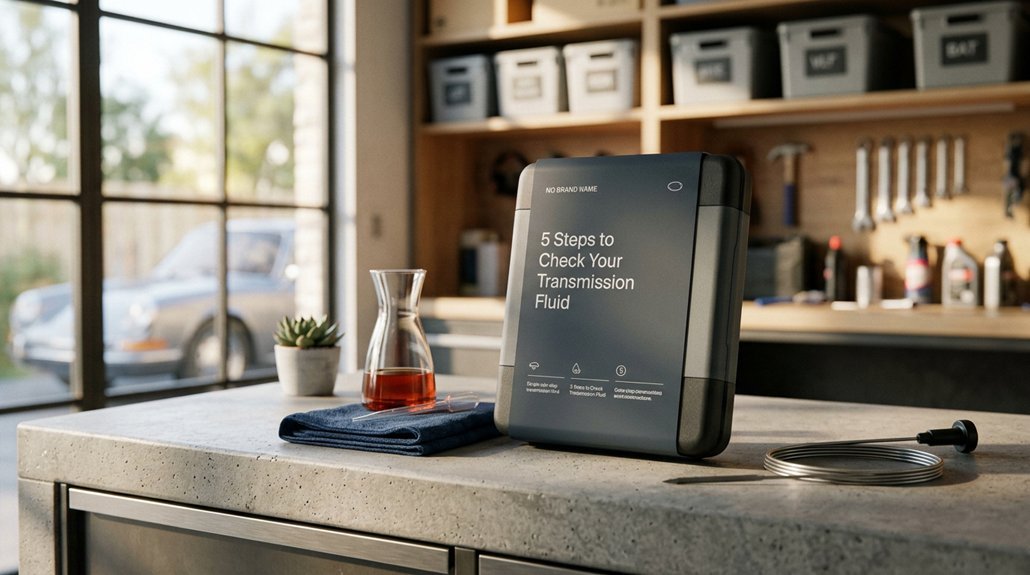
I’ve checked my transmission fluid dozens of times, and it’s simpler than most drivers assume. You warm the engine for three to five minutes, locate the dipstick (usually near the back of the engine bay), and pull it twice: once to wipe, once to read.
The fluid should sit just below the full mark, feel slick between your fingers, and show bright red or pink coloring. Dark brown, burnt smells, or metal particles mean trouble.
I’ll walk you through the exact steps I use, including how to handle sealed transmissions without dipsticks, and when adding half a quart beats a full flush.
Warm Up and Locate Your Transmission Fluid Dipstick
Before I check my transmission fluid, I warm up the engine for about three to five minutes. This gets the fluid circulating so I get an accurate reading. I pop the hood and scan toward the firewall, that’s where the dipstick usually hides.
I’ve learned the hard way, not every dipstick is your friend. Some vehicles tuck the transmission dipstick near the engine oil dipstick, so I double-check my owner’s manual to avoid mixing them up. It’s a quick step that saves costly mistakes.
If I’m staring at a sealed transmission with no dipstick at all, I know I’m locked out of DIY checks. That’s when I follow my model’s service schedule and let the pros handle it.
Recommended Products

SAME TOOL THE DEALER USES:【For select Chrysler Dodge Jeep VW vehicles】Level Measuring tool Designed to check and adjust ATF fluid on your vehicle. / Allows you to check fluid level without going to the Dealer.

EASY TO READ :Clear marks on the metal tip promise easy-to-read oil levels.
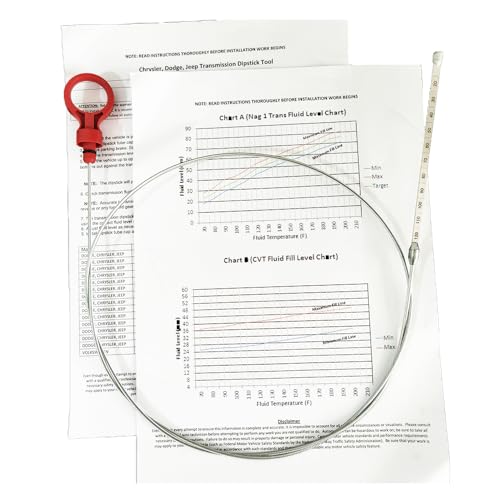
Replacement Part #: 8863B, 9336, 9336A, 917-327 42RLE, NAG1, 45RFE, 62TE.
Check Transmission Fluid Level With the Dipstick Method
How do I know I’ve got the right amount of fluid protecting my gears? I grab the transmission dipstick, pull it out, and wipe it clean with a rag. I slide it back in all the way, wait a second, then pull it again to read the fluid level. The marks tell me everything: “full” means I’m good, “low/fill” means I need more.
I always double-check. I wipe, reinsert, and pull once more to confirm the reading. Consistency matters here. If my transmission dipstick shows fluid between those two marks, my gears stay protected. No guessing.
Some cars hide the dipstick near the firewall, so I take a moment to identify it correctly. Engine oil and transmission fluid use different sticks, and mixing them up wastes time. I stay precise, and my transmission thanks me.
Recommended Products

Detects Combustion Leaks on Engines.

Check ATF Condition: Optical sensing measures transmission fluid transmittance and temperature to help identify changes in fluid clarity before routine service decisions

【WHY NEED IT】Our transmission fluid tester features an advanced optical probe that measures light transmittance within the transmission oil tank, instantly identifying metal wear particles, coefficient of friction, viscosity decay to assess lubricant integrity and transmission performance. Equipped with a high-precision temperature sensor, it delivers actual transmissionoil temperature readings (-10°C to 125°C / 14°F to 257°F),typical application scenarios: transmission failure warning, oil change cycle judgment.
Read Transmission Fluid Color and Smell for Problems
Why stop at just checking the level when the fluid itself tells me so much more? I pull the dipstick and immediately inspect the transmission fluid color and smell, two reliable indicators of what’s happening inside my gearbox.
Healthy fluid shows a clear, reddish-pink tint with a light, slightly sweet odor. That’s the condition I’m hoping to find. When I see brownish-red or dark brown fluid, I know wear or contamination has set in. Cloudy or foamy appearances signal moisture problems I can’t ignore.
Look for that clear, reddish-pink tint and light, sweet smell—that’s healthy transmission fluid telling you everything’s running right.
The smell test proves just as revealing. A burnt, acrid odor means trouble, even if the color hasn’t turned severely dark. That combination suggests possible internal damage requiring immediate professional attention.
I also watch for metal shards or gritty texture on the dipstick, clear evidence of internal wear that demands expert evaluation before permanent damage occurs.
Recommended Products

📣【Dip Stick Compatibility】 This automatic transmission dipstick is 21.65" length and 0.2" width, replacement OEM#31086-JA00A, 31086-JA000. And compatible with Nissan 2008-2020 Quest, 2008-2020 Altima, 2006-2022 Maxima, 2006-2022 Murano, 2015-2021 Rogue. Please confirm the OEM and car model before purchase so that you can get this convenient inspection tool.

【EASY TO USE: HOT and COLD】 markings let you check your fluid level easily without the need for remembering numbers and measurements.
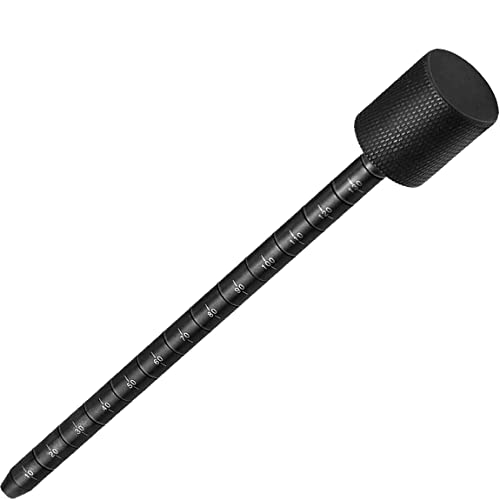
Main Usage: Measure the Fluid Level of the transmission;
Add Transmission Fluid Carefully Without Overfilling
The right funnel makes all the difference when I’m topping off my transmission. I grab a long-necked funnel that seats securely in the fill tube, then I add transmission fluid slowly, watching the dipstick carefully. I’m aiming for that sweet spot just below the full mark, because overfilling causes foaming, overheating, and serious damage I can’t afford.
Here’s my approach:
- Pour in half a quart at a time, waiting between additions
- Pull the dipstick, wipe it clean, reinsert fully, then check again
- Stop immediately when the level nears the full line
- Verify the fluid stays clear and pinkish, not dark or burnt
If my level keeps dropping or I spot leaks, I know it’s time for professional help.
Recommended Products

Auto Transmission Service Kit for ZF 8 Speed (8HP) Trans. (Comes with a Fluid Transfer Pump)

Importance of Transmission Filter Service: As clutches and bands wear, they shed a dark, fine friction material — similar to brake dust.The transmission filter and oil pan work together to trap this micro‑fine debris, helping reduce the risk of low‑speed "judder" or "shudder" and lowering the chance of an transmission rebuild.

Handle Sealed Transmissions and Know When to See a Mechanic
Some vehicles throw me a curveball: sealed transmissions with no dipstick at all. These systems minimize fluid waste, but they lock me out of DIY checks completely.
Sealed transmissions with no dipstick: less waste, zero DIY access.
I follow the manufacturer’s service schedule religiously here. Without user access, I can’t verify fluid level or condition myself, so I lean on dealership technicians or qualified shops with the right diagnostic tools. Strange noises, delayed engagement, or hesitation before shifting tell me something’s off.
I never attempt top-ups on these units myself. Overfilling happens easily, and misdiagnosis costs more than the initial inspection. Instead, I book professional service when symptoms appear or when the service schedule demands it.
For sealed transmission owners like us, prevention beats repair. Trust the intervals, watch for warning signs, and let experts handle what we can’t see.
Recommended Products

Designed for Easy Installation:Firewall mounted Flex Transmission's oil dipstick is designed for easy installation. It is engineered to compatible with GM TH350/TH400 transmissions, making it a reliable replacement for your old or damaged dipstick.
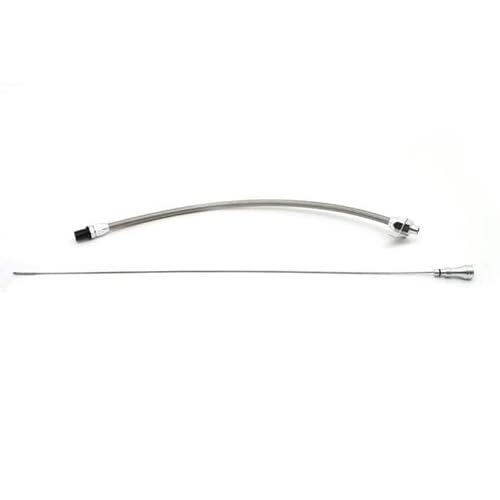
FLEXIBLE HOSE DESIGN – Features a braided stainless hose that allows easy routing around engine bay components for clean installation and convenient access.
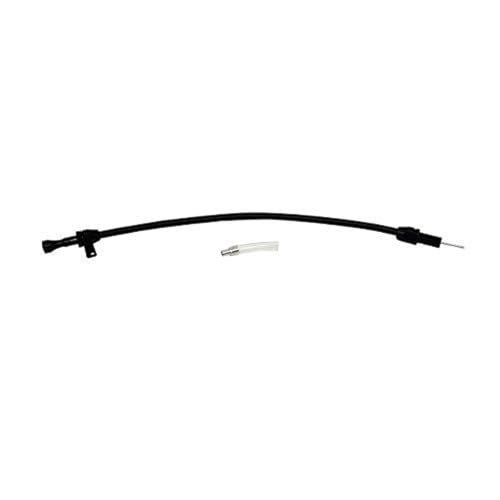
Precision-Engineered Design: A-Team Performance offers a highly specialized Firewall Mount Transmission Dipstick, compatible with GM 4L80E, LS1, LS3, LS6, and LSX transmissions. This dipstick ensures seamless integration and reliable measurement for automotive optimization