I check my alignment every 12,000 miles as a baseline, but I’ve learned the hard way that potholes and curb strikes demand immediate attention. You’ll feel pulling, off-center steering, or spot uneven tire wear long before serious damage sets in.
Rough roads or harsh winters? I tighten that schedule to six months. The real test comes when you request that printed before-and-after report at a reputable shop.
How to Know When Your Car Needs Alignment
How do you know when your car needs alignment? I look for unmistakable cues on the road. If my car starts to pull to one side on a straight, level surface, that’s my first red flag. I’m fighting the wheel instead of cruising relaxed, and that constant correction wears me out fast.
I also inspect my tires during rotation. Uneven tire wear patterns, feathered edges or bald spots on the inside shoulder, scream misalignment. I catch these early by running my hand across the tread, feeling for ridges or sharp edges.
My steering wheel sitting cocked when I’m driving straight is another dead giveaway. After a hard pothole hit or curb bump, I don’t guess; I get it checked. These signs keep my handling tight and my rubber lasting longer.
Recommended Products

【Material】:This car wheel pin is made of high-quality stainless steel, which is sturdy, not easy to deform, corrosion-resistant and sturdy, and has a long service life.

Designed for Golf Cart: Align wheels of your Golf Cart with rim sizes between 8-15 inches on any hard surface.

[What is it for:] When you are taking down the last bolt of the tire, the tire will fall suddenly. And when you are installing the first bolt of tire, you will have problem of aligning the bolt with the bolt hole. This Wheel alignment tool can help you to hold and align tire during these cases.
Annual Alignment Checks vs. Event-Based Triggers: What Applies to You?
I balance my yearly maintenance routine against incident response timing to keep my alignment costs predictable and my tires lasting longer. I aim for that 12,000–30,000 mile annual check as my baseline, but I won’t wait if I hit a nasty pothole or notice my steering wheel sitting crooked on the highway.
New tires, suspension work, or packing heavy loads for road trips all trigger immediate alignment checks for me, treating alignment as protective insurance rather than just calendar maintenance.
Recommended Products

Wide Vehicle Compatibility : Adjustable steering wheel holder works with a wide range of cars, trucks, vans, and buses. This 14-inch adjustable steering wheel lock holder is your go-to tool for wheel alignment and balancing jobs—one tool covers different vehicles across your fleet.

UNIVERSAL FIT FOR MOST VEHICLES – Designed for steering wheels with internal diameters from 10.5" (270mm) to 13.4" (340mm). Compatible with passenger cars, vans, and trucks – a versatile addition to any garage or professional workshop .

Alignment tools automotive for aligning that the steering wheel is centralized after making front end adjustments or repairs
Yearly Maintenance Routine
When exactly you need an alignment depends on how aggressively you drive and what punishment your local roads dish out. I align my tires every two years or 30,000 miles as a baseline, whichever hits first. That schedule works for steady highway commuting, but cratered city streets or spirited cornering demand yearly checks.
I treat annual alignment as cheap insurance against uneven tire wear. Some drivers wait for event-based triggers: fresh rubber installed, a curb strike, or that telltale steering pull on flat asphalt. I notice my steering wheel sitting off-center, and I know it’s time.
Visual cues matter. Uneven tread patterns, constant correction to stay straight, or the car drifting right or left signal trouble. Pair alignment with rotations, and I maximize tire life while keeping handling crisp.
Incident Response Timing
Usually, I decide between sticking to a calendar schedule or waiting for something to go wrong, and that choice depends on how hard I push my car and what my roads look like. Most shops suggest annual alignment checks, though rough driving conditions can push that timeline up. I pair yearly inspections with new tire installations; it’s a habit that saves money by catching drift early before tread turns patchy.
But I don’t rely on calendars alone. After curb strikes, pothole hits, or when my steering wheel sits off-center, I’m booking an immediate check. Off-roaders and commuters on cratered streets know: waiting for visible wear means you’ve already lost rubber.
I mix proactive scheduling with event-based triggers. That’s my system for keeping handling crisp and tire life maximized without guessing.
Warning Signs You Shouldn’t Ignore
I notice my car fighting the steering on flat highways, or I’ll spot uneven wear patterns, more rubber gone on one edge than the other, when I’m checking tread depth with a quarter. My steering wheel sits cocked at eleven o’clock when I’m driving straight, which tells me something’s off in the geometry.
These three symptoms, pulling, uneven wear, and that off-center wheel, are your dashboard-free warning system, and I’ve learned to treat them as urgent maintenance triggers, not suggestions.
Recommended Products

【Caliper Removal Not Required】 Unlike traditional wheel alignment tools, our upgraded alignment tool eliminates the need for brake caliper removal. The inclusion of versatile extension pieces allows for direct and immediate use, streamlining the entire process for a truly efficient DIY experience.
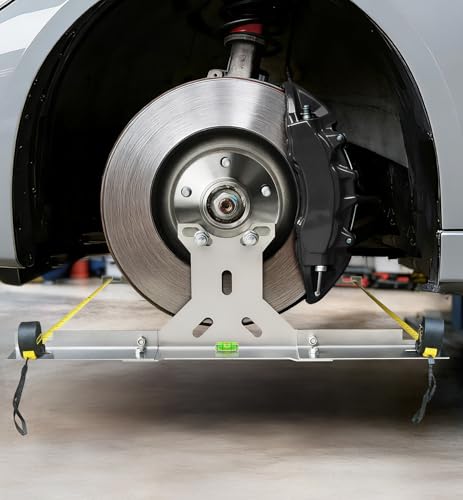
DIY front‑end toe adjustment for home garages - Designed for car owners and home garages who want tocheck front-end toe and assist with basic adjustments between professional visits. Use after minor suspension, steering, or tire work to verify toe settings and keep steering stable without a costly shop trip.

Key Features: This wheel alignment tool helps restore the strut to its original camber position after removing and reinstalling components of your vehicle's undercarriage system, or check the amount of camber change before re-installation. Suitable for precise checking of the caster and camber angle
Pulling to Side
Why does your car seem to have a mind of its own on straight stretches of highway? I’ve experienced that unsettling tug firsthand, and it’s a reliable indicator your Alignment needs attention. When you’re fighting the wheel just to stay centered, your vehicle is literally Pulling to one side, costing you focus and fuel economy.
I always check tire pressure first, then rotate my tires. If that persistent drift continues toward the curb or center line, you’ve got alignment issues. New tires or recent pothole impacts make this especially critical.
I noticed my own steering wheel sat slightly off-center during straight-line driving, a dead giveaway that factory specifications were off. Don’t ignore this warning. Left unchecked, misalignment degrades handling and turns every commute into unnecessary work.
Uneven Tread Wear
How can you spot alignment trouble before it drains your wallet? I always check for uneven tread wear, and you should too. Run your hand across each tire’s surface. Feel how one edge wears deeper than the other? That’s your red flag.
Misalignment shows through distinct patterns: inner shoulders chewing faster than outer ones, or center strips wearing while edges stay fresh. These point to toe, camber, or caster issues. Hit a pothole last week? Sudden changes in wear patterns often follow impacts like that.
Here’s my routine: rotate tires every 5,000 to 8,000 miles, inspect closely during each swap. Regular rotation reveals irregularities you’d otherwise miss.
Even with proper pressure and maintenance, uneven tread wear demands attention. Get your alignment checked promptly to stop further damage and protect your investment.
Off-Center Steering
When you’re cruising down a straight stretch of highway, does your steering wheel sit level, or is it cocked slightly left or right? Off-center steering signals something’s wrong beneath your vehicle. I notice this immediately during test drives: the wheel looks crooked even when you’re tracking straight.
This happens when bent components, worn tie rods, or loose suspension parts throw off your geometry. Potholes and curb hits cause it too.
Beyond the annoyance, you’re bleeding fuel efficiency and chewing through rubber unevenly. I’ve measured premature wear patterns, 15-20% faster in misaligned vehicles.
Feel drifting or vibration at speed? Schedule an alignment check fast. Most modern cars need four-wheel alignment to reset steering geometry properly. Don’t ignore it. Correct it early, save your tires, and drive with confidence.
How to Read Tire Wear for Alignment Problems
Because I’ve spent years crawling under cars and measuring tread depths with a gauge, I’ve learned that your tires are basically alignment report cards you can read with your eyes and hands. Wheel alignment issues show up as distinct tire wear patterns, and catching them early saves you money and keeps your ride smooth.
Here’s what to look for during your inspections:
- Feathered edges across tread blocks, shaved on one side and sharp on the other, signal toe misalignment needing immediate attention.
- Inside or outside shoulder wear, especially on front tires, points to camber problems where wheels tilt too far inward or outward.
- S-shaped or cupped patterns across the tread often mean suspension components or alignment angles have drifted out of specification.
I run my hand across the tread monthly, feeling for these irregularities before they destroy your tires.
Recommended Products

These driver's vehicle inspection report (DVIR) books comply with DOT regulations 49 CFR 396.11 and 396.13.

Our DOT multi-point inspection report forms included all information needed to estimate for any type of vehicle and designed to cover all critical aspects of a multi-point check.

DVIR inspection book helps satisfy DOT vehicle inspection regulations 49 CFR 396.11 and 396.13.
How Road Conditions and Driving Habits Affect Your Schedule
Where you drive and how you drive matter just as much as what you drive for keeping your wheels pointed straight. Rough road conditions with potholes and bumps knock your wheels out of true faster than you’d expect. I’ve seen alignment drift after just a few months on poorly maintained urban streets.
Your driving habits play a huge role too. Aggressive cornering, heavy braking, and constant quick turns accelerate tire wear and push suspension components harder. That translates to more frequent alignment checks.
Highway cruisers catch a break here. Smooth asphalt keeps everything in place longer. But if you’re hitting curbs or venturing off-road, inspect alignment afterward, even without visible damage.
In harsher environments, I recommend checking alignment every six months, regardless of how your tires look.
Recommended Products

Most-Used Metric Sizes: Wheel hanger alignment pin set includes M12x1.25, M12x1.5, M14x1.25, M14x1.5 (2PCS each), designed for common lug bolt vehicles.

Effective Detection: The magnetic gauge measures and adjusts the tilt angle of the wheel through the built-in green liquid column leveling bubble. Determining whether the entire vehicle is in a horizontal state helps improve driving stability, ensuring better safety

Features: The 10PC Wheel Holder makes it easier for you to mount your wheels and tires by aligning the wheel's lug holes with the hub so you don't have to worry about securing them to your car while you're trying to balance the wheel between your knees. The knurled end ensures a tight grip during installation and removal.
Always Align With New Tires? Plus After Potholes and Accidents
Why align new tires? I always recommend it as a preventative measure. You’re protecting your investment from day one, ensuring even wear and proper road contact. I’ve seen too many drivers skip this step and regret it months later when uneven patterns emerge.
Aligning new tires from day one protects your investment and prevents the uneven wear patterns too many drivers regret months later.
Here’s when alignment matters most:
- New tire installation: Many shops inspect alignment automatically, and I suggest requesting a four-wheel check for optimal wear patterns across all positions.
- Pothole hits or curb strikes: These impacts can knock things off even when driving feels normal, so get checked promptly.
- After any accident: Hidden damage affects tire geometry, and post-incident checks prevent uneven wear from developing silently.
Think of alignment with new tires as insurance against premature replacement. It costs little upfront compared to replacing rubber early.
Recommended Products

To make measurement more accurate.

The steering wheel holder stand tool used for fixing the steering wheel position, it fits for all cars steering wheel

WIDE APPLICATION - our adjustable holder stand is universally fits for most of Cars, Trucks and Vans to provide a firm hold on the steering wheel, is a must have tool for all alignments
Alignment or Balancing: Which Service Do You Actually Need?
“I think I need my tires balanced,” when the real culprit is alignment, or vice versa. I’ve mixed these up myself, and it cost me time and money.
Here’s how I tell them apart now. Alignment fixes your wheel angles, keeping tires wearing evenly, handling sharp, and fuel economy solid. Balancing distributes weight around the tire and wheel assembly, killing vibrations at highway speeds.
I feel pulling to one side, or my steering wheel sits crooked, or my tires are wearing funny? That’s alignment territory. I get shaking through the seat or steering wheel, especially above 50 mph? Balancing’s my fix.
Balancing won’t fix uneven wear patterns. Alignment won’t stop vibration. I match the symptom to the service, not guess. It saves me from paying for the wrong fix and keeps my ride dialed in.
Recommended Products

UPGRADED 4-IN-1 WHEEL ALIGNMENT KIT: Unlike basic toe alignment tools that only measure toe-in and toe-out, this advanced wheel alignment tool kit features an adjustable magnetic camber gauge to measure four essential alignment angles: camber, caster, toe-in, and toe-out. Get a more complete suspension alignment solution with one versatile tool designed for accurate vehicle alignment measurements.

[ Fitment ] for Ford F150 2WD 4WD 2004-2016,for Ford Expedition 2WD 4WD 2007-2016,for Lincoln Navigator 2WD 4WD 2007-2016,for Lincoln Mark LT 2006-2008

DIY front‑end toe adjustment for home garages - Designed for car owners and home garages who want tocheck front-end toe and assist with basic adjustments between professional visits. Use after minor suspension, steering, or tire work to verify toe settings and keep steering stable without a costly shop trip.
What Happens During a Professional Alignment
A professional alignment typically starts with me rolling onto a lift where technicians clamp sensors to each wheel. They measure my steering and suspension angles against factory specs, checking camber, toe, and caster with diagnostic equipment.
The process unfolds in three clear steps:
- Technicians take initial readings to spot misalignment causing uneven wear or steering pull.
- They adjust front-end and rear-end angles to match manufacturer targets.
- Final measurements confirm everything aligns, followed by a test drive verification.
Most shops hand me a printed report showing before-and-after numbers. This documentation proves the alignment fixed my off-center wheel and prevents future tire damage. The whole service takes under an hour, and I drive away knowing my suspension geometry matches exactly what engineers intended.
Recommended Products

DOT Compliance - These driver's vehicle inspection report (DVIR) books ensures compliance with DOT regulations (49 CFR 396.11 and 396.13)

Size: 5-1/2in. x 8-1/2in.; Pages Material: 50 gsm Carbonless Paper

You Will Receive: you can get 20 vehicle inspection report, each containing 31 sets of forms; In total, you will receive 310 forms; The size of each book is 5.5 x 8.5 inches/ 14 x 21.6 cm, 2 layers, with yellow carbonless copy paper, sufficient quantity, enough to meet your usage needs, to ensure that you have enough supply to meet your needs; Whether you drive alone or manage a fleet, this package can fully meet your needs
How to Choose a Shop and What the Service Includes
Once you understand what happens during an alignment, picking the right shop becomes your next move. I always look for certified technicians and Toyota-trained staff at places like AutoFair Toyota or Just Tires. They know proper Wheel Alignment and balancing inside and out.
Many shops provide free visual checks, reviewing details upfront if work’s needed. Typical service covers 4-wheel alignment, adjusting all angles, or thrust alignment for the front axle. Technicians compare measurements against manufacturer specs.
I schedule alignments with new tire purchases, since fresh rubber deserves proper setup to maximize Tire Life. Expect about one hour for the job, plus a printed report showing your before and after readings. Request post-work verification that everything sits within spec. It’s straightforward, transparent, and protects your investment.
Recommended Products

ESSENTIAL FOR WHEEL ALIGNMENT: AutoSolo's Wheel Alignment Turn Plates are a must-have accessory for any wheel alignment task. Designed to offer frictionless front wheel rotations to deliver precise and accurate alignment for automotive professionals and enthusiasts, these alignment plates ensure optimal performance in every scenario.

Fits Multiple Vehicles: Compatible with Mercedes, BMW, Audi, VW, Porsche, Fiat, and Dodge for versatile wheel alignment. This wheel stud installer tool ensures proper fitment for many European and domestic models.