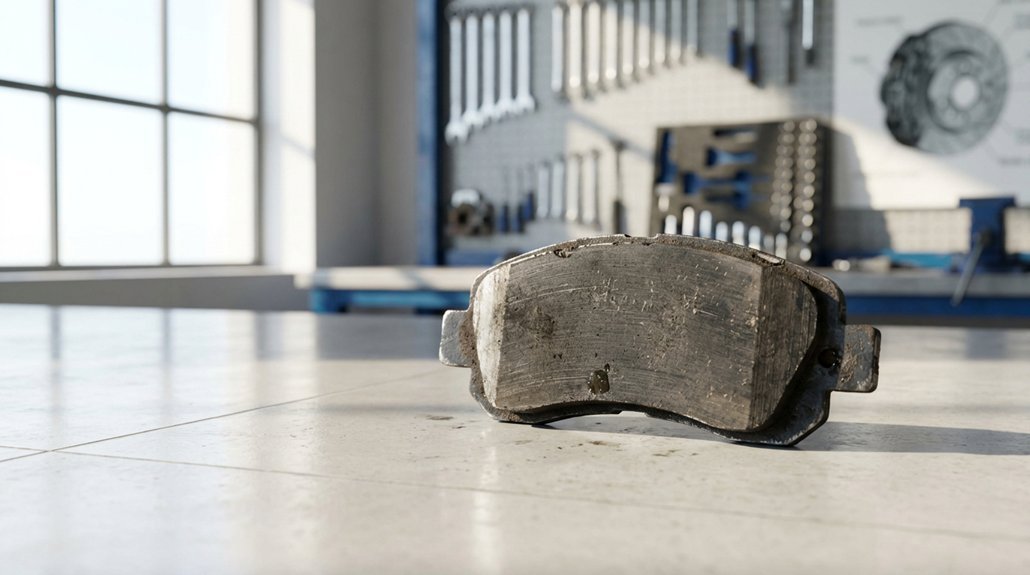
Brake replacement is a moving target, like trying to hit a bullseye on a spinning wheel. I’ve seen pads crumble at 20,000 miles in stop-and-go city traffic, and I’ve watched highway cruisers push past 65,000 without a squeak.
The real question isn’t when your manual says to swap them: it’s whether you’re listening to what your car’s actually telling you. Most drivers ignore the warning signs until metal meets metal, and that’s where the real damage, and cost, begins.
What Affects How Long Brake Pads Last?
Why do some drivers squeeze 70,000 miles from their brake pads while others need replacements at 25,000? I’ve tested enough vehicles to tell you brake pad wear isn’t random. It’s about how, where, and what you drive.
Your habits matter most. I ride my brakes less now after seeing how “riding the brake” shaves thousands of miles off pad life. Stop-and-go traffic? That’s urban torture for your brakes. Highway cruising? Much gentler.
Riding the brake shaves thousands of miles off pad life—stop-and-go traffic is urban torture for your brakes, highway cruising much gentler.
Vehicle type plays a role too. Heavier SUVs and trucks chew through pads faster than compact sedans. Front disc brakes handle most stopping power, so they wear quicker than rear setups.
Don’t ignore pad material. Organic pads run quiet but fade fast. Metallic lasts longer, dusts more. Ceramic balances both, costs extra. Snow, hills, heavy loads: they all speed up wear.
Recommended Products

The 9 Piece Manual Brake Gauge Set Allows Brake Pad Wear to be Accurately and Consistently Measured without Guessing.

Package Content: You will receive 1 piece of brake pad thickness gauge with white scale on the black handle, which is easy to read the data.

Wide Compatibility: This brake pad thickness gauge suitable for both internal and external brake pads, with 1.5mm calibration markings. Works perfectly for pads with standard 6mm-thick backing plates (levels IV, V). Works on most modern cars, SUVs, and light trucks.
How Many Miles Do Brake Pads Typically Last?
I typically see brake pads last anywhere from 25,000 to 70,000 miles, though your actual mileage will swing wildly based on how and where you drive. Urban stop-and-go traffic with aggressive braking can chew through a set in 30,000 miles or less, while easy highway cruising often pushes past 80,000.
I check mine at least once a year or every 12,000 miles, and I replace them when there’s less than a quarter inch of pad left, about 7 mm, to keep stopping power crisp and rotors protected.
Recommended Products

PLEASE CONFIRM YOUR FITMENT: Using the Amazon Confirmed Fit bar at the top of the page or check the Product Description to confirm your vehicle fitment

PLEASE CONFIRM YOUR FITMENT: Using the Amazon Confirmed Fit bar at the top of the page or check the Product Description to confirm your vehicle fitment
PLEASE CONFIRM YOUR FITMENT: Using the Amazon Confirmed Fit bar at the top of the page or check the Product Description to confirm your vehicle fitment
Average Lifespan Range
How long can you realistically expect your brake pads to last? I’ve found most brake pads provide between 25,000 and 70,000 miles of service. That’s a wide spread, and your results will land somewhere in that range based on how and where you drive.
City driving with constant stop-and-go traffic chews through pads faster than steady highway cruising. I inspect my pads once or twice yearly, or every 12,000 miles, to track remaining thickness. Aggressive braking habits, or “riding the brake,” push you toward that lower mileage figure sooner than you’d like.
Many newer vehicles now include wear indicators or dashboard alerts that flag replacement needs earlier within this lifespan. These warnings help you avoid guessing and keep your braking performance reliable.
Factors Affecting Wear
Several variables determine where your brake pads land in that 25,000–70,000 mile range. Understanding these brake wear factors helps you predict your own maintenance needs and avoid surprises.
Your driving environment matters most. I see urban drivers burning through pads in 30,000–35,000 miles with all that stop-and-go traffic, while highway commuters regularly stretch past 60,000. Your foot habits count too: hard braking and riding the pedal shaves thousands off your pad life.
Vehicle setup plays a role. Front-disc, rear-drum configurations typically wear fronts faster, though quality pads still clear 30,000 miles in normal use.
These brake wear factors aren’t just trivia; they’re your roadmap to smarter ownership. Match your expectations to your actual conditions, and you’ll budget better, plan smarter, and keep your stopping power solid.
Inspection Frequency Guidelines
Most drivers can expect their brake pads to last somewhere between 25,000 and 70,000 miles, but that wide range means you can’t just set a calendar reminder and forget about it. I’ve found that setting a smart inspection_frequency keeps you ahead of costly surprises.
I check my brakes at least once a year, or every 12,000 miles, whichever hits first. Urban driving with constant stop-and-go traffic chews through pads faster than highway cruising, so I adjust accordingly.
Watch for warning signs: squealing, grinding, a soft pedal, or longer stopping distances. These demand immediate attention, no matter your schedule.
Even without symptoms, I get a professional brake check during regular service visits. Technicians measure pad thickness and rotor condition, catching wear before it becomes dangerous.
How Often Should You Inspect Your Brake Pads?
I recommend inspecting your brake pads at least once a year, or every 12,000 miles, whichever comes first. Annual checkups catch wear early, and mileage-based intervals keep you on track if you drive more than average.
I’ll also test my brakes sooner if I hear squealing, feel vibration, or notice longer stopping distances.
Recommended Products

OPTIMUM PEDAL RESPONSE: Ultra low dust and wear resistant formulation engineered for optimum pedal response and consistent feel.
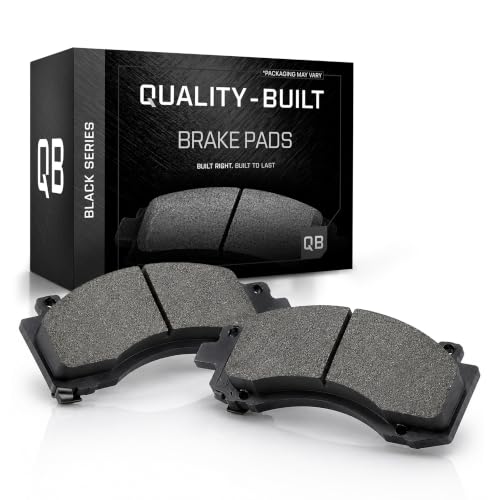
OPTIMUM PEDAL RESPONSE: Ultra low dust and wear resistant formulation engineered for optimum pedal response and consistent feel.

Brakes Compatible Vehicles: Front Brakes For 2011-2013 Chevy Cruze, 2014-2015 Chevy Cruze 1.4L, 2014-2015 Chevy Cruze 1.8L, 2016 Chevy Cruze Limited, 2012-2017 Chevy Sonic
Recommended Inspection Frequency
How often should you actually check your brake pads? I recommend inspecting them at least once a year, or every 12,000 miles, whichever hits first. Your driving habits and local conditions will push that number up or down.
Since brake pads typically last 25,000 to 70,000 miles, these inspections help me catch replacement needs before they become safety issues. I look for pad thickness below ¼ inch, about 7 mm, as my warning threshold.
I don’t wait for scheduled checks if I notice spongey pedals, unusual noises, or weaker stopping power. Those symptoms demand immediate attention.
A professional inspection gives me the full picture: pad life remaining, rotor condition, and whether resurfacing or replacement makes sense. It’s worth the modest cost for the confidence it gives me.
Annual Brake Checkups
Brake inspections deserve a spot on your calendar every 12 months or 12,000 miles, whichever rolls around first. I make this appointment non-negotiable because catching wear early saves money and keeps me safe.
During my annual checkup, my mechanic measures pad thickness. Anything under 1/4 inch, about 7 mm, signals I’m nearing brake pad replacement territory. They also eyeball the rotors and test brake fluid condition.
Even when my pedal feels firm and stopping distances look normal, this routine visit confirms what’s hidden behind the wheels. Typical pads last 25,000 to 70,000 miles depending on how I drive, my vehicle type, and how hard I brake. But mileage alone won’t warn me about fluid degradation or uneven wear. Annual inspections catch those silent problems before they balloon into costly repairs.
Mileage-Based Inspection Intervals
While annual checkups give me a fixed date to circle on the calendar, mileage tells the real story of what’s happening to my pads. I inspect my brake pads every 12,000 miles, or yearly, whichever hits first.
Most brake pads last 25,000 to 70,000 miles, but my driving style changes that math. City driving with constant stop-and-go wears them faster, around 30,000–35,000 miles. Highway miles treat me better, stretching pad life past 80,000.
I don’t wait for a number if something feels off. Squealing, grinding, or a spongy pedal means I get my brake pads checked immediately, no matter the odometer. Trusting mileage keeps me ahead of surprises, and pairing it with annual checks covers all my bases.
What Are the Warning Signs of Worn Brake Pads?
When should you start worrying about your brake pads? I listen for the telltale squeal first. That high-pitched sound often means wear indicators are doing their job, warning me before real damage starts. Not every brake pad has these built-in alerts, so I don’t rely on sound alone.
Listen for the telltale squeal first—that high-pitched sound often means wear indicators are doing their job, warning you before real damage starts.
I pay attention to feel too. A spongy pedal, longer stopping distances, or the car pulling to one side during braking tells me something’s off. These performance changes demand prompt inspection.
Then there’s the unmistakable growl. Deep metallic grinding means metal-to-metal contact, and I treat that as an emergency. At that point, I’ve waited too long and risked rotor damage.
I inspect my brake pads yearly, knowing urban driving wears them faster than highway cruising. Most pads give me 25,000 to 70,000 miles, but my driving style ultimately decides.
Recommended Products

Upgrade your braking performance with SRAM Disc Brake Pads.
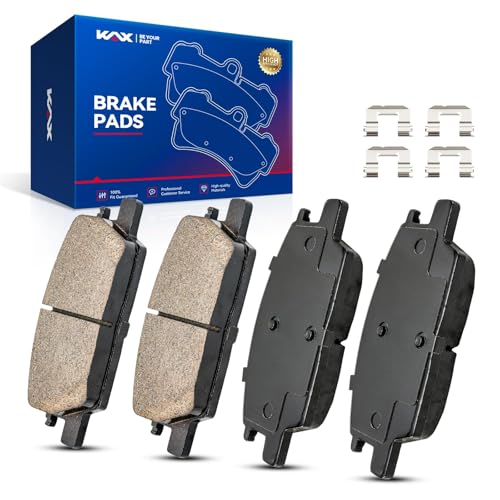
KAX brake pads fit for Chevrolet 2018-2020 Equinox, 2016-2020 Malibu, GMC 2018-2020 Terrain, Buick 2017-2019 LaCrosse, 2018-2019 Regal Sportback/TourX, 2020 Regal Sportback Avenir/Base/Essence/Preferred, (GM Brake Code J60)

Organic disc brake pads offer good stopping power while keeping noise to a minimum
How Thin Is Too Thin for Brake Pads?
I measure my brake pads with a simple caliper when I’m checking for minimum safe thickness, and I’ve learned that 1/4 inch, about 6 to 7 mm, is where most manufacturers draw the line for replacement. You’ll spot visual wear indicators, those small metal tabs, once the pad material wears down enough to expose them, usually right around that same threshold.
I replace mine before hitting that mark if I drive in heavy traffic, since urban stop-and-go conditions chew through pads faster than highway miles ever will.
Recommended Products
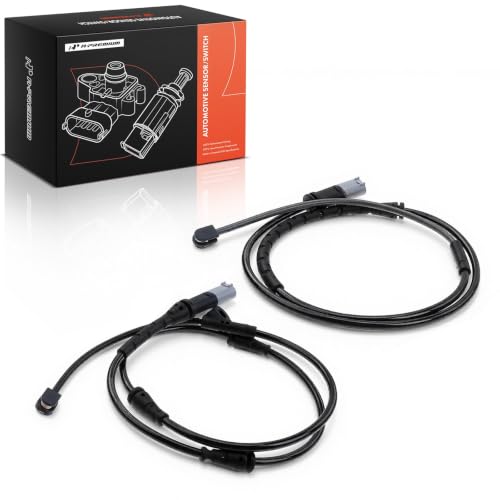
[Vehicle Fitment]: Compatible with BMW F15 Series X5 2014, E70/F15 Series X5 2011-2013 (xDrive35d/xDrive35i/xDrive50i), F15 Series X5 2016-2018 L4 2.0L (xDrive40e), F15 Series X5 2015-2018 L6 3.0L/V8 4.4L (xDrive50i/sDrive35i/xDrive35d/xDrive35i), E71/E72/F16 Series X6 2011-2014 (xDrive35i/xDrive50i), F16 Series X6 2015-2019 (sDrive35i/xDrive35i/xDrive50i) --- Front and Rear, Driver and Passenger Side

GM-recommended replacement part for your GM vehicle's original factory component
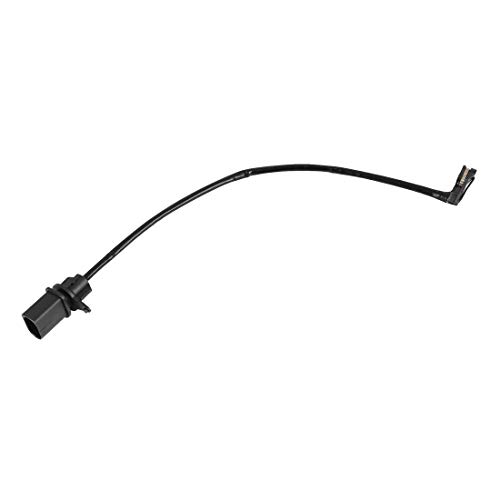
[Effectiveness] - In order to ensure the safe and effective braking performance of the vehicle, the brake pad sensor will automatically remind you when the brake pads wear out and need to be replaced.
Minimum Safe Thickness
How thin is too thin when you’re staring down at your brake pads during a Saturday morning inspection? I’ve learned that brake pad thickness tells you everything about your safety margin. Most manufacturers draw the line at 3 mm, about 1/8 inch, though I replace mine closer to 4 mm to protect my rotors from costly damage.
Here’s what I’ve picked up from years of hands-on testing:
- 3 mm is your hard stop, 4 mm is your smart stop
- Quarter-inch remaining means you’re already in the inspection zone
- Metal-to-metal contact turns a $150 job into a $500 nightmare
- Annual checks at 12,000 miles catch problems before they catch you
I measure with a simple caliper, no guesswork. Thin pads sacrifice stopping power and chew up rotors fast. Trust the numbers, not your gut.
Visual Wear Indicators
Where exactly do you look when you’re trying to spot worn brake pads without ripping everything apart? I check through the wheel spokes, using a flashlight to spot the pad material pressed against the rotor. Most of us can eyeball this during a tire rotation or oil change without special tools.
I measure brake pad thickness whenever I spot less than 7 mm, about 1/4 inch, of material remaining. That’s my warning zone. Some pads include built-in wear indicators, small metal tabs that squeal when contact occurs, but I don’t rely on them alone. Not every manufacturer includes these.
I inspect annually or every 12,000 miles, whichever comes first. Catching thin pads early prevents that dreaded grinding sound, metal scraping metal, which means I’ve already damaged the rotor. Regular checks keep repair bills manageable and my brakes performing reliably.
Replacement Timing Guidelines
When exactly should you swap out brake pads before they let you down? I inspect mine yearly, or every 12,000 miles, because waiting too long risks rotor damage and costly repairs. Most manufacturers recommend brake pad replacement when material thins to 1/4 inch, roughly 6–7 mm. That’s your hard limit.
Here’s what I’ve learned about timing it right:
- Measure twice: I use a simple gauge, or eyeball against a quarter, to check thickness during tire rotations.
- Listen up: Squealing wear indicators mean you’ve hit the danger zone; don’t ignore them.
- Know your driving: My city commute chews through pads faster than highway cruising. Expect 25,000–70,000 miles depending on conditions.
- Watch for warnings: Some cars flash a dash light thanks to wear sensors, giving you a head start.
Urban stop-and-go kills pads prematurely. I factor that into my maintenance budget.
How to Check Your Brake Pads at Home
Because I like knowing exactly what’s happening with my car before I visit a shop, I’ve made checking brake pads at home a regular habit, and it’s simpler than most drivers expect. I look through the wheel spokes from the back of the rotor to estimate pad thickness. If I spot less than about ¼ inch, or roughly 7 mm of visible material, I know replacement may be needed.
Many vehicles have wear indicators that squeal when brake pads run thin, though not all do, so I trust visual inspection more. I inspect the outer pad where it’s exposed. If the backing plate sits close to the rotor surface, I schedule replacement.
I run these checks once or twice yearly, or sooner if braking feels off or I hear odd noises.
Recommended Products
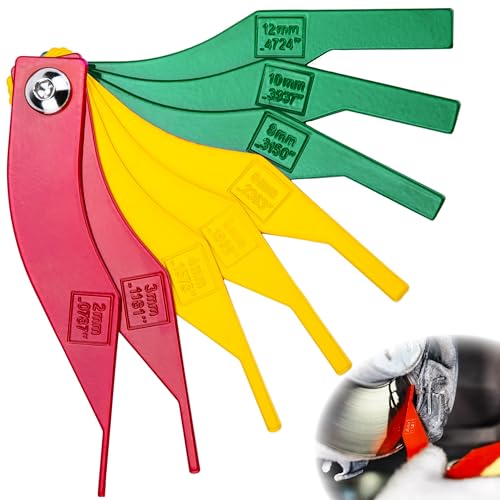
Excellent Material: Brake measuring tool is crafted from high-quality iron material with a sturdy and durable design and long service time. Its surface is not easy to lose paint, has excellent corrosion resistance and rustproof performance, even after a long time of use, it can still maintain its original color and appearance

MAKE BRAKE PAD MEASUREMENT EASY: Brake Lining Thickness Gauge is a super quick way to check if you need to get new brake pads. Simply place the end of each brake gauge on the pad until the gauge matches the thickness of the pad. That's it, no need to pull out a micrometer to do some math. If the meter is green, you are good. If it's yellow, it's time to start thinking about a replacement. If it's red, it's time to install some new pads

Precision Measurement: This thickness gauge is equipped with a 1.5-11 mm scale, enabling quick and precise measurement of the distance between the bottom of the brake pad backing plate and the brake disc. By monitoring brake wear, it helps ensure timely replacement to prevent potential brake failures
What Happens If You Delay Brake Pad Replacement?
I’ve seen what happens when drivers push their luck with worn pads, and it isn’t pretty. Brake pad wear doesn’t fix itself, and ignoring it hits your wallet and safety hard.
Here’s what you’re risking:
- Metal-on-metal contact that destroys rotors and doubles your repair bill
- Longer stopping distances that put you and your passengers in danger
- Squealing, grinding noises and steering wheel vibration that make every drive miserable
- Complete brake failure in extreme cases, which nobody wants to experience
I inspect my pads every 10,000 miles because catching brake pad wear early saves money. Replace pads at 3-4 millimeters, and you’ll usually avoid rotor replacement. Wait too long, and you’re looking at a much bigger job.
Smart maintenance keeps you safe and on budget.
Recommended Products
PLEASE CONFIRM YOUR FITMENT: Using the Amazon Confirmed Fit bar at the top of the page or check the Product Description to confirm your vehicle fitment
PLEASE CONFIRM YOUR FITMENT: Using the Amazon Confirmed Fit bar at the top of the page or check the Product Description to confirm your vehicle fitment
PLEASE CONFIRM YOUR FITMENT: Using the Amazon Confirmed Fit bar at the top of the page or check the Product Description to confirm your vehicle fitment
Do Ceramic Brake Pads Last Longer?
Ceramic brake pads have earned a reputation for longevity, and my own experience backs that up. I’ve watched ceramic pads stretch to 40,000–70,000 miles under normal driving, outlasting organic and metallic alternatives. They’re cleaner too, generating minimal dust and keeping wheels presentable.
That said, aggressive driving slashes this advantage. I’ve seen ceramic pads wear to 25,000–40,000 miles when pushed hard on twisty roads or track days. Your results depend on vehicle weight, rotor condition, and whether you’re battling city traffic or cruising highways.
I still inspect mine regularly. When friction material nears 7 mm, about a quarter inch, it’s replacement time regardless of pad type. Performance degradation matters more than mileage claims.
For most drivers seeking reliability without constant maintenance, ceramic pads provide genuine value.
Recommended Products
OPTIMUM PEDAL RESPONSE: Ultra low dust and wear resistant formulation engineered for optimum pedal response and consistent feel.
OPTIMUM PEDAL RESPONSE: Ultra low dust and wear resistant formulation engineered for optimum pedal response and consistent feel.
OPTIMUM PEDAL RESPONSE: Ultra low dust and wear resistant formulation engineered for optimum pedal response and consistent feel.
How Much Does Brake Pad Replacement Cost?
So how much will this actually set you back? I’ve found brake pad replacement cost typically runs $100 to $300 per axle. Your vehicle, pad material, and local labor rates all factor in.
Here’s what I’ve learned from hands-on experience:
- Organic pads cost less upfront but wear faster and create more dust
- Ceramic pads run higher, around $200 to $300 per axle, with cleaner wheels and quieter stops
- Labor adds $50 to $150 per axle depending on your shop and vehicle accessibility
- Rotor work pushes totals to $300 to $500 per axle when resurfacing or replacement becomes necessary
Some vehicles need wear sensors or specialized pads, which drives costs higher. I always price out the complete job, not just parts. Knowing your brake pad replacement cost upfront prevents surprises at the shop, and you’ll feel confident discussing options with your mechanic.
Recommended Products

Upgrade your trail riding experience with SRAM Disc Brake Pads Organic Compound, Steel Backed, designed for quiet and reliable performance.
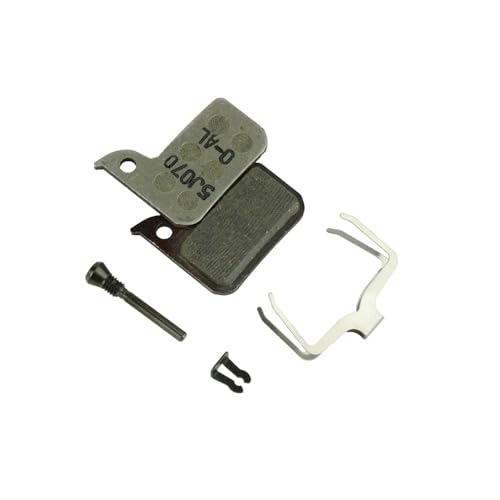
Aluminum backed organic pad is quiet and lightweight
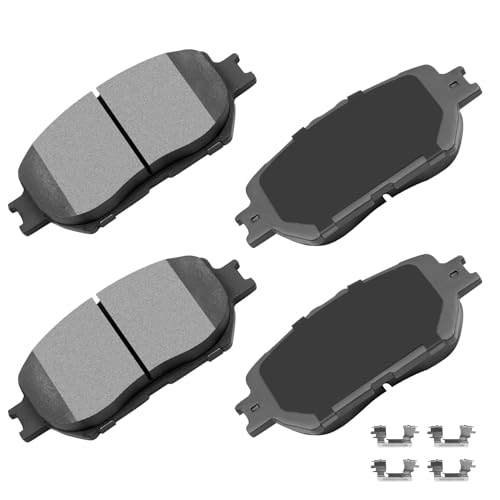
COMPATIBLE VEHICLES: ATD908C,D908-7787 Quiet Brake Ceramic Pads 2006 For Lexus GS300,2009-2015 For Lexus IS250,2002-2006 For Toyota For Camry
How Can You Make Your Brake Pads Last Longer?
Brake pad replacement isn’t cheap, so I’m always looking for ways to stretch those miles between shop visits. I’ve learned that my driving habits matter more than I thought. I stopped “riding the brake” in traffic and started coasting more, which helps my brake pads last considerably longer. Highway driving can push pad life to 80,000 miles, while constant urban braking wears them down fast.
I get my brake pads inspected yearly, checking that friction material stays above 7 mm to protect my rotors. I switched to ceramic pads, which cut down on dust and noise without sacrificing performance. I also follow my manufacturer’s brake fluid schedule and avoid heavy braking when I can.
These small changes keep my brake pads performing longer, saving me money and shop time.
Recommended Products

[Effectiveness] To ensure the effective braking performance of the vehicle, the brake pad sensor automatically reminds you when the brake pads wear out and need to be replaced.

Fitment: for ford Transit 2013-2024

[ EASY TO INSTALL ] - Direct Plug-In installation, All HiSport Brake pad wear sensor are easy to be replaced in your vehicle.