
Last winter, my sedan slid into a ditch, and I paid $127 for a 7-mile tow that ended up costing more than the tow itself because I didn’t ask about storage fees upfront.
I’ve since learned that towing bills are rarely straightforward. You’re looking at a base hook-up fee around $50-$75, plus $3-$5 per mile, with after-hours calls easily adding $50-$100 more. For a standard car, a 10-mile local tow typically runs $75-$125, but distance, vehicle size, and timing can push that well past $200.
Heavy-duty trucks or winch recoveries? Expect $150-$250 just to start.
Here’s the frustrating part: most drivers discover these numbers when they’re already stranded.
Average Towing Cost in 2024: What You’ll Pay for Common Scenarios
How much will you actually pay when your car needs a tow? I’ve researched this extensively, and here’s what I’ve found. The average towing cost nationwide sits around $109, though your specific situation matters enormously.
For a local tow under 10 miles, expect $75–$125. That hook-up fee, typically $75–$125, hits your bill before any per-mile rate kicks in. Those miles add $3–$5 each, so a 20–30 mile tow easily exceeds $200. Longer hauls? I’ve seen quotes top $600.
Vehicle size/weight changes everything. My friend’s compact sedan cost $95; my truck ran $140 for identical tow distance. After-hours surcharges sting too, adding $20–$50 when you need help at night or on holidays. Plan for these variables, and you won’t face sticker shock roadside.
Recommended Products

Heavy Duty Grade:Our hook trailer can withstand the worst conditions, such as rain, muddy roads, and various vehicle models on icy roads

With unique appearance, racing car style.

DEPENDABLE STRENGTH. This tow hook is constructed from high-strength, heat-treated, forged steel for maximum strength. It is rated for 10,000 lbs. (limited to mounting structure)
How Towing Cost Is Calculated: Hook-Up Fees and Per-Mile Rates
I’ll break down exactly how towing companies charge you, starting with that unavoidable hook-up fee, which typically runs $75 to $125 just to get the truck rolling to your location. Once they’ve got your vehicle secured, the meter keeps running at roughly $3 to $5 per mile.
This means a quick city tow might stay near $100 while a 25-mile haul can easily push past $200. Watch out for after-hours calls and bad weather, though, since those factors can raise your final price by 50% to 100% without warning.
Recommended Products

EMERGENCY CAR KIT ESSENTIALS: Have you ever had car trouble and were anxiously waiting for help? This car roadside emergency kit is suitable for every driver on the road. In any potential emergency, this safety kit will equip you with the necessary tools and items to ensure you and your car are safe

Must-have car accessory: This emergency car kit will prove invaluable should you ever get stranded or if your car, SUV or truck unexpectedly breaks down in the middle of the road. Above all, it’s a matter of staying safe and always being prepared wherever you are.

Essential Car Emergency Kit for All Drivers: This all-in-one emergency car roadside kit is a must-have for women, men, and teens, providing reliable tools like jumper cables, a detachable snow shovel, and more to handle any roadside emergency.
Hook-Up Fee Basics
When you’re staring at a broken-down car and the tow truck finally shows up, the first number that hits your bill isn’t the mileage, it’s the hook-up fee. This upfront cost covers dispatch and getting your vehicle secured, typically running $75 to $125 regardless of distance. I always tell folks to think of it as the price of admission before the per-mile rate kicks in.
Here’s what I’ve learned watching towing costs add up:
- Hook-up fees stay fixed, even for local tows under 10 miles
- Emergency surcharges can spike your total 1.5x to 2x for urgent dispatches
- That $100 hook-up plus $50 for 10 miles beats a 50-mile haul exceeding $350
- Distance always magnifies the final bill after you’re hooked
- Short trips keep towing costs manageable, long hauls don’t
The base fee is non-negotiable. Distance multiplies everything after.
Per-Mile Rate Factors
So you’ve paid the hook-up fee, but where does the rest of your money actually go? It goes into per-mile rates, the engine that drives distance-based pricing.
I typically see rates running $3 to $5 per mile after that initial hookup fee. A quick local tow cost might stay near $100 total. Stretch that into a longer distance tow, say 20 to 30 miles, and you’re crossing $200 fast. I’ve watched a 10-mile job land around $75 to $125 plus mileage, while 50 miles pushes $350.
Watch for the after-hours surcharge and other surge costs. They stack right on top. Understanding this breakdown keeps you from sticker shock when the bill arrives.
Total Cost Calculation
Now that you’ve seen how per-mile rates work, let’s put the whole bill together. Your total cost starts with the base hook-up fee, typically $75 to $125, which covers dispatch and securing your ride. After that, the per-mile rate kicks in, usually $3 to $5, so distance directly drives your final number.
A short regional tow under 10 miles might hit $150 total, while a long-distance tow of 50 miles can push past $350. Watch out for the emergency surcharge, it often doubles your rate and adds $50 to $100 for rush service.
Here’s what shapes your final bill:
- Base hook-up fee sets your starting point
- Per-mile rate multiplies with every mile
- Distance separates cheap local jobs from pricey hauls
- Emergency surcharge hits hardest when you’re desperate
- Regional tow versus long-distance tow makes or breaks your budget
Towing Cost by Distance: Price Breakdowns for Short and Long Hauls
I’ve towed vehicles across every distance bracket, and I’ll break down exactly what you’re paying for in short versus long hauls. Short tows under 10 miles typically run $75 to $125 with a base hook-up fee plus a small per-mile charge.
Long hauls over 40 miles can easily exceed $275 and climb past $600 depending on mileage and equipment needs. Understanding these price tiers helps you spot fair quotes and avoid overpaying when you’re already stressed on the roadside.
Recommended Products

【3/8"x 85ft Synthetic Rope】 Panther Series 3S winch features a 3/8" x 85ft synthetic rope with a 13,500 lb breaking capacity. It's perfect for trucks, jeeps, modified vehicles, trailers, and more, making it an ideal trailer winch.

4 IN 1 TOW STRAP KIT: This towing strap set includes 1 tow strap (3in x 20ft , Orange), 2pcs 3/4" D-ring shackles and 1pcs storage bag.
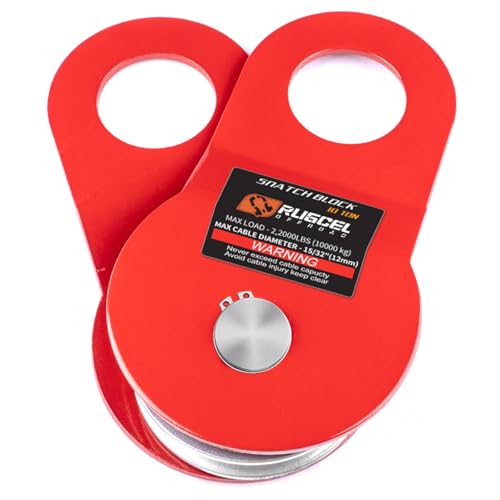
[Sturdiness] Made of heavy duty steel, this snatch block features a MAX LOAD at 10 Ton (22,000 LBS), ideal for most off-road recovery scenarios
Short Tow Pricing
How much should you really expect to pay when your car only needs to go a few miles?
I’ve crunched the numbers, and here’s the breakdown I find most reliable for a short tow. Your towing cost starts with a base fee, typically $75 to $125, which covers the hook-up regardless of how far you’re going. After that, you’re looking at a per-mile rate of $3 to $5 for the distance towed. For a quick urban tow under 5 miles, expect $75 to $125 total. A 10-mile run usually lands around $100 to $150, depending on your specific base fee and mileage.
I’ve learned to watch out for these common price factors:
- Base fee (hook-up charge, no mileage included)
- Per-mile rate applied after initial hook-up
- After-hours surcharge for late-night calls
- Extra services like winching or securement
- Location: city centers versus remote areas
Long Haul Costs
What happens when you’re stranded far from home and need a tow that stretches well beyond city limits? I’ve been there, and long-distance towing hits differently than a quick city pull. Long-haul costs climb fast because every mile matters. You’ll typically see a $3 to $5 per-mile rate stacked on top of your hook-up fee.
Push past 40 miles, and you’re looking at $275 to $600 or more depending on tow distance and timing. Watch out for the emergency surcharge if you’re stuck after hours, it can spike your bill 1.5x to 2x. Add a $20 to $50 overtime fee, and costs multiply.
Heavier vehicles? Expect even higher base rates and specialized equipment needs. Plan ahead, ask about per-mile pricing upfront, and you’ll avoid sticker shock when the miles stack up.
Vehicle Size and Towing Cost: Why Trucks and SUVs Cost More
Why does towing my truck cost nearly double what my neighbor pays for his sedan? I’ve learned the hard way that heavy vehicles trigger a cascade of extra charges that lighter cars simply avoid.
My full-size pickup demands a heavy-duty tow truck, not the standard flatbed that handles sedans. The specialized equipment, stronger winches, reinforced rigging, all of it costs more to deploy and operate. Larger vehicles also load slower, adding labor time that companies bill directly.
Heavy vehicles require bigger tow trucks with higher hourly rates. Specialized equipment rentals pass directly to your towing fees. Per-mile cost multiplies with weight, so distance hits harder. Storage fees jump for oversized vehicles needing extra lot space. Private companies add surcharges beyond base pricing.
City impound scenarios sting worst. My truck’s classification triggered oversized vehicle penalties, plus daily storage fees calculated by length. When I needed a 40-mile tow, that per-mile cost differential turned painful fast. Understanding these variables helps me budget realistically and question estimates that seem too low.
Recommended Products

Key Rack Size: 6 inches wide x 3.3 inches high with 5 rounded hooks for hanging keys, masks, lanyards, or similar

KEEP YOUR CARGO SECURE & ORGANIZED: This 3-section storage box keeps tools, groceries and gear neatly organized in your truck bed or SUV trunk. The included cargo net prevents items from shifting during travel.

Indoor & Outdoor Use: Eastrexon 2+2 trailer ladder racks are crafted with high-quality steel with protective coating to resist rust and corrosion, ensuring the solid side-mounted trailer ladder rack can withstand the rigors of daily use
Towing Cost by Time and Weather: Surcharges That Inflate Your Bill
When exactly did your midnight breakdown turn into a budget crisis? I’ve learned the hard way that nighttime towing hits different, and your wallet feels it immediately.
Here’s what actually happens. You pay your base hook-up fee, maybe $75, then add the per-mile charge. But after 9 PM? That’s when operators tack on an after-hours surcharge, typically $20–$50. I’ve seen holiday weekends push emergency roadside assistance bills past comfort zones fast.
Weather surcharges sting worse. A snowstorm doesn’t just slow traffic; it increases risk, complexity, and what you’ll pay. Operators justify this through tougher conditions, longer response times, and equipment strain.
Short urban tows stay reasonable. But combine nighttime towing with a longer-distance tow, say 25 miles, and you’re staring at $200-plus easily. These fees stack fast: base rate, mileage, time penalty, weather penalty. None are negotiable when you’re stranded.
Know this before you need it.
Recommended Products

2PK Universal recovery tow hook with hardware, including bolts, nuts, washers and safety clip

Fits 2" x 2" standard hitch receivers

DEPENDABLE STRENGTH - Forged, heat-treated steel hook is rated for 10,000 lbs., limited to the mounting structure and lowest-rated recovery component.
City vs. Private Towing Cost: Which Service Saves You Money
How exactly do you choose between city and private towing when every dollar matters? I’ve faced this dilemma myself, and the answer depends on your situation and priorities.
City tow operations run fixed rates, around $150 for a standard car in Chicago, plus mandatory storage fees at $25 daily for impounded vehicles. You lose destination control and pay admin tow fees with no negotiation room.
City towing locks you into fixed rates, daily storage fees, and zero say over where your vehicle ends up.
Private tow services vary widely. Short in-city runs hover near $100, while long-distance hauls exceed $200 with per mile charges adding up fast. You pick your drop-off point, but oversize vehicle surcharges sting.
Here’s what I weigh every time:
- Fixed vs. variable towing costs
- Mandatory impound vs. flexible destination
- Daily storage fees accumulation
- Per mile pricing on distance
- Hidden admin tow fees
Choose private for control when you’re proactive. Accept city tow when law enforcement decides for you.
Recommended Products

What you will get: This car roadside emergency kit is the ideal car emergency kit for every driver. This set contains first aid supplies and car repair kits, ssuitable for most sudden automotive emergencies

Essential Roadside Safety Kit: Be prepared for unexpected roadside emergencies with the XOOL Emergency Safety Kit. Whether it’s a flat tire, engine trouble, or an accident, this kit provides essential visibility and protection to keep you and your passengers safe. A must-have for every vehicle!

Multi-purpose Emergency Kit: This emergency kit is a ideal car accessory for every driver. It is suitable for most unexpected auto emergencies, such as dead battery, minor breakdown and other driving accidents; It is suitable for different occasions, like winter weather, commute and road trips
Does Insurance Cover Towing? What Roadside Assistance Actually Pays
Where exactly does your $109 tow bill land when the dust settles, I’ve wondered after a decade of roadside breakdowns. Your insurance coverage often determines whether you pay out of pocket or not. Most roadside assistance plans cap reimbursement at $75–$100 per tow, which barely covers the hookup fee on today’s invoices.
I’ve watched emergency surcharges and per-mile rates eat through policy limits fast. A 20-mile tow with recovery charges can hit $200+, leaving you to bridge the gap.
Some premium policies cover full towing cost, but read the fine print: winching, after-hours calls, and specialized equipment often sit outside your coverage. Check your roadside assistance limits before you need them. Belonging to the prepared crowd beats sticker shock every time.
Recommended Products
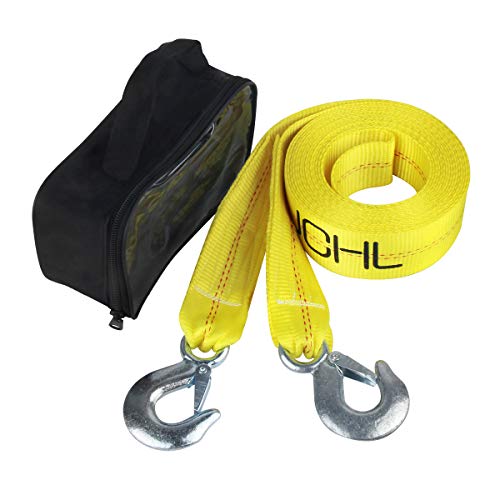
2 inch x 20 feet Yellow High Strength Polyester Strap, 20,000Lb Break Strength Capacity

Premium Material: This recovery ring winch is made of 7075 aluminum alloy for superior strength and durability. It is stronger, corrosion-resistant and less prone to rust than traditional grip blocks, ensuring a longer service time for a wide range of off-road gear and winch lines

4 IN 1 TOW STRAP KIT: This towing set includes 1 tow strap (3in x 30ft , Orange), 2pcs 3/4" D-ring shackles and 1pcs storage bag.
Post-Tow Costs: Storage, Impound, and Daily Fees Explained
Why does a simple tow suddenly balloon into a $200+ headache days later? I’ve watched post-tow storage fees pile up fast, and trust me, you’re not alone in feeling blindsided. Daily storage charges range from $35 to nearly $60, plus administrative fees that counties tack on without warning.
Here’s what hits your wallet at the tow lot:
- Daily storage charge accumulating every 24 hours until pickup
- Impound fees for city-mandated tows, often starting at $25 daily
- Administrative fees covering paperwork and vehicle processing
- Retrieval payment required upfront before you drive away
- Recovery costs climbing steeply after day three
I learned this the hard way: prompt retrieval slashes total damage. Storage doesn’t pause, and that tow lot meter keeps running.
Recommended Products
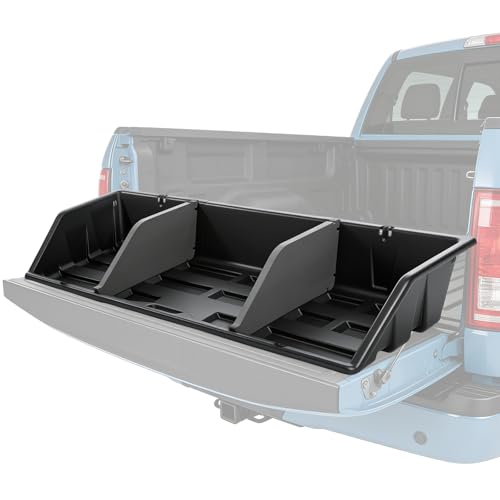
KEEP YOUR CARGO SECURE & ORGANIZED: This 3-section storage box keeps tools, groceries and gear neatly organized in your truck bed or SUV trunk. The included cargo net prevents items from shifting during travel.

KEEP YOUR CARGO SECURE & ORGANIZED: This 3-section storage box keeps tools, groceries and gear neatly organized in your truck bed or SUV trunk. The included cargo net prevents items from shifting during travel.

Kit Includes: 1 Pcs - 2 Ton 3" Snatch Block with Shackle and Chain Anchor
How to Lower Your Towing Bill: 5 Moves to Make Before You Need Help
Storage fees taught me a painful lesson, but I refuse to let towing costs catch me off guard again. I’ve learned five moves that keep my wallet intact when trouble strikes.
First, I joined a roadside assistance plan. It covers that base hookup fee, which typically runs $75–$125, plus per-mile costs that add up fast on longer hauls.
Second, I researched my regional tow company options and saved their numbers; calling around beats scrambling during a breakdown.
Third, I obtain multiple estimates when possible, especially since heavy/oversized vehicles like SUVs and trucks cost extra for the equipment needed.
Fourth, I avoid after-hours pricing entirely; I schedule routine tows during business hours when I can.
Fifth, I moved closer to preferred shops to cut mileage. These steps work. They’ll work for you too.
Recommended Products

DEPENDABLE STRENGTH. This tow hook is constructed from high-strength, heat-treated, forged steel for maximum strength. It is rated for 10,000 lbs. (limited to mounting structure)
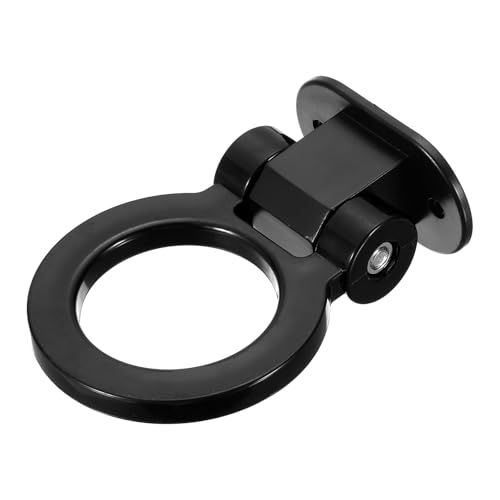
[Material]: ABS; Color: Black; Size: 110 x 74 mm / 4.33 x 2.91 inch(L*W); Gasket Height: 38 mm / 1.5 inch; Inner Diameter: 49 mm / 1.93 inch; Packing List: 1 Pcs x Track Racing Style Trailer Hook Sticker; 1 Pcs x Hex Wrench
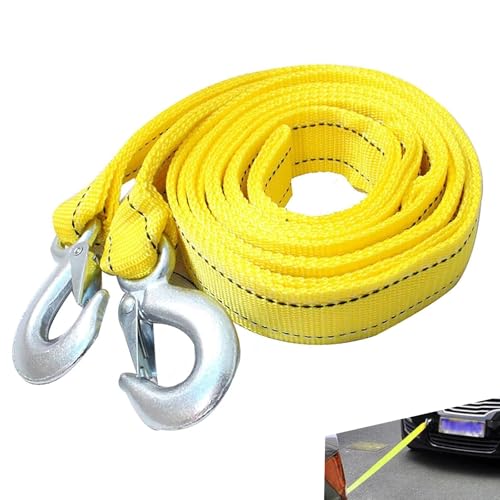
Heavy-Duty Polyester Tow Rope: Constructed with reinforced coarse fibers and anti-stretch threading, this thickened tow rope resists abrasion and fraying. The durable edges prevent vehicle scratches while ensuring safe, unbreakable towing under heavy loads.