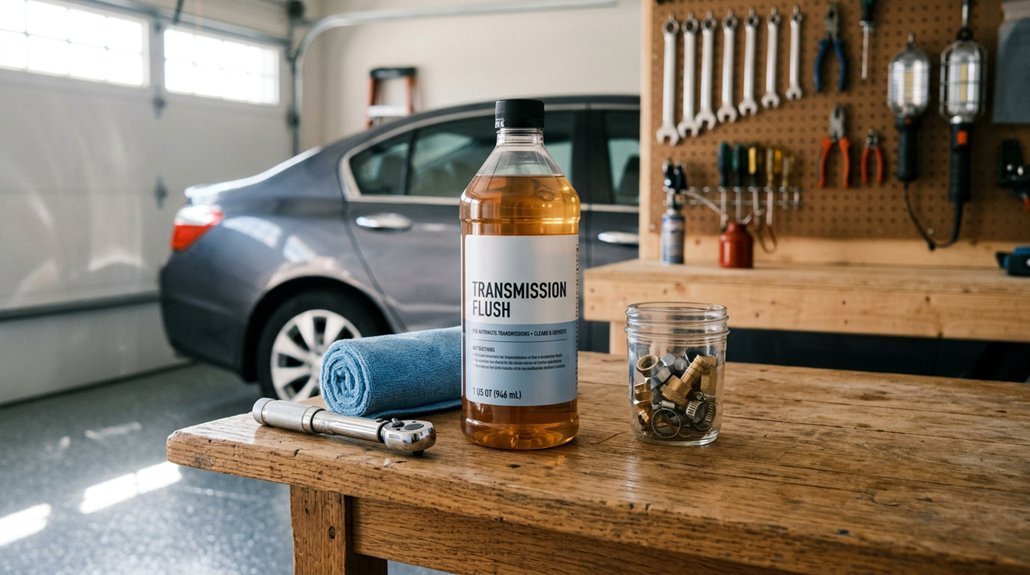
I’ve stared down enough shop invoices to know the $129 transmission flush special is rarely the final number. Last fall, my neighbor’s Honda ended up at $487 after they added the filter, pan gasket, and “required” synthetic fluid. Dealerships quoted me $365 to $600 for my Subaru’s CVT, while the independent shop across town landed at $240 with full cooler-line exchange.
The real question isn’t what you’ll pay. It’s what you’re actually buying.
Real Transmission Flush Prices in 2024 (From $150 to $600+)
Why does a transmission flush cost anywhere from $150 to $600? I’ve looked into this when budgeting for my own maintenance, and the range reflects real differences in what you’re getting.
Most transmission flush prices fall between $200 and $400 at independent shops. Dealerships hit $500 to $600 regularly, especially for luxury vehicles or CVT systems. A full flush exchanges 12 to 22 quarts of ATF using specialized machines, far more than a basic drain and fill at 5 to 7 quarts.
Your specific vehicle drives the cost. Manual transmissions run cheaper, automatics moderate, and high-performance or CVT systems push higher. I’ve found promotions at franchise locations like Valvoline that slash 30 to 50% off dealer quotes.
DIY routes exist at roughly $50 to $120, though you’ll sacrifice professional inspection and equipment quality.
Recommended Products

Direct replacement - this automatic transmission oil cooler hose assembly is designed to match the fit and function of the original equipment assembly on specified vehicle makes, models and years

Auto Transmission Flush Machine: Driving Force: (Electric) DC12V; Pressure Gauge: 0-60PSI

Recommended replacement part for your GM vehicle’s original factory component
What a Professional Transmission Flush Actually Includes
What exactly happens during a professional transmission flush? I connect my vehicle to a specialized machine that pushes new automatic transmission fluid through the cooler lines and torque converter, stripping out nearly every drop of the old stuff. We’re talking 12 to 22 quarts here, not the measly 5 to 7 quarts you’d get with a basic drain-and-fill.
The machine drains your pan, flushes contaminants from hidden spots like the torque converter, and refills everything with fresh ATF plus a cleaning solution for those cooler lines. Shops typically claim “complete” removal, though in practice some residue always lingers.
Here’s where transmission flushes get tricky: price ranges run $200 to $400, but that may not include a filter change. Some dealers skip filters entirely during flushes, while others bundle separate pan and filter services. Always ask what’s actually included before you pay.
Recommended Products

Enhanced friction durability for smooth transmission performance

For use in 95% of vehicles including most CVTs in operation with US registered light duty applications

For use in 95% of vehicles including most CVTs in operation with US registered light duty applications
7 Transmission Flush Price Factors (Vehicle, Fluid, Location)
Where does your money actually go when you pay for a transmission flush? I’ve broken down the key price factors so you know exactly what you’re paying for.
Your vehicle type matters most. Automatic and CVT transmissions, plus luxury or high-performance models, demand more expensive fluids and specialized handling. The transmission fluid exchange itself uses 12 to 22 quarts of ATF through a professional machine, way more than a simple drain-and-fill.
Your vehicle type drives cost more than anything else—automatic, CVT, and luxury models need pricier fluids and specialized care.
- Fluid specification: Synthetic ATF costs considerably more than conventional, but protects better under heat and load.
- Transmission complexity: More gears, CVT belts, or dual-clutch setups need precise procedures.
- Your location: Regional labor rates and shop availability swing costs by $50 to $150.
Add-ons like filter replacements, pan gaskets, or diagnostics push totals past that $200 to $400 base. Understanding these price factors keeps you in control.
Recommended Products

【Function】The Transmission Filter is Made of High-Quality Materials,Which can Filter the Oil,Remove the Impurities,Keep the Oil Clean,Prevent the Valve Body and Other Parts of the Blockage,Which can Effectively Extend the Service Life of the Gearbox.
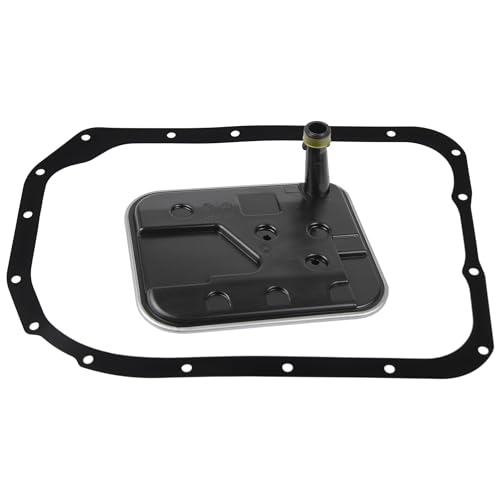
[Feature] Use 4L80E Transmission Filter Kit to filter oil and remove sundries from the transmission fluids.Keep the transmission fluids clean and prevent the valve body and other parts be clogged.Effectively to extend the service life of the transmissions kit.Please check and change filter if the gear change difficulty,rattling,leaks,and smoke when clogged.

Fit and function like the original parts.
Dealer vs. Quick Lube vs. Independent Shop: Who Charges What
I’ve seen dealer quotes hit $365 to $600 for a full transmission flush, which covers specialized equipment, new fluid, and often a test drive to verify performance. Quick-lube chains pitch lower prices and faster turnaround, but you’ll want to ask if they’re doing a complete fluid exchange or just a basic drain-and-fill that leaves old fluid in the torque converter.
I always compare what’s actually included; filter, gasket, cooler line flush, because that’s where the real value hides, and I’ve found independent shops land anywhere from $500 to $550 depending on whether they drop the pan or push fluid through every component.
Recommended Products

【MAIN USAGE】The transmission fluid adapter compatible with Mercedes Benz 722.9 automatic transmissions. As a connector for car oil pan ATF filling tool. Used in conjunction with the ATF filler system.

1 x Transmission Pan Assembly with Filter (includes gasket and drain plug)

Complete Tool Kit for Effortless Oil Changes: Includes everything you need for a smooth transmission fluid change: 1 x 8mm oil pan spanner, 1 x fluid drain tool, 1 x M12 x 1.5 ATF fill adapter, and 1 x specialized 9G-Tronic ATF fill adapter. Comes with a convenient carrying case for easy storage.
Dealer Pricing Premium
Why does the same transmission flush swing from $365 to nearly $600 at a dealer, while your neighborhood quick-lube joint might land closer to $525? I’ve crunched the numbers, and the dealer pricing premium isn’t random. It’s built into how dealers operate.
Labor rates run higher at dealers, often $120–$180 per hour versus $80–$100 at independents. Factory-specified fluid and OEM filters cost more than aftermarket equivalents. Recommended add-ons, inspections, and software updates inflate the final bill.
Your CVT or 10-speed automatic demands specific fluid, and dealers stock it. They’re also more likely to drop the pan, replace the filter, and inspect for wear. That thoroughness costs you. I’ve seen quotes hit $900 when everything’s included. The premium buys peace of mind, but you pay for it.
Quick Lube Value
So where’s the real value hiding when dealers want $500 and your local Valvoline Instant Oil Change flashes $149 on the sign? I’ve watched those quick lube centers operate, and here’s the deal: they move fast, they’re everywhere, and they’ll get your transmission fluid replacement done in 20 minutes while you sip free coffee.
But I’ve also seen the catches. Quick lube centers often skip the pan drop and filter change, just pushing fluid through. That’s fine for a basic flush, though you’re leaving old debris behind.
Independent shops land in the middle at $350, $550, usually doing the full service. My advice? Match the shop to your car’s needs. Synthetic fluid in a CVT? Skip the lube bay. Basic automatic with clean history? That $149 banner might be your sweet spot.
Hidden Transmission Flush Costs That Inflate Your Final Bill
When you’re staring down a $400 quote for a transmission flush, it’s easy to assume that’s the final number you’ll pay, but I’ve learned the hard way that the advertised price rarely tells the whole story.
Transmission flush costs balloon when shops don’t include everything upfront. Hidden costs sneak in through fluid type, method choice, and extra parts.
Transmission flushes rarely cost what shops advertise—fluid type, method, and parts hide behind that tempting base quote.
- Fluid markup: They quote conventional ATF, then your truck needs synthetic or CVT-specific fluid at $15 per quart for 15-20 quarts, that’s $200+ extra.
- Method fees: Pump inlet flushes cost more than cooler line flushes, and they won’t always tell you which they’re using.
- Parts surprise: Filters, gaskets, and pan replacements often sit outside the base quote, adding $50-150.
Always ask what’s included before you say yes.
Recommended Products

Backward compatible with previous Dexron automatic transmission fluids and can be used as a much-improved replacement for older vehicles/transmissions originally using previous Dexron fluids

Exceeds demands of automatic transmissions of most Chrysler, Dodge, Ram & other Stellantis vehicles

Backward compatible with previous DEXRON automatic transmission fluids and can be used as a much-improved replacement for older vehicles/transmissions originally using previous DEXRON fluids
Why Your Truck or SUV Costs $600+ to Flush
When I’m quoted $600 or more for a transmission flush on my truck, I immediately look at three culprits that drive that price skyward. High-performance fluid requirements, 8-speed transmission complexity, and dealer labor premiums each add substantial cost that basic sedans simply don’t face.
I’ll break down exactly how these factors hit your wallet and whether you can shop smarter without sacrificing your drivetrain’s longevity.
Recommended Products

Gm-Recommended Replacement Part For Your Gm Vehicle’S Original Factory Component.

Product Type :Auto Part
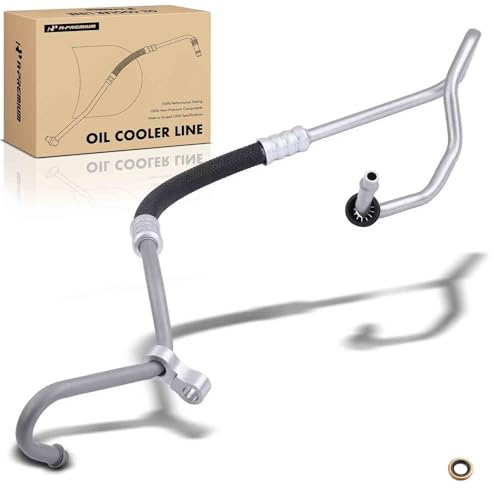
[Vehicle Fitment-1]: Compatible with Buick Enclave 2008-2015; Compatible with Chevrolet Traverse 2009-2015; Compatible with GMC Acadia 2007-2015; Compatible with Saturn Outlook 2007-2010 --- Inlet From Radiator (Lower)
High-Performance Fluid Requirements
Why does your truck or SUV demand $600 or more just for a transmission flush? High-performance fluid requirements push costs skyward, and I want you to understand exactly where your money goes.
High-performance transmission fluid flush procedures demand specialized fluids that withstand extreme heat and heavy loads. When I service a truck hauling trailers or an SUV climbing grades, I cannot use generic fluids. Your vehicle needs formulations meeting strict viscosity and durability specs, often 8+ quarts for larger transmissions, and that volume adds up fast.
Here is what drives your final bill:
- High-grade fluid costs: synthetic high-performance formulations run $15–$25 per quart versus $6–$10 for standard fluids
- Filter replacement and system cleaning, ensuring no contamination compromises your upgraded fluid
- Compatibility verification: shops confirm your new fluid meets updated OEM specifications for optimal shifting performance
Skipping these steps saves money now, but I have seen premature transmission failure cost owners thousands.
8-Speed Transmission Complexity
How exactly does an 8-speed transmission turn a routine transmission flush into a $600 proposition? I’ve seen the quotes myself, and the transmission complexity is the culprit. These systems aren’t built for simple drain-and-fill jobs. My local shop charges $550 to $600 because they must run a professional machine for complete fluid exchange, not just gravity drainage.
The real cost drivers stack up fast. You’re looking at cooler-line flushing, torque converter cleaning, plus filters and gaskets. My buddy’s 8-speed truck needed 12 quarts of synthetic fluid versus the usual 6 to 8. High-quality fluids, extra labor, and higher fluid volumes all inflate the bill. Vehicle make matters too: some designs demand pan removal for filter access. Skip the cheap route here, it costs more later.
Dealer Labor Premiums
Where exactly does that $600 price tag come from when you roll your truck into a dealer service bay? It boils down to dealer labor premiums that inflate your transmission flush bill. Shop rates run higher at franchised dealers, and they often pitch complex “full system” procedures versus basic drain-and-fill jobs.
I’ve seen quotes swing from $365 to $600+ for identical trucks. Here’s what drives the gap:
- Hourly labor rates at dealers typically outpace independent shops by 30-50%
- Upsold services, like filter swaps and pan removal, pad the invoice
- Regional cost variations mean your zip code affects pricing significantly
Some dealers skip the filter entirely during a transmission flush, so you’re paying premium rates without premium scope. Shopping where you bought the vehicle, or comparing three local quotes, usually trims that dealer labor premium down to size.
Transmission Fluid Change: The Cheaper Alternative ($80–$300)
If you’re looking to save some cash without leaving your transmission high and dry, a basic fluid change is your most practical move. I’ve seen this transmission fluid change cost fall between $80 and $300, depending on your ride, the fluid type, and where you take it.
Here’s what you’re actually getting: a drain and refill from the pan, no fancy flushes or cooler line cleanouts. It’s quicker, simpler, and often wrapped up in under an hour. Synthetic fluids push you toward that higher end, while conventional keeps things budget-friendly.
Feeling handy? I’ve finished DIY versions for $50–$120, but you’ll need proper tools and a legal way to dump the old stuff. For most drivers, this hits the balance between protection and price.
Recommended Products

Meets the challenging demands of most belt and chain-driven continuously variable transmissions

Safely removes varnish deposits

Genuine Honda Transmission
Flush Versus Fluid Change: Which Prevents Costly Damage
I’ll start by explaining the basics of a fluid change, which drains your pan and swaps out 5 to 7 quarts of ATF, versus a full flush that pushes 12 to 22 quarts through the entire system using a machine to clean cooler lines and the torque converter. I’ve seen both procedures up close, and the flush definitely removes more old fluid and suspended debris that can cause overheating or rough shifting, though it won’t catch everything stuck to the pan or let a technician inspect for metal particles.
You’ll pay roughly $80–$300 for a basic change against $200–$400 or more for a flush, with luxury vehicles pushing quotes toward $600 at dealers, so the real question is whether that extra coverage justifies the price jump for your specific transmission condition and mileage.
Recommended Products
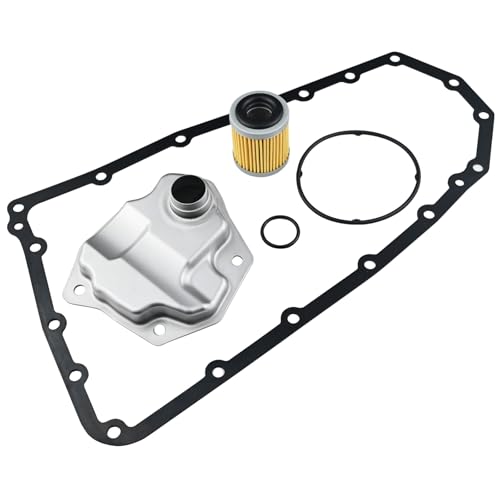
【HIGH PERFORMANCE】The CVT transmission oil pan plays a vital role in maintaining the efficiency, longevity, and reliability of the CVT system by managing fluid storage, lubrication. Regular maintenance, such as filter changes and inspections, is essential to ensure its proper function.Equipping with O-rings to prevent leaks and ensure a secure, airtight connection.

【Function】The TF-161 Automatic Transmission Filter Oil Pan Gasket Kit is Made of High-Quality Materials,Which can Filter the Oil,Remove the Impurities,Keep the Oil Clean,Prevent the Valve Body and Other Parts of the Blockage,Which can Effectively Extend the Service Life of the Gearbox.

Compatible: Fits for 722.6 Transmission. Compatible with J-eep Vehicles: 2012-2018 Wrangler; 2018 Wrangler JK; 2005-2013 Grand Cherokee; 2006-2010 Commander. Compatible with D-odge Vehicles: 2006-2019 Charger; 2008-2014 Challenger; 2003-2009 Sprinter 2500/3500; 2005-2008 Magnum;2011-2013 Durango;2007-2011 Nitro. Compatible with Chry-sler Vehicles: 2005-2014 Chry-sler 300;2004-2008 Crossfire
Fluid Change Basics
The difference between a transmission flush and a fluid change isn’t just about price; it’s about what each procedure actually does inside your gearbox. I’ve seen too many owners confuse these services, and that confusion costs them.
A fluid change drains 5–8 quarts of old ATF from the pan and valve body area, running roughly $80–$300. It’s simpler, gentler, and often what your manufacturer actually recommends.
A transmission flush uses a machine to push through 12–22 quarts, targeting cooler lines and the torque converter, but that power comes with a steeper $200–$400 bill.
Here’s what matters for your decision:
- Check your owner’s manual first. Some specs demand fluid changes only.
- High-end vehicles and CVTs need specialized fluids, which increases costs either way.
- When in doubt, the gentler fluid change protects more transmissions than aggressive flushing
Flush Procedure Explained
Understanding how a flush actually works helps you see why it costs more, and why it might not always be the smarter buy. A transmission flush hooks up a professional machine that pushes 12–22 quarts of new ATF through your system, plus a cleaning solution. It grabs fluid hiding in the torque converter and cooler lines, places a basic drain-and-fill misses entirely.
That thoroughness drives the cost to roughly $200–$400, nearly double a standard change at $80–$300.
But here’s what some shops won’t volunteer: they might skip the filter and leave the pan untouched. I’ve seen dealers cut corners this way. You’re paying premium prices for incomplete service. Ask specifically what’s included. The transmission flush cost only makes sense if you confirm they’re actually inspecting, not just circulating fluid.
DIY Transmission Flush: Actual Savings Versus Messy Reality
Why tackle a transmission flush yourself? I get the appeal: a DIY transmission flush or basic transmission fluid change runs $50–$120 for ATF and supplies, versus $150–$400 professionally. But I’ve learned the reality bites harder than the savings suggest.
You’ll need a catch pan, basic tools, and a proper disposal plan for used fluid. A home job typically swaps 5–7 quarts through the pan, while shop machines push 12–22 quarts through cooler lines and torque converters for deeper cleaning. You also lose professional inspection of wear patterns.
Here’s what I weigh before grabbing my wrench:
- Mess factor: spilled ATF stains everything it touches, garage floor included
- Hidden costs: filter kits, pans, and potential leak repairs add up quick
- Incomplete flush risk: DIY methods often leave old fluid in the torque converter
Recommended Products

Transmission Oil Filling Tool: Designed specifically for Mercedes-Benz 9G-Tronic 8-speed and 9-speed transmissions, it is used for automatic transmission oil change, enabling easy completion of oil draining, oil filling, and oil pan bolt removal and installation. This kit includes a 9-speed hybrid fuel filler neck to support hybrid vehicles.
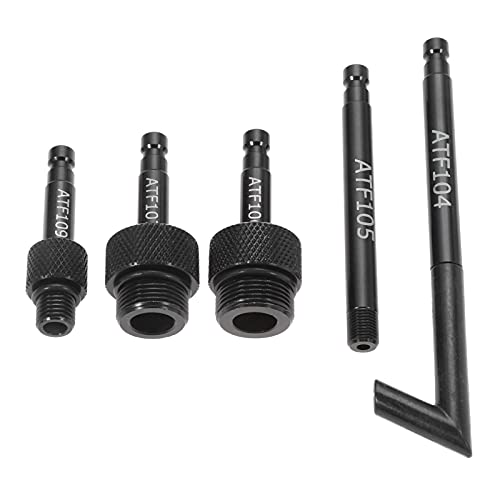
[High Quality]: TOP quality oil filler adapter, constructed of hard steel for long lasting durability and reliability. Direct replacement for a proper fit and easy installation, meets or exceeds OEM standards, 100% tested before shipping.

Automatic transmission fluid(ATF) plug kit for draining, levelling and filling
How to Compare Quotes Without Getting Ripped Off
I’ve spilled enough ATF in my garage to know when a professional job makes sense, but I’ve also paid enough shop bills to know not every quote deserves my wallet.
For a solid price comparison on your transmission flush, I always grab at least three estimates. Dealers typically land between $365 and $600, while my local independent shop quoted $550 for pan, filter, and fluid. That gap matters.
I verify what’s actually included. A real flush burns through 12 to 22 quarts of ATF versus 5 to 7 for a basic drain and fill, so prices ranging $200 to $400 make sense only if the work matches. I ask about synthetic fluid upcharges, filter replacements, and whether they’re using a cooler flush or pump inlet method.
Luxury rides and CVTs always cost more, so I factor that in. I walk away from vague quotes. Specific parts, fluid specs, and labor hours tell me I’m dealing with professionals, not salesmen.
Recommended Products

Material code - 98KY58

6Qt Genuine 00289-ATFWS

Backward compatible with previous DEXRON automatic transmission fluids and can be used as a much-improved replacement for older vehicles/transmissions originally using previous DEXRON fluids