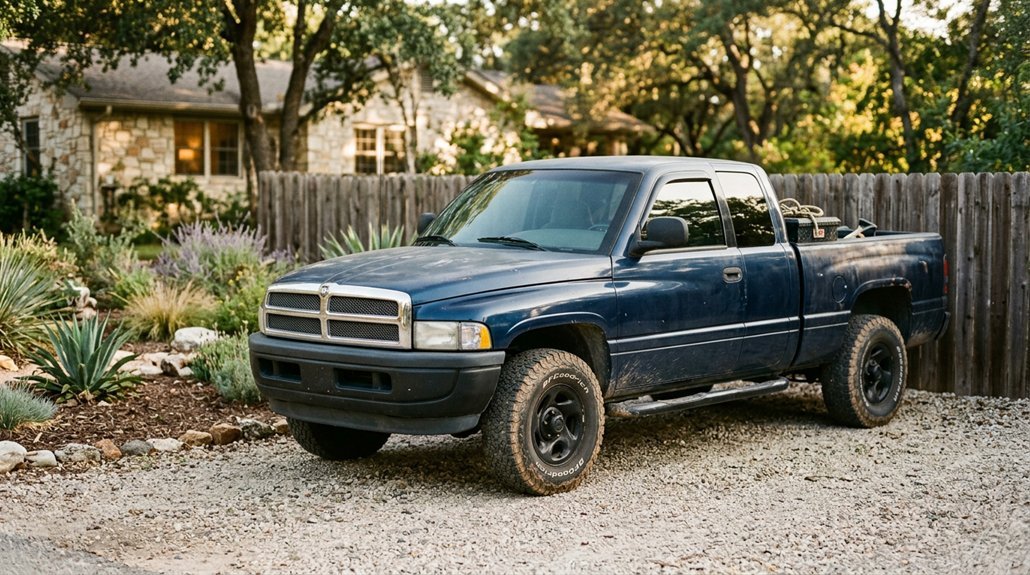
Buying a semi-truck is like betting your savings on a second home that also happens to haul 80,000 pounds. I’ve watched new Freightliner Cascadias roll off the lot at $135,000 with basic specs, while a loaded Peterbilt 579 with a 72-inch sleeper and collision mitigation can breach $200,000 before you sign the financing papers.
That 5–10% interest over five years? It’ll cost you roughly $2,900 monthly before diesel even touches the tank. Used trucks cut that upfront hit markedly, but you’re inheriting someone else’s maintenance history and praying the emissions system doesn’t rebel at 600,000 miles.
The real question isn’t just sticker price; it’s whether your freight lanes and annual miles can stomach the total cost of ownership.
How Much Does a New Semi-Truck Cost?
When I’m standing on a dealership lot looking at a brand-new semi-truck, the first thing that hits me is the price tag. You’re looking at a new semi-truck cost between $120,000 and $200,000+, with high-end Peterbilts pushing past $200,000. Freightliners run $130,000–$180,000, Kenworths and Volvos hover around $140,000–$190,000, and Internationals start closer to $120,000.
That starting price climbs fast. Add larger sleeper cabs, automatic emergency braking, or lane departure systems, and you’re paying thousands more for safety features that could save your life and your insurance premiums.
Don’t forget financing interest, typically 5% to 10%, which adds serious weight to your monthly payment. A $150,000 truck at 7% over five years costs roughly $2,900 monthly before fuel, maintenance, or that $8,000–$16,000 annual insurance hit.
Recommended Products

Black tear-resistant material.Fit Type: Universal

Semi Truck Interior Light Plate - Aftermarket Truck Parts Allow You To Customize The Look Of Your Rig – As Well As Provide Additional Safety And Comfort For Those Long Cross-Country Drives. The Quality-Made Mirrored Dome Light Plate, Lights Up The Inside Of Your Sleeper Cab From The Roof With A Soft Glow. This High-Quality Aftermarket Replacement Part (Not Oem) Fits Kenworth W900, T660, T600 Models.
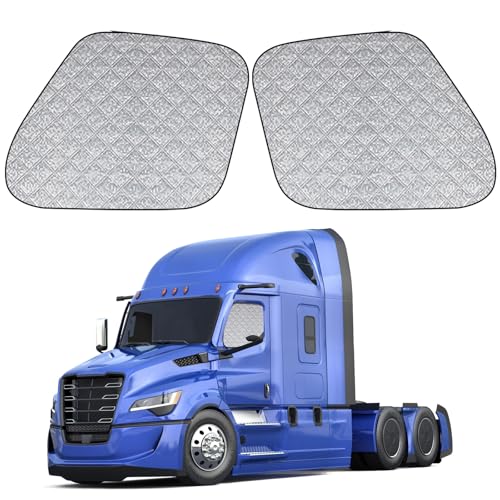
【Custom Fit & Edge-to-Edge Coverage】 Specifically designed for Freightliner Cascadia 2008-2017. Unlike universal shades, our sunshade is laser-cut to match the exact contours of your truck's side windows. The precise fit ensures zero gaps, providing complete coverage and a professional look for your cabin.
What a Used Semi-Truck Actually Costs
I walked onto the used truck lot knowing I’d find something very different from those $150,000 showrooms. The price tags here told a welcoming story: most used semi-truck options ran $45,000 to $100,000, depending on what I prioritized.
I immediately checked mileage and maintenance history. A well-documented service record meant everything. I spotted an International MV Series at $60,000 and a Durastar under $75,000, both decent starting points for my budget.
Condition matters more than age alone. I looked for emissions compliance, clean interiors, and evidence of regular upkeep. High mileage isn’t always a dealbreaker if the previous owner stayed on top of oil changes and component replacements.
Buying used saves money upfront, but I’m budgeting extra for potential repairs. It’s a trade-off I’ll track carefully.
Recommended Products


All-in-one 7” truck navigator with powered magnetic mount plus built-in dash cam to record your drive and enable driver awareness features such as forward collision and lane departure warnings1

Designed for models with lane departure warning: ① Chevy Silverado 1500 2014-2019 incl. 2019 LD; ② Chevy Silverado 2500HD / 3500HD 2015-2019; ③ GMC Sierra 1500 2014-2019 incl. 2019 Limited; ④ GMC Sierra 2500HD / 3500HD 2015-2019
Which Brands Hold Value Long-Term?
Which brands actually keep their worth when it’s time to resell? I’ve watched the market long enough to know that value retention separates smart investments from money pits. Let me break down what I’ve learned from tracking both new trucks and used trucks across major manufacturers.
Here’s my brand comparison based on real resale data:
- Peterbilt commands top dollar after 500,000 miles, with buyers paying high prices for the hood and heritage
- Kenworth matches Peterbilt’s value retention in most sleeper configurations, especially the T680 series
- Freightliner dominates volume but depreciates faster, though Cascadia Evolution models buck this trend
- Volvo holds steady in the $120,000 to $190,000+ range when properly spec’d with factory safety packages
- International lags slightly in value retention, yet has lower maintenance costs that balance the equation
I factor maintenance costs heavily into any recommendation, because a truck that holds value but drains your wallet isn’t really holding value. Watch the odometer, demand service records, and buy the previous owner, not just the badge.
Recommended Products

Excellent for diesel vehicles driven regularly at slow speeds, low loads, short durations or make frequent stops as these are more prone to having the problem of crystallization deposit build up in the SCR system.

Two Jugs Fewer Reorders: Five gallons of high-purity DEF on hand means fewer trips for fluid and a lower cost per gallon than buying single jugs one at a time.
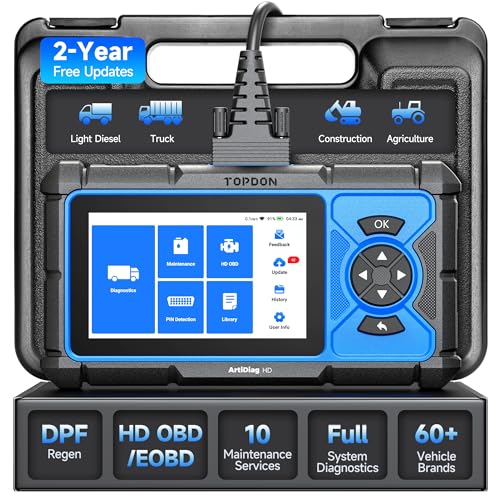
Compatible with 60+ Truck & Engine Brands: TOPDON ArtiDiag HD is a versatile diagnostic scanner compatible with over 60 global brands, including Freightliner, Peterbilt, Kenworth, Volvo, Cummins, Detroit, MaxxForce, and more. This truck tool efficiently diagnoses a vast range of vehicles, including heavy-duty trucks, transit buses, and construction equipment, making it indispensable for urban fleets, logistics hubs, and construction sites
The Hidden Costs of Truck Ownership
How quickly does a $150,000 investment balloon into something far steeper? I’ve watched it happen. Financing costs alone tack on 5% to 10% interest, turning your loan into a heavyweight. Then there’s insurance, running $8,000 to $16,000 annually, and maintenance, which reliably hits $15,000 to $20,000 per year. Depreciation sneaks in too, your truck losing value the moment you drive off the lot.
Factor in licensing, factory add-ons like larger sleeper cabs, and safety features, and your total cost of ownership dwarfs that sticker price. I’ve learned the hard way: the real price tag isn’t what you see on the window. It’s what drains your account year after year. Plan for it, or it plans for you.
Recommended Products

110 Sheets Log Book: This vehicle maintenance log book includes 110 record sheets to track repairs, services, fuel costs, and other vehicle-related expenses. It also comes with 36 convenient “Service Due” stickers to help remind you of upcoming maintenance schedules. Everything you need to keep your car records organized in one place.

Made in USA - Proudly produced in Ohio by a Veteran-owned business
Should You Buy New or Used?
Where exactly does your money work hardest when you’re staring down a $120,000 to $200,000 new truck against a $45,000 to $100,000 used one? I’ve wrestled with this new vs used question myself, and here’s what I’ve learned: your upfront cost tells only part of the story.
New trucks carry full warranty coverage, protecting you from surprise repair bills. Used trucks slash your upfront cost by 50% or more, freeing cash for operations.
New trucks shield you with warranty protection; used trucks unlock capital with steep upfront savings.
Financing interest hits harder on new trucks, running 5% to 10% on larger principal. Maintenance on used trucks can spike unpredictably, especially past 500,000 miles. New trucks average $15,000 to $20,000 annually in maintenance, but used ones often exceed that.
I recommend used trucks for experienced mechanics with cash reserves, and new trucks for operators prioritizing reliability and warranty protection over maximum savings.
Recommended Products

7.5-inch diameter fan with 100% metal construction

✔ CUSTOM FIT FOR FREIGHTLINER CASCADIA 2018–2027 HIGH ROOF – Designed specifically for a perfect fit in your sleeper cab. Clean, factory-style look. ✔ FULL BLACKOUT PRIVACY – Blocks outside light for better sleep anytime, day or night. Ideal for long-haul drivers and rest breaks. ✔ 2-LAYER INSULATED DESIGN – Premium black faux leather outside + soft grey fleece inside for comfort, durability, and performance. ✔ THERMAL INSULATION & NOISE REDUCTION – Helps keep your cab cooler in summer, warmer in winter, and reduces outside noise for a quieter environment. ✔ EASY INSTALLATION – Hooks included. No special tools required for installation

Perfect Fit for Freightliner Cascadia (2008-2027) – Custom-designed for an exact fit on your sleeper window. ✔ Premium Double-Layer Vinyl – Strong, durable, and resistant to wear and tear. ✔ Temperature & Energy Efficiency – Keeps heat out in summer and warmth in during winter, reducing fuel consumption. ✔ Ultimate Privacy & Sun Block – Provides full blackout coverage for better sleep and UV protection. ✔ Easy to Install & Maintain – Quick and secure installation, easy to clean and maintain.