
I’ve handled enough claims to know deductibles trip people up when they matter most. You pay your set amount first, collision or comprehensive kicks in after, and your premium shifts based on what you chose. Total loss? They subtract it from your check.
The real question isn’t how it works, it’s whether you picked the right number for your wallet.
What Is a Car Insurance Deductible?
A car insurance deductible is the fixed dollar amount I pay out of pocket before my insurer steps in to cover the rest of a claim. I’ve learned this applies per claim on my collision coverage and comprehensive coverage, not just once annually.
Let’s say I carry a $500 deductible and face $3,000 in repairs. I hand over $500, my insurer pays $2,500. Simple math, real impact on my wallet.
Here’s the trade-off: my deductible directly shapes my premium. When I choose a higher deductible, I slash my monthly costs. Go lower, and I’m paying more each bill cycle. In a total-loss scenario, the insurer subtracts my deductible from the settlement amount before cutting my check. It’s consistent, predictable, and worth calculating before I sign anything.
Recommended Products

New Set of 2 Auto Car Registration & Insurance Card Holder

Protect Your Documents: Car registration and insurance holder protects documents from wear and tear, takes up little space in glove compartment or on the visor. It enables your important and essential vehicle and insurance paperwork organized and easily accessible

Protect Your Documents: Car registration and insurance holder protects documents from wear and tear, takes up little space in the glove compartment or on the visor. It enables your essential vehicle and insurance paperwork organized and easily accessible.
What Happens When You File a Claim?
When I file a claim, I need to understand exactly when and how I’ll pay my deductible, since this affects my out-of-pocket costs and cash flow during repairs. I’ve seen insurers handle this two ways: either I pay the shop directly and get reimbursed for the covered portion, or the insurer subtracts my deductible from the settlement check they send me.
Knowing which method my policy uses helps me plan for the immediate expense, especially if I’m facing a $500 or $1,000 hit while already dealing with the stress of an accident.
Recommended Products

👁️Quick Accessible: Inside the car insurance and registration card holder, the clear inner material makes you easy to find documents when you open it up, you can see exactly what they are and quickly show them when asked, even no need to take the stuff out.

Attractive design: The iridescent sheen is vibrant and bright, changing with viewing angle and lighting. This iridescent car accessory is perfect for adding a touch of uniqueness to your car interior.
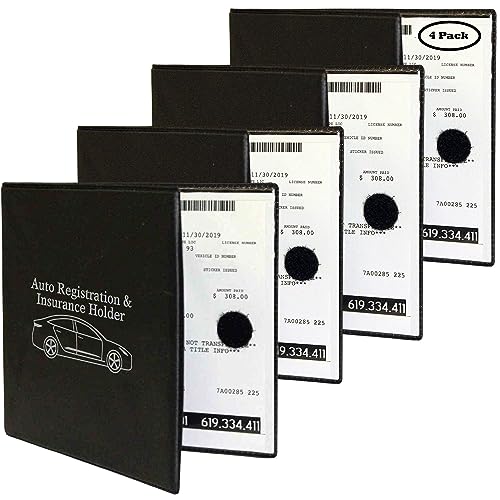
4 pack Car Registration and Insurance Card Holder for any Car, Truck, Motorcycle, or Automotive Vehicle. Easy to store In any visor or glovebox.
Claim Payment Process
Two scenarios play out every time you file a claim, and I’ve walked through both as both a driver and an advisor reviewing dozens of policies. Here’s how the claim payment process actually works when you need your insurance deductible to kick in.
You pay the deductible first, then your insurer covers remaining repair costs up to policy limits. For a total loss, they subtract your insurance deductible from the settlement check.
I learned this the hard way when my repair estimate came in at $450 against my $500 deductible, meaning zero insurer payout and full out-of-pocket pain.
Deductible Timing Options
How exactly does your money leave your pocket when you file a claim? I’ve found that deductible timing depends on how your insurer handles the claims process.
When you file a claim, you’ll typically pay the deductible directly to the repair shop before work begins. Sometimes, the insurer subtracts it from their payout instead. For a $500 deductible on $3,000 damage, the insurer payout is $2,500 after you cover your share.
In a total loss, the deductible comes straight off your settlement check. No repair shop involved there.
Some policies let you delay payment if the insurer partners directly with preferred shops, billing you after repairs finish. Check your terms, because deductible timing varies. Knowing when you’ll pay keeps the claims process smooth and stress-free.
How Your Deductible Works in a Total Loss
When your car’s declared a total loss, I’ve found the deductible subtraction process works exactly like it sounds. Your insurer determines the actual cash value, then pulls your deductible straight off that top line before cutting any check. This settlement amount impact means a $1,000 deductible on an $8,000 vehicle leaves you with $7,000 in hand, not a penny more.
You’ll also want to watch the payment timing options closely, since some insurers apply that deduction before issuing your payout while others handle it differently if salvage or replacement enters the picture.
Recommended Products

Protect Your Documents: Car registration and insurance holder protects documents from wear and tear. It takes up little space in the glove compartment or on the visor. It enables your essential vehicle and insurance paperwork organized and easily accessible.
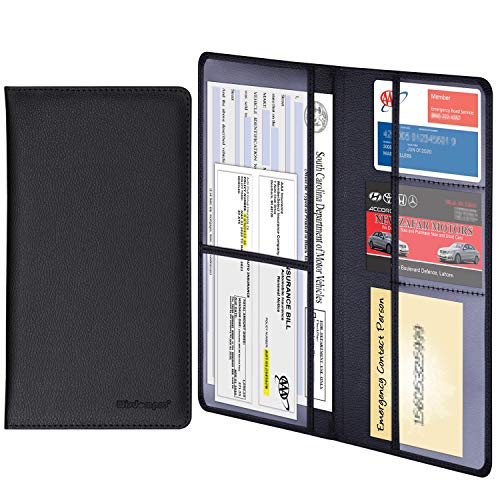
Perfect auto car document holder, keeps your registration and insurance paperwork, business cards, emergency information all well organized and looks better than papers just scattered in the glove box.

Perfect auto car document holder, keeps your registration and insurance paperwork, business cards, emergency information all well organized and looks better than papers just scattered in the glove box.
Deductible Subtraction Process
Where does your deductible go when your car is totaled? I want you to understand exactly how this works so you’re not caught off guard when it matters most. The deductible subtraction process is straightforward once you see it in action.
Here’s what happens with your total loss settlement:
- Your insurer calculates the actual cash value of your vehicle pre-accident
- They subtract your deductible amount from that settlement amount
- You receive the final insurance payout, minus your out-of-pocket responsibility
Say your car’s valued at $12,000 and you carry a $500 deductible. Your check comes to $11,500. This applies consistently regardless of claim type wrinkles in repair scenarios. Your chosen deductible amount stays fixed per total loss. Know this going in, and you’ll negotiate your settlement with confidence, not confusion.
Settlement Amount Impact
Why does your deductible matter so much when your car’s declared a total loss? It directly shrinks your settlement amount. When my insurer declares a total loss, they calculate the actual cash value of my vehicle, then subtract my deductible from that figure. That’s my final claim payout.
Here’s how this plays out. If my car’s actual cash value is $8,000 and I carry a $1,000 deductible, my insurer payout drops to $7,000. The deductible applies before the insurer determines the final number, reducing what I receive to replace my vehicle.
Some policies handle this differently during the claims process, depending on specific insurer terms. Either way, policy limits cap the maximum available, so my out-of-pocket cost stays tied to that deductible choice I made when I bought coverage.
Payment Timing Options
- Insurer pays shop directly: The repair shop payment comes straight from your carrier, minus your deductible, so you pay the shop what’s owed.
- Insured reimbursement first: In some reimbursement scenarios, you pay everything upfront, then claim back the repair cost minus deductible timing delays.
- Total loss payout: Your deductible is subtracted before you see a dime; a $5,000 car becomes $4,500 in your hands.
Each path changes your cash flow. Ask your adjuster which applies, so you’re not scrambling when the bill arrives.
Which Car Insurance Coverages Have Deductibles
When you’re picking apart a car insurance policy, you’ll quickly notice that not every coverage works the same way at claim time. Collision and comprehensive are the main coverages where you’ll pay a deductible before your insurer handles repair costs.
I hit a deer last year and learned fast how comprehensive works. The deductible applies per loss, so each incident means paying again.
Collision covers accidents you cause, while comprehensive handles theft, vandalism, and glass damage. Some insurers have zero deductible for windshield repair; others don’t, so check your policy details.
Uninsured motorist property damage can include a deductible too, though state rules vary widely. If your car’s totaled, they subtract the deductible from your settlement check. Personal injury protection might also require one, depending on where you live.
Recommended Products

【LARGE CAPACITY】The car registration holder is Large enough for you,and you can put in long car documents without folding them. 【 HIGH QUALITY 】The registration and...
Typical Deductible Amounts and What They Cost
I’ve been through the quoting process enough times to know that most standard policies start with $500 deductibles, though carriers usually provide a full spread from $100 up to $2,000 for collision and comprehensive coverage. Higher deductibles shave substantial dollars off my annual premium, but I run the math every time: could I comfortably cover $1,000 or $2,000 out of pocket tomorrow if I hit a deer or slid into a guardrail?
My move is picking the highest deductible I can pay without reaching for a credit card, because that maximizes my year-over-year savings without putting me in a financial bind when I actually need the claim.
Common Deductible Ranges
Ranging from $100 to $2,000, auto insurance deductibles give you real flexibility in how you balance monthly costs against potential out-of-pocket hits.
Most drivers land on $500, and honestly, it’s a solid middle ground. Your collision deductible and comprehensive deductible work the same way: you pay first, then your insurer handles the rest.
Here is what I’ve learned matters most:
- Your per-claim deductible resets with every incident, not yearly.
- A lower deductible means higher premiums, and vice versa; the premium impact is real.
- Glass damage sometimes carries a $0 deductible, depending on your state and insurer.
When you file, your claim payment covers everything above your set amount. Pick a deductible range you could actually pay tomorrow, not just what looks good on paper.
Premium Cost Trade-offs
Raising your deductible from $500 to $1,000 typically knocks 5% to 15% off your monthly premium, though I’ve seen swings as wide as 25% depending on your insurer and driving record. Most drivers settle on $500, but options stretch from $100 to $2,000.
Here’s the trade-off in action. Pick a higher deductible, and your premium drops, but you’ll pay more out-of-pocket when filing a claim. Choose a lower deductible, and your premium climbs, though repair costs sting less at the counter.
With $500 deductible coverage on a $3,000 repair, your insurer pays $2,500. Drop to $250, and they cover $2,750.
Savings vary by state rules, claim history, and coverage type. Run the numbers on your actual policy before switching.
How Your Deductible Affects Your Monthly Premium
Why does bumping my deductible from $500 to $1,000 knock real dollars off my monthly bill? It’s simple: I’m taking on more risk, so my insurer charges me less. That’s the deductible impact in action.
Here’s how this trade-off plays out:
- High deductible, lower monthly premium: I pay less each month because I’m agreeing to cover more claim costs myself.
- Low deductible, higher monthly premium: I pay more upfront for the security of smaller out-of-pocket expenses after an accident.
- Per-incident reality: Deductibles apply to each collision or comprehensive claim, not annually, so my choice matters every time I file.
I balance my auto insurance premium against what I can actually afford if something happens. For me, that spot depends on my emergency fund and my car’s value.
High or Low Deductible: What Saves More Money?
Where exactly does the math actually work out in my favor? I ran the numbers on my own policy, and here’s what I found.
A higher deductible slashes my monthly bill, but sticks me with bigger per-incident hits. For my collision and comprehensive coverage, bumping from $500 to $1,000 dropped my premium impact by about $180 yearly. Sounds sweet, until I pictured paying that grand at the body shop after a fender bender.
The premium impact of a lower deductible feels safer, cushion-wise. I pay more upfront, sure, but my out-of-pocket costs stay manageable when life happens. One bad year with two claims and that “cheap” higher deductible wipes out years of savings.
My take? I picked middle ground, $750. Enough monthly relief, not terrifying at claim time.
When You Actually Pay Your Deductible
How exactly does the money leave my pocket when I finally file that claim? Let me break down deductible payment timing so we’re all on the same page.
Here’s when you pay deductible in real scenarios:
- Repair shop billing: I pay my $500 directly to the mechanic, and my insurer sends the remaining $4,500 for that $5,000 repair.
- Claim payout: Sometimes the insurer cuts a check minus my share, so claim reimbursement processing handles the split automatically.
- Total loss deductible: My settlement gets reduced upfront, a $20,000 car becomes $19,500 in my hands.
When Your Car Insurance Deductible Can Be Waived
A pleasant surprise can make all the difference after a fender bender, and that’s exactly what deductible waivers feel like when they kick in. I’ve found these waivers hiding in plain sight within my policy, often tied to specific situations that reward careful reading.
Windshield damage frequently qualifies for waiver under comprehensive terms, especially when cracks spread across my field of vision. Some insurers zero out my per-incident deductible for glass repairs entirely.
State-specific waivers also exist; I’ve seen states mandate waived deductibles for certain losses, regardless of my chosen coverage level. Waiver conditions vary dramatically between carriers. My total loss settlement once surprised me when my insurer applied special provisions, reducing my out-of-pocket burden.
I always verify waiver scenarios directly with my agent, since policies differ and exclusions hide in the fine print.
Choosing a Deductible That Fits Your Budget
Why exactly am I willing to bet against myself when I pick my deductible? Because choosing wrong hits my wallet twice, through premium and out-of-pocket pain. I need a plan that actually fits my life.
Choosing the wrong deductible hits your wallet twice—through premiums and out-of-pocket pain—so I need a plan that actually fits my life.
Here’s how I break it down:
- I check my savings: can I cover my deductible tomorrow if a claim hits?
- I compare my insurance premium at $500 versus $1,000 to see real monthly savings
- I remember deductibles apply per-claim, so repeated bad luck multiplies my costs
A higher deductible cuts my premium, sure, but I won’t choose one that empties my emergency fund. I aim for the sweet spot where my budget survives both scenarios: paying monthly and paying out-of-pocket when metal meets metal.