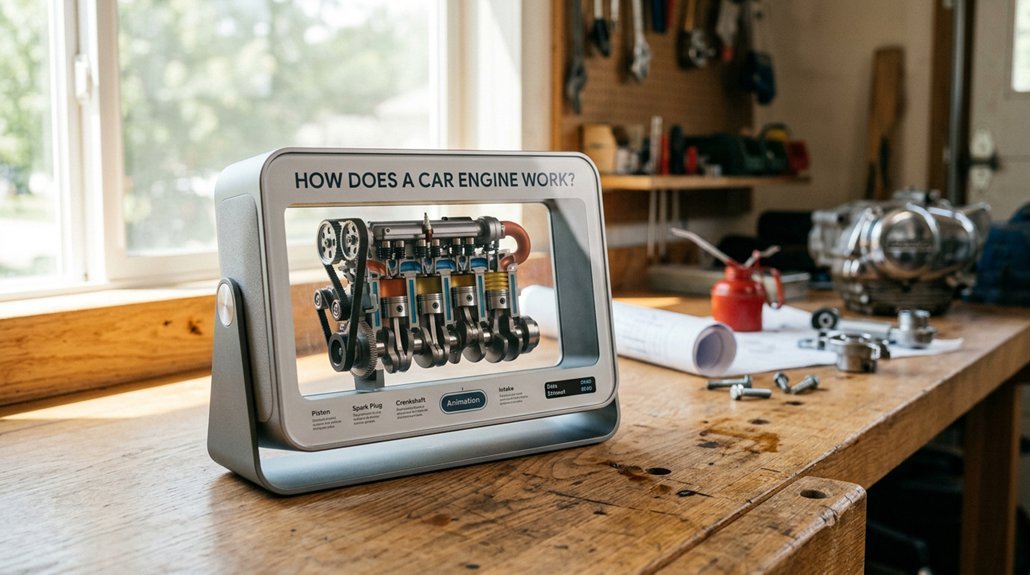
I’ve spent years testing engines in everything from commuter sedans to track-day builds, and the four-stroke cycle still impresses me with its mechanical elegance. Your piston pulls in that fuel-air mix through an open intake valve, squeezes it to roughly 150 psi in a typical 10:1 compression ratio engine, then the spark plug fires 10-30 degrees before top dead center for maximum force. That explosion drives your crankshaft at 3,000 rpm or more, turning linear motion into the rotation that powers your wheels.
But here’s what most drivers miss: your engine’s only as good as its weakest component. Worn piston rings bleed compression, carbon-fouled plugs misfire under load, and timing chains stretch silently until valves meet pistons. I’ve seen $5,000 rebuilds from ignored maintenance that a $40 spark plug change would have prevented. The real question isn’t whether your engine works, it’s whether you’re catching the warning signs before they become catastrophic failures.
How the Four-Stroke Cycle Powers Your Car
How does your car actually turn a gallon of gas into miles on the road? I’ve spent years testing engines, and it all comes down to a precise four-stroke cycle that happens thousands of times per minute.
The intake stroke pulls the air/fuel mixture past open valves as the piston drops. Then compression squeezes that mixture tight, both valves sealed shut, building density for maximum punch.
Air and fuel rush in, valves open, piston drops—then compression seals everything tight, packing power for the explosion to come.
The spark plug fires, launching the combustion (power) stroke that shoves the piston down with real force, spinning the crankshaft to move your wheels. Finally, the exhaust stroke pushes spent gases out through the open exhaust valve.
This cycle repeats relentlessly, each revolution converting chemical energy into mechanical motion you can feel through the accelerator.
Recommended Products

Wide range of professional automotive specialy tools

Has a pocket-clip

🎃【Accurate Scale】Ordinary straight rulers cannot meet the precise measurement requirements of cylindrical objects gap such as automotive spark plugs, so our spark plug gauge is particularly important! Its scale range is standard 0.020 to 0.100 inches (0.6 to 2.4mm), with a diameter of 1.48 inches (37.6mm).
How Your Engine’s Cylinders Turn Explosions Into Motion
Where exactly does the raw force come from when you stomp the accelerator? It starts inside your cylinder, where I’ve watched the magic happen countless times.
Your four-stroke engine runs on precision timing. The intake valve opens, your piston drops, and the cylinder fills with air and fuel. Then comes compression, and finally the combustion stroke: the spark plug fires, pressure explodes, and that piston rockets downward.
Here’s what makes it work:
- Piston rings seal the gap tight, keeping pressure in and oil out
- The crankshaft transforms that linear punch into spinning torque
- Valve timing coordinates your intake valve and exhaust valve openings so nothing interferes
Without this choreography, you’re wasting fuel and losing power. I’ve seen engines with worn rings, and trust me, you feel the difference immediately.
Recommended Products

Part Type: Engine Timing Set

Fitment: Replacement for Honda Accord 2013-2017 (2.4L L4 - Gas, 3.5L V6 - Gas), Replacement for Honda Civic 2016 (1.5L L4 - Gas), Replacement for Honda CR-V 2015-2016 (2.4L L4 - Gas), more models are available in the product descriptions below

Genuine OEM Champion Spark Plug for Champion 71, 71-1, 711, 71ECO, 71F, 71G, RC12YC Engine
How Your Engine Ignites Fuel, Air, and Spark
The spark is everything. In your gasoline engine, I’m watching the ignition system transform battery power into controlled fire. The ignition coil sends voltage to spark plugs positioned at each cylinder, where they ignite a precisely metered air/fuel mixture. I’ve tested engines where ignition timing makes or breaks performance; fire too early or late and you’re wasting power.
The piston approaches top dead center, compression peaks, and spark ignition triggers combustion. That explosion drives the piston downward, converting chemical energy into mechanical force. Port injection or direct injection ensures each cylinder receives the right fuel volume for current load conditions.
Weak spark, mistimed ignition, or lean mixture causes misfire and rough operation. Your battery powers this entire sequence, so maintain it. Proper ignition timing maximizes efficiency; neglect it and you’ll feel the stumble immediately.
Recommended Products

【Professional Tools】 Socpuro piston ring repair Kit is designed to fit piston rings in compression cylinders, with fine tooth locks to support your compression band in small engine increments. An essential tool for mechanics, tractors, cars, trucks, racing cars and diesel engines.

Universal Compatibility: Designed for all vehicle types, this versatile piston ring tool kit is a must-have for professional mechanics and DIY enthusiasts alike.

【Versatile Design】This Set Features A Heavy-duty Ratcheting Compression Pliers And Six Piston Ring Compressors, Each Labeled For Easy Identification And Compatible With Various Piston Sizes.
Why Engines Misfire: Three Common Failure Points
I’ve spent hours tracing rough idle complaints back to the same culprits, and misfires almost always boil down to three failure points: bad fuel mixture, lost compression, or missing spark.
Bad air/fuel mixture: Lean or rich conditions from clogged intakes, bad fuel delivery, or impurities cause incomplete combustion and rough running.
Lost compression: Worn piston rings, valve leakage, or a blown head gasket let pressure escape, so the cylinder can’t squeeze the mixture hard enough to fire properly.
Missing spark: Worn spark plugs, faulty wires, or incorrect ignition timing fail to ignite what’s there, even with good fuel and compression.
Each robs power, shakes the engine, and throws codes. Pinpoint which system’s failing, and you’ll fix it fast.
Recommended Products

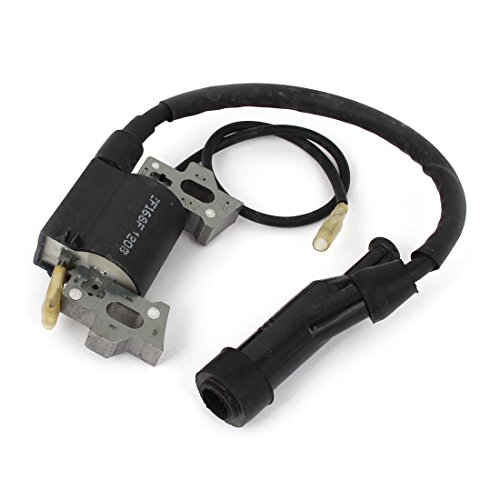
Country of Manufacture: CHINA; Material: Plastic, Metal

Fitment: Replacement for Champion Power Equipment Branded 196CC 6.5HP 3500/4000 Watts Gasoline Generator Models