Your transmission fluid degrades faster in stop-and-go traffic than on highway runs, and I learned this the hard way after ignoring subtle warning signs for three months.
I noticed delayed engagement when shifting from park to drive, then a slight whine under acceleration that grew louder each week. My fluid turned dark brown and smelled burnt, which meant internal friction was cooking the clutches.
By the time I scanned for codes, I had solenoid faults and metal debris in the pan. I will walk you through the exact symptoms I missed, the $40 fluid test that could have saved me $2,800, and which failures demand you pull over immediately.
Your Transmission Refuses to Shift Gears
Why won’t my car move when I shift into drive or reverse? I’ve faced this frustration, and it’s usually one of several transmission problems causing the headache.
Low fluid tops my suspect list. I always check the dipstick first, looking for proper level and clean, pinkish fluid, not dark or burnt. A leak somewhere in the system often creates this scenario.
Low transmission fluid is the first thing I check—always start with the dipstick before chasing complex problems.
If fluid checks out, I examine the shifter, cable, and valve body in automatics. These mechanical links can fail silently.
Modern vehicles complicate things with computer control, so I grab an OBD-II scanner to pull trouble codes. That data points me straight to the fault.
My diagnostic routine is simple: verify fluid level and condition, then scan for codes. This two-step process saves time and money.
Recommended Products

EASY TO READ :Clear marks on the metal tip promise easy-to-read oil levels.

SAME TOOL THE DEALER USES:【For select Chrysler Dodge Jeep VW vehicles】Level Measuring tool Designed to check and adjust ATF fluid on your vehicle. / Allows you to check fluid level without going to the Dealer.
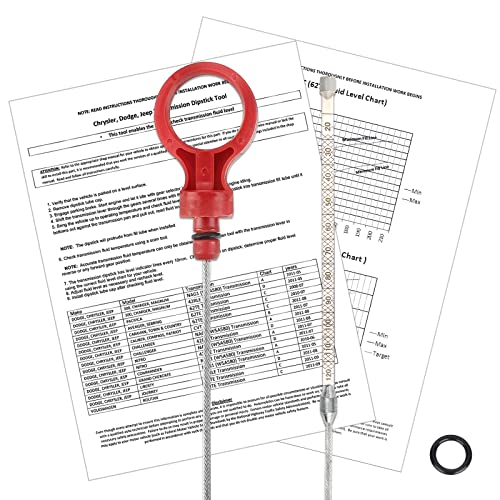
*Now, 3mirrors New Dipsticks are upgraded design that adds grids between the scales, making the fluid stick to the dipstick easily. More Clear marks for better, easier, and more accurate reading. It definitely outperforms any other similar product! The package comes with detailed manual instructions, No worries. You can also download the PDF from Technical Specification.
Burning Smell From Your Transmission
When I catch a whiff of something burning near my transmission, I know I’ve got a problem that won’t fix itself. That burning smell usually means my transmission’s overheating or the fluid‘s old and cooked. I’ve learned this happens when fluid leaks, runs low, or touches hot engine parts, and that heat can wreck internal components fast.
If I notice a sweet, unusual odor with smoke or feel heat radiating nearby, I stop driving immediately and call for a tow. I’ve checked my dipstick before; transmission fluid should be bright red. Dark or dirty fluid with a burnt scent signals contamination or wear. I don’t wait on this one.
That burning smell often points to failing parts or lubrication breakdown, and prompt diagnosis saves me from catastrophic damage and expensive repairs down the road.
Recommended Products

CEL Doctor: The ANCEL AD310 is one of the best-selling OBD II scanners on the market and is recommended by Scotty Kilmer, a YouTuber and auto mechanic. It can easily determine the cause of the check engine light coming on. After repairing the vehicle's problems, it can quickly read and clear diagnostic trouble codes of emission system, read live data & hard memory data, view freeze frame, I/M monitor readiness and collect vehicle information

[Easy to Use—Work Out of the Box] + [FOXWELL 2026 New Version] FOXWELL NT604 Elite scan tool is the 2026 new version from FOXWELL, designed for car owners who want to figure out the cause of issues before fixing car problems by scanning common systems like ABS, SRS, engine, and transmission. The NT604 Elite obd2 scanner diagnostic tool comes with the latest software—no need to waste time downloading software first. Plug the scanner into the OBDII port with OBDII cable to start the diagnosis.

Understand Your Check Engine Light – The ANCEL AD410 OBD2 scanner helps everyday drivers quickly read and clear engine-related fault codes, view code definitions, and understand why the check engine light is on before visiting a repair shop. With 42,000+ built-in DTC lookups, this car code reader helps reduce guesswork and makes basic vehicle diagnostics easier for beginners and DIY users
Strange Noises From Your Transmission in Neutral
I listen closely when my car sits in neutral, because humming sounds usually mean trouble’s brewing inside the gearbox, whining tells me internal wear is grinding away at parts, and any clunking demands I stop driving immediately and call a mechanic.
Recommended Products

Felt filter media helps deliver high-filtration efficiency and excellent fluid flow

Fit and function like the original parts.

Fitment: 4R70W, 4R75W, 4R75E Transmission filter fits. Compatible with Crown Victoria 1996-2011 | E-150 1994-2014 | E-250 1997-2012 | E-350 1997-2014 | E-450 2000-2014 | E-xpedition 1997-2006 | E-xplorer 1996-2001 | F-150 1996-2010 | F-250 1997-1999 | M-ustang 1996-2004 | L-incoln Town Car 1996-2011 | M-ercury Grand Marquis 1996-2011 | M-ercury Mountaineer 1997-2001.For More Models, Please Refer to the Detailed Description or Adaptation Table to Select!
Humming Sounds Indicate Problems
What exactly should I be listening for when my car sits in neutral? I listen for humming sounds that shouldn’t be there. A healthy transmission stays quiet. When I hear persistent humming, I know something’s wrong with my transmission fluid or internal components.
That low, steady drone often means my transmission fluid is low, contaminated, or breaking down. Without proper lubrication, bearings and gears grind metal against metal. I’ve learned this noise won’t fix itself. It worsens with heat and driving load, even when I’m not shifting.
I check my fluid level and condition first. Dark, burnt-smelling fluid confirms my suspicion. If humming continues, or I feel vibrations with shifting changes, I book a professional inspection immediately. Catching this early saves me from complete transmission failure and costly repairs down the road.
Whining Signals Internal Wear
Why does my transmission seem to sing its own sad song when I shift into neutral?
That whining or humming you’re hearing isn’t normal, and I’ve learned it usually means trouble’s brewing inside. When your transmission stays noisy in neutral, you’re likely dealing with internal wear, failing bearings, or damaged gears spinning without load.
I always pay attention to whether the pitch changes with engine speed. that detail helps technicians separate fluid issues from serious mechanical problems.
Here’s what I’ve found matters most:
- Whining in neutral signals transmission wear you can’t ignore
- Accompanying symptoms like slipping or hard shifting confirm broader internal damage
- Noise characteristics, pitch and consistency, guide proper diagnosis
Don’t wait on this one. I’ve seen internal wear progress fast, turning a repairable transmission into a total failure. Get it checked promptly.
Clunking Means Immediate Attention
Whining isn’t the only noise that’ll catch my ear when I’m diagnosing transmission trouble. Clunking noises from your transmission in neutral demand immediate attention, and here’s why: they’re never normal.
I’ve found that these thuds often signal internal damage, worn gears, damaged bearings, or a failing torque converter struggling to maintain proper alignment. Low or contaminated fluid usually lurks behind the problem, starving components of lubrication and causing metal-on-metal contact.
That jolt when shifting from neutral to drive or reverse? It points to a faulty valve body, damaged synchronizers, or loose transmission mounts. When clunking pairs with slipping, hard shifts, or delayed engagement, I’m booking a shop visit immediately.
Don’t ignore repeated neutral clunks. Get a diagnostic scan and fluid check to catch leaks, contamination, or internal wear before catastrophic failure hits your wallet.
Your Transmission Won’t Respond When You Shift
When you shift into drive or reverse and nothing happens, that’s gear shift failure, and it stops your trip cold. I’ve seen this traced to simple fixes like low transmission fluid from a leak, or trickier issues like a faulty sensor throwing codes in newer computer-controlled systems.
Check your fluid level and smell first. If it’s burnt or nearly empty, you’ve found your culprit. If not, worn clutches or a bad valve body could be to blame, and you’ll want a pro with a scanner to sort it out.
Recommended Products

[Vehicle Fitment]: Compatible with Chevrolet Express 1500 2003-2014, Express 2500 2003-2009, Express 3500 2003-2005, Express 3500 2006-2009, Express 4500 2009; Compatible with GMC Savana 1500 2003-2014, Savana 2500 2003-2009, Savana 3500 2003-2005, Savana 3500 2006-2009, Savana 4500 2009; Compatible with Workhorse Custom Chassis P32 2003-2005 V8 8.1L, P42 2003 V8 6.5L, W18 2007-2009 V8 8.1L, W42 2006-2009 V8 4.8L, W42 2006-2009 V8 6.0L

📣【Dip Stick Compatibility】 This automatic transmission dipstick is 21.65" length and 0.2" width, replacement OEM#31086-JA00A, 31086-JA000. And compatible with Nissan 2008-2020 Quest, 2008-2020 Altima, 2006-2022 Maxima, 2006-2022 Murano, 2015-2021 Rogue. Please confirm the OEM and car model before purchase so that you can get this convenient inspection tool.

【EASY TO USE: HOT and COLD】 markings let you check your fluid level easily without the need for remembering numbers and measurements.
Gear Shift Failure
How exactly does it feel when you move the shifter, but your transmission acts like it never got the memo? I’ve been there, and it’s frustrating. Your car won’t move or stay in gear, leaving you stranded and confused.
First thing I do: check the transmission fluid level. Low fluid from a leak, or discolored, contaminated fluid, prevents proper gear engagement. It’s a quick diagnostic that saves time.
Here’s what I watch for:
- A loose or unresponsive shifter that feels disconnected from the transmission
- Dashboard trouble codes in newer vehicles when gear selection isn’t recognized
- Persistent failure to engage gears despite normal shifter movement
I scan for computer codes and inspect the shifter linkage or valve body. If shifting issues continue, I get professional help fast. Ignoring this risks internal damage and unsafe driving.
Common Causes
Why does your transmission sit there doing nothing when you’ve already moved the shifter? I’ve seen this frustrate too many drivers, and I’ve been there myself. Usually, it’s low transmission fluid from a leak, a busted shifter cable, or a valve body that’s given up. In newer cars, the computer might be the culprit.
Here’s what I do first: check fluid level and condition. It’s the quickest diagnostic, and it costs nothing. Low or dirty fluid means delayed shifts, slipping, or complete engagement failure. I’ll scan for trouble codes next, since electronic issues, solenoid faults, or sensor glitches can mimic mechanical problems.
If your shifter cable’s stretched or the valve body’s clogged, you’re going nowhere fast. Water intrusion or overheating damages internals fast. Pinpoint the cause early, save your transmission.
Your Transmission Slips Gears While Driving
Nothing kills your confidence on the road faster than feeling your transmission slip out of gear when you need power most. I know that sinking feeling when you press the accelerator and the engine revs higher, but the car doesn’t respond. That’s transmission slipping in action, and it means your gears aren’t holding like they should.
Here’s what I’ve learned to watch for:
- Engine RPMs spike during normal shifts without matching speed
- The car hesitates or jerks when accelerating under load
- You feel unexpected gear changes, like the transmission can’t decide where to settle
This happens when worn clutches or low hydraulic pressure can’t engage gears properly. I’ve seen it strand drivers mid-merge. Get your fluid checked, scan for trouble codes, and address it fast. Driving with slipping gears risks complete power loss when you need it most.
Recommended Products

NOTE: This device requires a compatible third-party app to operate and is primarily designed for standard OBD-II diagnostics (excluding ABS/SRS, oil light or service reset, etc.). Please check the product description for compatible apps and supported functions.

【Diagnose Check Engine Light in Seconds – No Mechanic Needed】The FOXWELL NT301 OBD2 scanner instantly reads & clears engine fault codes (DTCs) with one click. Simply plug into the 16-pin DLC port, turn ignition on, and get accurate results within seconds—No prior car knowledge required. Save hundreds on dealership fees by knowing exactly what’s wrong before you visit a shop. The #1 choice car scanner for DIYers and car owners who want to take control of their vehicle’s health

OBD2 SCANNER & BATTERY TESTER IN ONE – The INNOVA 5210 OBD2 scanner not only reads and clears check engine light and ABS codes (coverage may vary) but also functions as a car battery tester to check alternator health and prevent unexpected breakdowns.
Transmission Fluid Leaking Under Your Vehicle
Slipping gears often leave you staring at warning lights, but I’ve found that fluid leaks can blindside you completely if you don’t check what’s pooling under your car. When I’m inspecting for transmission fluid leaking, I look for red puddles with that distinctive sweet smell. This fluid loss starves your system of lubrication, leading to overheating and premature wear.
Common culprits include cooler lines, worn seals, gaskets, or a cracked transmission pan. I always check the dipstick level and color first, then scan for active dripping. Low fluid causes delayed engagement, hard shifting, or slipping between gears.
If you spot a leak, locate the source with your mechanic and avoid long drives until it’s sealed. Your transmission’s survival depends on keeping fluid where it belongs: inside the case, not on your driveway.
Recommended Products

Fitment: for Toyota for Scion XA A/T 2004-2006, for Toyota for Scion XB A/T 2004-2006, for Toyota for Scion XD A/T 2008-2014, for Toyota for Scion XD M/T 2010, for Toyota Corolla 1.8L A/T 2009-2012, for Toyota Echo A/T 2000-2005, for Toyota Matrix 1.8L A/T 2WD 2010-2012, for Toyota Matrix 1.8L A/T 2013, for Toyota Yaris 1.5L A/T Liftback 3-Door 2007-2011, for Toyota Yaris 1.5L A/T Liftback 5-Door 2009-2011

【Function】The TF-161 Automatic Transmission Filter Oil Pan Gasket Kit is Made of High-Quality Materials,Which can Filter the Oil,Remove the Impurities,Keep the Oil Clean,Prevent the Valve Body and Other Parts of the Blockage,Which can Effectively Extend the Service Life of the Gearbox.
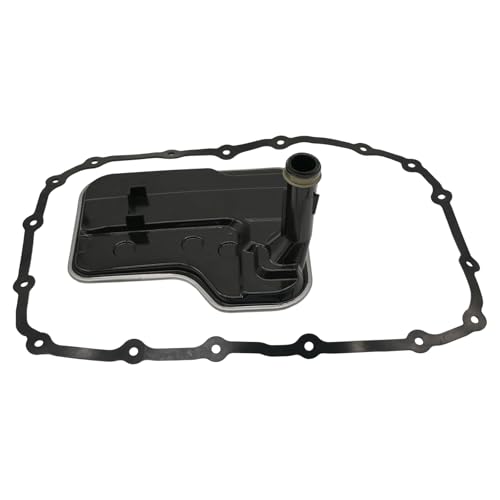
[Trans Code:] 6L45E / Ga6-L45R, 6L50 2007-On Pan Bolts 18 Compatible With Compatible With Cadillac Compatible With Chevrolet
Grinding or Shaking From Your Transmission
How do you tell the difference between a rough road and a transmission that’s begging for mercy? I’ve learned to watch for grinding or shaking from your transmission during gear changes, it’s one of the clearest warnings you’re not getting.
When I feel that rough grind pushing into third gear, or notice my sedan shuddering at low speeds, I’m diagnosing wear. Manuals often suffer worn synchronizers, automatics harbor damaged gears, either way, metal meets metal wrong.
Here’s what I track:
- Grinding intensity when shifting into specific gears
- Shaking that worsens with speed and load
- New clunks or hums joining the orchestra
That shaking signals internal looseness, bearing wear, or gears rubbing where they shouldn’t. I always get it inspected fast. Ignoring grinding or shaking from your transmission only multiplies repair costs.
Recommended Products

Special made for For 5.7 V8 Engines: PERMANENT LOCKING DIPSTICK - Stays in vehicle -Check Hot or Cold

Replacement locking cap compatible with select Nissan transmission fluid filler tubes.

Direct replacement - this automatic transmission dipstick is designed to match the fit and function of the original dipstick on specified vehicles
Which Symptoms Mean Stop Driving Immediately
When does a transmission problem become a roadside emergency? I know the difference between a worry and a real stop-now moment, and I’m going to share it with you.
If your car won’t engage or stay in gear, or you’re sitting there in drive and nothing happens, stop immediately. That points to major failure or fluid loss, and driving further destroys what’s left.
When your car refuses to engage or stay in gear, treat it as major failure—stop driving before you destroy what’s left.
Transmission slipping or your engine revving high during shifts? I treat that as a red flag. I’ll drive only long enough to stop safely, then get it inspected.
Burning smells near the transmission mean overheating from low or degraded fluid. I pull over right then.
Sudden grinding, clunking, or humming during gear changes demands an immediate stop.
A steady check engine light plus unresponsive shifting? I cease driving and arrange urgent service.
Recommended Products
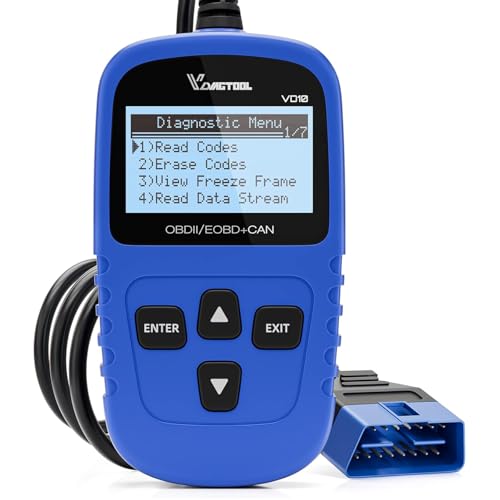
【A MUST-HAVE SCANNER TOOL FOR DIYERS】 - VDIAGTOOL VD10 car code reader is an incredibly useful, handheld obd2 scanner for each car owner or hobbyist, even for those with little to no experience when it comes to vehicle mechanics! Similar to a fixd car diagnostic tool, using this car diagnostic scanner is extremely easy. All you have to do is attach it to your car OBDII port and you can diagnose car problems in seconds! Read Codes (DTCs); Clear Codes; Live Data; View Freeze Frame; I/M Readiness; Vehicle Information.

Your Personal Car Doctor - Officially licensed for compatibility with Volkswagen Group (VAG), BMW Group, Mercedes-Benz, Toyota Group, and US-made Ford Group, Safescan equipped with 65,000+ built-in DTC lookups, quickly reads & clears engine codes while providing precise interpretations. It views freeze frame data, checks I/M readiness status, runs oxygen sensor tests, and vehicle information (VIN, CIN, CVN) just to help you fully assess engine health before paying for costly, unnecessary repairs. Perfect for pre-purchase inspections to avoid buying used cars with hidden engine problems or unknown origins.

Multi-Functions - Practical Multi-Functions OBD2 code reader features built-in OBD2 DTC lookup library, which help you to determine the cause of the engine light, read code, erase code, view freeze frame, I/M ready, vehicle information, data flow, real-time curve, get vehicle speed information, calculate load value, engine coolant temperature, get engine speed.
How to Diagnose Your Transmission Problem
Where do I start when my transmission feels off? I grab my code scanner and pop the hood. Transmission fluid tells the whole story, so I check the dipstick first. Low, dark, or burnt-smelling fluid means trouble, and I won’t ignore it.
Here’s my three-step process:
- Inspect the transmission fluid level and color, watching for leaks or that acrid burning smell that screams overheating
- Listen for grinding, clunking, or whining during shifts; these noises reveal internal wear before failure hits
- Scan for trouble codes; solenoid faults and sensor errors show up clear as day
I confirm fluid condition, then chase codes and leaks. This sequence saves me from guessing; degraded fluid or component wear becomes obvious fast. No fluff, just answers I can act on.
Recommended Products

Fitment: 6R80 Transmission filter fits. Compatible with Ford Expedition 2009-2017, Ford F-150 2011-2017, Ford F-250 Super Duty 2017-2022, Ford F-350 Super Duty 2018-2022, Ford Mustang 2011-2017, Lincoln Navigator 2011-2017. For More Models, Please Refer to the Detailed Description or Adaptation Table to Select!

Aftermarket Transmission oil pan magnet,Contains 3 pcs

【Precision Fit for 6L80E & 6L90E Transmissions】:Designed for 6L80, 6L80E, 6L90, and 6L90E transmissions. Directly replaces OEM part numbers 24236931, 24236933, 24238229, 24236517, B239, V400964, B240, B234, B241, 58369, and includes oil pan gasket 24224781, JG140, 749523. Please confirm your part number before ordering