Wondering about the correct Honda Civic 2010 tire size for your vehicle? Finding the right tires isn’t just about fit—it’s about optimizing your driving experience and ensuring your safety on the road.
When it comes to your 2010 Honda Civic, tire specifications can vary depending on the exact trim level you own. Whether you’re replacing worn tires or looking to upgrade your current set, understanding the factory-recommended sizes will save you time and potentially costly mistakes. Let’s explore the standard tire dimensions for your Civic and what options might work best for your driving needs.
Understanding Honda Civic 2010 Tyre Specifications
The 2010 Honda Civic comes equipped with exact tire sizes that vary by trim level. Factory-fitted tires on the DX and LX models typically measure P195/65R15, while the EX and Si trims feature P205/55R16 and P215/45R17 respectively. These specifications include the tire width in millimeters, aspect ratio (sidewall height as a percentage of width), construction type (R for radial), and wheel diameter in inches.
Reading tire sidewalls reveals crucial information beyond just size. The load index indicates how much weight each tire can support, with most 2010 Civic tires ranging from 87 to 91 (representing approximately 1,201 to 1,356 pounds per tire). Speed ratings on these tires typically range from H (130 mph) to V (149 mph), reflecting the maximum safe operating speed.
Additional markings on your Civic’s tires include:
- Tread wear rating (typically 300-500 for original equipment)
- Traction rating (AA, A, B, or C)
- Temperature resistance (A, B, or C)
- DOT code showing manufacturing date
- Maximum inflation pressure
“Many customers overlook the importance of matching all four tires to the factory specifications,” says Liam Kohn, who’s helped countless Civic owners select replacement tires. “I once worked with a customer who installed oversized tires on his 2010 Civic Si, causing speedometer inaccuracy and unexpected handling changes.”
Understanding these specifications ensures you’ll make informed decisions when replacing your Honda Civic’s tires, maintaining optimal performance and safety characteristics your vehicle was designed to deliver.
Factory-Fitted Tyre Sizes for Honda Civic 2010 Models
The 2010 Honda Civic comes with exact factory-fitted tire sizes that vary across different trim levels. These factory specifications ensure optimal performance, handling, and fuel efficiency for your vehicle.
Base Model Tyre Specifications
Base models of the 2010 Honda Civic, including the DX, GX, Hybrid, and LX trims, feature smaller tire sizes designed for comfort and economy. Most entry-level DX and GX models come equipped with 195/65R15 tires mounted on 15-inch wheels. The Hybrid variant also utilizes this same tire size to maximize fuel efficiency. LX trims typically upgrade to slightly larger 205/55R16 tires, offering a balanced blend of comfort and improved handling characteristics. These tire dimensions provide adequate road contact while maintaining the smooth ride quality Honda Civics are known for.
Higher Trim Level Tyre Options
Higher-end 2010 Honda Civic models feature performance-oriented tire specifications for enhanced handling and aesthetics. The sporty Si trim standardizes on 215/45R17 tires, providing superior grip and responsiveness for more spirited driving. EX and EX-L trims often come with either 205/50R17 or 215/45R17 tires, offering drivers a more captivating experience without sacrificing too much ride comfort. LX-S models similarly use these sportier tire dimensions. Factory-installed tires on these premium trims included brands like Dunlop, Bridgestone, and Michelin, with each manufacturer chosen to complement the exact performance characteristics of each trim level. The larger 17-inch wheels on these models not only improve handling but also contribute to the more aggressive appearance that distinguishes higher-end Civic variants.
Recommended Replacement Tyre Sizes for Honda Civic 2010
Selecting the correct replacement tyres for your 2010 Honda Civic depends primarily on your vehicle’s exact trim level. The factory-recommended tyre sizes vary across different models to optimize performance, comfort, and fuel efficiency for each variant.
OEM Equivalent Options
OEM equivalent tyres maintain the specifications Honda engineers originally selected for your Civic model. For the base DX trim, 195/65R15 tyres provide the ideal balance of comfort and fuel economy. EX, EX-L, LX, and Hybrid models typically require 205/55R16 tyres, offering enhanced handling without sacrificing ride quality. Sportier Si models and certain EX trims come equipped with 215/45R17 tyres for superior grip and performance characteristics. When replacing your tyres, look for options with matching load ratings and speed indices to ensure optimal safety and performance—generally around 32 psi is recommended for all standard sizes on the 2010 Civic.
Performance Upgrade Options
Performance enthusiasts often gravitate toward 215/45R17 tyres when upgrading their 2010 Civic beyond factory specifications. These tyres deliver improved cornering ability and responsive handling, particularly valuable for spirited driving. Popular performance options include Pirelli P4 Persist AS Plus, Yokohama Avid Ascend LX, and Nexen N Priz AH8, each offering enhanced grip compared to standard options. Many Civic owners report noticeable improvements in steering response and wet-weather traction after upgrading to premium tyres in this size. Enthusiasts occasionally opt for wider tyres or lower aspect ratios, though compatibility with your vehicle’s wheel size, offset, and clearance must be carefully confirmed before making such modifications.
How to Read Honda Civic 2010 Tyre Size Information
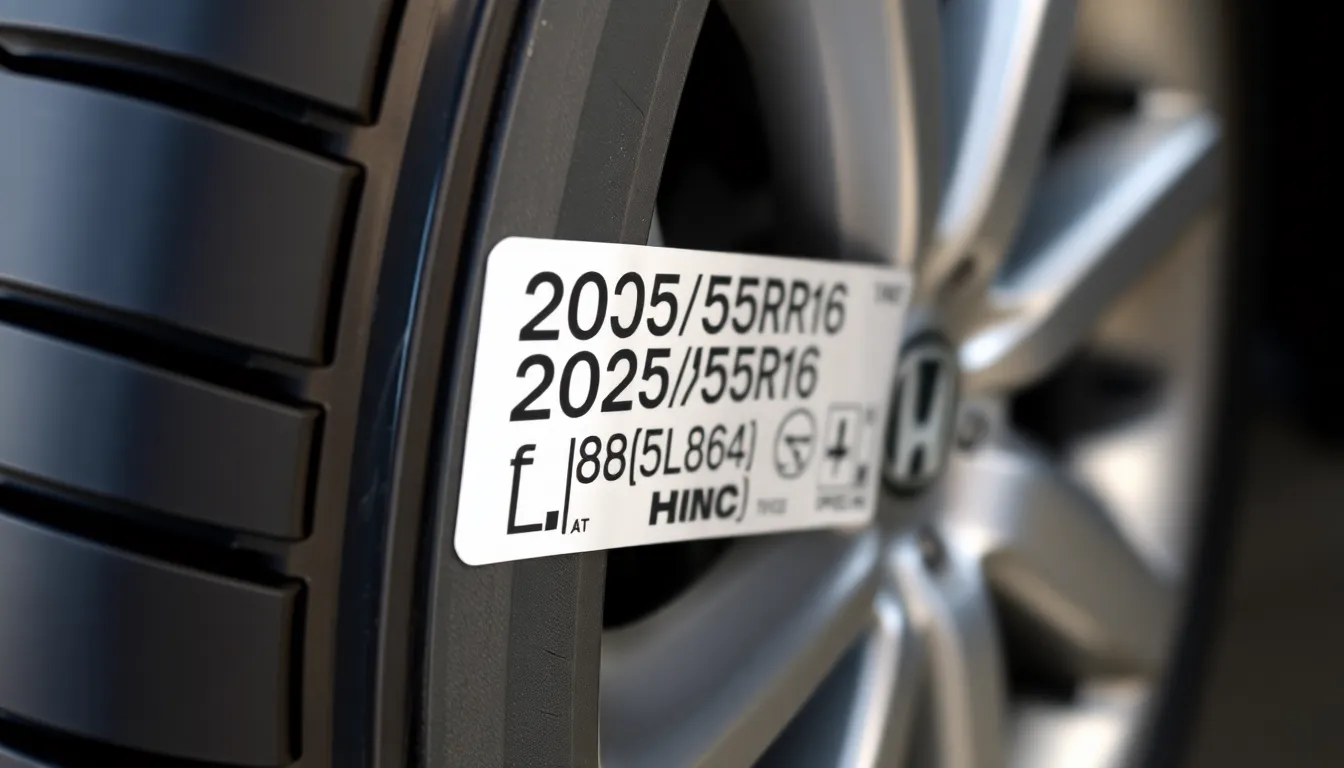
Tyre size information appears on the sidewall of every tyre in a standardized format. For the 2010 Honda Civic, the typical format looks like “205/55R16” which contains crucial specifications about the tyre’s dimensions and construction.
Decoding the Sidewall Numbers
Tyre sidewalls contain a wealth of information beyond just the size. The primary size designation (e.g., 205/55R16) breaks down into four essential components: the width measurement in millimeters (205), the aspect ratio representing sidewall height as a percentage of width (55), construction type (R for Radial), and wheel diameter in inches (16). Additional markings include the manufacturer’s name, tyre model, manufacturing date code, and tread wear indicators. Load capacity markings also appear on the sidewall, providing guidance on the maximum weight the tyre can safely support when properly inflated.
Speed and Load Ratings Explained
Load index and speed ratings determine your Civic’s performance capabilities and safety margins. The load index appears as a number (typically 87-91 for 2010 Civics) corresponding to a exact weight capacity—for example, a load index of 91 equals approximately 615 kg per tyre. Speed ratings follow the load index and are represented by letters indicating maximum safe speeds: T (118 mph), H (130 mph), V (149 mph), W (168 mph), and Y (186 mph). Most factory Honda Civic 2010 tyres came with H or V ratings depending on the trim level. Premium trims like the Si model typically featured V-rated tyres from manufacturers such as Dunlop SP Sport 5000, Bridgestone Turanza EL400-02, or Michelin Pilot MXM4 to complement their performance characteristics.
Seasonal Tyre Considerations for Your 2010 Civic
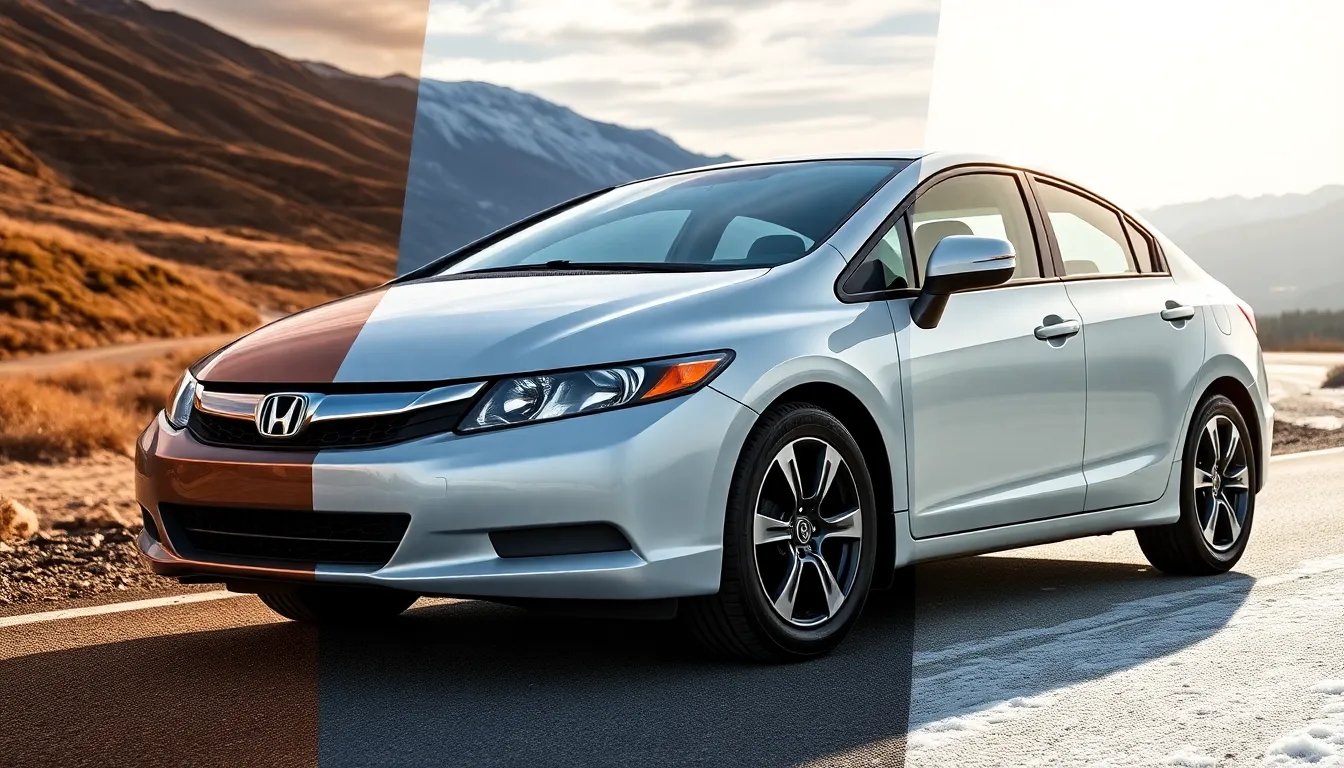
Selecting the appropriate seasonal tyres for your 2010 Honda Civic significantly impacts your vehicle’s performance throughout the year. Different weather conditions demand exact tyre characteristics to maintain optimal safety and handling on the road.
All-Season Options
All-season tyres provide balanced performance across varied weather conditions, making them ideal for regions with mild climate fluctuations. These versatile options deliver reliable traction on dry roads, wet surfaces, and even light snow. For 2010 Civic Si owners with 215/45R17 fitments, the Pirelli P4 Persist AS Plus and Yokohama Avid Ascend LX offer excellent year-round performance. All-season tyres typically feature moderate tread patterns with sufficient siping to channel water while maintaining good contact with the road surface.
Winter Tyre Answers
Winter tyres become essential in areas experiencing heavy snowfall or frequent icy conditions. These specialized tyres use unique rubber compounds that remain flexible in freezing temperatures, along with aggressive tread patterns designed to bite into snow and ice. The enhanced traction provided by winter tyres dramatically improves braking distances and cornering stability when temperatures drop below 45°F (7°C). Regardless of your Civic’s trim level, matching the OEM size specifications—whether 195/65R15, 205/55R16, or 215/45R17—ensures proper fitment and optimal performance.
Summer Performance Tyres
Summer tyres deliver superior grip and responsive handling during warm weather driving. These performance-oriented options feature specialized rubber compounds and tread designs optimized for dry and wet conditions in higher temperatures. Summer tyres aren’t suitable for winter use as their compounds harden in cold weather, significantly reducing traction. Performance enthusiasts driving the sportier Civic trims often prefer summer tyres for their enhanced cornering abilities and road feedback during the warmer months.
Remember that switching between seasonal tyres based on your local climate conditions maximizes both safety and tyre longevity. Adhering to your 2010 Civic’s factory size specifications ensures proper clearance and maintains the vehicle’s handling characteristics as designed by Honda engineers.
Common Tyre Issues and Solutions for the 2010 Honda Civic

The 2010 Honda Civic experiences several recurring tire problems that affect driving safety and comfort. Uneven wear patterns frequently develop across the tire tread, reducing grip and increasing road noise over time. Punctures represent another common issue, especially with the thinner sidewalls on the 215/45R17 tires used in sportier models like the Si Coupe. Balancing problems often manifest as steering wheel vibrations at highway speeds, creating an uncomfortable driving experience.
Maintaining proper tire pressure sits at the foundation of preventing these issues. Honda recommends approximately 32 psi for all 2010 Civic models regardless of whether you’re driving with 195/65R15 tires (DX trim), 205/55R16 tires (EX and EX-L trims), or 215/45R17 tires (Coupe EX-L and Si variants). Regular pressure checks prevent premature wear and help maintain optimal fuel efficiency.
Tire rotation every 5,000-7,500 miles extends tire life by equalizing wear patterns across all four tires. Front-wheel drive Civics place more stress on front tires, making rotation particularly important for even tread wear. Implementing a cross-rotation pattern works best for most 2010 Civic models.
Alignment issues commonly arise after hitting potholes or curbs, leading to uneven tire wear and handling problems. Signs of misalignment include the vehicle pulling to one side or uneven wear on tire edges. Professional alignment service restores proper geometry and prevents costly premature tire replacement.
Seasonal changes require attention to tire condition and type. Winter driving demands adequate tread depth (at least 6/32″) on whatever size your Civic uses. Summer heat accelerates wear on older tires, particularly affecting the 215/45R17 performance tires found on sportier models due to their softer rubber compounds.
Replacing tires with exact OEM specifications ensures proper handling characteristics. The load index and speed rating must match Honda’s recommendations to maintain safety margins – typically H (130 mph) or V (149 mph) ratings depending on your exact trim level. Using tires with incorrect specifications compromises handling performance and potentially voids insurance coverage in case of accidents.
Conclusion
Choosing the right tires for your 2010 Honda Civic isn’t just about fitment—it’s about safety performance and driving enjoyment. Whether you’re sticking with the factory-recommended sizes (P195/65R15 for DX/LX models or P205/55R16 for EX trims) or exploring upgrade options like the performance-oriented 215/45R17 tires you’ll now have the knowledge to make informed decisions.
Remember to consider seasonal needs load ratings and maintain proper tire pressure at approximately 32 psi. Regular rotation every 5000-7500 miles will extend your tires’ lifespan and ensure even wear. By following these guidelines and understanding your exact trim requirements you’ll maximize both safety and performance while enjoying everything your Civic has to offer.
Frequently Asked Questions
What are the factory-recommended tire sizes for a 2010 Honda Civic?
The 2010 Honda Civic has different tire sizes depending on the trim level. DX and LX models typically use P195/65R15 tires, EX trims come with P205/55R16, and Si models feature P215/45R17 tires. Each size is specifically engineered to match the performance characteristics of that particular trim level, ensuring optimal handling, comfort, and fuel efficiency.
How do I read tire size information on my Civic?
Tire size information like “205/55R16” follows a standard format. The first number (205) is the width in millimeters, the second (55) is the aspect ratio or profile height as a percentage of width, “R” indicates radial construction, and the final number (16) is the wheel diameter in inches. This information is printed on your tire’s sidewall and in your owner’s manual.
What do load index and speed ratings mean for my Civic’s tires?
Load index (typically 87-91 for 2010 Civics) indicates the maximum weight each tire can safely carry. Speed ratings (usually H or V for Civics) show the maximum sustainable speed: H means 130 mph and V means 149 mph. These ratings are crucial for safety and performance, and replacement tires should match or exceed the original specifications.
Can I upgrade my Civic’s tire size?
While you can upgrade your Civic’s tires, it’s important to maintain the overall diameter within 3% of the original specification. Performance enthusiasts often upgrade to 215/45R17 tires for better handling and grip. Popular brands for upgrades include Pirelli, Yokohama, and Nexen. Always consult with a tire professional before making changes.
What seasonal tires work best for the 2010 Honda Civic?
All-season tires work well in mild climates and provide year-round performance. Winter tires are recommended for heavy snowfall areas, offering superior traction in cold conditions. Summer performance tires provide enhanced grip in warm weather. Regardless of the season, always adhere to factory size specifications to ensure proper fitment and handling.
How often should I rotate the tires on my 2010 Civic?
Rotate your Civic’s tires every 5,000-7,500 miles to promote even wear and extend tire life. Maintain proper tire pressure at approximately 32 psi (check your driver’s door jamb for exact specifications). Regular rotation helps prevent uneven wear patterns that can affect handling, comfort, and safety.
What are common tire issues for the 2010 Honda Civic?
Common tire issues include uneven wear patterns, punctures, and balancing problems. Alignment issues may develop after hitting potholes or curbs, affecting handling and tire longevity. Seasonal changes require attention to tread depth for winter driving and monitoring tire condition during summer heat. Always replace tires with the correct OEM specifications to maintain safety.
Will using incorrect tire sizes affect my Civic’s performance?
Yes, using incorrect tire sizes can significantly impact your Civic’s performance, safety, and fuel efficiency. Oversized tires may cause rubbing against wheel wells or suspension components, while undersized tires can affect speedometer accuracy and stability. Incorrect sizes may also void insurance coverage in case of accidents. Always match factory specifications for optimal performance.