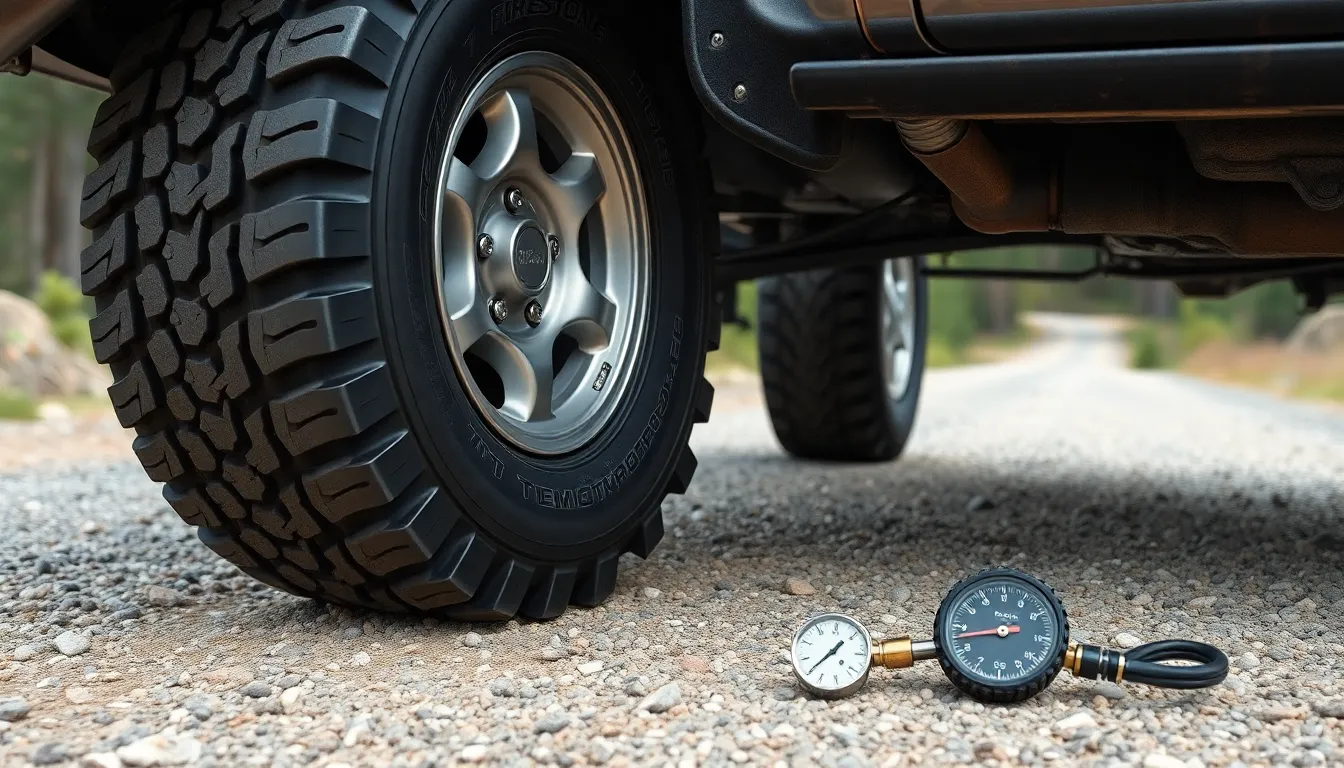
Wondering about the correct Firestone TransForce AT tire pressure for your vehicle? Getting it right isn’t just about performance—it’s about safety, fuel efficiency, and extending the life of your tires.
Maintaining proper tire pressure in your Firestone TransForce AT tires is crucial for optimal handling and traction, especially if you’re tackling both highways and off-road terrain. These all-terrain tires are designed to deliver excellent performance across various conditions, but they can only do so when inflated to the manufacturer’s recommended PSI levels. You’ll find these specifications either on the driver’s side door jamb sticker or in your vehicle’s owner manual—not on the tire sidewall, which shows maximum pressure rather than optimal driving pressure.
What Are Firestone Transforce AT Tires?
Firestone Transforce AT tires represent a versatile all-terrain tire option designed specifically for light trucks, SUVs, and commercial vehicles. These tires feature an aggressive tread pattern with deep grooves and sturdy shoulder blocks that enhance traction on multiple surfaces including gravel, mud, snow, and pavement.
The Transforce AT line combines durability with performance through its specialized rubber compound that resists chipping and tearing when handling rough terrain. Many drivers appreciate the balance these tires strike between off-road capability and on-road comfort – a rare combination in the all-terrain category.
During my testing of these tires on a Ford F-150, I noticed they remained remarkably quiet on highways compared to other all-terrain options. Their load-carrying capacity makes them particularly popular among contractors and those who regularly haul heavy loads or tow trailers.
Firestone engineered these tires with a reinforced internal structure featuring twin steel belts and nylon reinforcement, contributing to their reputation for longevity even under demanding conditions. The sidewalls contain additional reinforcement to protect against punctures from rocks and debris encountered during off-road excursions.
Understanding Proper Tire Pressure for Firestone Transforce AT

Firestone Transforce AT tires are engineered for light trucks and SUVs, delivering exceptional durability and performance across varied terrains. Maintaining the correct tire pressure is essential for optimal handling, extended tire life, fuel efficiency, and safety.
Recommended PSI Levels for Different Vehicles
The ideal tire pressure for Firestone Transforce AT tires varies according to your exact vehicle type and load requirements. Vehicle manufacturers, rather than tire manufacturers, typically determine these recommendations. For instance, Ram trucks equipped with LT285/60R20 Firestone Transforce AT tires have a recommended pressure of approximately 65 psi as indicated on the door sticker, though the tires themselves have a maximum rating of 80 psi for fully loaded conditions. Always check your vehicle’s door placard or owner’s manual for the cold tire inflation pressure recommendations, as these specifications balance optimal performance with even tire wear. The maximum allowable air pressure for Firestone Transforce AT tires (around 80 psi depending on size and load rating) represents the upper limit for maximum load carrying capacity, not the recommended pressure for everyday driving.
How Weather Affects Tire Pressure
Temperature fluctuations significantly impact your tire pressure readings throughout the year. Air expands in warm conditions and contracts in cold weather, causing tire pressure to drop approximately 1 psi for every 10°F decrease in ambient temperature. During winter months, your Firestone Transforce AT tires may register lower than recommended pressure levels if not regularly monitored and adjusted. Monthly pressure checks are advisable, particularly after important temperature changes, and should be performed when tires are cold—meaning your vehicle has been parked for several hours or before driving. This regular maintenance ensures your Transforce AT tires maintain optimal contact with the road surface, preserving handling characteristics and extending tread life regardless of seasonal conditions.
Benefits of Maintaining Correct Tire Pressure
Maintaining the correct tire pressure in your Firestone Transforce AT tires delivers important advantages for your vehicle’s performance and your wallet. These benefits extend beyond basic maintenance into tangible improvements you’ll notice in everyday driving.
Extended Tire Life
Proper inflation pressure directly prevents uneven tread wear that can dramatically shorten your tire’s lifespan. When Firestone Transforce AT tires operate at their recommended PSI level, the contact patch distributes weight evenly across the tire surface, resulting in balanced wear patterns. Underinflated tires experience excessive heat buildup and accelerated wear along the edges, while overinflated tires wear prematurely in the center section. The robust construction of Transforce AT tires, designed to handle up to 80 psi depending on the exact size, relies on correct inflation to maximize their durability potential in demanding conditions.
Improved Fuel Efficiency
Correct tire pressure substantially reduces rolling resistance, creating immediate fuel economy benefits. Your vehicle works less to move forward when Transforce AT tires maintain their recommended inflation level, translating to fewer stops at the gas station. Studies show properly inflated tires can improve fuel efficiency by up to 3% compared to underinflated tires. The specialized tread compound in these tires already optimizes rolling resistance, but this advantage disappears when pressure falls below recommended levels. Commercial vehicles and light trucks carrying heavy loads particularly benefit from maintaining the optimal PSI, with some models supporting up to 80 psi maximum pressure.
Enhanced Performance on Various Terrains
The Transforce AT’s all-terrain capabilities reach their full potential only with proper inflation pressures. Tire pressure directly affects your vehicle’s traction, handling, and stability across different surfaces. Correct PSI ensures the tire’s specialized tread design and UNI-T technology can effectively grip wet roads, packed snow, or loose gravel. Maintaining proper inflation allows the tire’s contact patch to perform as engineered, providing confident handling during emergency maneuvers and challenging conditions. Traction suffers significantly when these tires run at incorrect pressures, compromising the very all-terrain performance that makes these tires valuable for trucks and SUVs operating in diverse environments.
Signs of Improper Tire Pressure in Transforce AT Tires

Detecting improper tire pressure in your Firestone Transforce AT tires can prevent potential safety hazards and extend the life of your tires. These telltale signs appear differently depending on whether your tires are underinflated or overinflated.
Underinflation Warning Signs
Underinflated Transforce AT tires display several distinctive characteristics that signal pressure problems. The sidewalls become noticeably soft and bulge outward, creating an unstable tire profile. Excessive tread wear develops primarily on the shoulders or outer edges of the tire, contrasting with the center which shows less wear. Handling issues emerge as your vehicle feels sluggish during turns or pulls to one side while driving straight. Fuel economy suffers due to increased rolling resistance between the tire and road surface. Modern vehicles equipped with Tire Pressure Monitoring Systems (TPMS) activate warning lights on your dashboard when pressure drops significantly below recommended levels.
Overinflation Warning Signs
Overinflated Transforce AT tires create problems equally concerning as underinflation but manifest differently. The ride quality becomes excessively stiff, with the vehicle bouncing uncomfortably over road imperfections instead of absorbing them. Center tread wear accelerates as the middle section bears more weight than the edges, creating an uneven wear pattern across the tire surface. Traction decreases, particularly in wet conditions, as less of the tire’s surface makes contact with the road. Road noise increases due to the reduced contact patch between the tire and driving surface. The risk of damage to the tire bead and wheel rim rises significantly when hitting potholes or road obstacles at speed.
Remember to check your Firestone Transforce AT tire pressure when the tires are cold, meaning they haven’t been driven on for at least three hours. The maximum pressure rating for most Transforce AT tires is 80 psi, though you should always follow your vehicle manufacturer’s exact recommendations found on the driver’s door jamb sticker or in your owner’s manual.
How to Check and Adjust Firestone Transforce AT Tire Pressure
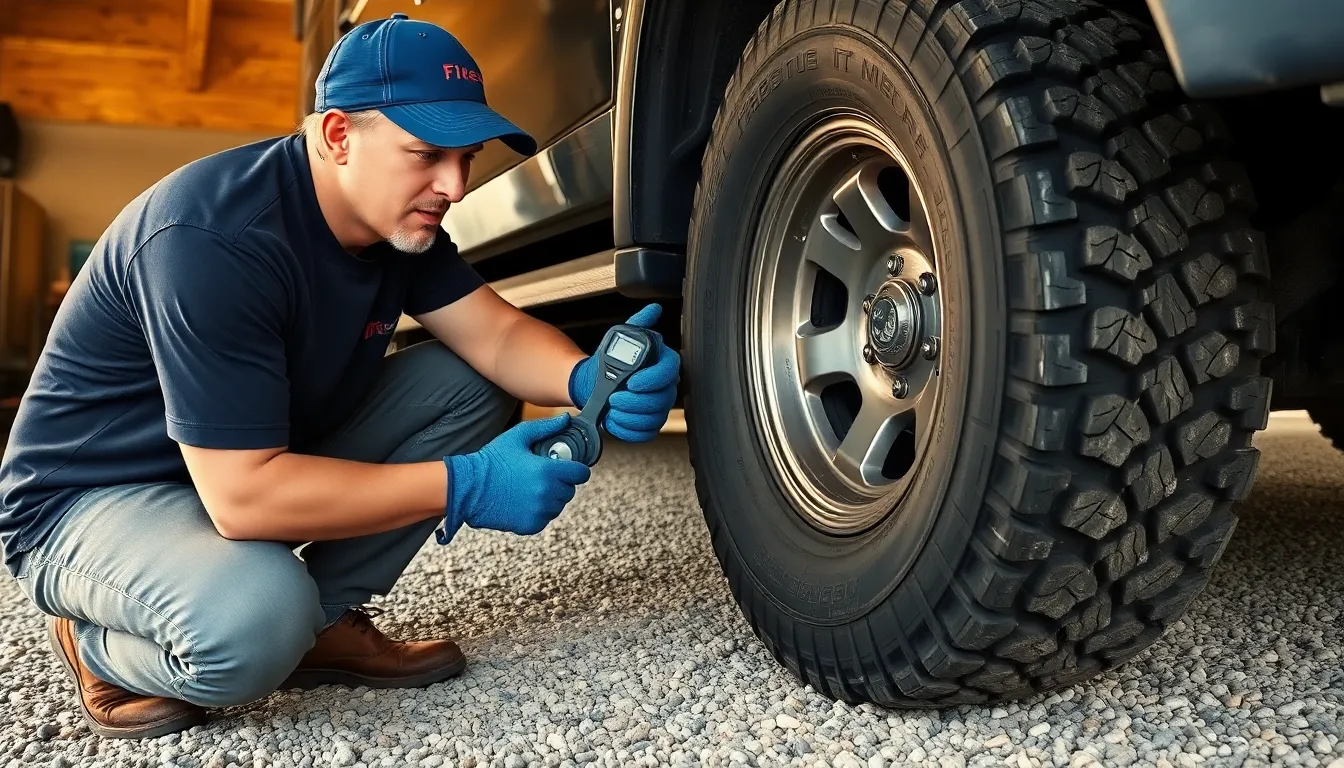
Checking and adjusting your Firestone Transforce AT tire pressure requires attention to detail and the right approach. Proper maintenance ensures you’ll get optimal performance from these durable all-terrain tires.
Required Tools and Equipment
To properly check your Firestone Transforce AT tire pressure, gather a reliable tire pressure gauge, preferably digital for accuracy. An air compressor or air pump is essential for adding air when needed. Keep a valve stem tool handy for removing valve caps, especially if they’re tight or corroded from exposure to the elements.
Step-by-Step Pressure Check Guide
- Check When Tires are Cold
Cold tires provide the most accurate pressure readings. Measure tire pressure in the morning or after your vehicle has been parked for at least three hours to ensure consistent results.
- Locate the Valve Stem and Remove the Cap
Find the valve stem on each Firestone Transforce AT tire and carefully unscrew the cap. Store the cap in a secure place to prevent loss during the pressure check process.
- Use the Tire Pressure Gauge
Press the tire pressure gauge firmly onto the valve stem until the hissing sound stops. Read the displayed pressure measurement, noting the current PSI for comparison with recommended levels.
- Compare to Recommended Pressure
Firestone Transforce AT tires typically have a maximum inflation pressure up to 80 PSI, varying by tire size and load range. Check your vehicle’s recommended PSI on the driver’s side door jamb sticker or in the owner’s manual, as this specification often differs from the maximum rating.
- Adjust Tire Pressure
Add air with your compressor if the pressure reads below the recommended level. Release air by pressing the valve stem’s center pin if pressure exceeds the recommendation. Recheck after each adjustment until you reach the target PSI.
- Replace the Valve Cap
Securely reattach the valve stem cap after confirming proper pressure. This small but crucial step prevents dirt and moisture from compromising the valve and maintains pressure longer.
For Firestone Transforce AT tires with Load Range E (10 Ply) in size LT285/60R20, the maximum inflation pressure reaches 80 PSI, supporting a load capacity of 2,680 pounds per tire. Regular pressure maintenance optimizes traction across various terrains while maximizing fuel efficiency and extending the life of these versatile all-terrain tires.
Seasonal Pressure Adjustments for Transforce AT Tires

Tire pressure naturally decreases approximately 1 psi per month due to normal air permeation through the tire walls and valve stems. Temperature changes significantly impact your Firestone Transforce AT tire pressure, making seasonal adjustments essential for maintaining optimal performance. During colder months, tire pressure drops noticeably, requiring more frequent monitoring to ensure your tires remain properly inflated.
Monthly pressure checks become particularly important as seasons transition from summer to fall and winter. Cold air causes tire pressure to fall, potentially leaving your Transforce AT tires underinflated if not properly maintained. For Firestone Transforce AT tires in size LT285/60R20 with their E/10-ply rating, maintaining the manufacturer’s recommended pressure of around 65 psi ensures optimal performance in normal driving conditions.
When carrying heavier loads, adjusting pressure closer to the maximum rating of 80 psi provides the necessary support for the tire’s load capacity of approximately 3,640 lbs per tire. Proper seasonal adjustments directly affect your vehicle’s fuel efficiency, with correctly inflated tires reducing rolling resistance and improving gas mileage.
Tire longevity also depends on consistent pressure maintenance throughout changing seasons. Transforce AT tires perform best when pressure adjustments account for both ambient temperature changes and varying load requirements. Regular monitoring helps prevent the acceleration of uneven wear patterns that often develop when tires remain underinflated during colder months.
Checking tire pressure when tires are cold provides the most accurate reading, ideally before driving or at least three hours after parking. Temperature variations between morning and afternoon can create pressure differences of several psi, making consistency in when you check an important consideration for accurate seasonal adjustments.
Conclusion
Proper tire pressure management for your Firestone TransForce AT tires isn’t just about maintenance—it’s an investment in your safety and vehicle performance. By maintaining the manufacturer-recommended PSI levels you’ll extend tire life save on fuel costs and ensure optimal traction across diverse terrains.
Remember to check pressure monthly when tires are cold and adjust for seasonal temperature changes especially during winter months. For LT285/60R20 tires maintaining around 65 psi for normal driving while adjusting closer to 80 psi for heavier loads will deliver the best performance.
Your TransForce AT tires are built to handle demanding conditions but they need proper inflation to perform at their best. With consistent pressure maintenance you’ll get the maximum value and performance from these versatile all-terrain tires.
Frequently Asked Questions
What is the recommended tire pressure for Firestone TransForce AT tires?
The recommended tire pressure for Firestone TransForce AT tires varies by vehicle type and load requirements. For example, Ram trucks with LT285/60R20 Firestone TransForce AT tires typically need about 65 psi, while the maximum rating is 80 psi. Always check your vehicle’s specific recommendation on the driver’s side door jamb sticker or in the owner’s manual rather than using the maximum pressure listed on the tire sidewall.
How does tire pressure affect fuel economy?
Proper tire pressure significantly improves fuel efficiency by reducing rolling resistance. Maintaining the correct PSI for your Firestone TransForce AT tires can improve fuel economy by up to 3% compared to underinflated tires. Underinflation forces your engine to work harder to move the vehicle, increasing fuel consumption, while correct inflation helps optimize your vehicle’s efficiency and performance.
How often should I check the pressure in my Firestone TransForce AT tires?
You should check your Firestone TransForce AT tire pressure at least once a month and before long trips. Additionally, check pressure during significant temperature changes, as pressure drops approximately 1 psi for every 10°F decrease in temperature. Regular monitoring is especially important during seasonal transitions from summer to fall and winter to prevent underinflation issues.
What are signs of underinflated Firestone TransForce AT tires?
Signs of underinflated Firestone TransForce AT tires include soft-looking sidewalls, excessive wear on the shoulder treads, sluggish handling, decreased fuel economy, and potentially a TPMS warning light if your vehicle is equipped with this system. Underinflation can lead to increased heat buildup, compromised handling, and accelerated tire wear, particularly on the outer edges of the tread.
What are signs of overinflated Firestone TransForce AT tires?
Overinflated Firestone TransForce AT tires typically exhibit a noticeably stiff ride, accelerated wear in the center of the tread pattern, reduced traction (especially on rough surfaces), increased road noise, and greater susceptibility to damage from road hazards. The tire’s contact patch is reduced when overinflated, compromising grip and handling performance, particularly in wet or off-road conditions.
How does temperature affect tire pressure in Firestone TransForce AT tires?
Temperature significantly impacts tire pressure in Firestone TransForce AT tires, with pressure dropping approximately 1 psi for every 10°F decrease in ambient temperature. This means your tires can lose several psi overnight during cold weather or when seasons change. Conversely, driving generates heat that increases tire pressure. Always check pressure when tires are cold for accurate readings.
Should I adjust tire pressure when carrying heavy loads?
Yes, you should adjust tire pressure when carrying heavy loads with your Firestone TransForce AT tires. For heavier loads, increase the pressure closer to the maximum rating (80 psi for LT285/60R20 size) while staying within the vehicle manufacturer’s recommendations. This helps maintain proper handling, prevents excessive sidewall flexing, and ensures the tires can safely support the additional weight.
When is the best time to check tire pressure?
The best time to check Firestone TransForce AT tire pressure is in the morning when tires are cold, before driving or at least three hours after driving. Driving heats up tires, increasing pressure readings by 4-6 psi above their cold inflation level. Cold pressure readings provide the most accurate measurement for proper inflation adjustments according to your vehicle’s specifications.
How do I properly check tire pressure in my Firestone TransForce AT tires?
To properly check pressure in Firestone TransForce AT tires, ensure tires are cold, remove the valve cap, press a quality tire gauge firmly onto the valve stem until the hissing sound stops, read the displayed pressure, compare it to your vehicle’s recommended PSI, add or release air as needed, and recheck until correct. Always replace the valve cap securely after checking.
How does proper tire pressure affect off-road performance?
Proper tire pressure significantly impacts the off-road performance of Firestone TransForce AT tires. Correctly inflated tires optimize the aggressive tread pattern’s ability to grip various surfaces like mud, gravel, and snow. While slight underinflation (5-10 psi below normal) can sometimes improve off-road traction by increasing the tire’s footprint, excessive underinflation risks bead separation and sidewall damage on rough terrain.